






Hrob sovětských válečných zajatců Grave
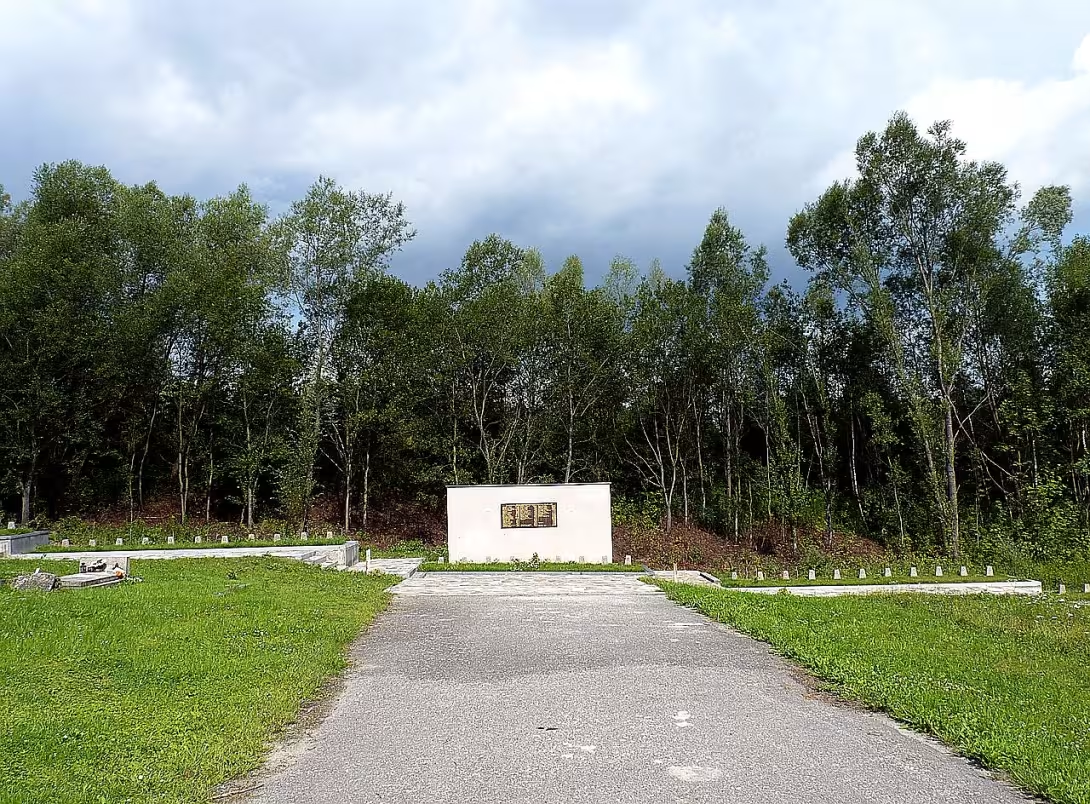
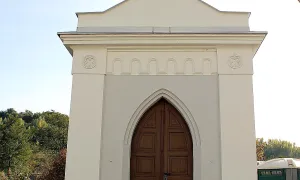
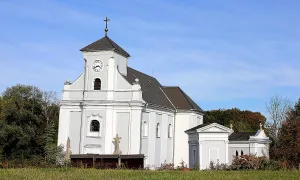
Hrob sovětských válečných zajatců is located in the cemetery in Karviných-Dolech opposite St. Peter's Church from Alkantara and is registered as a cultural monument of the Czech Republic. This monument was built after 1945. It buried Soviet prisoners who worked in local mines during World War II. The object is an important reminder of the war events and human victims of prisoners deployed on forced labour.
The historical context of the memorial is connected to the period of World War II, when the Stalag VIII B prison camp was built on the territory of Český Těšín. The task force created was deployed on forced labour in agriculture, heavy industry, mines, forestry, transport including rail and other sectors. The monument itself was created after 1945 and worships the memory of Soviet soldiers, which we see as liberators as a result of their efforts during the war.
The architectural solution of the monument underwent a new reconstruction in 1970. It touched the object itself and surrounding surfaces. The original form from the post-1945 period was modified by this intervention to the form in which it is found among the graves buried.
A key element of the monument is the base on which is placed a black marble plate. On it is the inscription "Here lie our liberators, who lay their lives on the altar of our country" and the names of 75 soldiers buried. The memorial is situated right between the graves of buried Soviet soldiers.
Today this grave is registered as a cultural monument of the Czech Republic. It is located in the cemetery in Karviných-Dolech opposite the church of St. Peter of Alkantara and serves as a piety place reminiscent of the fate of forced prisoners. Visiting this place offers direct meetings with the history of World War II and with the fate of the people who left their lives. Stopping at this monument reminds of the value of human life and historical events of the region, so it is worth visiting it within the trip to this location.
Historical milestones
- 1945
- The creation of a monument after World War II.
- 1970
- Architectural reconstruction of the monument and surrounding areas.
Architectural development
Originally, the memorial was built after 1945. In 1970 there was an architectural reconstruction which included a new solution of the monument and surrounding areas.
Historical events
- 1945
- The creation of a monument after World War II.
- 1970
- Implementation of a new architectural solution of the monument and surrounding areas.
Points of interest
- The tomb is located in the cemetery in Karviných-Dolech opposite the church of St. Peter of Alkantara and is registered as a cultural monument of the Czech Republic. - It's buried by Soviet prisoners who worked on forced labor in local mines during World War II. - The original appearance of the monument from the post-1945 period was modified in 1970 by a new architectural design. - On the base of the monument is a black marble plate that says, "Here rest our liberators, who have laid their lives on the altar of our country" and the names of 75 soldiers buried. The memorial is located right between the graves of buried Soviet soldiers.
Guide
Show guide text
This text was created by artificial intelligence and has not been editorially reviewed. It may contain inaccuracies.
Welcome to Karviné, Part Doly. Stop for a moment, take a breath and feel the silence of this place. You're standing in front of the grave of Soviet prisoners of war. It is a place that seems modest at first glance, but carries a deep and painful story from a time when the world was torn apart by the greatest conflict in human history. Look around you. You are in the cemetery, in the immediate vicinity of St. Peter's Church from Alkantara, which stands right opposite. This contrast between the sacred space of the church and the silent monument of the prisoners creates a special atmosphere of peace and respect that now surrounds you here.
Let us now look together at how this place was created and why it is important to us today. The monument was built shortly after the end of World War II, in 1945. It was created as an honorable space for men who came here under completely different circumstances than we can imagine today. They weren't volunteers or ordinary workers. They were Soviet soldiers who found themselves in captivity and were forced to do heavy, exhausting work. Their destiny was to work in the local mines, which are so crucial to the entire Karviné region. Imagine the conditions in which these people spent their days. Dark underground, dust, constant fear and physical exhaustion of forced labor. This grave is such a silent witness to their suffering and a reminder that war affects the lives of millions of people far beyond the battlefield.
Now pay attention to the appearance of the monument itself and the space around it. Even if you see the resulting form today, this monument has undergone changes over the years. The original form from 1945 was modified with time. A major breakthrough occurred in 1970, when a new architectural solution of the whole monument and surrounding areas was implemented. Architects, whose names remained unknown in time, tried to redesign the space in a way that was better suited to the understanding of respect and memorization. See how the space is arranged. Feel the line of the monument and the way it is entered into the cemetery landscape. Even if you don't find complex ornaments here, it is the silences and simplicity that are meant to bring about a sense of humility. Notice how the monument acts relative to the surrounding green space and how it separates it from other graves. The whole complex is designed so that the visitor can stop in peace and think about the fate of those who rest here.
When you're standing in front of this place, try to imagine specific people. Although we do not know the names of all the personalities buried here, we know one fundamental thing about them: they were people who were taken from their home, from the vast areas of the Soviet Union, and brought here, to the mines in Karviné. Each had his family, his dreams, and his hopes, which were suppressed during the war years. Their lives intertwined with the history of this region through hard work in coal shifts. The work in the mines was extremely difficult and dangerous at the time, and was also burdened by the psychological pressure of forced residence in a foreign country. So this monument is not only a symbol of state respect, but above all the grave of the particular men who left their sweat and blood in these mines.
The place where you're standing right now contains one interesting thing that gives it meaning. Hrob sovětských válečných zajatců is not only a local cemetery object but is officially registered as a cultural monument of the Czech Republic. This means that the state has recognised its historical and cultural value. It is proof that even such a specific and painful part of history is part of our common heritage. It is fascinating to realize that this tiny piece of land in the Karvin Mine is protected as an important document of the time. The fact that the grave is located just opposite the church of St. Peter of Alkantara can be seen as a symbolic combination of faith and memory, hope and sadness.
While you're circling the memorial, you might wonder why a reconstruction was carried out in 1970. At that time, it was important that the World War II monuments looked representative and expressed some sort of stability and endurance. The new architectural solution was intended to ensure that the site did not only act as a temporary grave, but as a permanent monument, which will commemorate the merits and suffering of soldiers and future generations. It's kind of a dialogue between the two ages, between the instant sadness of 1945 and the organized memory of 1970.
Now that you have learned of the origin and importance of this place, I suggest you remain silent for a while. Feel the atmosphere of the cemetery and look again at the monument. Try to realize how many kilometers these people must have traveled to find themselves here in Karviné. How many times have they probably dreamed of returning home, which for many of them never happened again. It is in these personal, unwritten stories that the true power of this place lies.
This concludes a short stop at the grave of Soviet prisoners of war. I hope that this interpretation has helped you better understand the importance of this silent witness to history. This place teaches us that memory is important, even if it is associated with heavy topics such as forced labor and captivity. It's a lesson in humility and a reminder of how valuable peace is.
Now, let's invite you to further explore the area. You can walk towards the church of St. Peter of Alkantara, which you saw across the street, or continue to discover other hidden corners of the Karviny Mall. Every stone and every building in this area tells its own story about the people who lived here, worked and made history. I wish you a pleasant continuation of your journey and thank you for your attention to this place. Goodbye.
Tips for visitors
The best time to visit this pietable place is during the morning hours when sunlight naturally irradiates the cemetery and monument in the village Doly, which allows peaceful contemplation without disturbing influences.
For transport and parking use the possibility of arriving by car or by public transport; Please check the exact and up-to-date connection in normal connection search engines directly before your journey.
Take with you especially comfortable shoes suitable for moving on the cemetery terrain, suitable clothing according to current weather and possibly a flower or candle as a silent memory of fallen prisoners.
When shooting this culturally protected monument, which is located opposite the famous church of St. Peter of Alkantara, get the best pictures in the morning or late afternoon side light to highlight the details of the monument.
Since there are no other specific tourist targets within the recommended list in the immediate vicinity, focus your attention on the cemetery itself and the adjacent historical sacral structure.
Businesses nearby
Do you run a restaurant, accommodation, shop, museum, rental, wellness or other visitor service near this monument? Show yourself directly to the people heading to it — this is how they will see you in the app and on the web:
Nearby
🏰 Historic sites (251)
- Socha Panny Marie 0.4 km
- Pomnik katastrofy górniczej z 12 kwietnia 1924 1.7 km
- Pomník horníkům 2.4 km
- Valtr Elsner 2.6 km
- Hermína Elsnerová 2.6 km
- Ordinace MUDr. Glasera 4.2 km
- Památník obětem obou světových válek 4.2 km
- Pomník padlým za Těšínsko 4.3 km
- 1924-1918 + 1939-1945 4.3 km
- Boží muka u bývalého zámku 4.3 km web
- Padlým rudoarmějcům 4.4 km
- sv. Jan Nepomucký 4.5 km
- Madona 4.5 km
- Panna Maria Bolestná 4.5 km
- Obětem 1. a 2. světové války 4.5 km
- Kostel Povýšení sv. Kříže 4.5 km
- sv. Jan Nepomucký 4.5 km
- sv. Patrik 4.5 km
- Zámek v Karviné-Fryštátě 4.5 km web
- Socha TGM 4.6 km
🍽️ Restaurants and dining (734)
- Golf Resort Lipiny 2.8 km
- Delikana 3.9 km web
- Orlovka 4.0 km
- Restaurant Letiště 4.0 km web
- Panda 4.1 km
- Depo Orlová 4.1 km +420 605 434 121 web
- Dělnický dům 4.2 km Centrum 231/3 web
- Fajna Pizza 4.4 km Chrost 1177/2 web
- Dinos Restaurant 4.4 km +420 774 002 162 web
- Bistro Darkov 4.5 km
- restaurace Na kopečku 4.5 km web
- Tamarín 4.5 km
- U Koplíků 4.5 km
- Majaček 4.5 km
- Restaurace Baron 4.5 km
- Elektra 4.6 km Masarykovo nám. 5/4
- cafe BB bar 4.6 km
- Venezia 4.6 km
- Rest&rt 4.7 km
- Bok of Ka 4.7 km Svatováclavská 33/2
🏨 Accommodation (73)
- Country Motorest 4.2 km
- Vulture 4.3 km U Pošty 371/4 web
- Apartmany BB 4.6 km
- Koleje Slezká univerzita 4.7 km Na Vyhlídce 1079/1
- Hotel Impuls 4.8 km U Hřiště 1324/13b web
- Hotel Sport 5.2 km web
- U Jelena 5.6 km +420 608 751 517 web
- Penzion Urban 5.8 km +420603783554 web
- Lázně Darkov, a.s. 6.6 km Čsl. armády 2954/3 +420596372210 web
- Boršičanka 7.0 km
- Restaurace a penzion U Lesa 7.2 km +420 732 595 205 web
- Penzion Amerika 7.2 km +420 736 627 315 web
- Zámek Havířov 7.3 km web
- Penzion U Popelků 7.8 km +420 724 200 838 web
- Resort Těrlicko 8.0 km +420 724 387 666 web
- U Balona (Slezský pivovar) 8.0 km Selská 1329/43 +420 596 810 914; +420 601 550 001 web
- Jaškovská krčma 9.2 km web
- Hotel Fridrich 9.2 km U Hotelu 728/1 +420 596 423 229 web
- Kemp Rostislav Rypien 9.4 km +420 604 239 075
- Penzion Silma 9.4 km Úvozní 5 web
🚲 Rentals and sport (106)
- Modelářské letiště Hohenegger 1.3 km
- Sportisimo 4.0 km
- Sportovní centrum Na Císařství 4.0 km web
- Tipsport 4.1 km
- Sportovní hala Horní Suchá 4.3 km
- STaRS Karviná - víceúčelová hala 4.4 km
- Hala házené 4.6 km
- sportovní areál 5.1 km
- Kola Go 5.1 km
- Letní koupaliště 5.2 km
- Cyklo ADS cykloservis 5.6 km
- Bazén Stars 5.8 km
- Sportisimo 6.0 km
- Sportisimo 6.0 km web
- Squash centrum 6.1 km
- Městský sportovní areál 6.2 km
- Sportovní hala 6.6 km
- Slovan Havířov 6.7 km
- Bazén Delfínek 6.8 km web
- Městská sportovní hala 6.8 km web
🥾 Hiking and nature (171)
- Lazy 3.4 km
- Zámecký park 4.0 km
- Sad Boženy Němcové 4.2 km
- sady Bedřicha Smetany 4.7 km
- Lázeňský park 4.7 km
- Univerzitní park 5.0 km
- lesopark 5.2 km
- Vrchlického sady 5.3 km
- Volontérská studánka 5.9 km
- Zádomí 5.9 km Těšínská 230+
- Lázeňský park, Lázně Darkov 6.8 km
- Odbočka Petřvald 7.0 km
- Něbrojův kopec 7.2 km
- Labyrint 7.3 km
- Park u Náměstí Republiky 7.3 km
- Kolonie Pokrok 7.4 km
- Vyhlídka na Beskydy 7.6 km
- Pastuchovka 7.8 km
- Park na ul. Hálkova 7.8 km
- Kotulova dřevěnka 7.9 km web
Accommodation nearby
Themed route
Hrob sovětských válečných zajatců Monument This main objective resembles human destinies and victims from the times of war conflict. The pieté place encourages a quiet reflection on history.
Area around the grave Park The immediate surroundings of the monument form a quiet outdoor area that allows undisturbed contemplation. The surrounding green gives this place a dignified atmosphere.
Seasonal recommendations
Spring brings about an awakening nature, when the surrounding forests at the last resting place of fallen warriors from far east begin to green and snow retreats to the first spring flowers. Lighting is usually subtle and variable, often accompanied by morning fog, which gives the drinking place a quiet and thoughtful atmosphere. In this period, you will not meet a large number of curious people, so you will enjoy the honor of the monument in complete peace. It is appropriate to wear solid and waterproof shoes, because forest roads tend to be muddy, and warmer layered clothes, as spring wind weather can deceive the body. The best time to visit is in the morning, when the sun's rays slowly penetrate through the so far imperfect trees.
Summer opens the gates of the main visiting season, where the monument is surrounded by lush greenery and shady trees provide a welcome shelter from the steep noon sun. The atmosphere is quiet here in long days, interrupted only by the singing of birds, which encourages deeper reflection on the fate of tragically deceased prisoners. Although it is a remote place, in warmer months, a little more tourists come here than for the rest of the year. The practical council commands to set off either early in the morning or vice versa in the late afternoon, when temperatures are most pleasant and the light falling on the stone of the monument creates impressive shadows. Put on light clothes, don't forget the headgear and bottle of drinking water, because you won't find any snacks in the area.
Autumn turns the surrounding forest into a colorful mosaic of shades of yellow, red and brown, which creates a strong visual contrast with the cold material of the monument itself. The light is often dramatic due to the low sun, and the whole area is covered in a golden haze that underlines the melancholy mood of this drinking place. The crowds of tourists are completely retreating at this time, so you will enjoy maximum concentration and silence. At the autumn walk, get ready with a wind-resistant jacket, hat and high-quality shoes into the damp, because fallen leaves can slide and hide the dirt of the terrain. The ideal time for arrival is around noon, when daylight reaches its peak and warms the most.
Winter covers both Doly and the grave of prisoners of war into deep silence and often a strong layer of snow, which gives the whole location an unrepeatable amount of deep respect and cutting off from the outside world. Illumination in January days is usually short, while the low sun reflects off the snow cover and creates sharp contrasts. Visitors are the minimum in winter, often you will be alone with your thoughts. Due to the freezing weather and early dimming it is necessary to schedule a visit to the morning or early afternoon. Don't forget the winter jacket, warm gloves, hat and robust winter shoes with anti-slip soles because the access routes may not be regularly maintained.
Visualizations and artistic views

The visualisations are generated by artificial intelligence and serve as inspiration.
Photos from the area
Real photos taken near the monument


Zdroj a licence jsou uvedeny u každého snímku.
Tips from visitors
No tips yet. Be the first!
Log in and add your tip.
Sources and literature
Photos: Michal Klajban / CC BY-SA 3.0 — Wikimedia Commons. The author and licence also appear when you hover over the image.
Faktickým podkladem tohoto textu byl článek na Wikipedii, jehož autory jsou přispěvatelé Wikipedie. Článek je dostupný pod licencí CC BY-SA 4.0.
Location on the map

Příběhy a pověsti
Legendy, pověsti a příběhy spjaté s touto památkou
Fotografie návštěvníků
Zatím žádné fotografie. Buďte první, kdo přidá fotografii z návštěvy!
Log in a přidejte svou fotografii nebo hodnoťte.
Za ověřenou návštěvu v aplikaci získáte víc bodů — poznáme podle GPS, že jste na místě.
Reviews and comments