






dům Embassy Building
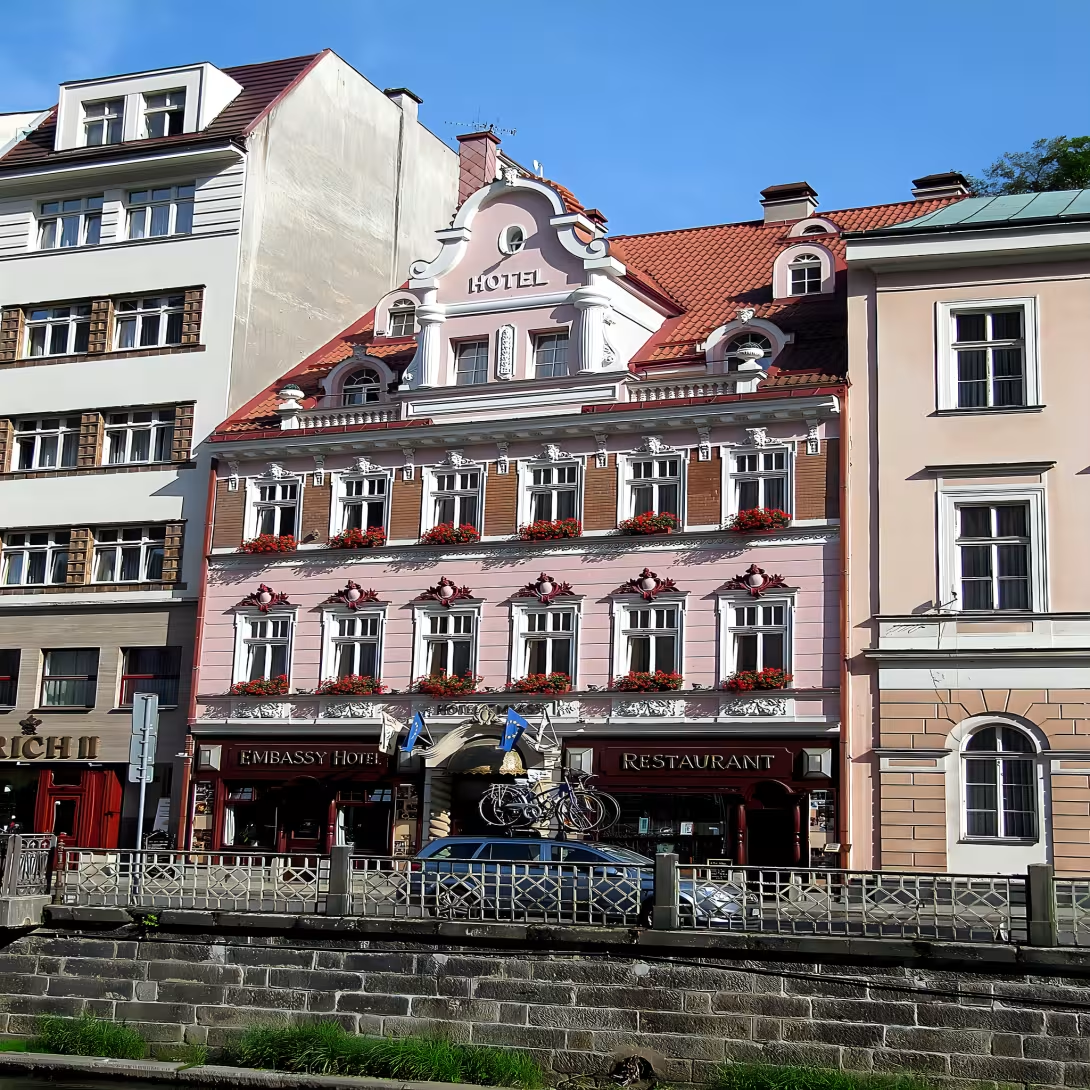
Dům Embassy, originally named Fürst Reuß-Greiz, is a historic building located at Nová louka 296/21 in Karlovy Vary’s spa district. This monument blends Classicism and Historicism elements and is a protected cultural site within the municipal monument zone.
Initially comprising two classicist houses, the property underwent significant modifications in the 1850s under Anton Pitroff's ownership. During this period, courtyard wings with a recessed arcaded walkway were added around the inner courtyard.
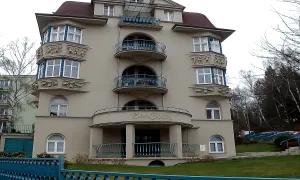
The building features a two-story row house design with a residential attic. Its facade is organized into six window axes and topped by an attic balustrade slightly narrower than the main front. The ground floor has a wide rectangular entrance with neo-Renaissance double wooden doors adorned with rosettes. First-floor windows are set in rectangular stucco frames with ears, straight cornices, and stucco cartouches featuring acanthus and festoons in the parapets. Second-floor windows have similar frames but include keystones with plastic mascarons. The crown cornice is detailed with dentils on acanthus consoles. A deep, roofed courtyard with arcades complements the structure. Modern updates to the roof include a large central dormer and smaller side dormers.
Anton Pitroff owned the property during its major 1850s modifications. As of July 2021, SJM Balkových owns it, operating it as a family hotel.
The building's current exterior primarily dates from the early 20th century when the facade was modified. A significant adaptation in 1936 followed plans by builder Paul Schauffuss, introducing interior salons with mythological themes and Heimatstil elements like the Dragon, Falcon, Hunting, and Dutch salons. Heinrich Kempf from Tuhnice crafted the stucco decorations. The ground floor houses Vinárna Embassy, one of Karlovy Vary’s oldest wine cellars, redesigned during the 1936 adaptation by architect Mewese to include thematic salons.
Dům Embassy is located between the Karlovy Vary Museum and Dům Rich, a representative of austere modernism. In 2014, it was included in the Regeneration Program of the Municipal Monument Zone of Karlovy Vary 2014–2024, with its condition listed as satisfactory. It has been an officially protected cultural monument since April 26, 1991.
This site exemplifies architectural layering and thematic interior design typical of the Karlovy Vary spa district. Its preservation of 1930s stylistic elements makes it a noteworthy destination for visitors interested in the city's urban history.
Historical milestones
- 1850
- Extensive modifications and addition of courtyard wings under owner Anton Pitroff.
- 1936
- Major adaptation by Paul Schauffuss and interior design of the wine cellar by architect Mewese.
- 1991
- The building was officially declared a cultural monument.
Architectural development
Originally consisting of two classicist houses, the building was expanded in the 1850s with courtyard wings and arcades. The front facade was updated in the early 20th century, and a major interior adaptation occurred in 1936. The roof was modified in modern times to include a large central dormer and smaller side dormers.
Historical events
1850s: Extensive construction modifications under Anton Pitroff. 1936: Major adaptation of the building and the wine cellar. 1991: Officially declared a cultural monument of the Czech Republic.
Owners
Anton Pitroff (1850s), SJM Balkových (as of 2021)
Points of interest
- The building originally named Fürst Reuß-Greiz is located in Karlovy Vary’s spa district and blends Classicism and Historicism elements. - Significant modifications were made to the property in the 1850s under Anton Pitroff's ownership, including adding courtyard wings with a recessed arcaded walkway. - In 1936, the building underwent major adaptations following plans by builder Paul Schauffuss, introducing interior salons with mythological themes and Heimatstil elements like the Dragon, Falcon, Hunting, and Dutch salons. - The ground floor houses Vinárna Embassy, one of Karlovy Vary’s ol
Guide
Show guide text
This text was created by artificial intelligence and has not been editorially reviewed. It may contain inaccuracies.
Welcome to the heart of the spa district in Karlovy Vary. As you stand here, take a moment to breathe in the atmosphere of this historic municipal monument zone. You are surrounded by architecture that has witnessed the rise of this world-famous spa town, and the building directly in front of you is a perfect example of that storied elegance. This is the Dům Embassy, a structure that carries with it a name and a history that have evolved significantly over the decades. While you know it today by this name, it was once known as Fürst Reuß-Greiz, a title that hints at the prestige and the high social standing associated with this location.
As you look at the building, try to sense the layers of time embedded in its walls. The structure we see today is not merely the result of a single moment in time, but rather a carefully composed piece of architectural history. To understand why it looks the way it does, we must travel back to the mid-19th century. It was during this era, specifically around 1850, that the property underwent a profound transformation. This period of extensive modification was driven by a man named Anton Pitroff. Under his ownership, the building began to shed its simpler origins and take on a more commanding presence. It was Pitroff who oversaw the addition of the courtyard wings, a move that would fundamentally change the layout and the character of the property, creating a sense of depth and enclosure that remains one of its most defining features.
Now, I invite you to direct your gaze toward the facade of the building. Notice the rhythm and the balance of the design. The facade is organized around six window axes, creating a sense of orderly repetition that is characteristic of the styles used here. As you observe the details, you will notice a fascinating blend of two distinct architectural movements: Classicism and Historicism. This combination is what gives the Dům Embassy its unique personality. From Classicism, the building draws a sense of harmony, proportion, and structured elegance. From Historicism, it gains a decorative richness, a nod to the grandeur of the past that was so popular during the height of the spa era.
If you look upward, toward the top of the structure, pay close attention to the decorative attic. It is crowned with a balustrade, a detail that adds a sophisticated finish to the silhouette of the building against the sky. This interplay of straight lines and decorative elements is a testament to the skill of the architects who shaped this site. While the foundations were laid and modified by figures like Heinrich Kempf and the influential Anton Pitroff, the building continued to evolve well into the modern era.
As we move forward in time, the building underwent another significant chapter in 1936. During this period, a major adaptation was carried out by the architect Paul Schauffuss. His work helped to refine the building for the needs of the 20th century, ensuring that it remained a functional and beautiful part of the Karlovy Vary landscape. It was also during this era of refinement that the interior saw specialized attention, particularly in the wine cellar. The architect Mewese was responsible for the design of this space, contributing to the overall craftsmanship and the high standard of the property's interior life.
One of the most intriguing aspects of the Dům Embassy, which you might not immediately see from your current standing position, is the layout of its inner sanctum. The building is notable for its deep, roofed courtyard. If you were to step inside, you would find yourself walking through arcades, those beautiful arched walkways that provide both shelter and a sense of classical grandeur. This courtyard, with its recessed arcaded walk, was a key part of the 1850s expansion, designed to offer a private, elegant retreat from the bustling streets of the spa district. It is this hidden geometry—the way the building opens up into itself—that marks it as a truly significant piece of urban design.
The importance of this site is not just a matter of architectural opinion; it is officially recognized. In 1991, the building was formally declared a cultural monument. This designation ensures that the legacy of Pitroff, Schauffuss, and the many hands that shaped this house will be preserved for future generations to admire. It stands as a permanent reminder of the era when Karlovy Vary was the center of European social life, a place where architecture was used to express status, beauty, and the timeless pursuit of wellness.
As you stand here, contemplating the six window axes and the decorative balustrade, remember that you are looking at more than just stone and mortar. You are looking at a living chronicle of Karlovy Vary itself—a story of transformation, from the grand modifications of the 1850s to the sophisticated adaptations of the 1930s.
Thank you for joining me for this brief moment in front of the Dům Embassy. There is so much more to discover in this district, from the hidden courtyards to the grand facades that line these streets. I encourage you to continue your walk, to keep looking up, and to keep exploring the many layers of history that wait around every corner here in Karlovy Vary. Enjoy the rest of your journey through this magnificent town.
Tips for visitors
The best time to visit Dům Embassy is during the late spring or early autumn months, when the weather is pleasant for exploring Karlovy Vary's charming streets without the crowds of summer tourists. This period offers a comfortable climate that enhances your experience as you stroll through the historic spa district and admire the architectural beauty of the area.
For transportation, Dům Embassy is easily accessible both by car and public transport. There are parking facilities available in the vicinity for those driving to Karlovy Vary. If opting for public transport, it's advisable to check current routes and schedules online prior to your visit, as this will ensure a smooth journey to the municipal monument zone where Dům Embassy is located.
When planning your visit, consider bringing comfortable walking shoes, especially if you intend to explore more of Karlovy Vary beyond Dům Embassy. The area around the spa district offers numerous attractions within walking distance. Additionally, carrying a camera or smartphone for photography will allow you to capture the unique blend of Classicism and Historicism that characterizes this historic building.
For photography enthusiasts, the best spots to capture Dům Embassy are from the street level during the golden hours of early morning or late afternoon when the light is soft and warm. This lighting accentuates the architectural details and creates a picturesque backdrop with the neighboring Karlovy Vary Museum and Dům Rich.
In terms of nearby attractions, consider visiting the Karlovy Vary Museum, which is within walking distance from Dům Embassy. It offers insights into the city's rich history and culture. Additionally, for families with children, exploring the spa district provides a delightful experience with its beautiful gardens and fountains, making it an ideal spot for leisurely family walks.
Businesses nearby
Do you run a restaurant, accommodation, shop, museum, rental, wellness or other visitor service near this monument? Show yourself directly to the people heading to it — this is how they will see you in the app and on the web:
Nearby
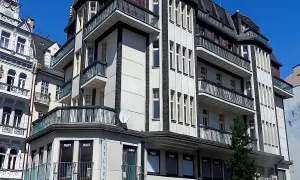
The building is situated in the Karlovy Vary municipal monument zone, neighboring the Karlovy Vary Museum and the modernist Dům Rich.
Accommodation nearby
Trips and activities nearby
Guided tours, tickets and activities nearby from GetYourGuide
Affiliate link: if you buy from the partner, we may receive a commission. The price for you does not change.
Search tours and activities →Themed route
Embassy House Type: Architectural Monument This modernist gem serves as the primary focal point of your visit, showcasing the distinctive architectural style of the era. Its unique design offers a compelling look at the historical evolution of residential structures in the region.
Karlovy Vary Museum Type: Cultural Institution Located in the immediate vicinity of the Embassy House, this museum provides essential context regarding the local history and cultural heritage. It is the perfect companion stop to deepen your understanding of the area’s past while remaining within the municipal monument zone.
Dům Rich Type: Modernist Building Standing right next to the Embassy House, this structure offers a striking architectural contrast and comparison. Visiting it allows you to appreciate the diversity of modernist interpretations within the same tight-knit neighborhood, highlighting the rich architectural dialogue of the period.
Municipal Monument Zone Type: Protected Area Walking through the broader zone surrounding these specific buildings allows you to experience the cohesive urban planning and protected status of the area. This final leg of the route ensures you fully absorb the atmospheric and historical significance of the immediate surroundings without venturing into unrelated locations.
Seasonal recommendations
Spring brings a gentle awakening to the historic district of Karlovy Vary, offering a serene backdrop for visiting the Embassy House. The natural surroundings begin to unfurl with fresh greenery, and the light takes on a soft, diffused quality that is particularly flattering for photography. This season is ideal for those who prefer a quieter atmosphere, as the initial rush of tourists has not yet arrived. Visitors should pack layers, as temperatures can fluctuate significantly between cool mornings and warmer afternoons. A comfortable pair of walking shoes is essential for navigating the cobbled streets. Arriving in the late morning often provides the best balance of pleasant weather and manageable crowd levels, allowing for a more intimate exploration of the building’s architectural details without the pressure of large groups.
Summer transforms the area into a vibrant hub of activity, characterized by long daylight hours and a lively social scene. The Embassy House stands out against a backdrop of fully bloomed gardens and bustling promenades. The atmosphere is energetic, with the sound of street musicians and the hum of conversation adding to the sensory experience. However, this peak season means that crowds are at their highest, particularly during the midday hours. To avoid the heat and the densest throngs of people, it is advisable to visit early in the morning or in the late evening when the light is golden and the streets are slightly less congested. Light, breathable clothing is recommended, along with a hat and sunglasses for sun protection. Hydration is key, so carrying a water bottle is a practical necessity for any extended walk around the historic center.
Autumn offers a visually stunning palette of colors as the surrounding trees turn shades of gold, orange, and red. The air becomes crisp and cool, creating a distinct change in atmosphere that feels both melancholic and invigorating. The light during this season is often sharper and more directional, casting long shadows that highlight the textures of the historic architecture. This is an excellent time for visitors who appreciate a more contemplative experience, as the summer crowds have thinned out considerably. Layers are crucial, as temperatures drop steadily throughout the day. A warm jacket and sturdy footwear are advisable to handle the potentially damp and chilly conditions. Visiting in the afternoon can be particularly rewarding, as the lower sun angle enhances the visual appeal of the exterior and the interior spaces feel cozier against the cooling weather outside.
Winter presents a stark and elegant contrast, with the possibility of snow dusting the historic rooftops and streets. The atmosphere is quiet and reflective, often accompanied by the subtle glow of early evening streetlights. While the days are short, the cool air provides a refreshing clarity that makes the architectural details of the Embassy House stand out with crisp precision. Visitors must prepare for cold temperatures by wearing heavy winter coats, scarves, gloves, and warm boots. It is important to note that opening hours may be reduced during the colder months, so checking specific schedules in advance is prudent. The best time to visit is usually mid-morning, when the sun is highest and the light is brightest, helping to combat the gloominess that can sometimes accompany the season. The lack of large crowds allows for a peaceful and unobstructed view of the landmark, making it a perfect time for solitary reflection or small-group visits.
Visualizations and artistic views


The visualisations are generated by artificial intelligence and serve as inspiration.
Photos from the area
Real photos taken near the monument


Zdroj a licence jsou uvedeny u každého snímku.
Tips from visitors
No tips yet. Be the first!
Log in and add your tip.
Sources and literature
Fotografie: Palickap / CC BY-SA 3.0, rozlišení zvýšeno umělou inteligencí — Wikimedia Commons. The author and licence also appear when you hover over the image.
Faktickým podkladem tohoto textu byl článek na Wikipedii, jehož autory jsou přispěvatelé Wikipedie. Článek je dostupný pod licencí CC BY-SA 4.0.
Location on the map
More monuments – Karlovy Vary
Show all in the municipality
Příběhy a pověsti
Legendy, pověsti a příběhy spjaté s touto památkou
Fotografie návštěvníků
Zatím žádné fotografie. Buďte první, kdo přidá fotografii z návštěvy!
Přihlaste se a přidejte svou fotografii nebo hodnoťte.
Za ověřenou návštěvu v aplikaci získáte víc bodů — poznáme podle GPS, že jste na místě.
Reviews and comments