






Dům Gustava Mahlera Museum building
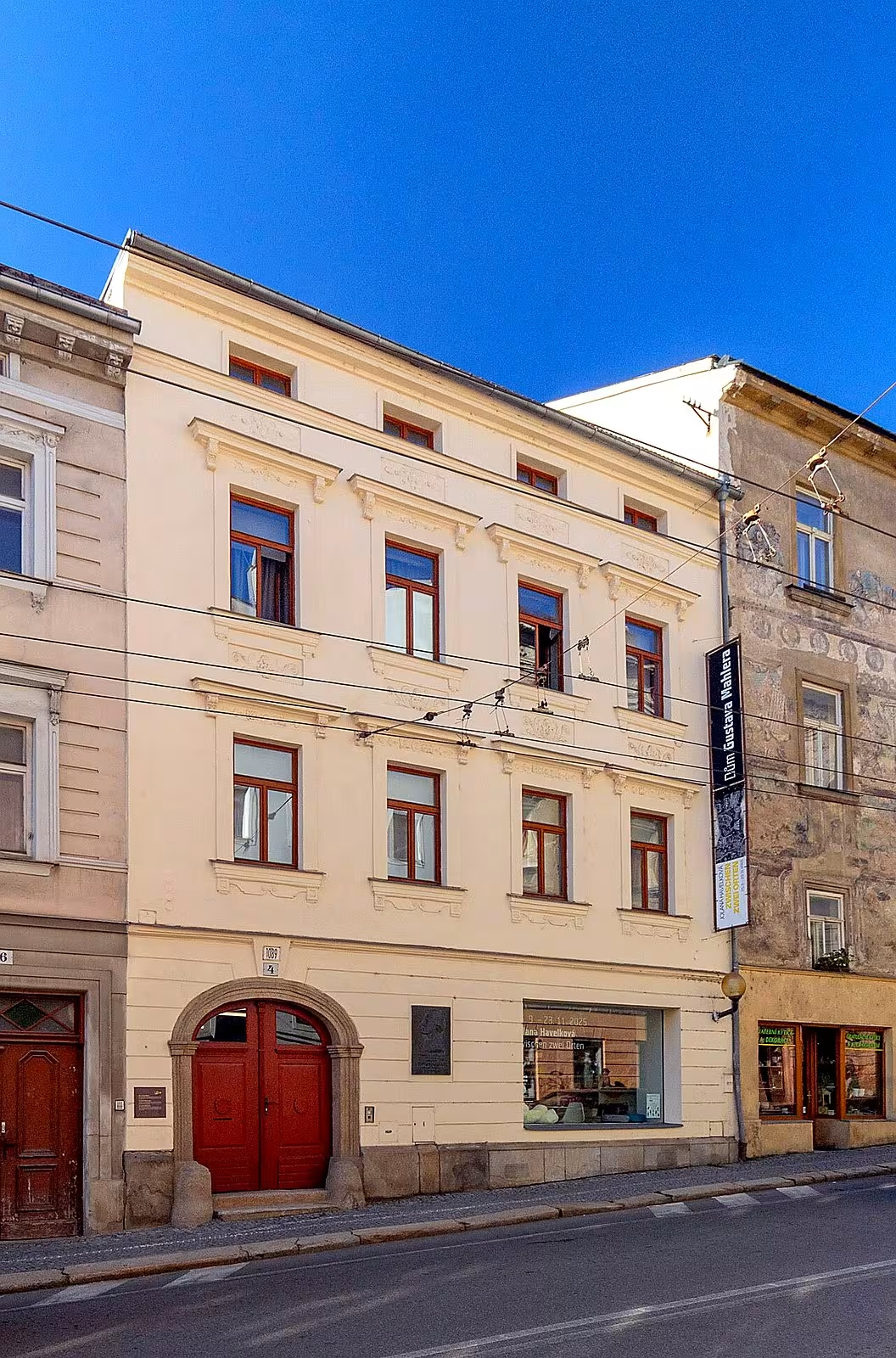
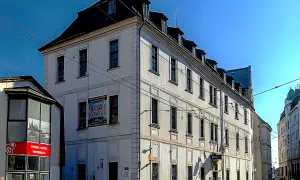
Dům Gustava Mahlera, located at Znojemská ulice č. 4 in Jihlava, serves as a museum dedicated to the life and works of composer and conductor Gustav Mahler. Originally constructed in the 16th century, it underwent significant neoclassical renovations in the 19th century, which added a second floor and a new façade. The house is historically important as Mahler's childhood home from 1860 until 1875. After Jihlava acquired the building in the early 1990s, extensive restoration transformed it into a cultural monument with exhibitions exploring Mahler's life, his ties to Jihlava, and broader Czech, Jewish, and German cultural themes.
The origins of Dům Gustava Mahlera date back to the 16th century. In the 19th century, it underwent significant neoclassical renovations that included adding a second floor and a new façade. This era was marked by profound social and political changes across Europe, such as rising nationalism, industrialization, and the flourishing of Romanticism in music—a movement that greatly influenced composers like Gustav Mahler.
Architecturally, Dům Gustava Mahlera is notable for its neoclassical style resulting from 19th-century renovations. These changes added structural elements like an additional floor and a redesigned façade, reflecting architectural trends of the time. The building has been restored multiple times to preserve its historical integrity, with significant work carried out between 1993 and 2000.
Ownership of Dům Gustava Mahlera changed hands several times throughout history. Initially owned by Bernard Mahler, it was sold in 1889 after Gustav Mahler's parents passed away. Following World War II, the house was confiscated as German property, became state-owned, and was managed by Moravské kovárny from 1953 to 1993. Since the early 1990s, Jihlava has owned and restored it.
Several key events have marked the history of Dům Gustava Mahlera. In 1872, Bernard Mahler expanded his business by acquiring a neighboring house (now Znojemská 6) for a tavern with a billiards room. A significant moment in its commemorative history occurred in 1960 when a plaque was unveiled on the façade to mark the centenary of Gustav Mahler's birth.
Today, Dům Gustava Mahlera is not only a museum but also a cultural hub offering insights into Gustav Mahler's life and legacy. The exhibitions are divided across several floors, each focusing on different aspects of his life and broader historical themes. Visitors can explore interactive exhibits such as a music station in the 'World of Children' section or view works by They Weltner, a local artist who contributed to the museum at her request.
Dům Gustava Mahlera stands as a testament to both its architectural evolution and cultural significance. It offers a unique glimpse into the life of one of classical music's most influential figures while reflecting broader historical narratives. This monument is worth visiting for anyone interested in history, architecture, or the enduring legacy of Gustav Mahler.
Then and now
Drag the slider to compare how the landmark may have looked when it was built with the view today.
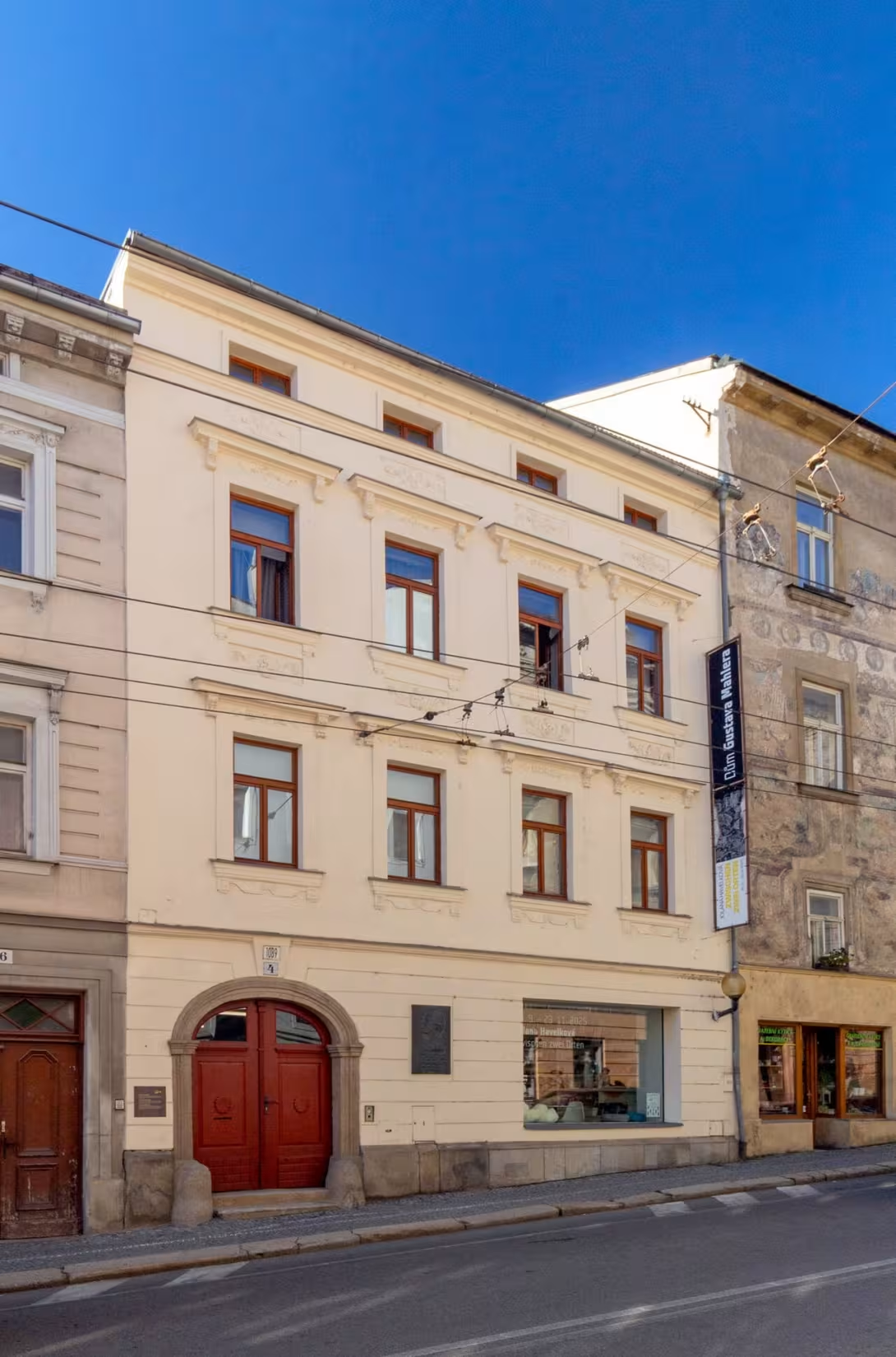
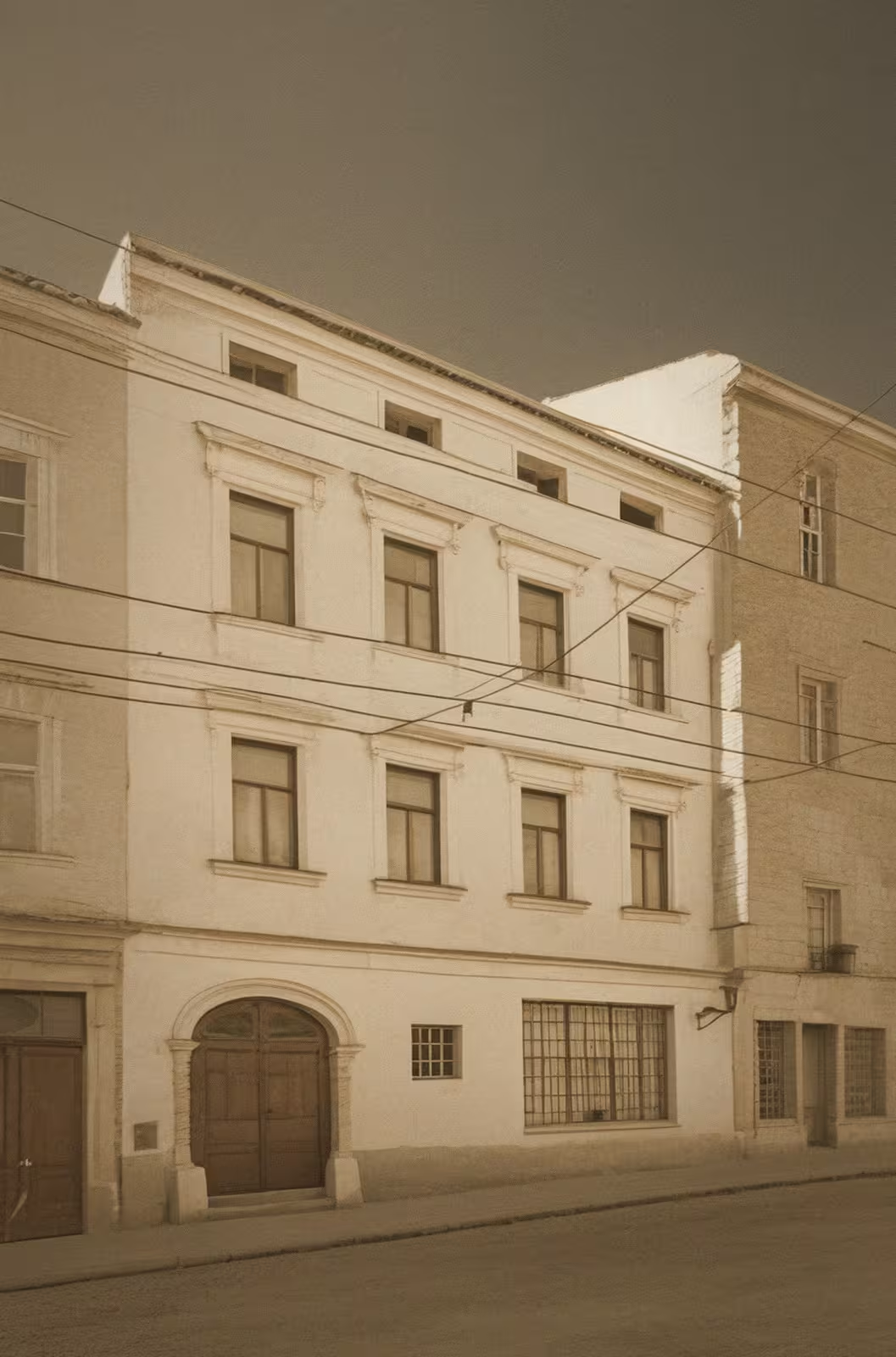
The historical appearance on the left is an AI-generated visualisation and serves as inspiration only.
Historical milestones
- 16. století
- The original construction of the Gustav Mahler House.
- 19. století
- A neoclassical renovation with the addition of a second floor and a new façade design.
- 1860
- Gustav Mahler settled in the house as a child.
- 1875
- Mahler left Jihlava to move to Vienna.
- 1889
- The house was sold after the death of Mahler's parents.
- 1960
- An unveiling ceremony for a plaque commemorating Gustav Mahler's 100th birthday.
Architectural development
Dům Gustava Mahlera was first mentioned in the 16th century. In the 19th century, it underwent a neoclassical renovation that added a second floor and new façade. The house has been restored multiple times, most notably between 1993 and 2000, to preserve its historical integrity.
Historical events
In 1872, Bernard Mahler expanded his business by acquiring a neighboring house (now Znojemská 6) for a tavern with a billiards room. In 1960, a commemorative plaque was unveiled on the facade to mark the centenary of Gustav Mahler's birth.
The building underwent comprehensive reconstruction from 1993 to 2000 and has been managed by various entities since then, including Městská knihovna until 2008.
Owners
The house was originally owned by Bernard Mahler. After Gustav Mahler's parents sold the property in 1889, it changed hands several times until being confiscated as German property after World War II. It then became state-owned before being managed by Moravské kovárny from 1953 to 1993. Since the early 1990s, the city of Jihlava has owned and restored the building.
Points of interest
- Despite its association with Gustav Mahler, the house underwent significant neoclassical renovations in the 19th century long after he left Jihlava, reflecting broader architectural trends rather than his personal influence.
- The building's ownership history is marked by political upheaval; it was confiscated as German property following World War II and later managed by Moravské kovárny from 1953 to 1993 before being restored by the city of Jihlava.
- In 1872, Bernard Mahler expanded his business presence in Jihlava by acquiring a neighboring house for use as a tavern with a billiards room, indicating an entrepreneurial spirit that predated Gustav's musical fame.
- The unveiling of a commemorative plaque on the façade in 1960 to mark the centenary of Mahler's birth highlights how his legacy was celebrated and preserved even decades after his death.
- Local artist They Weltner contributed works to the museum at her request, illustrating the collaborative effort between local artists and cultural institutions to enrich the museum's offerings.
Guide
This guide is narrated by a synthetic voice generated by artificial intelligence.
Show guide text
This text was created by artificial intelligence and has not been editorially reviewed. It may contain inaccuracies.
Welcome to the historic site of Dům Gustava Mahlera, a cherished gem nestled in Jihlava at Znojemská ulice č. 4. As you stand here, take a moment to absorb the atmosphere of this place that holds stories from centuries past. This building is not just an architectural marvel but also a museum dedicated to the life and works of Gustav Mahler, one of the most renowned composers and conductors in history.
Let's delve into its origins and historical context. The house was originally constructed in the 16th century, serving as a testament to the architectural styles of that era. However, it underwent significant transformations during the 19th century when neoclassical renovations brought about a new façade and an additional floor. These changes reflect broader architectural trends rather than any personal influence from Mahler himself.
As you look around, take note of the elegant neoclassical elements that adorn the building's exterior. The symmetry and grandeur are evident in its design, inviting you to appreciate the careful craftsmanship of a bygone era. While inside, the museum pays homage to Gustav Mahler’s childhood years spent here from 1860 until 1875.
Mahler's connection to this house is deeply personal yet historically significant. Born into a world that would later celebrate his musical genius, he lived in Jihlava during his formative years before moving to Vienna in 1875. This period was crucial for shaping the young composer who would go on to leave an indelible mark on classical music.
Interestingly, despite its association with Mahler, the house's architectural evolution continued long after he left Jihlava. The neoclassical renovations were part of a larger trend rather than being directly inspired by him. This fact adds a layer of intrigue to your visit, as you explore how history and architecture intertwine.
The building’s ownership history is also marked by political upheaval, adding another dimension to its story. After Mahler's departure, the house changed hands several times, reflecting the tumultuous socio-political landscape of the time. In 1889, following the death of his parents, the home was sold, marking a new chapter in its existence.
A significant moment in this building’s history came in 1960 when it was commemorated with a plaque celebrating Gustav Mahler's centennial birth anniversary. This act of remembrance underscores the lasting impact of Mahler’s legacy and the cultural importance of preserving his childhood home as a museum.
As you continue your exploration, I invite you to immerse yourself in the rich tapestry of history that this place embodies. From its architectural elegance to the personal stories it harbors, Dům Gustava Mahlera offers a unique glimpse into both the past and the enduring legacy of one of music’s greatest figures.
Thank you for joining me on this journey through time at Dům Gustava Mahlera. I hope your visit has been enlightening and inspiring, encouraging you to delve deeper into the fascinating world of history and music. Safe travels as you continue your exploration of Jihlava and beyond!
Frequently asked questions
Can the monument be visited?
Some buildings of this kind are open for guided tours, others serve another purpose or are privately owned. We have not verified whether and when this monument is open – please ask the operator.
What are the opening hours and admission?
We have not verified the opening hours or admission. Current information is published by the operator. Official website: http://www.mahler.cz/
Where is the monument?
Location: Jihlava, Kraj Vysočina. The map on this page shows the exact spot.
Why is the monument protected?
It is listed in the Central List of Cultural Monuments of the Czech Republic as a cultural monument (register no. 1000125350).
Businesses nearby
Do you run a restaurant, accommodation, shop, museum, rental, wellness or other visitor service near this monument? Show yourself directly to the people heading to it — this is how they will see you in the app and on the web:
Nearby
Dům Gustava Mahlera is situated in Jihlava, surrounded by historical architecture and cultural sites. The city itself offers a rich tapestry of medieval streets and modern amenities.
Accommodation nearby
Trips and activities nearby
Guided tours, tickets and activities nearby from GetYourGuide
Affiliate link: if you buy from the partner, we may receive a commission. The price for you does not change.
Search tours and activities →Themed route
Thematic Walking Tour of Jihlava Featuring the House of Gustav Mahler
1. Dům Gustava Mahlera (Gustav Mahler's House) - Historical Site Begin your journey at this iconic historical site, where the renowned composer Gustav Mahler spent his formative years from 1860 to 1875. The house has been transformed into a museum that offers visitors an intimate glimpse into Mahler’s early life and influences through carefully curated exhibits. This cultural gem is central to understanding Jihlava's rich musical heritage.
2. Staroměstské náměstí (Old Town Square) - Urban Cultural Hub A short walk from the House of Gustav Mahler, this vibrant square lies at the heart of Jihlava’s medieval core. The area is surrounded by historical architecture that reflects centuries of urban development and cultural evolution. Visitors can enjoy a leisurely stroll while appreciating the blend of traditional and modern elements that characterize the city's streetscape.
3. Špilberk (Schlossberg) - Historical Fortress Located just outside Jihlava, Špilberk is an imposing fortress with a rich history dating back to medieval times. Although slightly further from the main urban center, it offers panoramic views of the city and surrounding landscapes. The fortress provides insight into the region’s strategic importance over the centuries and serves as a testament to its historical resilience.
4. Jihlavské divadlo (Jihlava Theatre) - Cultural Venue Return to the heart of Jihlava to visit this renowned cultural venue, known for its vibrant performances and significant contribution to the city’s artistic scene. The theatre hosts a variety of events ranging from classical concerts to contemporary plays, making it an essential stop for those interested in experiencing local culture and arts.
5. Kostel svatého Jakuba (St. James's Church) - Architectural Marvel Conclude your tour at this stunning example of Gothic architecture, located near the Old Town Square. The church is notable not only for its architectural beauty but also for its historical significance and role in the community over the centuries. Visitors can admire intricate details and learn about its place within Jihlava's religious and cultural history.
This thematic walking tour offers a comprehensive exploration of Jihlava’s rich cultural tapestry, from historical sites to vibrant urban spaces, all centered around the legacy of Gustav Mahler.
Seasonal recommendations
Spring: Visiting the Gustav Mahler House during spring offers a refreshing experience as nature awakens around this historic site. The blooming flowers and budding trees create a picturesque setting, enhancing the serene atmosphere of Jihlava. With longer daylight hours, the museum's interior is bathed in natural light, making it an ideal time to explore its exhibits. Visitors can enjoy pleasant weather without the crowds typical of peak tourist seasons. It's advisable to wear layers as temperatures can vary throughout the day.
Summer: Summer at the Gustav Mahler House provides vibrant energy with longer days and warm evenings perfect for evening strolls in Jihlava. The lush greenery surrounding the museum adds a lively backdrop, though it’s wise to visit early in the morning or late afternoon to avoid larger crowds that gather during peak hours. Comfortable shoes are recommended due to increased foot traffic, and light clothing is ideal for staying cool under the sun.
Autumn: Autumn brings a unique charm to the Gustav Mahler House with its warm hues of reds, oranges, and yellows enveloping Jihlava. The cooler temperatures make it comfortable for walking tours around the area, while the changing leaves offer a stunning visual feast. This season is less crowded compared to summer, allowing for a more relaxed visit. Layered clothing is recommended to adapt to fluctuating weather conditions throughout the day.
Winter: Winter transforms the Gustav Mahler House into a serene and magical setting with its snow-covered surroundings adding a touch of enchantment to Jihlava. The museum's interior provides warmth and comfort, making it an inviting escape from the cold outside. Arriving early can help avoid any potential queues, as fewer tourists visit during the colder months.
Visualizations and artistic views


The visualisations are generated by artificial intelligence and serve as inspiration.
Photos from the area
Real photos taken near the monument


Zdroj a licence jsou uvedeny u každého snímku.
Tips from visitors
No tips yet. Be the first!
Log in and add your tip.
Sources and literature
Photos: VitVit / CC BY-SA 4.0 — Wikimedia Commons. The author and licence also appear when you hover over the image.
Faktickým podkladem tohoto textu byl článek na Wikipedii, jehož autory jsou přispěvatelé Wikipedie. Článek je dostupný pod licencí CC BY-SA 4.0.
Location on the map


Příběhy a pověsti
Legendy, pověsti a příběhy spjaté s touto památkou
Fotografie návštěvníků
Zatím žádné fotografie. Buďte první, kdo přidá fotografii z návštěvy!
Log in a přidejte svou fotografii nebo hodnoťte.
Za ověřenou návštěvu v aplikaci získáte víc bodů — poznáme podle GPS, že jste na místě.
Reviews and comments