






Královský vršek Kopec
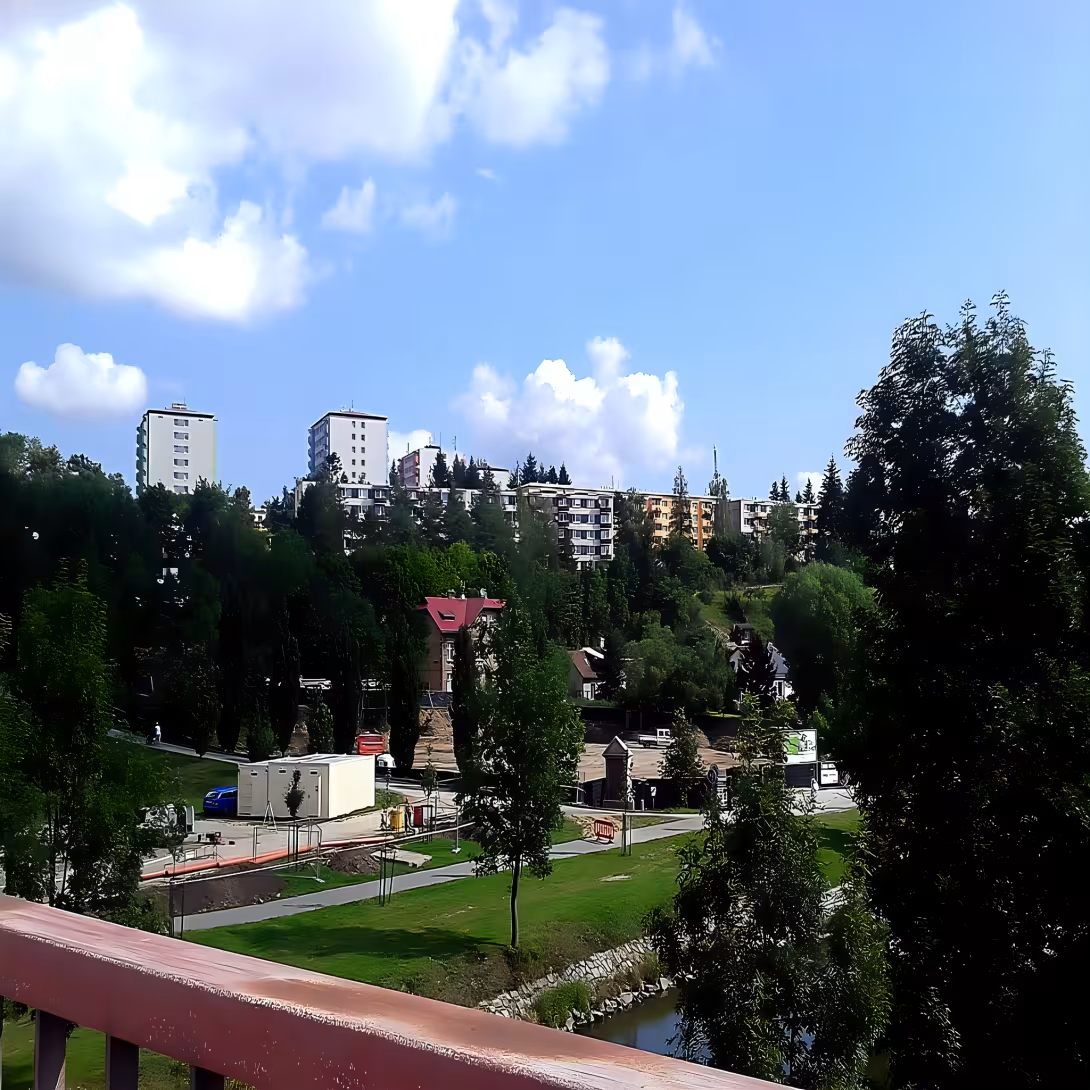
Královský vršek is one of the basic residential units of the Statutory City of Jihlava in Vysočina Region. This housing estate of 56 hectares occupies an important location in the northern part of the city, exactly between the traditional Bedřichov and the historical centre. Geographically, it is defined by the filmmakers of the neighboring part: Bedřichov, Hrušková Dvory, Calvary and Old Mountain. The west side is Sokolovská Street, the southern border is determined by the street of the same name as the settlement, and in the east it is lined by railway line No 225, which crosses Sokolovská Street at the Main Station.
The development of settlements shows a gradual reduction in the number of residents. In the 1991 census there lived 4358 inhabitants, a decade later it was 4026 people and in 2011 it decreased to 3405 inhabitants. These figures map a longer-term trend in the housing structure of Jihlava.
From the point of view of services and equipment, Královský vršek maintains the function of a common residential estate with an important infrastructure. You will find here the primary school Kollarov and the mother school Mosaic. Education is also supported by one of the buildings of the Business Academy Jihlava on Havlickov Street. Cultural needs are served by a branch of the City Library Jihlava. Sports activities are provided by the tennis hall, Sokol Bedřichov playground and the bowling alley Jitřenka. There is also a traditional garden settlement at the railway line. Regular shopping can be arranged at Albert supermarket, in case of a restaurant you can sit in the restaurant U Suchánky.
The most valuable monument of the Royal Hill is the Monument of the Royal Oath, which was created in 1565. It was built by representatives of the city as a permanent reminder of the solemn promise taken here by the archduke and the Czech Kralj Ferdinand I. Habsburg on 30 January 1527. This historic oath was originally held on the former Imperial meadow at the Long Bridge, which was located on the Czech-Moravian border. The monument thus reminds of the key moment in Central European political history when Habsburg committed to promises of Czech states.
Královský vršek thus shows itself as a settlement that links ordinary urban life to memory sites. It is a functional residential area of Jihlava with a rich offer of educational, cultural and sports equipment. At the same time, however, it keeps a reminder of an important historical moment that has influenced the development of Central Europe, thereby offering interested people a valuable cohesion of everyday life with a deeper historical dimension.
Historical milestones
- 1527
- The solemn oath of Archduke Ferdinand I. Habsburg Czech states on the Imperial meadow near the Long Bridge.
- 1565
- The status of the Royal Oath Memorial as a permanent reminder of a historic event.
- Around the 16th century
- Commencing settlement of the Royal Hill area as part of Jihlava.
- 18th Century
- The development of the Royal Hill as a residential area with infrastructure expansion.
- 1991
- The census recorded 4358 inhabitants of the Royal Hill.
Architectural development
The monument was built in Renaissance style as a simple stone building with a sign resembling an oath. During the 19th century it was probably supplemented by other elements, but the original form from 1565 remained. The materials are typical of Renaissance architecture - stone blocks and simple construction without significant decoration.
Historical events
- 1527
- The solemn oath of Ferdinand I. Habsburg as the Czech king in the Imperial meadow at the Long Bridge, which strengthened the connection of the Czech Kingdom to the Habsburg dynasty.
- 1565
- Construction of the royal oath monument by city officials Jihlava as a reminder of the historical event of 1527.
Points of interest
- The monument of the royal oath was built in 1565 as a permanent reminder of the solemn promise of the archduke and the Czech king Ferdinand I of Habsburg of 1527.
- The original oath took place on the Imperial meadow at the Long Bridge, which was located on the Czech-Moravian border.
- The memorial commemorates the key political moment when the Habsburgs committed to promises of Czech states.
Guide
This guide is narrated by a synthetic voice generated by artificial intelligence.
Show guide text
This text was created by artificial intelligence and has not been editorially reviewed. It may contain inaccuracies.
Welcome to the Royal Hill, in the northern part of Jihlava, where you are today walking through a quiet residential area, which, however, hides deep historical roots. Dive into the atmosphere of this place where the everyday life of the local people intermingles with the memory of events that affected the fate of the whole Czech state. Before you there is a space that is not just an ordinary settlement, but a place where important decisions were born and treaties between rulers and states have been sealed. Although it may appear at first sight that you are in the ordinary city district, know that it is here, on this territory, that there is an important historical monument that reminds you of one of the most important moments in the history of the Habsburgs in Bohemia.
Let's move on to the core of the story that defines this place. You are standing before the Monument of the royal oath, which was made in 1565. This monument is not randomly located, but it serves as a permanent reminder of a festive event that took place exactly 38 years ago, in 1527. Then, on January 30, on the Imperial meadow near the Long Bridge, which was located on the border of Bohemia and Moravia, the Austrian Archduke and Czech King Ferdinand I. Habsburg took the solemn oath to Czech states. It was a moment when the king made a public commitment to respect the rights and freedoms that were granted to him, and thus gained the trust of the nobles and townspeople in a period when the situation in the country was tense and unclear. The city leaders of Jihlava, who witnessed this important event or who were aware of its importance for the future of the city and the region, decided that this monument must remain alive in memory. That's why they built this monument so no one would forget the word given by the king.
Now pay attention to the memorial itself. Although architects who participated in its creation are not named in historical records, their work speaks for itself. Look at the facade and feel the atmosphere radiating from it. This is not a monumental building with high towers or complex sculptures, but a modest but dignified reminder. This is exactly what it was meant to be to match the spirit of that time and the significance of the event it resembles. The memorial stands as a silent witness to history whose stone blocks bear traces of time. Notice how its shape is placed in the Royal Hill landscape as if it were an integral part of it. This simplicity is his strength. It leaves room for your imagination and thought about what happened here before. Imagine how in 1565 this monument had to act on the visitors at the time as a new and exciting reminder of the recent past. Today, it is a place of calm and reflection where you can appreciate the patience and vigour of those townspeople who wished that this event would not be destroyed in a flood of other historical events.
Key stories and personalities associated with this place are closely linked to Ferdinand I. He was a ruler who had to face many challenges and who realised that his legitimacy depended on supporting Czech states. His oath to the Imperial meadow was not only a formal act, but a political move to ensure stability and peace in the country. Although the specific names of the persons behind the memorial are unknown, we can imagine that they were a group of influential Southern townspeople and representatives who were close to the events on the Long Bridge. Their decision to build a monument in 1565 shows their sense of history and the identity of the city. Jihlava, lying at the crossroads and on the border of two countries, has always played an important role, and this monument is another proof of its importance.
The interesting thing that may interest you is that the original oath took place on the Imperial meadow near the Long Bridge. This bridge was an important element of the landscape and symbolized the connection between Bohemia and Moravia. The border between these two countries was not just a line on the map, but a real barrier that had to be overcome. The King's oath at this place was therefore also symbolic because it took place on the border where various interests and cultures clashed. The long bridge is no longer in its original place in the form known to people in the 16th century, but the monument on the Royal Hill retains its memory. It's a sort of bridge between times that connects our presence to the past. This connection is important because it reminds us of how much the city's face changes, but how the values that are important to it remain unchanged.
Královský vršek developed gradually. The settlement of this area began in the 16th century when it became part of Jihlava. This part of the city was developed during the 18th century, which became a full-scale residential area with expanding infrastructure. People were building houses here, starting families, and creating a community that was gradually growing. In 1991, the census recorded a population of 4358, indicating the dynamic development of this neighborhood. Even though you're moving today between modern buildings and green areas, remember, underneath it lies a layer of history that shapes the identity of this place. Every step you take here is a step in the footsteps of the people who have lived and worked here for centuries.
At the tour, stop and listen to the silence. You can hear the wind in the trees, the voices of birds, perhaps the distant sound of traffic. It all forms the present symphony of the Royal Hill. But under this symphony, there is a silent tune of history. The monument to the royal oath is her proud representative. Let it remind you how important continuity is and how much one event can project into the future. Ferdinand's oath affected the political scene, but also the soul of the city. And the monument that stands before you is its physical manifestation.
In conclusion, I invite you to enjoy this place fully. Take a look around, find a view to reach you. Maybe you'll stop at the memorial and think about what it means to give the word and hold it. You might imagine what Jihlava looked like 500 years ago, what colors were there, what sounds were carried through the air. Královský vršek offers you space for such thought. It's a place where history and the present meet in harmony. I hope that this walk has brought you new insights and that you will bring with you a feeling
Frequently asked questions
Is Královský vršek open to the public?
Yes, Královský vršek is open to the public. The tour is possible throughout the year, except for exceptional events or maintenance.
How do I get to the place by car / public transport?
Královský vršek is available by bus No. 5 from public transport station Jihlava center. The car can be reached by road III / 03342, which runs from the center of Jihlava.
How much is the entrance fee and is it paid on the spot?
It's paid right inside the monument.
Is the tour suitable for children and seniors?
Yes, a tour of the Royal Hill is suitable for families with children as well as for seniors. The tour can be adapted according to the age and ability of visitors.
How long does the tour take?
The tour of the Royal Hill takes approximately 30-45 minutes, depending on the speed and reasoning of the visitors.
What are the opening times and booking is required?
Královský vršek is open to the public all year round from 9: 00 to 5: 00. Reservation is not required, but for groups of over 10 persons, prior contact with the organizer is recommended.
What's interesting in the immediate vicinity?
In the immediate vicinity of the Royal Hill there is a nature reserve of the Bedřichov side, which offers nice walks and views of the town of Jihlava. The local museum or gallery can also be visited.
For kids
Imagine going back to the past, when Královský vršek was the highest point in the center of Jihlava. That was a time of life, color and comfort. The city was a theno city castle where there were people who lived for a living in agriculture, trade and craft.
Who lived here? They were people who tried to live in harmony with nature. There lived cottages, merchants, craftsmen and even priests. The city was theno at the center of the region where markets and markets took place.
Businesses nearby
Do you run a restaurant, accommodation, shop, museum, rental, wellness or other visitor service near this monument? Show yourself directly to the people heading to it — this is how they will see you in the app and on the web:
Nearby
Ambient landscape, other monuments, natural elements up to 5 km.
Accommodation nearby
Trips and activities nearby
Guided tours, tickets and activities nearby from GetYourGuide
Affiliate link: if you buy from the partner, we may receive a commission. The price for you does not change.
Search tours and activities →Themed route
Thematic cruise route: Královský vršek and school architecture Jihlava
1.Královský vršek (memorial) * Memorial * - A dominant place overlooking the city, associated with historical events. Ideal for short rest and shooting of Jihlava panorama.
2. primary school Kollarov * School building * - It lies east of the monument and represents an example of modern school architecture. Suitable for visiting if interested in the educational history of the region.
3. Business Academy Jihlava (former Integrated High School Business) * School building * - South West of the monument stands a building with a rich history associated with the teaching of business disciplines. Interesting for 20th century school architecture lovers.
4. Mosaic School * School building * - Another school building nearby, designed for the smallest pupils. It shows how school spaces are transformed for different age groups.
5. Garden settlement at the railway track * Garden colony * - Located near school buildings and offers a quiet environment with family houses and gardens. Suitable for walking and relaxing in green.
Seasonal recommendations
Spring Královský vršek in the spring months offers a unique atmosphere of transformation - from pale, moist days in March to blooming meadows in May, when the surroundings turn into green carpet with a hint of jasmine and wild flowers. The morning and late afternoon illuminates the memory of the soft sun, which creates long shadows and gives the monument a monumental weight. At this time, the visit is quiet, as tourists have not yet started coming in such numbers as in summer; But nature is alive - you hear the singing of birds and the rustling of leaves. It is recommended to wear layered clothes because the weather can be variable: from sunny moments to sudden rain. The best time to visit is early in the morning when the air is fresh and the monument is not yet crowded. Avoid weekends when families often come here with children on trips.
Summer In summer months, Královský vršek becomes one of the most visited places in Jihlava, especially in June and July, when the sun stands high and the monument is lit with a sharp, almost white shining light. The surrounding area is dry, the grass is brown, and the air smells of warm soil; In the vicinity of the monument, visitors are often gathered to relax on benches or take pictures. In the main summer season it is advisable to come early in the morning to avoid the crowds that are beginning to form from 9: 00. It is recommended light but protective clothing - a sun hat and sunglasses because the afternoon can be very hot. Water is available only limited, so take the bottle with you.
Autumn Autumn on the Royal Hill is a period of contrast: from golden leaves in September to bare branches and grey air in November, when the monument appears to be a shadow silhouette against a foggy sky. The morning dew and the late afternoon with soft, scattered light create dramatic effects, especially in October, when the leaves turn orange and red. The atmosphere is calm, almost meditative, because most tourists have already left and the locals are taking advantage of the opportunity to walk. It is recommended to warm but not too heavy clothing - autumn weather can be cold and windy, especially in higher positions. The best time to visit is in the afternoon when the sun boils down and the monument gets a mysterious touch.
Winter Winter Královský vršek is a place where the monument turns into a white statue against the snow coat landscape. Snow dampens sounds, so there is a quiet, almost sacred atmosphere, complemented by ice shine on trees and ice crusts on the monument. Freezing air and short days mean that the monument is illuminated only briefly - the most beautiful moments come at sunset when the snow field shines into pink and purple. In winter, warm, waterproof clothes, gloves and tight shoes are suitable because the roads can be slippery. The opening hours of the monument are limited, often only in the afternoon, so please inform yourself in advance. The best time to visit is in the afternoon, when the light is the softest and the crowds almost none.
Visualizations and artistic views


The visualisations are generated by artificial intelligence and serve as inspiration.
Photos from the area
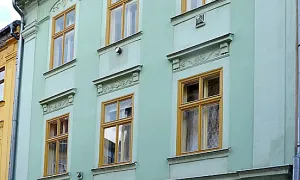
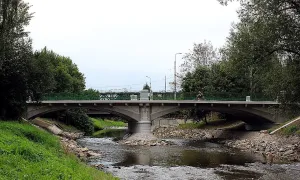
Real photos taken near the monument

Zdroj a licence jsou uvedeny u každého snímku.
Atmosphere of the place
This atmospheric visualisation of the place and period was generated by artificial intelligence. It is not real footage of the location.
Tips from visitors
No tips yet. Be the first!
Log in and add your tip.
Sources and literature
Fotografie: Jana Lánová / CC BY-SA 4.0, rozlišení zvýšeno umělou inteligencí — Wikimedia Commons. The author and licence also appear when you hover over the image.
Faktickým podkladem tohoto textu byl článek na Wikipedii, jehož autory jsou přispěvatelé Wikipedie. Článek je dostupný pod licencí CC BY-SA 4.0.
Location on the map

Příběhy a pověsti
Legendy, pověsti a příběhy spjaté s touto památkou
Fotografie návštěvníků
Zatím žádné fotografie. Buďte první, kdo přidá fotografii z návštěvy!
Přihlaste se a přidejte svou fotografii nebo hodnoťte.
Za ověřenou návštěvu v aplikaci získáte víc bodů — poznáme podle GPS, že jste na místě.
Reviews and comments