






dům Petr Veliký Other
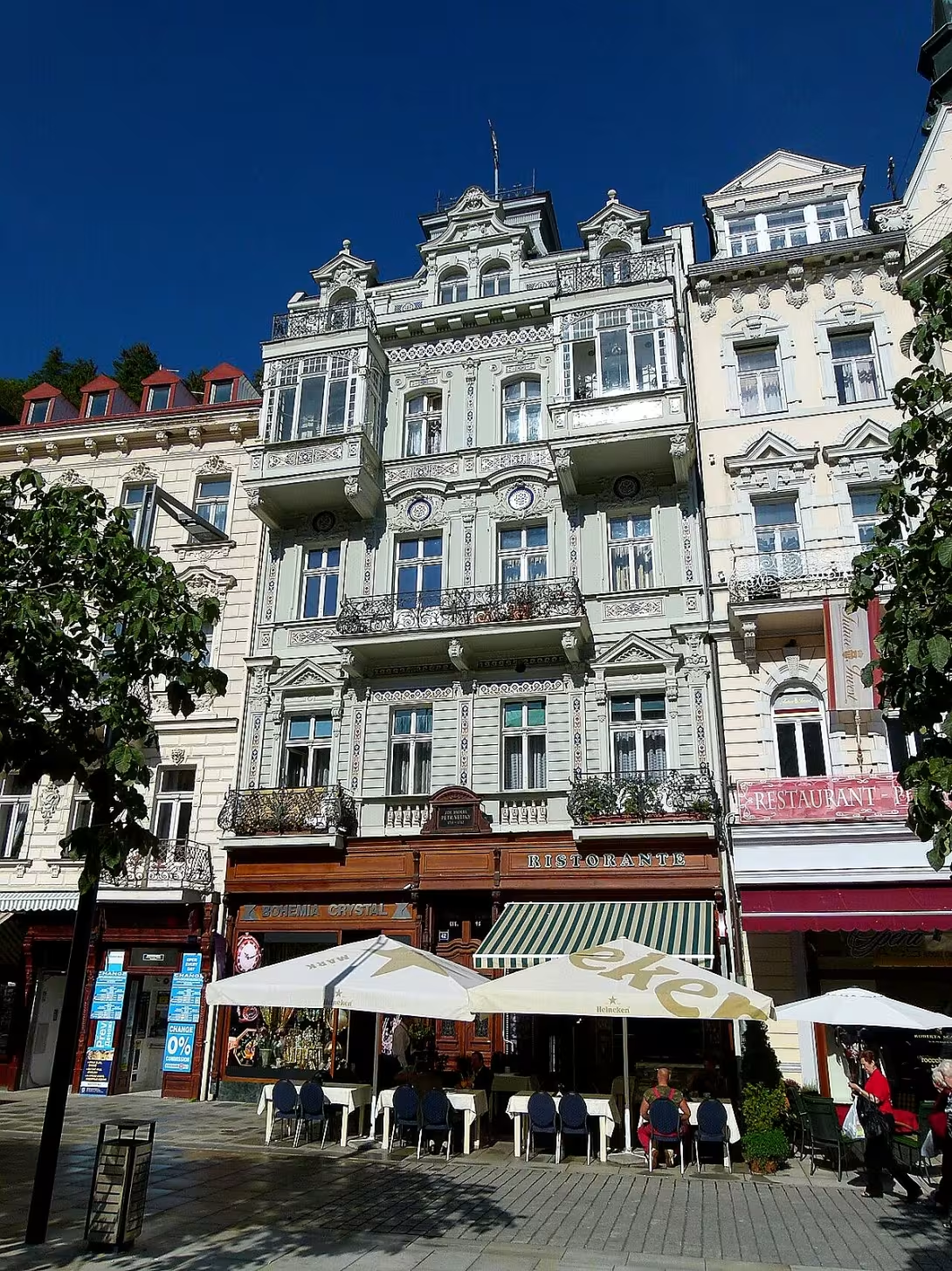
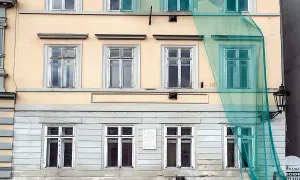
The house Petr Veliký, formerly known as Roter Adler, is a landmark from the end of the 19th century located in the centre of the spa part of Karlovy Vary on Old meadow no. 338 / 42. This building from the period of late history has become famous for its rich facade decorated with ceramic tiles and is protected as a cultural monument.
Originally there was a baroque house that wore the names Heydemann or Drechsler. In 1893- 1894, the owner Adolf Knoll built a new building here under the leadership of Karlovy Vary builder Josef Waldert, who designed the house himself. Barroquing elements such as cartouche in window fronts and skylights suggest possible cooperation with architect Alfred Bayer.
The house is a four-storey building with an elevated living attic and a four-axis street front. On the ground floor there is a rectangular entrance with original doors decorated with pseudohorac grate and glass with the inscription "Old meadow čís." 42. The first floor has rectangular windows, the extremes of which are finished with a triangular front; On the second floor, the central windows have a segment ledge. The third floor is decorated with glazed windows in the outer axes and segmented windows in the middle axes. Balconies with forged railing, which have motifs of grates, belts and mussels, are located at the middle windows of the second floor and the outer windows of the attic. The facade is broken by pilasters and a distinctive crown ledge on the tooth-shaped consoles. It is dominated by a large bay with two arc windows and a saddle-shaped shield, supplemented by smaller side skylights with triangular frontons. The architecture is special thanks to the use of painted tiles and ceramic tiles for decoration of the facade. In 1910 Josef Waldert modified balconies on the third floor on the covered lodžie.
After construction, the building remained part of the urban structure and today it is registered as a residential house owned by the owners' community. The house is connected with the tradition that Russian car Petr Veliký stayed here in 1711 and 1712 during his visits to Karlovy Vary. However, historical sources suggest that the Tsar probably lived in the Market, and in this place he merely turned the famous legs to the table at the turning machine Haydemann.
Since 22 May 1991 dům Petr Veliký has been declared a cultural monument of the Czech Republic. In 2014 it was included in the Urban Monument Zone Karlovy Vary 2014-2024 Regeneration Programme, where it was assessed as satisfactory.
House Petr Veliký presents a valuable example of architecture of late historism with unique ceramic decoration and is an ideal stop for anyone looking for details of period architecture in the historical center of the city.
Then and now
Drag the slider to compare how the landmark may have looked when it was built with the view today.
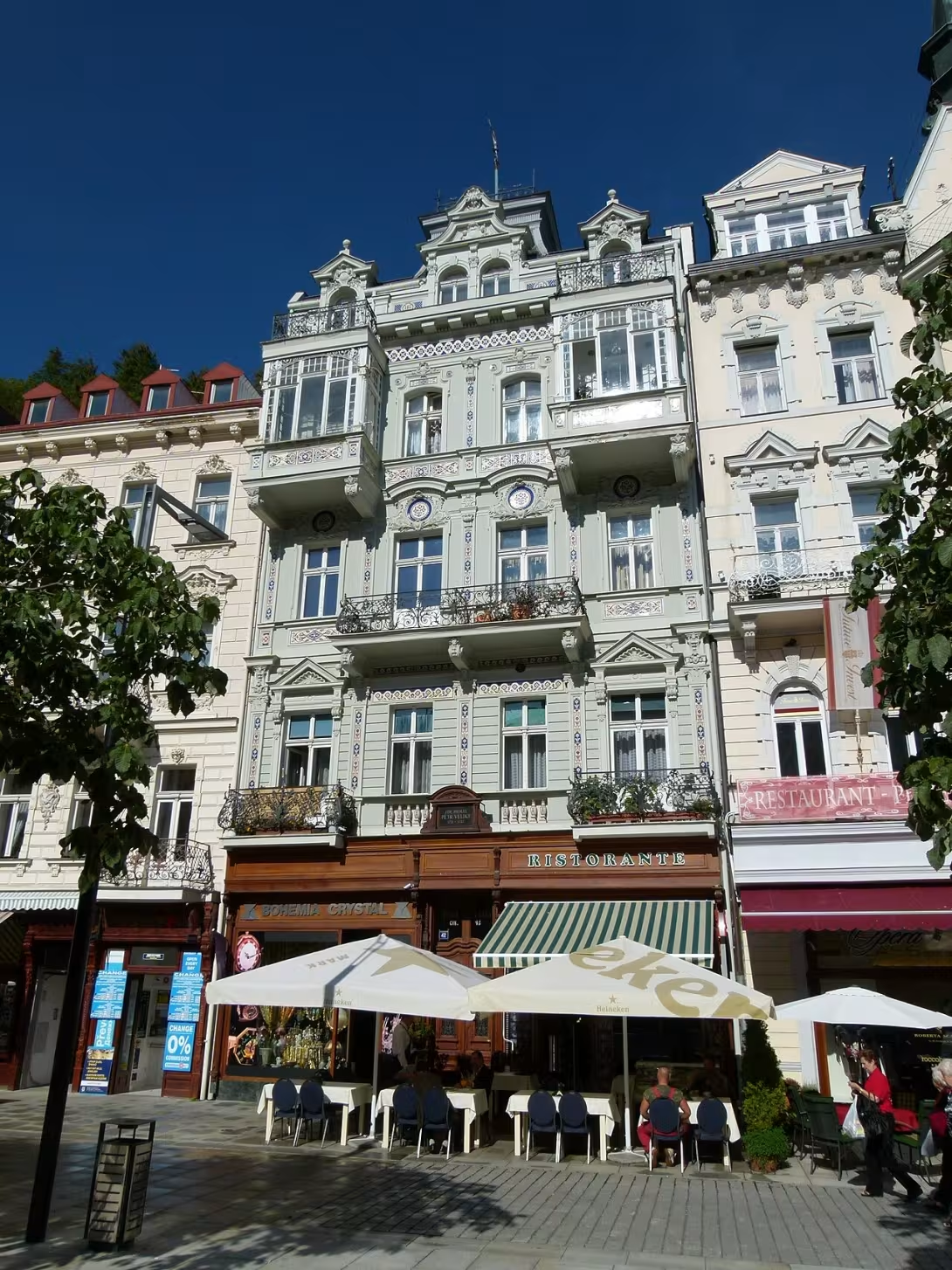
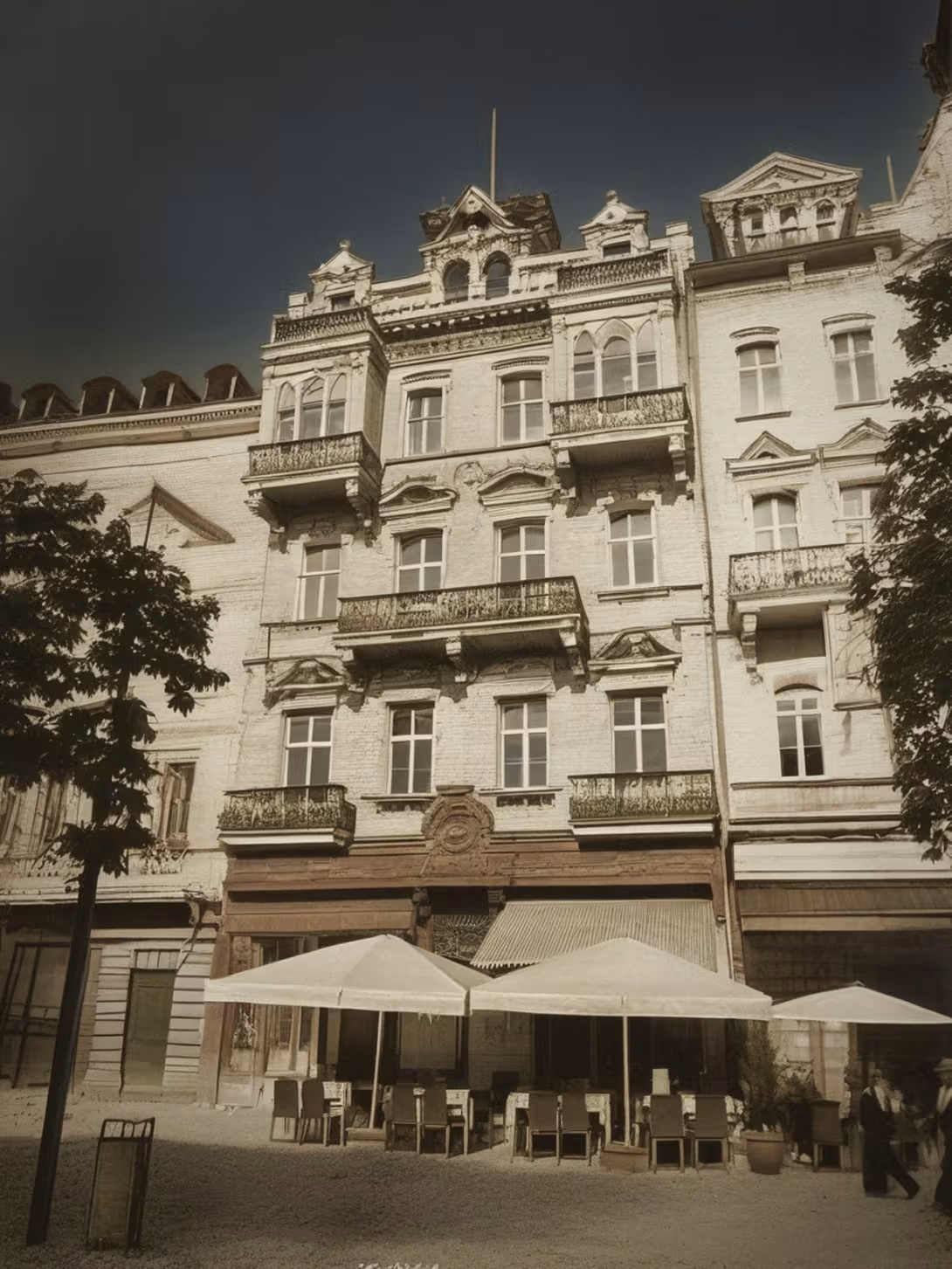
The historical appearance on the left is an AI-generated visualisation and serves as inspiration only.
Historical milestones
- 1894
- completion of building the house in late history
- 1910
- adaptation of balconies on the third floor to covered logžie
- 1991
- declaration of the building as a cultural monument
Architectural development
The Baroque Heydemann house or Drechsler house was originally located. The current construction was realized by builder Josef Waldert, and in 1910 he modified the balconies on the third floor of the covered lodžie. The facade is uniquely decorated with ceramic tiles and painted tiles.
Historical events
1893-1894: construction of a new house by Adolf Knoll; 1991: declaration for cultural heritage.
Owners
Currently, the building is registered as an apartment building owned by the owners' community.
Points of interest
- House Petr Veliký is a monument from the end of the 19th century located in the centre of Karlovy Vary. - This object from the period of late history is famous for its rich facade decorated with ceramic tiles and is protected as a cultural monument. - The house was built in 1893- 1894 under the direction of Karlovy Vary builder Josef Waldert, who designed the house himself. - Since 22 May 1991 it has been declared a cultural monument of the Czech Republic. - In 2014 it was included in the Urban Monument Zone Karlovy Vary 2014-2024 Regeneration Programme, where it was assessed as satisfact
Guide
Show guide text
This text was created by artificial intelligence and has not been editorially reviewed. It may contain inaccuracies.
Welcome to Karlovy Vary, where history intersects with the unique atmosphere of the spa city in every detail. Stop for a moment, take a breath and look in front of you. Right now, you're standing in front of a building that is a silent but proud witness to the transformation of this city. It is the dům Petr Veliký that welcomes you with its noble form and reminds us of the time when Karlovy Vary experienced their golden age. The first impression of this object is the impression of stability and elegance. It is a four-storey terraced house that dominantly fills the space in the centre of the spa area with its height and distribution. When you look at it, you might see how the building harmoniously fits in, and yet it has something unique in it that makes you stop and take into account her story.
Now let's go back in time together to understand how this house came into being and why it looks just like this. There was a whole other world where you were standing today. Originally there was a Baroque house, but with the advancing time and growing demands of the spa town it stopped satisfying. At the end of the nineteenth century, namely between 1893 and 1894, it was replaced by this current construction. It was a period of great ambition and architectural change. The building was carried out in the spirit of late historism, which was a style that returned to proven patterns from the past, but interpreted them with modern precision and expansion. Two talented men, Karlovy Vary builder Josef Waldert and architect Alfred Bayer, were responsible for the creation of this house. Together they created a work to express the prestige and wealth of the time.
I now ask you to pay full attention to the architecture itself. Please look up and look at the front of the house. What you see is a typical example of a rich facade that was tasked with capturing every bystander. Notice the Pilastres, the vertical Roman columns that are built into the wall and rhythmically divide the area of the house. It gives him a sense of stability and vertical nobility. If you move your views up to the very top of the building, you will see a distinctive crown ledge. It is the final element that optically closes the building and separates it from the sky, giving the whole building a final, representative look.
If you look closer at the surface of the facade, notice the details that make this house special. The building is famous for its rich decoration, where ceramic tiles play the main role. These elements provide the facade of texture and depth, which are so characteristic of late historism. It's a craft job that was supposed to create a sense of luxury and durability. Further focus your attention on the third floor. Here you will see the covered lodgers. Originally there were balconies in this place, but in 1910 they were modified. This change to the covered lodjie gave the house a new aesthetic dimension while providing more privacy and shade to the people who lived or worked in the building. It is fascinating to see how the robust building has changed slightly over the years to meet new trends and needs.
Now we stop at the identity of this place. The house bears the name of Peter the Great, which immediately brings back memories of the Russian Tsar and his relationship with the spa towns. Although the name is dominant today, the building had a different name in the past, under which it was known as Roter Adler, which means Red Eagle in translation. This change of names reflects the cosmopolitan character of Karlovy Vary, where guests from all over Europe flowed, from Russia to German-speaking areas. It is this multinationality and openness that is reflected in the architecture itself, which speaks the universal language of European history.
You may be wondering why this house is so important today, in the time of modern glass facades. The answer lies in its value as a cultural monument. In 1991 the building was officially declared a cultural monument of the Czech Republic. This is not just a formal label, but a promise that this beauty will be preserved for future generations. It is a recognition of the work of Joseph Waldert and Alfred Bayer, who have been able to create a space that, even for over a century, still seems noble and elegant. The mystery remains, how many stories have taken place behind these walls, how many travelers have found refuge in it and how many secret conversations have taken place in its premises during the stormy twentieth century.
If you look at the whole house again, try to imagine what the Karlovy Vary Centre looked like in 1894, shortly after the construction was completed. Imagine carriages passing through the streets, rustling long dresses and the smell of spa air. The house Petr Veliký was a symbol of a new beginning and modernity that grew on the foundations of an old Baroque. Today is the bridge that connects us to that time.
I hope you enjoyed this short journey in time and that you have noticed the little details that make this house the real jewel of Karlovy Vary. It's a place where craftsmanship meets historical ambition. I now invite you to continue to explore the beauty of this city. Let yourself be guided by narrow streets, admire other facades and perceive the atmosphere that is so unique in Karlovy Vary. Thank you for letting me introduce you to this house. I wish you a pleasant journey and many other unforgettable experiences in our spa town. Goodbye.
Tips for visitors
For the best experience of the tour of architecture we recommend a visit in clear days, especially during the morning hours, when the sun will highlight the historical details of the facade beautifully.
The house is located in the town monument zone in Stará louka street, which means that the place is easily accessible by foot. Use the parking space in the wider area to arrive by car or use public transport; Please check the current connection in the search engine.
When taking pictures, focus on the views from Stará louka street, which offer the best perspective on the four-storey building. For comfortable movement on historic tiles we recommend to bring comfortable shoes.
Families with children will appreciate a walk around the surrounding urban monument zone, which offers an interesting atmosphere for a common discovery of history.
Businesses nearby
Do you run a restaurant, accommodation, shop, museum, rental, wellness or other visitor service near this monument? Show yourself directly to the people heading to it — this is how they will see you in the app and on the web:
Nearby
The building is located in the town monument zone of Karlovy Vary in Stará louka street.
Accommodation nearby
Trips and activities nearby
Guided tours, tickets and activities nearby from GetYourGuide
Affiliate link: if you buy from the partner, we may receive a commission. The price for you does not change.
Search tours and activities →Themed route
1. Old meadow street, type: communication. Walk down the street where the main destination of the trip is located. 2. House Petr Veliký, type: monument. Main point of the visit and a tour of the building itself. 3. Area of the house Petr Veliký, type: outer space. Exploring the immediate surroundings and outer parts of the building. 4. Karlovy Vary City Monument Zone, type: Protected Area. A tour of the wider historical context in which the monument is located.
Seasonal recommendations
Spring in Karlovy Vary brings to the surroundings of the Petr Veliký house the gradual use of green and sunlight, which highlights architectural details of historical buildings. The atmosphere is quiet and fresh, ideal for slow walks without summer heat. Practically this period is suitable for visitors who prefer smaller clusters of people compared to highly seasonal months. Clothes should be layered because spring weather is usually variable and rainy, so it is necessary to carry a light waterproof coat and comfortable shoes. The best time to visit is in the morning when visibility is best and temperature is not yet too high, which allows a detailed tour without feeling tired.
Summer is the peak of the tourist season, where the surroundings are full of life, but also large crowds. The sunlight is intense and long days allow to explore the memory even after sunset, when the atmosphere changes to romantic. The main risk, however, is hot and overcrowded, especially in the afternoon. It is recommended to arrive as early as possible in the morning, ideally before nine o'clock to avoid the greatest pressure of visitors. Clothes should be light, breathable and light, with emphasis on sun protection such as a hat and sunglasses. Due to the high attendance, longer waiting times at the entrance and in nearby cafés must be foreseen.
Autumn offers a unique atmosphere thanks to coloured tree leaves that create dramatic contrast with the facade of the building. The light is softer and warmer, which is ideal for photographing and admiring historical elements without sharp shadows. The weather is beginning to cool and night temperatures are falling, which requires layered clothes with a warm windshield or jacket. The crowds are already significantly smaller than in summer, which ensures a calmer experience and better accessibility to the monument. The most suitable is a visit in the late afternoon when the sun rises at a low angle and illuminates the facade from the side, highlighting the relief and texture of the stone. It is important to monitor the weather forecast because autumn rains can be frequent.
Winter brings a cool but calm atmosphere, where the city is often surrounded by snow, creating a fairy tale environment around the historical monument. Short days and low sun create dramatic shadows and cold light that underlines the seriousness and historical character of the building. Visitors must be prepared for low temperatures, therefore warm clothing is necessary, including gloves, scarf and warm caps. The opening hours of the monument can be shortened in winter months, especially on weekends and holidays, so it is advisable to check the current operating rules in advance. The crowds are minimal, allowing an intensive and private tour. The best time is the late afternoon, when temperatures are slightly rising and the light is warmer, although it is already late.
Visualizations and artistic views


The visualisations are generated by artificial intelligence and serve as inspiration.
Photos from the area
Real photos taken near the monument


Zdroj a licence jsou uvedeny u každého snímku.
Tips from visitors
No tips yet. Be the first!
Log in and add your tip.
Sources and literature
Fotografie: Václav Hájek / CC BY-SA 3.0 — Wikimedia Commons. The author and licence also appear when you hover over the image.
Faktickým podkladem tohoto textu byl článek na Wikipedii, jehož autory jsou přispěvatelé Wikipedie. Článek je dostupný pod licencí CC BY-SA 4.0.
Location on the map
More monuments – Karlovy Vary
Show all in the municipality
Příběhy a pověsti
Legendy, pověsti a příběhy spjaté s touto památkou
Fotografie návštěvníků
Zatím žádné fotografie. Buďte první, kdo přidá fotografii z návštěvy!
Přihlaste se a přidejte svou fotografii nebo hodnoťte.
Za ověřenou návštěvu v aplikaci získáte víc bodů — poznáme podle GPS, že jste na místě.
Reviews and comments