



dům U Tří tykví House
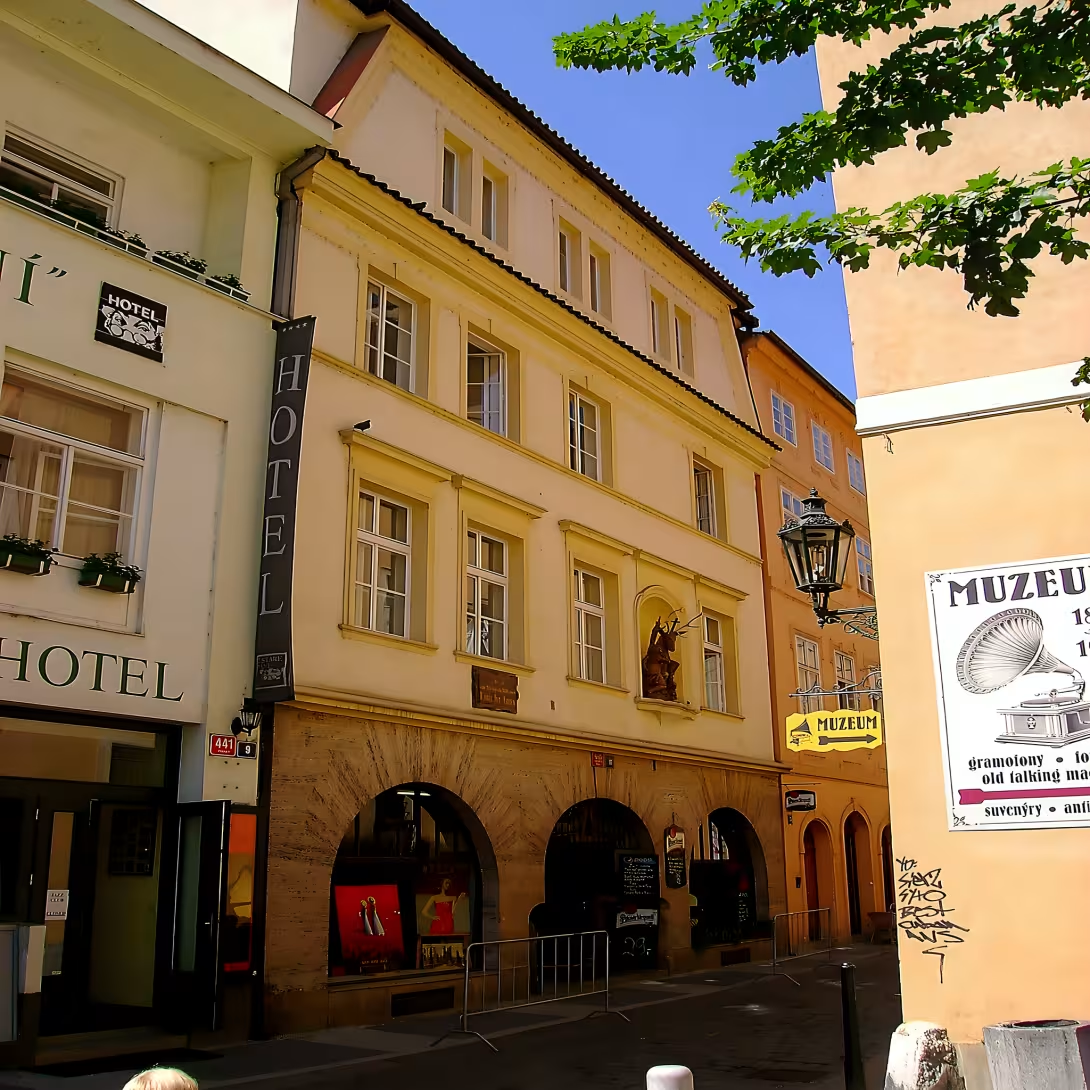
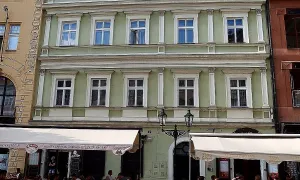
House U The Three Tyquists in Michal Street in Prague's Old Town are also known under the names U Five Tyquettes, U Tyquettes or U Elena. It's a 1935 new building. Its facade imitates the original historical building and the building is protected as a cultural monument of the Czech Republic.
The first reports of the original house at this place dates back to 1360. The name Ad cucumeres, translated U Tykví, is documented for 1424. The building has undergone several reconstructions over the centuries, first in Renaissance style and then after 1705 in Baroque.
The present appearance of the house is the result of an interwar reconstruction. The original building was demolished in 1932. During the works, Gothic fragments and fresco from the turn of the 14th and 15th centuries were discovered, which was subsequently stored in the Prague City Museum. The new construction was completed in 1935. Her facade was designed to mimic the appearance of the original house.
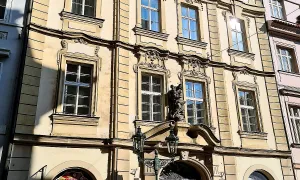
The Rococo sculpture of St. Hubert is an important detail of the facade. It was created by Ignác František Platzer in the 1960s. He was inspired by a similar work by Ferdinand Maximilian Brokoff from Tomáš Street on Malá Strana.
There are important personalities associated with the house. Josefina Brdlíková was born here in 1843. In the building also lived poet Karel Jaromír Erben, who died here in 1870. There's a commemorative plaque under the window on the first floor.
The building is located in the centre of Prague 1 in the neighbourhood of the houses U White Hare and U Old Lady. The combination of modern construction from 1935 with historical facade and preserved details such as the statue of St. Hubert makes this house an interesting point when walking through Old Town. It is a place where the memory of important Czech personalities meets with architectural imitation of the past.
Then and now
Drag the slider to compare how the landmark may have looked when it was built with the view today.
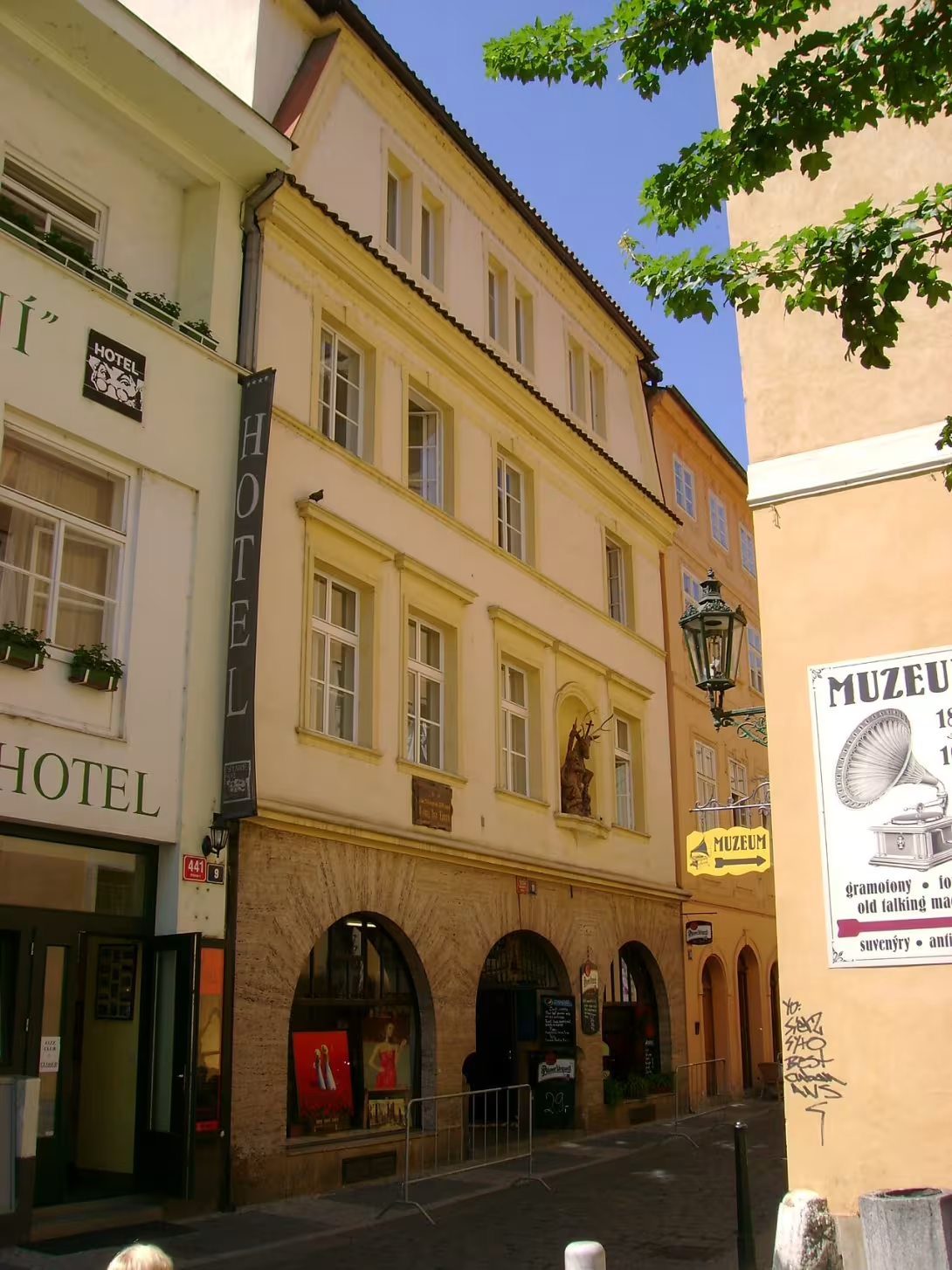
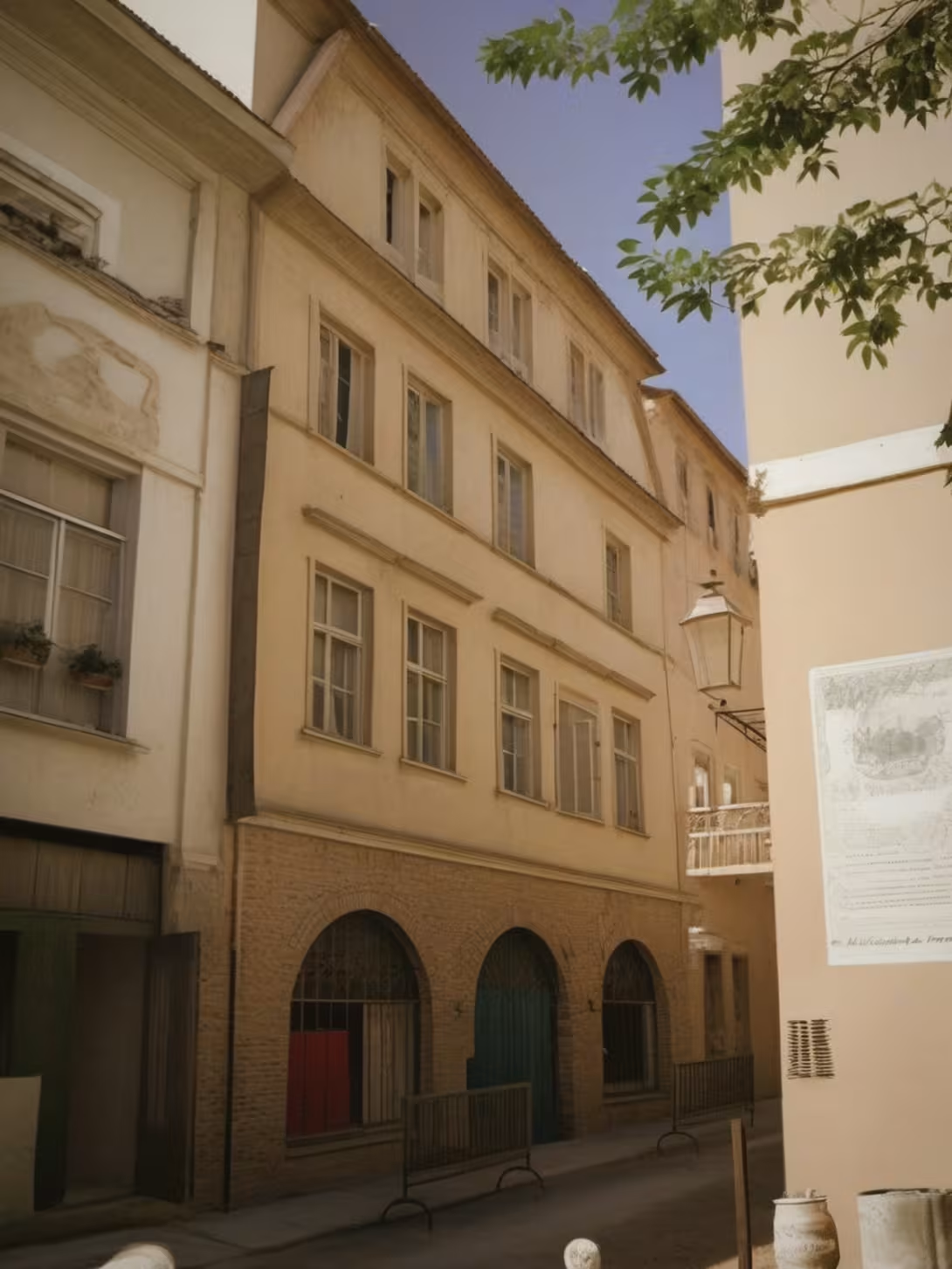
The historical appearance on the left is an AI-generated visualisation and serves as inspiration only.
Historical milestones
- 1360
- First news of the existence of the house.
- 1424
- Supported by Ad cucumeres (U Tyqui).
- 1932
- The demolition of the original house and the discovery of Gothic fragments.
- 1935
- the emergence of current new construction.
Architectural development
The original building was renaissance and subsequently Baroque rebuilt. In 1932 it was demolished while Gothic fragments and fresco were discovered. The current 1935 house is a new building with a facade imitating the original appearance.
Historical events
1870: the death of Karl Jaromír Erben in the house; 1932: destruction of the original house; 1935: completion of new construction.
Points of interest
- The house is also known under the names U Five Pumpkin, U Pumpkin or U Elena. - The current building is a new building from 1935 with a facade that mimics the original building. - During the demolition of the original house in 1932, Gothic parts and painting from the wall from the turn of the 14th and 15th centuries were found. - On the facade is the Rococo sculpture of St. Hubert from the 1960s. - In the house lived poet Karel Jaromir Erben, who died here in 1870.
Guide
Show guide text
This text was created by artificial intelligence and has not been editorially reviewed. It may contain inaccuracies.
Welcome to Michael Street in the heart of Prague's Old Town. You're standing in front of the house of the Three Pumpkin. If you look at him now, you might be interested in his appearance, which perfectly fits into the surrounding historical structure. It's a building that has layers of many centuries in it, although what you see before you is the result of an elaborate plan from the beginning of the twentieth century. Stop for a moment, take a breath and feel the atmosphere of this narrow alley space where history meets modern reconstruction.
Now let's look deeper into the past to understand what really happened here. The first reports of the existence of a house in this place date back to the year three hundred and sixty. So imagine what path this place has gone down since the Middle Ages of Prague until today. Already in the year thousands four hundred twenty-four was the house known as Ad cucumeres, which in translation means U Tyqui. This name is very typical of old Prague, where houses were not called numbers, but according to the characteristics, images or owners. The pumpkins were the favourite symbol at the time, and they became the calling card for this house, which later became the name of the Three Pumpkins.
Now pay attention to the architecture itself and the facade of the building. If you look closely at the building, you might wonder why it looks so unified and in good condition. The answer is that the current construction from the year one thousand nine hundred thirty-five is actually a new construction. The original house was demolished in the year one thousand nine hundred thirty-two. However, the builders did not want to erase the memory of the past. The facade you're seeing right now has been designed to faithfully imitate the original historical house. So it's an architectural letter of love to old times. Look up at the facade details. There you will notice the rococo sculpture of the Holy One, which gives home appearance a sense of elegance and spirituality. It's one of those elements that build its unique character and remind us how the city houses were decorated in the past.
When you're standing in front of a house like this, it's good to realize that the walls of this house have witnessed the lives of many prominent personalities. The most famous of them was without doubt the poet Karel Jaromír Erben. He lived in this very house, and here he ended his earthly life. Imagine Erben making up his unforgettable poetry in these premises, and seeing the rhythm of the city, which from Michal Street shrunk into the rooms of the house. The figure of Josephine Brdlíková is associated with this place. These people are connected by this address, which has thus become a home for the art and intellectual society of its time. It's fascinating to think that even though the building is newer today, the spirit of these people is still there.
Now, I want to take you to an interesting place that borders on secrets. As I mentioned earlier, the original house was demolished in a thousand and nine hundred and thirty-two. That's when something unexpected happened. Gothic fragments and parts of old walls appeared under the clouds of time during the crash. What is even more interesting, however, were found paintings from the wall that came from the turn of the 14th and 15th centuries. These findings show that the house was much more than just an ordinary building, it was a layered archive of Prague's history. The house is also known under several other names such as U Five Pumpkin, U Pumpkin or even U Elena. This variability of names reflects how the perception of the house changed over the centuries to its inhabitants and neighbors.
Today dům U Tří tykví is protected as a cultural monument of the Czech Republic, which ensures that future generations can admire this harmonious combination of modern design and historical appearance. It is a reminder that history may not only be about preserving old stones, but also about the ability to reconstruct them faithfully and keep them in mind.
Thank you for stopping by this house on Michael Street. I hope you're interested in the story of the poet Erben, the mysterious Gothic paintings and the pumpkin name. Now you will continue to explore the narrow streets of Old Town, where there is another story waiting around every corner. We wish you a pleasant walk and a beautiful day in Prague.
Tips for visitors
The best time to visit is in the morning or late afternoon, when the sun hits the façade of the house on Michal Street and highlights the details of its appearance. Since it is a building that imitates historical style, we recommend paying attention to the details of the outer shell.
We recommend travelling by public transport to the centre of Prague in the Old Town, because traffic in narrow streets is difficult. Check the current connection in the search engine.
You don't need any special equipment to visit, you just need comfortable shoes to walk through the historical center. It is advisable for lovers of architecture to take a notebook to record the observation of the facade.
Photograph from the opposite side of the street to capture the entire height of the building. The best light is on bright days when the colors of the facade are the most distinctive. Focus on contrast with the surrounding houses.
During a short walk around you can see the neighbouring buildings U White Hare and U Old Lady. It is interesting for families with children to look for details on facades and compare them with other houses in the street.
Frequently asked questions
Can the monument be visited?
This is a residential or farm building, not a museum with opening hours. Please view it from public space and respect the owners' privacy. We have no information about access to the interior.
Where is the monument?
Location: Praha 1. The map on this page shows the exact spot.
Why is the monument protected?
It is listed in the Central List of Cultural Monuments of the Czech Republic as a cultural monument (register no. 1000150499).
Businesses nearby
Do you run a restaurant, accommodation, shop, museum, rental, wellness or other visitor service near this monument? Show yourself directly to the people heading to it — this is how they will see you in the app and on the web:
Events nearby

Zdroj akcí: otevřená data měst a obcí ČR (Národní katalog otevřených dat) a kalendář akcí Národního památkového ústavu.
Nearby
Dům se nachází v centru Prahy na Starém Městě, sousedí s domy U Bílého zajíce a U Staré paní.
Accommodation nearby
Trips and activities nearby
Guided tours, tickets and activities nearby from GetYourGuide
Affiliate link: if you buy from the partner, we may receive a commission. The price for you does not change.
Search tours and activities →Themed route
Here is a proposal for a short walk:
1. White Hare House (construction) - The first stop in a number of neighboring houses, which represents the historical architecture of the centre. 2. House U Three Tyquettes (construction) - The main destination of the journey where you can admire the details of this particular house. 3. House U Old Lady (construction) - The final location of the route that complements the image of this historical group of buildings.
Seasonal recommendations
In spring, the surroundings of the house will be brightened with first flowers and fresh greenery. The soft spring light excels beautifully on the facade of the building. We recommend visiting the place in the morning when the air is fresh, and wearing a light jacket or beecloak against the wind.
In the summer months, the atmosphere of hot days and bright sun dominates the building's details. The main season is the streets most people, therefore it is best to come early in the morning to be quiet. Don't forget the comfortable shoes and the sun hat.
Autumn brings the golden colour of leaves and a misty wound to the surroundings, giving the memory a mysterious touch. The light is finer and more golden in this period. Hot clothes and scarf are suitable because it can be colder in the narrow streets of Prague.
In winter the house is cosy, especially in advent time, when the surroundings are brightened by lights of ornaments. The atmosphere is quieter and quiet. Due to freezing and possible snow, it is necessary to wear a warm sweater, gloves and waterproof shoes.
Visualizations and artistic views


The visualisations are generated by artificial intelligence and serve as inspiration.
Photos from the area
Real photos taken near the monument

Zdroj a licence jsou uvedeny u každého snímku.
Tips from visitors
No tips yet. Be the first!
Log in and add your tip.
Sources and literature
Photos: Jirka23 / CC BY-SA 3.0, rozlišení zvýšeno umělou inteligencí — Wikimedia Commons. The author and licence also appear when you hover over the image.
Faktickým podkladem tohoto textu byl článek na Wikipedii, jehož autory jsou přispěvatelé Wikipedie. Článek je dostupný pod licencí CC BY-SA 4.0.
Location on the map

Příběhy a pověsti
Legendy, pověsti a příběhy spjaté s touto památkou
Fotografie návštěvníků
Zatím žádné fotografie. Buďte první, kdo přidá fotografii z návštěvy!
Log in a přidejte svou fotografii nebo hodnoťte.
Za ověřenou návštěvu v aplikaci získáte víc bodů — poznáme podle GPS, že jste na místě.
Reviews and comments