



Dům U zavřené brány House
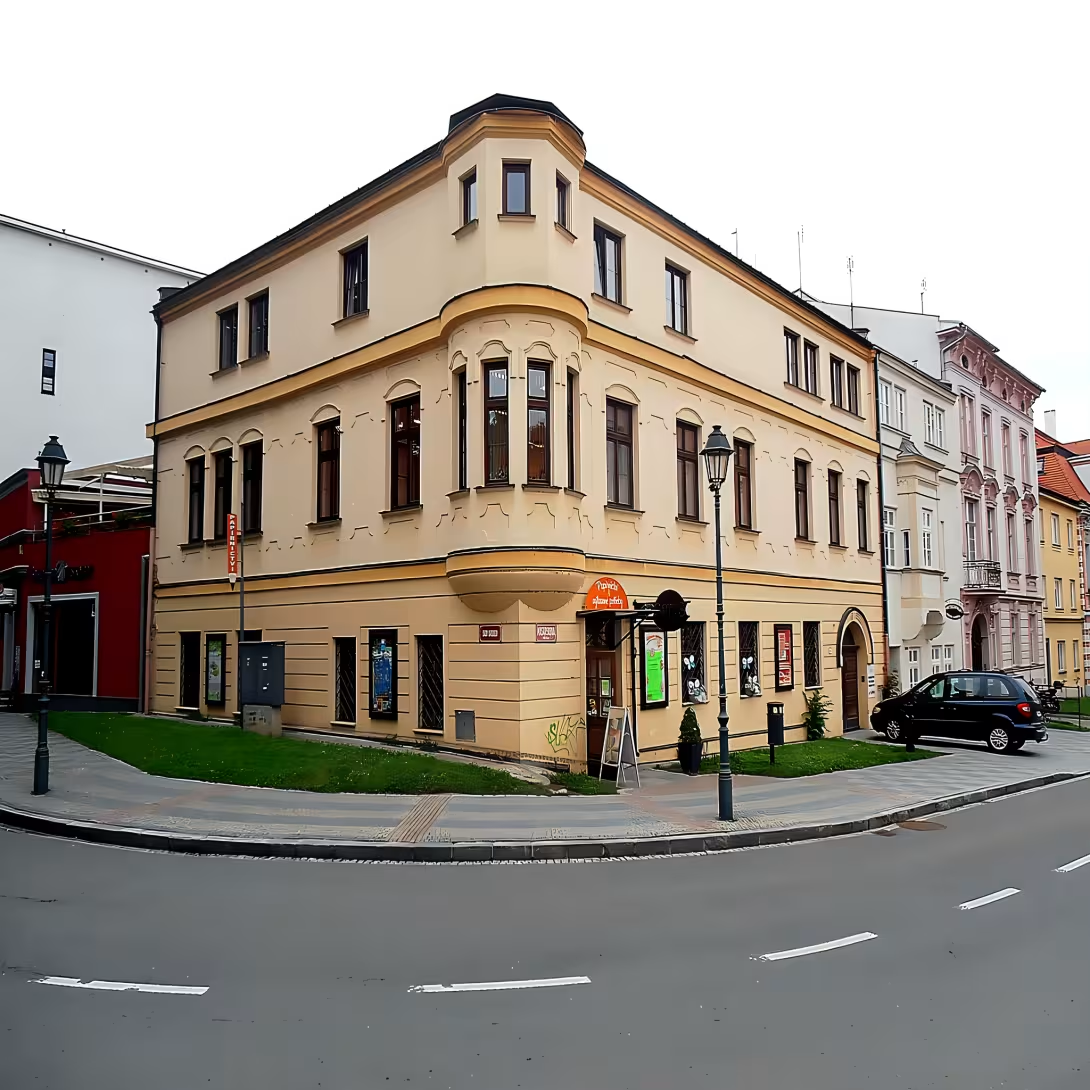
Dům U zavřené brány, also known as the Bítovský House of Bítov, is a Renaissance town house from the 16th century. Located in the center of Opava on Masaryk's class. The building is remarkable with its corner tower and history of the residence of the Silesian Vladic family. Since 3 May 1958 it has been included in the list of cultural monuments.
The first written mention of a noble house in this place dates back to 1496. In the second half of the 16th century he built a two-storey corner Renaissance house Karl Bítovský z Bítova, which established a family home. The creation of the building is linked to the development of the Renaissance and the development of the urban craft as well as the commercial sector in Central Europe, when Silesia was an important cultural and political region.
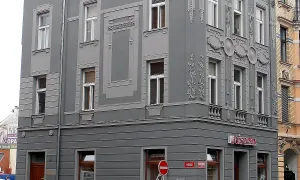
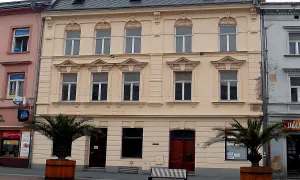
The current three-storey building features a preserved southeast corner tower. Similar elements were previously placed on all corners of the house. The facade above the windows of the first floor is decorated with a segmental front, which in the level of the last floor passes into a smooth atics floor. In the direction of the yard are visible brick arcades. At the beginning of the 18th century a Baroque reconstruction took place during which a previously separate building was connected to the house. He kept the Renaissance mazhaus with a quelb and a full vault.
Apart from the Bítovský family in the house later, the printers were based. Between 1750 and 1945 the privileged printer Šindlerův and subsequently Trasslarov worked here. In the immediate vicinity is the Romberg House.
The monument is a valuable example of Renaissance urban architecture in Opava. Her visit allows you to see the history of Silesian Vladic condition and craft development of the city.
Historical milestones
- 1496
- First written mention of a noble house in this place
- 1550
- Karl Bítovský z Bítova built a Renaissance family home
- 1700
- Baroque reconstruction and connection of adjacent building
- 1750
- The start of the Shindler printer in the house
- 1958
- Entry of the object into the list of cultural monuments
Architectural development
A two-storey Renaissance house was built in the second half of the 16th century. At the beginning of the 18th century, a Baroque reconstruction took place in which a neighbouring building with a Renaissance mazhaus was connected. The facade is decorated with a segmental front and a smooth atic floor.
Historical events
1496: the first written mention of a noble house in this place; 1958: entry in the list of cultural monuments.
Owners
Karl Bítovský z Bítova (second half of the 16th century), later operators of Shindler and Trasslar printers.
Points of interest
- It's a renaissance town house from the 16th century, which is remarkable for its corner tower. - In the second half of the 16th century Karl Bítovský z Bítova built a family home here. - The building has a well-preserved southeast corner turret and a brick arcade is visible towards the yard. - At the beginning of the eighteenth century, a Baroque reconstruction took place in which another building was connected to the house. - Between 1750 and 1945 there were the Šindlerův printers and then Trasslarov printers.
Guide
Show guide text
This text was created by artificial intelligence and has not been editorially reviewed. It may contain inaccuracies.
Welcome to the heart of Opava. Right now, you're standing in front of one of the most prominent buildings in the city centre, telling stories from many centuries. Look at the closed gate house in front of you. It's a building that, at first glance, captures you with its stability and its history. If you look at her facade like that, you might feel the atmosphere of an old town where the ambitions of noble families clashed with the daily lives of craftsmen and printers.
Now let's go back in time together to understand how its first owners got to this place. The first written mention of a noble house in this place dates back to a thousand four hundred ninety-six. This means that the building was built here when the city was developing and looking for its face. However, what you see today has acquired its main form later. In the year of a thousand and five hundred and fifty, Karl Bítovský z Bítova built his family home here. It was a flag from the Silesian family who wanted to have a representative place in Opava that would fit his social position. At that time, the Renaissance was in full swing and houses were supposed to emit wealth, culture and strength.
Now pay attention to the architecture surrounding you. Look closely at the corner of the building. Notice this beautiful corner tower. It is one of the most significant elements of this house and at the same time a detail that makes it a unique monument from the sixteenth century. This turret is not only an ornament, but symbolizes the importance of a house in urban space. If you could look towards the inner court, you would notice something very interesting. There's a visible brick arcade. The arcades were very popular in the Renaissance time, creating roofed pavements with arches, connecting different parts of the house and providing shade and shelter from the rain. The fact that they are walled up today shows us how the house has changed over the centuries and adapted to the new needs of its citizens.
But the history of this house did not stop at the Renaissance. Let's move on a little further in time. About a thousand seven hundred years ago, there was a Baroque reconstruction. At this time, the house was expanding further and a neighboring object was attached to it, which made it even more massive. It's a fascinating idea of how the house was gradually expanding and how its functions changed. While in the first half of his existence he served as a nest for the noble family of Bítovský, later things became quite different here.
The key person related to the house was Karl Bítovský z Bítova, who laid the foundation of the family home. But the house has another, perhaps more practical face. In a thousand and seven hundred and fifty years, the Shindler printer started running here. Imagine the contrast. Instead of quiet aristocratic rooms, the sounds of printers, the noise of paper and the smell of ink began. Printers were at the time centres of information and education, and the fact that they were based in this very house adds a new dimension to the building. From the aristocratic residence the house became a place of knowledge production.
When you look at this object today, you might wonder why the house is called the closed gate. It's one of those interesting things that gives the place a secret. The name itself evokes something that was once open and is now closed, which may be a reference to the old city fortifications or the inner layout of the house. This mystery together with the corner tower makes the house one of the most remarkable places in Opava. It is a building that has survived centuries, wars and regime changes.
Due to its extraordinary value, the house was entered in a list of cultural monuments in the year one thousand nine hundred fifty-eight. This means that the state has recognised its incalculability for Czech and Silesian history. Now, if you look at the facade again, consider it a layered book. The first layer is Renaissance with its turret and arcades, the second layer is Baroque with the expansion of the building and the third layer is industrial with printing operation.
It's an amazing feeling to stand in front of a building that's seen so many changes. From the family of Bítovský to the printer Shindler to today's visitors who stopped their steps here. This house is a living proof of how the town of Opava evolved and how the life of nobles and craftsmen intermingled.
Now that you know the story of the house At the closed gate, I suggest you stay for a while and observe the facade details in peace. Imagine what those arcades looked like centuries ago when they were still open and used to walk in the shadows. Feel the atmosphere of this place where history touches the present.
I hope you are interested in this short trip to the past and that you are now seeing this house in a new light. Opava has many other hidden treasures in the centre that await your discovery. I ask you to take another walk through the city and explore other historic buildings that will tell you their stories. Thank you for your attention and I wish you a pleasant rest of the day in our beautiful city. Goodbye.
Tips for visitors
The best time to visit is morning or late afternoon time when the sun hits the Renaissance facade at an angle, which will highlight the details of the construction. Since it is a residential house, the tour takes place only from the outside, so we recommend to ease the pace and focus on architectural elements.
Since the monument is located in the heart of the city, it is best to take a walk along the surrounding streets.
During the photo shoot we recommend looking for angles that capture the entire height of the house. The best light for photography is during the golden hour before sunset.
During short walks around, within a half hour walk, you will definitely visit the Romberg House, which is located in the immediate vicinity. It's a great addition to the Renaissance architecture of the closed gate house.
For families with children we recommend a game to find Renaissance elements on the facade. You can encourage children to find specific ornaments or details that distinguish the house from modern buildings in the centre of Opava.
Frequently asked questions
Can the monument be visited?
This is a residential or farm building, not a museum with opening hours. Please view it from public space and respect the owners' privacy. We have no information about access to the interior.
Where is the monument?
Location: Opava-Město. The map on this page shows the exact spot.
Why is the monument protected?
It is listed in the Central List of Cultural Monuments of the Czech Republic as a cultural monument (register no. 1000143461).
Businesses nearby
Do you run a restaurant, accommodation, shop, museum, rental, wellness or other visitor service near this monument? Show yourself directly to the people heading to it — this is how they will see you in the app and on the web:
Events nearby
Zdroj akcí: otevřená data měst a obcí ČR (Národní katalog otevřených dat) a kalendář akcí Národního památkového ústavu.
Nearby
V bezprostřední blízkosti se nachází Rotmberský dům v centru Opavy.
Accommodation nearby
Themed route
Here is the design of the thematic route:
1. The Romberg House (historical building) - A magnificent building in the city centre, which represents an important architecture of the region. 2. Dům U zavřené brány (Memorial House) - The main destination of the trip where you can admire the unique details and atmosphere of this place.
Both stops are located in the immediate vicinity of one another.
Seasonal recommendations
In spring, the surroundings of the house flourish and fresh greenery accompanies the city's walks. The soft spring light pleasantly highlights the facade details. We recommend light but laminated clothing and a visit in the morning when the air is the cleanest.
In the summer months, clear sun and hot air dominate space. The building in full light works very strongly, which is ideal for observing architectural elements. It is advisable to choose the time early in the morning or late in the evening to avoid the biggest Closing heat, and not forget the comfortable shoes.
Autumn brings golden leaf colours and a specific nostalgic atmosphere to the streets of Opava. The lower sun creates long shadows that give the house depth. In this period it is best to choose a warm sweater and visit the place in the afternoon when the light is softest.
Zimą the appearance of the building changes depending on the weather, while snow can highlight the outlines of the roof and windows. In advent time in the surroundings, the expectations of the holidays rule and the evening lighting of the city creates a cozy feeling. Hot winter clothes and solid footwear with anti-slip soles are essential.
Visualizations and artistic views

The visualisations are generated by artificial intelligence and serve as inspiration.
Photos from the area
Real photos taken near the monument


Zdroj a licence jsou uvedeny u každého snímku.
Tips from visitors
No tips yet. Be the first!
Log in and add your tip.
Sources and literature
Photos: Richard Zoban / CC BY-SA 3.0, rozlišení zvýšeno umělou inteligencí — Wikimedia Commons. The author and licence also appear when you hover over the image.
Faktickým podkladem tohoto textu byl článek na Wikipedii, jehož autory jsou přispěvatelé Wikipedie. Článek je dostupný pod licencí CC BY-SA 4.0.
Location on the map

Příběhy a pověsti
Legendy, pověsti a příběhy spjaté s touto památkou
Fotografie návštěvníků
Zatím žádné fotografie. Buďte první, kdo přidá fotografii z návštěvy!
Log in a přidejte svou fotografii nebo hodnoťte.
Za ověřenou návštěvu v aplikaci získáte víc bodů — poznáme podle GPS, že jste na místě.
Reviews and comments