






Dominikánský klášter v Opavě Monastery
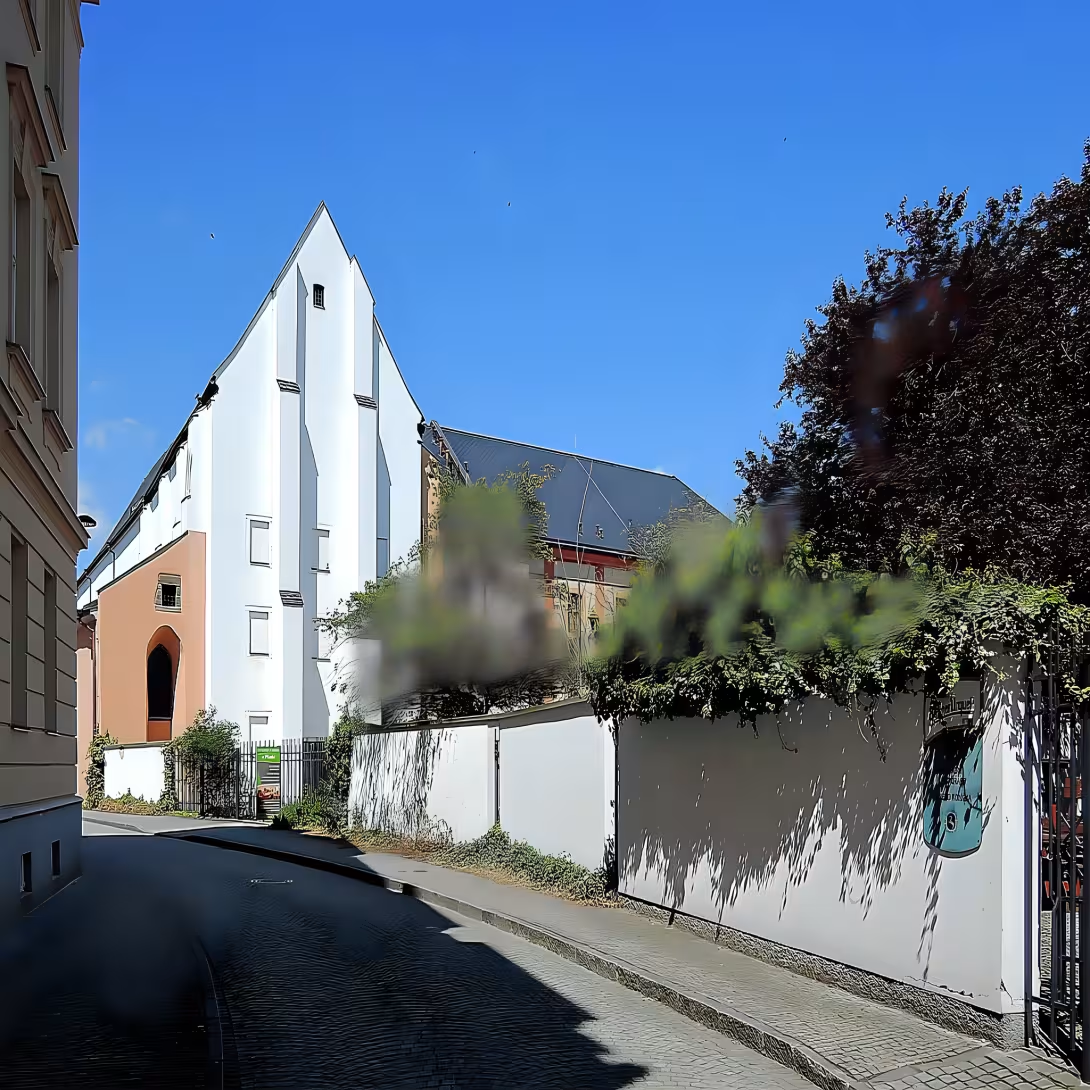
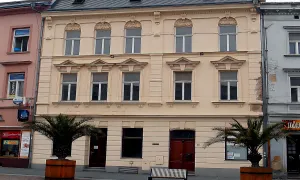
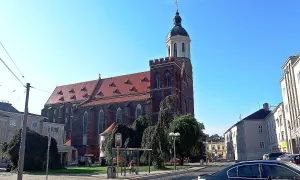
The Dominican monastery is situated in the centre of Opava between the streets of Bakar, Solna and Munich. Together with the church of St. Wenceslas, it is protected as a cultural monument. It is one of the important historical witnesses of the life of the medieval and early modern city.
The monastery was founded on 1st September 1291 by Prince Nicholas I. Opavský in the northern part of the city near the city walls. The fact that the monastery was at least partially completed in the early 14th century attests to the fact that there was a provincial chapter of the Czech Dominican province on 7 June 1321.
The period of Reformation and counter-Reformation brought the monastery a difficult test. In 1542, the entire staff of the monastery, including Prior Leonhard Cypsensia, died of the plague. The Protestant secluded townspeople immediately took advantage of the situation and seized the desolate monastery, taking possession of all the monastic and church valuables including the archive. Shortly afterwards, on 9 and 14 June 1556, two devastating fires hit Opava. At the first one, the Dominican monastery burned down. The fires were allegedly set by an arson group in the service of France and the Ottoman Empire. The monastery was thus only able to be repaired temporarily. In February 1585, an angry crowd of the townspeople of Opava invaded the monastery and plundered it. Only some local nobles who resisted the townspeople saved the life of the Dominicans.
In the early 18th century, Dominicans tried to revitalize the monastery. In order to gain space for the necessary extension, they agreed with the owners of five salt shops next to the monastery to remove the buildings. The construction of the new monastery building began on 5 April 1723. The builder Josef Rieth has committed himself to building a two-story building facing backwards into Salt Street with side wings east and west. He was supposed to live up to 700 gold pieces, 3 shefly rye and 3 barrels of beer. The carpenter Jakub Wildner built a double counter roof for 180 gold pieces, 3 shefles of rye, 2 shefels of barley and a keg of beer. Construction works took place until November 1723, then stopped and continued from February 1724. All works were completed by October 1724, although the costs exceeded the budget by 128 gold pieces.
However, financial problems have proved to be insoluble. The Dominicans themselves faced the great debt of the monastery. On 14 March 1786, Prior Sigisbert Sigl and sub-Prior Petr Müller wrote to the Moravian-Silesian Government that the monastery did not have enough resources to feed and dress its members. Emperor Josef II decided on June 17, 1786 to cancel the monastery. On 20 October 1786 the Mass was last served in the monastery church and after it was completed, all remaining assets were transferred to the new administrator. By this act, nearly five centuries of the Dominican Order in Opava ended.
In modern times, the monastery is taken care of by the Opava Cultural Organization, whose administration the building and the church moved to in 2007.
Then and now
Drag the slider to compare how the landmark may have looked when it was built with the view today.
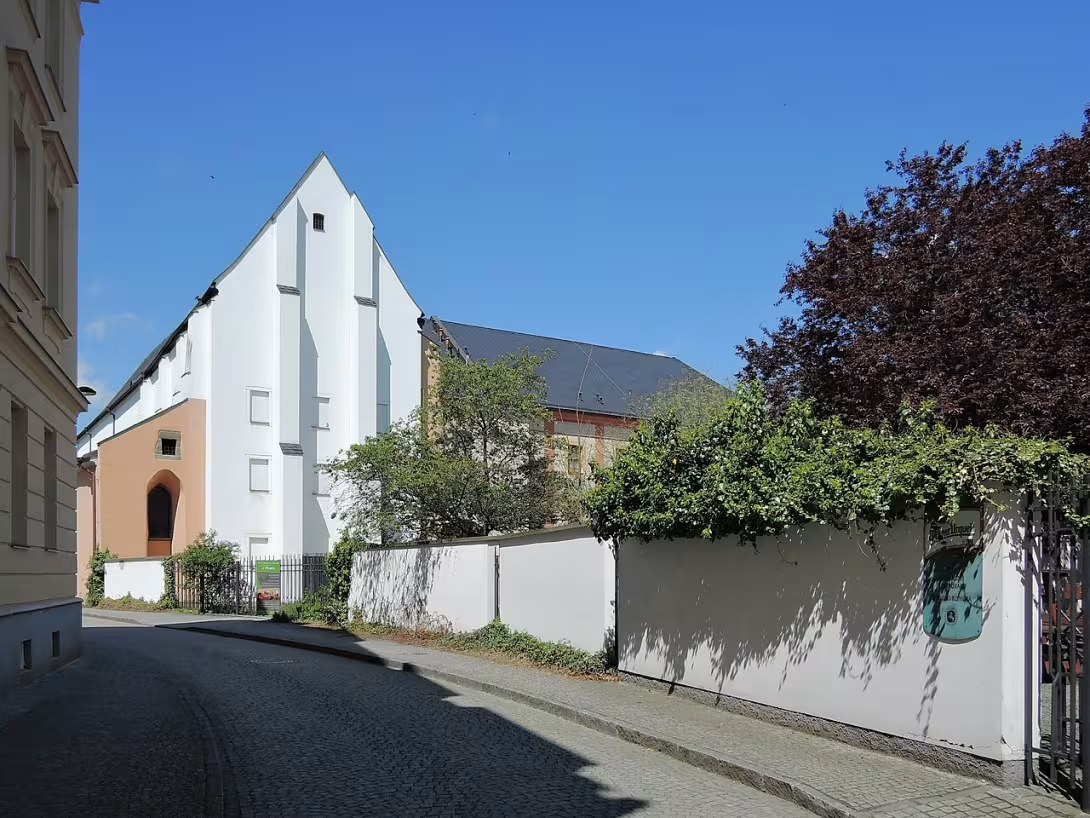
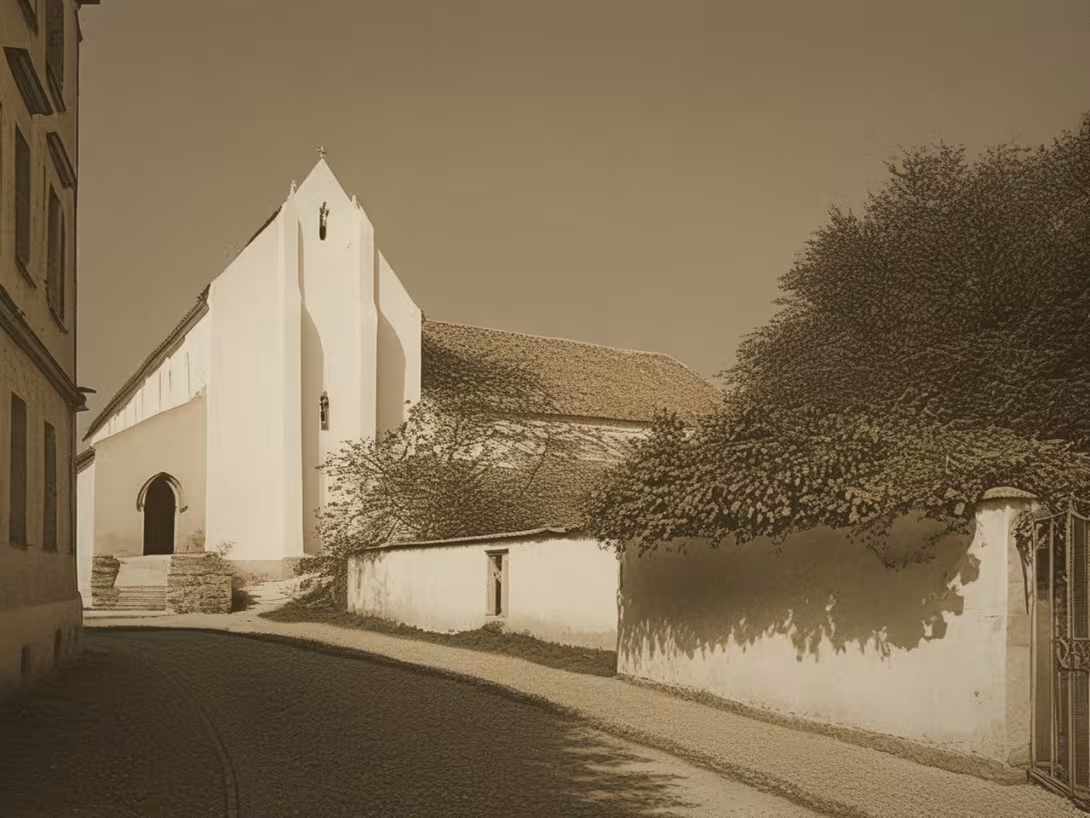
The historical appearance on the left is an AI-generated visualisation and serves as inspiration only.
Historical milestones
- 1291
- The establishment of the monastery by Nicholas I. Opava.
- 1321
- Doing a provincial chapter of the Czech Dominican province in the monastery.
- 1723-1724
- Construction of a new building of the monastery under the direction of Josef Rieth and Jakub Wildner.
Architectural development
The monastery was founded in Gothic style and later rebuilt into Baroque style. After the fire in 1556, its temporary repair took place, then the extensive reconstruction began in 1723 under the leadership of architects Josef Rieth and Jakub Wildner. The construction of the new building was completed by October 1724.
Historical events
- 1291
- The establishment of the monastery by Nicholas I. Opava.
- 1542
- The plague that struck the entire staff of the monastery.
- 1786
- The abrogation of the monastery by Emperor Joseph II.
Owners
- 1291
- 1786
- 2007
Points of interest
The Dominican monastery stands in the center of Opava between the streets of Bakar, Solna and Munich.
- The monastery was founded on 1 September 1291 by the Prince of Opava.
- In 1542, the entire staff of the monastery, including Prior Leonhard Cypsensia, died of the plague.
- At the beginning of the 18th century the Dominicans tried to revitalize the monastery and the construction of the new monastery building began on 5 April 1723.
- Emperor Josef II. decided on June 17, 1786 to abolish the monastery, which ended almost five centuries of Dominican order in Opava.
Guide
This guide is narrated by a synthetic voice generated by artificial intelligence.
Show guide text
This text was created by artificial intelligence and has not been editorially reviewed. It may contain inaccuracies.
Welcome to the heart of Opava, where stands the historical monument of the Dominican monastery, a record of the past and a witness of the many events that shaped this place. You stand before an impressive facade whose architecture tells the story of the meaning and spirituality that this monastery has symbolized for centuries. Imagine Baking Street, Solna and Munich as a witness to the time where every stone has a story.
In 1291, Prince Nicholas I of Opava founded this monastery in a place that was intended to become the centre of religious life. This act was not only a political decision, but also a call to strengthen spiritual values in society. The formation of the monastery began at a time when the Order of Dominicans sought a new territory to spread its ideals and teachings.
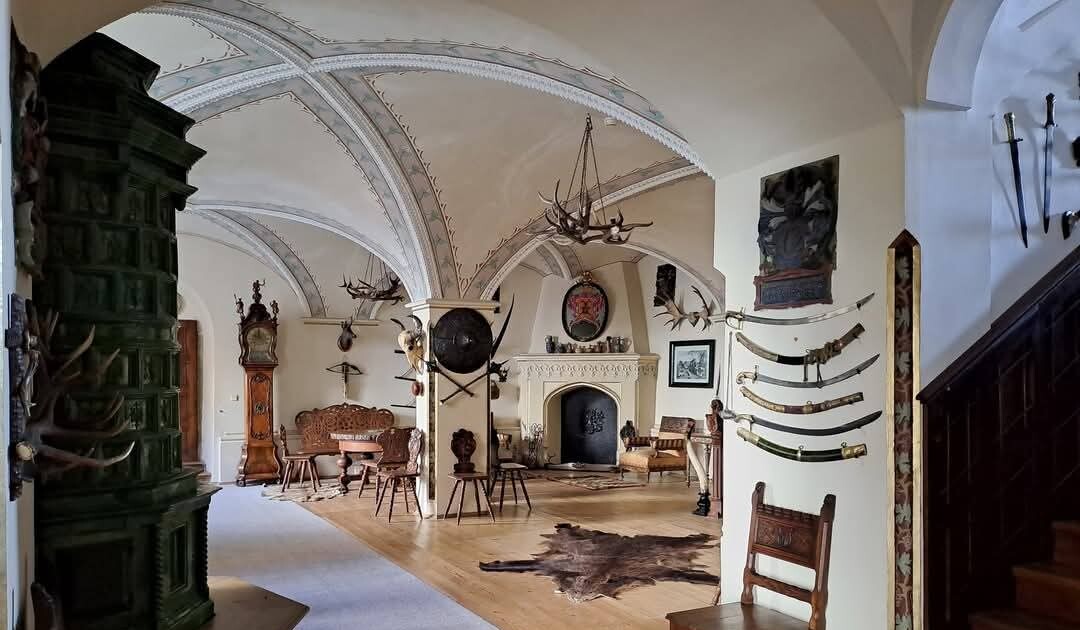
The architecture of the monastery is an excellent example of baroque art. Look up at the double counter roof designed by Jakub Wildner, the carpenter, and look at the elegant solution of the facade that Josef Rieth created. These elements are evidence of the expertise and creativity of architects of the time. The interior of the monastery is full of peace and harmony, allowing you to pause and listen to the silent stream of history.
The key personalities associated with this place are Mikuláš I. Opavský, whose vision lays the foundations for the existence of the monastery, and William Prusínovský, the Bishop of Olomouc, who solved the disputed issues in 1569. These figures are reminders of the expertise and dignity that the monastery has represented for centuries.
An interesting thing is the tragic fate of the entire population in 1542, when the plague struck a heavy blow to the monastery community. Prior Leonhard Cypsensius and his brothers fell victim to this disease, which reminds us of the relentlessness of history even in times when one believes to be safe.
Let's move on to the other shadows of the past and look at the monastery gardens. This space has witnessed many changes, and every step of these roads brings you closer to a deep understanding of the history and spirituality of this place.
Thank you for your visit to the Dominican monastery. I hope this guide helped you explore its rich history and architecture. Let yourself be inspired by this place and if you have time, feel free to look at other sights of Opava. When we meet new stories in the future, keep this calm spirit and continue your journey through time.
Tips for visitors
The best time to visit the Dominican monastery in Opava is the autumn period, when there are fewer tourists and beautiful coloured leaves provide a quiet hallway with a monastery atmosphere. Visit the monastery also during some cultural events that can take place in its historic environment.
Parking is possible to find near the center of Opava. We recommend the use of public transport or parking lots in the surrounding area, which you can find out using current maps and navigation applications. The monastery is also well accessible by walking route.
When visiting the monastery, bring your shoes suitable for walking in stone corridors and in case of a planned longer stay in winter, remember to wear a warm suit. The photos can be very interesting, so you can also remember the camera or mobile.
Photography of the monastery is the best in the morning, when the sun rays illuminate architectural details. Don't forget to look at the interior of the church and its frescoes, which are the hidden treasure of the monastery complex.
In the vicinity of the monastery you will find a historical centre Opava with its monuments such as castle Opava or Gothic Town Hall. For families with children can be an interesting visit to the museum nearby or a walk through the park which offer various activities and information about the history of the region.
Frequently asked questions
Can the monument be visited?
Yes. We verified the opening hours or admission on the official website (14. 9. 2026); you will find them in the visitor information on this page. Please double-check with the operator before you travel. According to the heritage register restoration is under way, so access may be restricted.
What are the opening hours and admission?
Details verified on the official website (14. 9. 2026) are listed in the visitor information on this page. Official website: https://oko-opava.cz/
Where is the monument?
Location: Pekařská 113/22, Město, Opava, Opava-Město, Moravskoslezský kraj. The map on this page shows the exact spot.
Why is the monument protected?
It is listed in the Central List of Cultural Monuments of the Czech Republic as a cultural monument (register no. 34629/8-1307).
For kids
Imagine going back to the past... To the town of Opava, where today stands the Dominican monastery. It was alive and full of living space at the time, where people from the entire area met.
The monastery was an important cultural center of the city. People were meeting here for religious acts, concerts, theatrical performances... There were priests who took care of people's souls and bodies. And there was a school where young people learned to read, write, count...
Businesses nearby
Do you run a restaurant, accommodation, shop, museum, rental, wellness or other visitor service near this monument? Show yourself directly to the people heading to it — this is how they will see you in the app and on the web:
Events nearby
Zdroj akcí: otevřená data měst a obcí ČR (Národní katalog otevřených dat) a kalendář akcí Národního památkového ústavu.
Nearby
The surrounding area of the monastery is the historical core of Opava.
Accommodation nearby
Themed route
Thematic cruise route Dominikánský klášter v Opavě
1. Dominikánský klášter v Opavě (monastery) We begin our journey right at the Dominican monastery itself, which is one of the most important Gothic monuments in Opava. The monastery was built in the 13th century and served as a spiritual centre of the city. It is necessary to visit its beautiful interiors, historical church with rich architecture and courtyard, which in the past was a monastery court.
2. Church of St. Nicholas (church) Around 200 metres from the Dominican monastery is the Church of St. Nicholas, which is another important sacral building in Opava. This church was built in the 14th century and belongs to the oldest Gothic buildings in the city. Its interior contains beautiful sculptures and frescoes that attract visitors with its historical value.
3. Old Town Square (Square) Approximately 500 metres away is the Old Town Square, which is the heart of the historical centre of Opava. The square is surrounded by Baroque houses and served as a place for markets and public gatherings over centuries. It is an ideal place to enjoy a quiet view of historical buildings and the atmosphere of the old town.
4. Memorial of Victory to Nesval (memorial) In Old Town Square there is also a monument to the poet Vízslav Zeval, which is an important cultural monument. This monument reminds of an important Czech author and his contribution to literature. It is a suitable point to stop and reflect on the cultural heritage of Opava.
This route will offer visitors a view of key historical and cultural sites in Opava, which are closely linked to local traditions and history.
Seasonal recommendations
Spring: In the spring season Dominikánský klášter v Opavě opens with golden light, which brings long and warm days. Flowers around the monument begin to bloom, which gives the surroundings a wonderful color shine. The atmosphere is calm, often with mild winds that increase comfort during walks around historical walls. More visitors may appear this season than in winter, but it is still a good time to visit without crowd congestion. It is recommended to wear clothes according to temperature because spring weather can be variable, and don't forget to take coffee or tea to enjoy a quiet moment in the monastery square.
Summer: Summer brings long days full of sunlight and warm nights. The monastery becomes a popular place to relax in green, where visitors enjoy the peace of life. The atmosphere is full of energy and vitality, making this time ideal for long walks around the monastery gardens. In the main summer season there may be more visitors, so we recommend to arrive early in the morning or later in the afternoon to avoid the peak of the crowd. Don't forget the protective sunglasses and enough water, because the temperature can be very high.
Autumn: In autumn, the monastery offers breathtaking experiences with its colorful palette. Tree leaves turn into hot colors, which adds a calm and sometimes nostalgic feeling to the atmosphere. The sunny days are still warm, but the evenings are gradually colder, so it is advisable to prepare for variable conditions. This period can be ideal for visiting because the crowd is not as much as in summer, and a quieter environment allows a better understanding of historical details. We recommend wearing layered clothes so that you can adjust temperature changes during the day.
Winter: The winter visit to the Dominican monastery offers a unique atmosphere where sunlight joins snowy architectural elements. Peace and quiet are at the top this season, making the monastery an ideal place for relaxation and reflection. Although opening hours may be shorter due to winter conditions, it is important to come up with warm clothes, including fur coat and protective shoes. Visit the monastery at noon, when the sun lights up its roofs most beautifully, and enjoy the well-being gained far from the summer crowd.
Visualizations and artistic views


The visualisations are generated by artificial intelligence and serve as inspiration.
Photos from the area
Real photos taken near the monument


Zdroj a licence jsou uvedeny u každého snímku.
Atmosphere of the place
This atmospheric visualisation of the place and period was generated by artificial intelligence. It is not real footage of the location.
Tips from visitors
No tips yet. Be the first!
Log in and add your tip.
Sources and literature
Photos: Daniel Baránek / CC BY-SA 4.0, rozlišení zvýšeno umělou inteligencí — Wikimedia Commons. The author and licence also appear when you hover over the image.
Faktickým podkladem tohoto textu byl článek na Wikipedii, jehož autory jsou přispěvatelé Wikipedie. Článek je dostupný pod licencí CC BY-SA 4.0.
Location on the map

Příběhy a pověsti
Legendy, pověsti a příběhy spjaté s touto památkou

Fotografie návštěvníků
Zatím žádné fotografie. Buďte první, kdo přidá fotografii z návštěvy!
Log in a přidejte svou fotografii nebo hodnoťte.
Za ověřenou návštěvu v aplikaci získáte víc bodů — poznáme podle GPS, že jste na místě.
Reviews and comments