



dům U Zlaté dvojky House
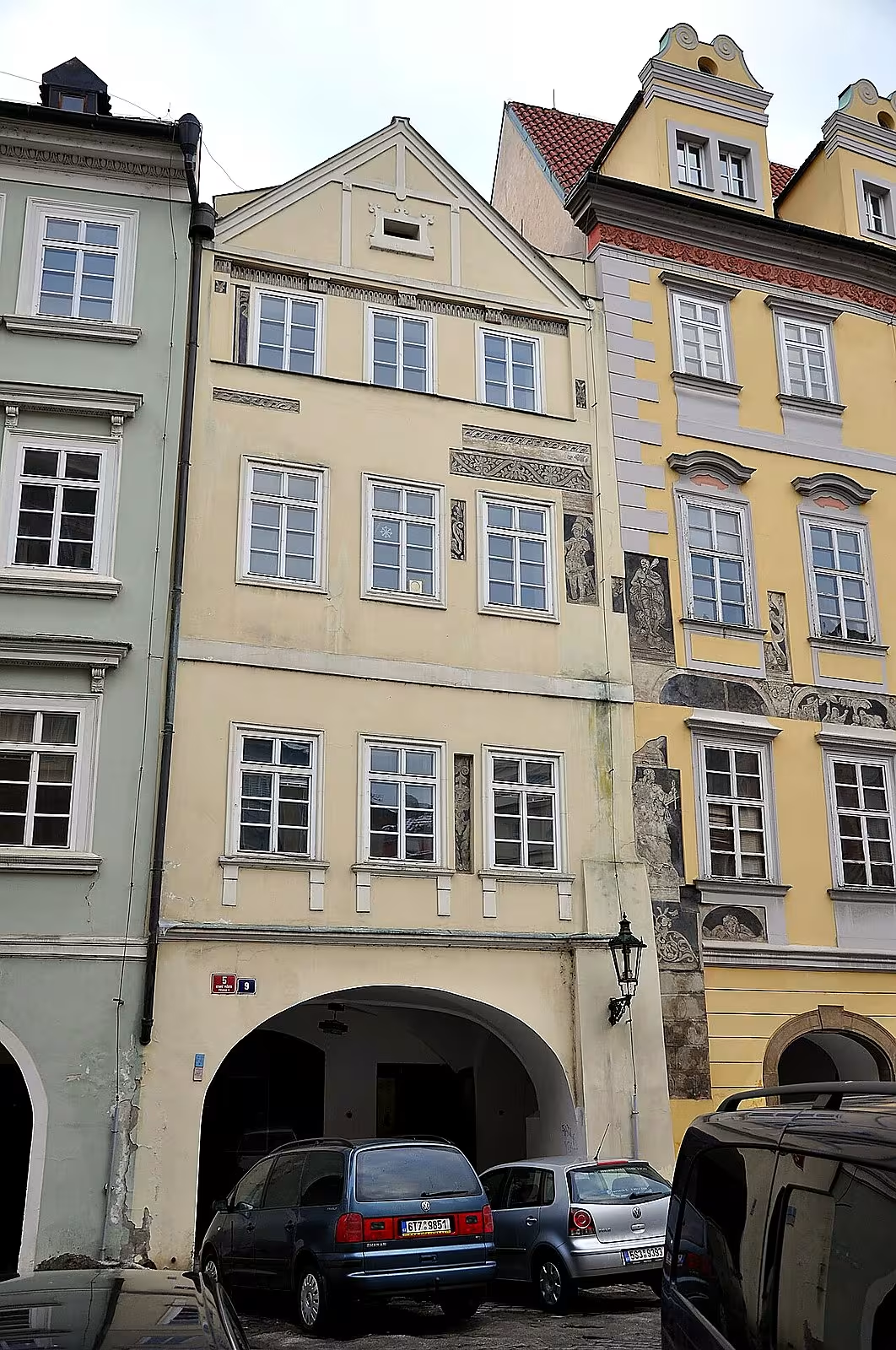
The House U Zlaté 2, also known as the House U Koníčka, is a historical monument in the Small Square in Prague 1 (no. 5). This medieval object boasts rich history and architectural changes that reflect city changes over centuries. The building is protected as a cultural monument of the Czech Republic. It stands between the houses of the Golden Horn and the Three Swords, which makes it a key part of the historic building of the Old Town.
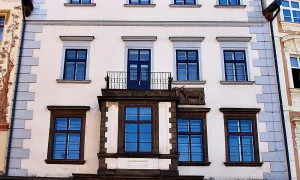
The construction was built before the increase of the Old Town terrain in the 13th century. Already in the second half of the 14th century it was extended to a two-storey object. The first mention of it dates back to 1400, when it was referred to as the House U Koníček. Over the years, the architecture of the house has evolved and adapted to period trends. The morning of the Renaissance period has left its mark in the construction, while the late Renaissance triangle shield with fragments of sgraffiti gives the facade a unique character. In 1790, thanks to Filip Heger, a classical adjustment took place, which brought new elements to the appearance of the building. Another significant change was recorded in the house in 1803 when the arch was walled up.
Architectural dům U Zlaté dvojky is especially interesting with its layered character. The original Gothic core manifests itself in sliding structures with a cross-ribbed vault, which probably represented the original ground floor. These elements are an important witness to the historical development of Prague townhouses. In the 18th and 19th centuries there were other modifications involving classical elements. In 1940, significant changes were made to the interiors according to Pavel Janák's design.
The building has undergone a number of property and architectural transformations that reflect the dynamics of urban life. In 1593 it was extended to its present form. Over the years, there have been other adjustments that included both aesthetic changes and adaptation to new needs. The classical reconstruction of Filip Heger in 1790 and later changes in interiors in 1940 represent key moments in the history of the house.
Today dům U Zlaté dvojky is not only a monument but also a witness to the rich history of Prague. Its architectural composition and historical changes attract interested people for history and lovers of architecture. Visitors have a unique opportunity to explore the layered development of townhouses and understand how Prague evolved from the Middle Ages to the present. Visiting this place is an opportunity to appreciate the historical value and architectural diversity of the Old Town, making it an unforgettable experience.
Then and now
Drag the slider to compare how the landmark may have looked when it was built with the view today.
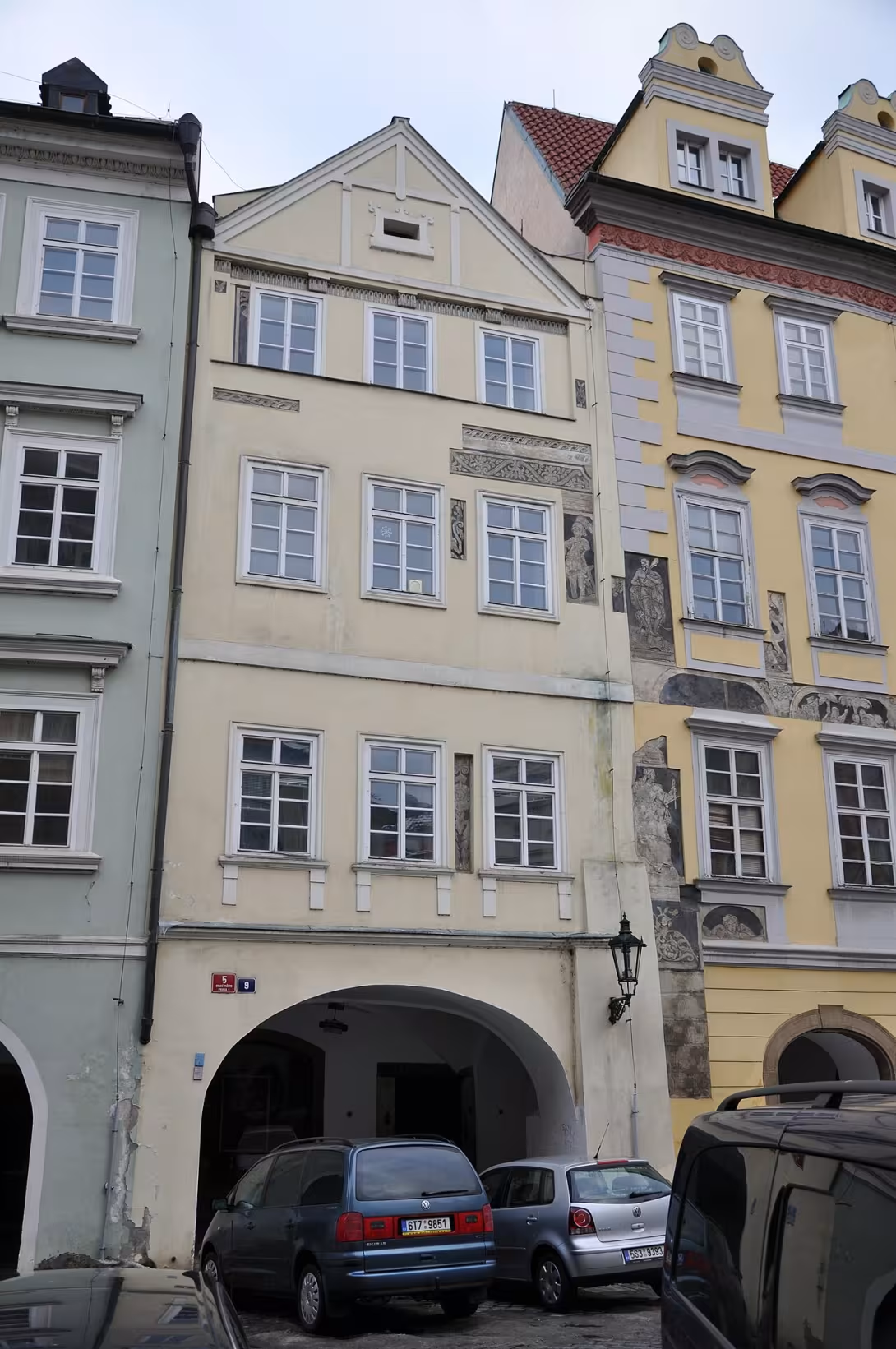

The historical appearance on the left is an AI-generated visualisation and serves as inspiration only.
Historical milestones
- 1400
- First mention of the house under the name U Konicek
- 1593
- Significant expansion of the house to today's extent
- 1790
- Classicism of the house Philip Heger
- 1803
- Grinding
Architectural development
The original Gothic core is visible in the battle with the sacrosanct vaults. The morning of the Renaissance period brought construction of the arch and late Renaissance triangle shield with sgraffiti. In the 18th and 19th centuries the house underwent classical modifications, while in 1940 the interiors were changed.
Historical events
In 1400, the house is first mentioned under the name U Konicek. Classicist adjustment was carried out in 1790 and in 1803 the arch was walled.
Points of interest
- The construction was built before the increase of the Old Town terrain in the 13th century. - The first mention of the building dates back to 1400, when it was referred to as the house U Koníček. - A late Renaissance triangle shield with fragments of sgraffiti gives the facade a unique character. - The original Gothic core manifests itself in sliding structures with a cross-rib arch. - In 1940, significant changes were made to the interior according to Pavel Janák's design.
Guide
Show guide text
This text was created by artificial intelligence and has not been editorially reviewed. It may contain inaccuracies.
Welcome to the heart of Prague's history. You are standing in the Small Square, in a place where every cube of old Prague paving and every stone of historical facades seem to tell thousands of stories. In front of you is a building that is living witness to the incredible transformation of our city - dům U Zlaté dvojky. If you look around you now, you'll notice that this object is not based on isolation. It's a solid part of a narrow, historical building that surrounds you. In the neighbourhood there are houses at the Golden Horn and the Three Swords, which together create a unique atmosphere of this corner of Prague's first quarter. Feel this atmosphere, feel the feeling that you have just stopped in time, in the middle of a pulsating metropolis, which, however, still hides its oldest secret under your feet.
Now let's look deeper into the past together to understand why this house is so special. Its roots go much further than it might seem. This building was built in the 13th century. Imagine that time when Prague had only just begun its grand journey to the role of the European metropolis. It's fascinating to realize that this house existed before there was a significant increase in terrain in this part of Old Town. That means that under your footsteps, deep down, there is a world that once was the level of the street. The first written mention of this place appeared only in 1400 and at that time the house was not known under today's name, but was known as the house U Koníček. Perhaps you can imagine the sound of hoof horses on this street when businessmen and passengers moved around the house.
Over the centuries the house has not stopped in any development. Every generation that lived here or did business here left its own trail, creating what experts call the layered development of urban architecture. In 1593, there was a very significant expansion of the house, thanks to which it gained the impressive extent of today's. It is at this time that elements enter the building that give its appearance an unmistakable character. If you look at the facade now, pay particular attention to what you see upstairs. Above your eyes is a late Renaissance triangle shield. Although time passes relentlessly, on its surface you can still touch fragments of sgraffiti. These decorative techniques, where the two-layered plaster creates a pattern, are a rare and beautiful proof of the aesthetics and craftsmanship at the time.
But now I want to take you to a time when the city's face began to change towards something else, quieter and stricter. Let's move forward in time to the end of the eighteenth century. In 1790 the architect Filip Heger entered the history of this house. He made classicist modifications to the house to deliver a new, then modern and harmonious form. This style brought order and symmetry into architecture, which over the years connected with the older, medieval shapes. Another important moment was the modification made in 1803 when the original arch of the house was walled up. This fundamentally changed the way the building interacts with the square space and the way people moved in it.
Many worlds meet in the architecture of this house. You have here the Gothic core, which is no longer directly seen today, but which is still present in its most important part - in the basement structures. These cellars are probably the oldest part of the entire building and form its unshakable foundation. On the other hand, in the history of the construction, the name of Pavel Janák is also included, which only confirms that this house has always been in contact with the most important creators and ideas of its time. It's fascinating how medieval cruelty, Renaissance decorativeness and Classicist elegance can combine in one object.
You may now ask what the greatest secret of this place is. It's just the connection to the depths of the earth. As I mentioned, dům U Zlaté dvojky is older than the very surface you are standing on. If you look at the windows or the ground floor level, try to imagine what this street looked like 700 years ago. The terrain was rising, the streets were changing, but this house lasted here. It's like you're looking at a ship that sails out of the sea while the water levels are constantly rising around it. This invisible layer of history is what gives this place its true weight and depth.
Now that you've been through the basic milestones of this house, I suggest you continue your walk around Little Square. Don't forget to stop by the neighbouring buildings, because it is in their relationship and in the details of their facades that you will be asking yourself. Continue to look at the surrounding facade, see the shadows that cast historic buildings, and try to find in every piece of stone the invisible thread that connects today's Prague to those ancient times. Thank you for spending this moment right here at the Golden Two House. I wish you a beautiful and full of discoveries another part of your journey through the city.
Tips for visitors
The best time to visit is early morning or late afternoon, when there are fewer people in Little Square. This allows you to explore the architectural details of this historic house from the 13th century without crowds of tourists.
With us we recommend to take comfortable shoes suitable for walking on historic tiles and a camera. For the best pictures of the facade, search for natural light during the golden hour, when the building works most notably and the colors are the most saturated.
As part of a short walk in the surroundings, visit the Small Square, the Golden Horn House and the Three Swords House. For families with children it is ideal to combine a tour with a short rest in the adjacent square where children have room for movement and parents can admire the surrounding architecture.
Frequently asked questions
Can the monument be visited?
This is a residential or farm building, not a museum with opening hours. Please view it from public space and respect the owners' privacy. We have no information about access to the interior.
Where is the monument?
Location: Praha 1, Hlavní město Praha. The map on this page shows the exact spot.
Why is the monument protected?
It is listed in the Central List of Cultural Monuments of the Czech Republic as a cultural monument (register no. 1000150186).
Businesses nearby
Do you run a restaurant, accommodation, shop, museum, rental, wellness or other visitor service near this monument? Show yourself directly to the people heading to it — this is how they will see you in the app and on the web:
Events nearby

Zdroj akcí: otevřená data měst a obcí ČR (Národní katalog otevřených dat) a kalendář akcí Národního památkového ústavu.
Nearby
Malé náměstí, dům U Zlatého rohu, dům U Tří mečů.
Accommodation nearby
Trips and activities nearby
Guided tours, tickets and activities nearby from GetYourGuide
Affiliate link: if you buy from the partner, we may receive a commission. The price for you does not change.
Search tours and activities →Themed route
1. Small square , square. This place is the perfect starting point for your walk. 2. house U Golden Rohu, historical building. It represents an interesting architectural element in close proximity to the square. 3. house U Three Sword , historical building. This object is an important neighbour within this location. 4. dům U Zlaté dvojky, main target. This monument is the culmination of the entire route.
Seasonal recommendations
Spring: In the spring period dům U Zlaté dvojky in Prague 1 is lit with sunny rays that decorate the green nature around the monument. Flowers and trees are beginning to bloom, which gives the atmosphere the life and breath of a new beginning. It is advisable for a visit to travel in the early afternoon when the temperature is pleasant and the crowds are less than the middle of the day. A good choice of clothes is light clothes or jackets with the possibility of easy licking.
Summer: In summer dům U Zlaté dvojky is a popular place for tourists who want to enjoy warm weather and historical architecture in a quiet environment. The sun illuminates the building in a special way, which is ideal for photography. Due to the large crowds, it is recommended to arrive earlier in the afternoon, as in the main summer season the room is often filled. In your clothes you should choose light fabrics and do not miss sunscreen to protect your skin.
Autumn: Autumn brings dům U Zlaté dvojky in colors of red, yellow and orange leaves, which gives the atmosphere a mild melancholy. The sun illuminates the building with long rays, which are projected on a green grassy area around the monument. For a visit it is advisable to choose a colder day when crowds are less than in the weather more sunny. Clothes should be mild and include a warm coat to protect against sudden cold.
Winter: Winter season offers dům U Zlaté dvojky in an atmosphere of snow tranquility or freezing rays of the sun. At this time, the building is lit with a special light, which is projected on white surfaces on streets and floors. Due to cold temperatures and shorter opening times, it is advisable to visit the memory early in the morning or on time in the afternoon when the crowds are less. The warm clothes with a shirt and a blanket for the head are essential for a comfortable stay at the outdoor visiting place.
Visualizations and artistic views


The visualisations are generated by artificial intelligence and serve as inspiration.
Photos from the area
Real photos taken near the monument


Zdroj a licence jsou uvedeny u každého snímku.
Tips from visitors
No tips yet. Be the first!
Log in and add your tip.
Sources and literature
Photos: Ben Skála / CC BY-SA 3.0 — Wikimedia Commons. The author and licence also appear when you hover over the image.
Faktickým podkladem tohoto textu byl článek na Wikipedii, jehož autory jsou přispěvatelé Wikipedie. Článek je dostupný pod licencí CC BY-SA 4.0.
Location on the map
Příběhy a pověsti
Legendy, pověsti a příběhy spjaté s touto památkou
Fotografie návštěvníků
Zatím žádné fotografie. Buďte první, kdo přidá fotografii z návštěvy!
Log in a přidejte svou fotografii nebo hodnoťte.
Za ověřenou návštěvu v aplikaci získáte víc bodů — poznáme podle GPS, že jste na místě.
Reviews and comments