



dům U Zlatého klíče - muzeum Museum building
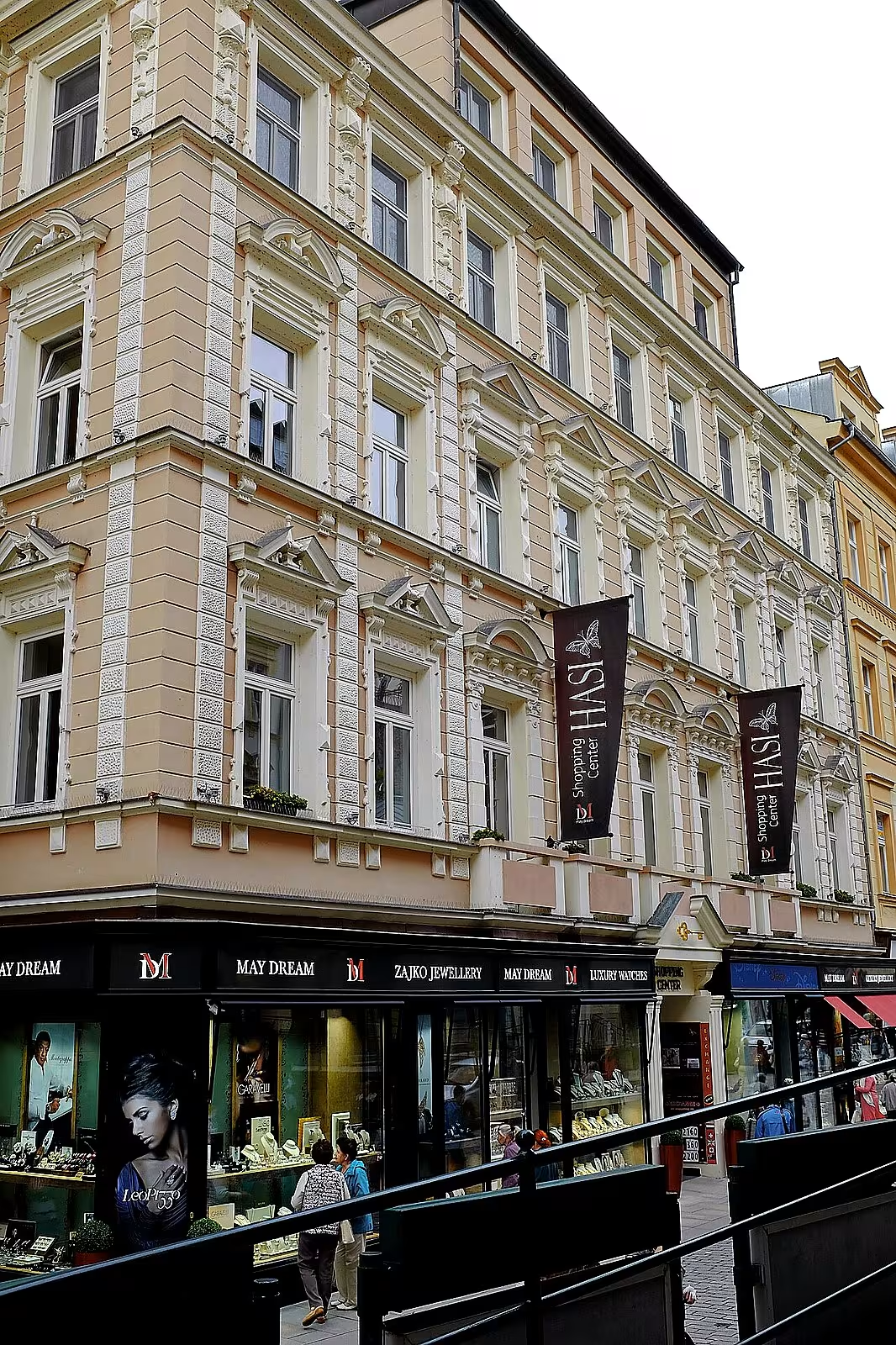
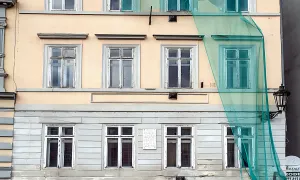
The Golden Key House is a classic terraced building in the historical centre of Karlovy Vary, specifically in Spa Street number 21 / 3. The building gained its present form between 1835 and 1836. Since 1964, it has been registered as a cultural monument. In the past, it served as a private museum as well as a practice of important spa doctors.
The first written mention of the house used at the time by the paint shop dates back to 1759. Already in 1788 the object was known as Goldener Schlüssel, the Golden Key. The current construction was built between 1835 and 1836 by the color master Bernard Richter. He later became Karlovy Vary's purkmaster and also devoted himself to the production of Karlovy Vary salt.
Architectural representation corresponds to a classical concept with later modifications. The four-storey house has nine axes and a roof superstructure. The ground floor was originally opened with equal translations on marble pillars, but these spaces were later used for commercial purposes. The facade, modified in historical style between 1889 and 1893 according to the design of the builder Konrad Eckle, is characterized by barefoot floors with presented pilasters and cordon mansions. The windows on the first and second floors complement profiled frames with triangular and semi-circular labels on the consoles. The windows on the third floor have frames with ears. The roof five axis superstructure is plastered.
House ownership changed during the 19th century. At the end of this century, the building was owned by Gustav and Karl Becher, who were behind the aforementioned reconstruction of the facade. A significant character connected to the house was the spa doctor Karl David Becher, who built a private museum in the building. His collections included a rich regional library, materials about Karlovy Vary and a collection of artistic links.
The house is closely connected with the history of Karlovy Vary spa. The appointment was carried out by a doctor Leopold Fleckles, who was visited by a German philosopher Karl Marx during treatment stays. This historical link led to the residence of the Karl Marx Museum between 1960 and 1990. At the time of its creation, it was the first museum of this name in the world. The house is currently used as a multi-purpose building in private ownership.
The Golden Key House is a valuable document of the building development of the spa centre and a reminder of the personalities that shaped the cultural life of the city. Visiting this place in the historical part of Karlovy Vary offers the opportunity to look at the history of architecture and social events that connected to the building over the centuries.
Historical milestones
- 1759
- First mention of a house with a dye factory.
- 1836
- Finishing the construction of the new house by the painter Bernard Richter.
- 1964
- Declaration of the object by cultural monument.
Architectural development
The original house was replaced by a new building in 1835-1836. The facade was modified in the historical style in 1889-1893. The building has boarded floors with pilasters and roof-plated superstructure.
Historical events
1759: the first written mention of a house with dyeing operation. 1835-1836: construction of a new house. 1889-1893: modification of the facade in a historic style. 1960-1990: operation of the Karl Marx Museum.
Owners
Bernard Richter (from 1835), Gustav and Karl Becher (end of the 19th century).
Points of interest
- The house gained its present form in the years eighteen hundred thirty-five to eighteen hundred thirty-six, when it was built by the colorist master Bernard Richter. - In the past, the building served as a private museum and practice of important spa doctors. - In the years nineteen hundred and sixty-ninety to nineteen nineteen, there was a museum dedicated to the thinker Karl Marx, who was the world's first museum at the time of its creation. - The first written mention of the house that used the paint shop at the time dates back to seventeen hundred fifty-nine. - The ground floor of the house was originally opened with flat translations on marble-lined pillars, but these spaces were later used for business purposes.
Guide
Show guide text
This text was created by artificial intelligence and has not been editorially reviewed. It may contain inaccuracies.
Welcome to the heart of Karlovy Vary. You are standing in one of the most important and oldest parts of this famous spa town, right on Spa Street. Feel the atmosphere surrounding you right now. You hear the silent noise of the city, the footsteps of tourists on the historic pavement and feel the weight of history that is hidden in every stone of this place. In front of your eyes is an impressive building that bears the name of the Golden Key House. This four-storey object you are now observing is not just an ordinary house in a number of other buildings. He is a living witness to the many years this city has lived and a place that carries traces of very important people and important events. Before you go on your journey, pay attention to his appearance for a moment and imagine what stories these walls could have preserved over the centuries and how the lives of the people who lived here changed.
Let us now go back deep into the past together to understand better how this house was created and why it is so important. Although its present form may seem solid, stable and immutable to you, its roots extend far beyond what is apparent at first sight. The first mention of this place appears in historical records in seven hundred and fifty-nine. At that time, however, there was no spa life as we know it today. At the time the house was mainly used as a place with dyeing operation. Imagine the period activity, the coloring masters working in difficult conditions, and the specific fragrance of the materials that probably worked here in the eighteenth century. But the real breakthrough for this object was not until the middle of the nineteenth century. In the years eighteen hundred and thirty-five to eighteen hundred and thirty-six, the house was rebuilt into a form you can perceive today. A man named Bernard Richter was behind this fundamental change. He was not only an ordinary craftsman, but a colorist master who later gained a great political position and became the purkmaster of this city. His personal success and ambition were reflected directly in this building, which he had built as his seat and place of business.
Now take a closer look at the building itself, which stands right in front of you. Note how the house rises to the height of four floors and how harmonically it fits into a number of neighboring objects in this historic street. Even though his basic structure comes from the times of Richter, his face that you see right now has undergone an important transformation. At the end of the nineteenth century, the facade was adapted to match the fashion and taste of the time. This new look, which is characteristic of the historical style, was designed by a builder named Konrád Eckle. When looking at the building, focus on its modification and how its appearance differs from simple buildings from the dyeing age. This modification gave the house elegance and dignity that you perceive when looking at its facade. It is a fascinating combination of two different epoch, when the old structure has merged with a new, richer aesthetics of the end of the century. This building is so important that, since nineteen hundred and sixty-four, it has been officially declared a cultural monument, which means that we must protect its appearance for future generations.
Let us now move on to the people who have lived or been closely associated with this house over the years. The Golden Key House was not just an ordinary house, but a place where very important people met. In addition to the founder, Bernard Richter, other famous personalities have left a trail here in history. Feel the weight of the names associated with this place. This includes the Becher family, namely Gustav Becher, Karl Becher and Karl David Becher. Their names are synonymous with the spa tradition and blossom in Karlovy Vary. The house was also a place where important doctors could work, which perfectly corresponds to the spa nature of the whole city. In the past there was also a practice where they took care of the health of the spa visitors. And if you're looking for a really big name, we need to mention Karl Marx. Imagine the discussion, the thoughts and the human destinies that could be in these spaces. Also here we can connect the name Leopold Fleckles. Each of these names adds another layer of mystery and historical importance to this place. The house was even a private museum at some point, which suggests that its owners were very interested in collecting and history.
Perhaps now you're being told how it happened that a house that began as simple dyeing grew into such an important object. The mystery lies in constant transformation and ability to adapt to new times. From craftsmanship in the eighteenth century, to the luxury residence of a successful purkmaster, to the place where science, medicine and collecting were mixed. It is fascinating to think about how over the years the importance of each room and floor has changed. Today, we see a beautiful historical building, but underneath it lies a complex network of human lives and professions, from colorers to world thinkers. Every change in the facade, every new function of this house was a reaction to how the city was and how the needs of its inhabitants changed.
Now you are ready to continue your walk through the historical center. The Golden Key House is just one of the many pearls Karlovy Vary offers. I recommend stopping by other buildings nearby and looking for similar traces of the past. Every house here has its own story waiting to be discovered. I hope that this brief insight into the history of this house has brought you interesting insight and that you will enjoy the rest of your day in this beautiful city. I wish you a beautiful and inspiring visit.
Tips for visitors
We recommend a visit in the morning during the working week, where there are fewer visitors in the historical centre and you can enjoy the architecture of the Golden Key House.
The house is located in the spa zone where the entrance is restricted. Check the current connection in the traffic search engine.
For a tour of the interior and surroundings, wear comfortable shoes suitable for walking on historic tiles. If you are planning to photograph, the best lighting conditions for capturing the facade of the house are in the morning when the sun illuminates the facade of the Spa Street.
Directly within ten minutes' walk you will find the Spa Colonnade and the main spring of Vladlo. The whole historical centre of Karlovy Vary offers a pleasant walk with many architectural details.
The location is suitable for families with children due to flat terrain around the colonnade. The Museum in the Golden Key House offers an interesting insight into the history, but we recommend to verify the accessibility of prams in advance due to the historical nature of the building.
Frequently asked questions
Can the monument be visited?
Some buildings of this kind are open for guided tours, others serve another purpose or are privately owned. We have not verified whether and when this monument is open – please ask the operator.
What are the opening hours and admission?
We have not verified the opening hours or admission. Current information is published by the operator.
Where is the monument?
Location: Karlovy Vary, Karlovarský kraj. The map on this page shows the exact spot.
Why is the monument protected?
It is listed in the Central List of Cultural Monuments of the Czech Republic as a cultural monument (register no. 1000127877).
Businesses nearby
Do you run a restaurant, accommodation, shop, museum, rental, wellness or other visitor service near this monument? Show yourself directly to the people heading to it — this is how they will see you in the app and on the web:
Nearby
Lázeňská kolonáda, Vřídlo, historické centrum Karlových Varů.
Accommodation nearby
Trips and activities nearby
Guided tours, tickets and activities nearby from GetYourGuide
Affiliate link: if you buy from the partner, we may receive a commission. The price for you does not change.
Search tours and activities →Themed route
Thematic cruise route from Karlovy Vary
1. * * * Golden Key House - Museum (museum) This historic place is not only one of the oldest buildings in the city, but also home to the museum. Visit him for a look at the ancient life and culture of Karlovy Vary. The museum offers fascinating exhibitions that will lead you back to the past.
2. * * Spa colonnade (architectural monument) After visiting the museum take a look at the Spa Colonnade, which is a symbol of the city. This impressive construction with its elegant design is an ideal place for short rest and photos. It is not only an architectural pearl, but also a starting point for visiting other spa institutions.
3. * * Swirl (memorable natural object) Shortly after the colonnade, look at the Vladlo, one of the most famous sources of the city. It's a place where water flows through the earth with temperatures above 73 degrees Celsius. This amazing natural phenomenon is an ideal place to amaze and learn about the history of Karlovy Vary springs.
4. * * Historical centre of Karlovy Vary (historical area) Finally, immerse yourself in the historic heart of the city, where you will enjoy the beautiful architecture and atmosphere of the 19th century. Walk the streets of this centre will allow you to discover other attractions and restaurants where you can relax and appreciate local specialities.
This route will offer a varied mix of history, architecture and nature, allowing you to understand deeply the spirit of Karlovy Vary.
Seasonal recommendations
Spring in Karlovy Vary is a time when nature awakens from its winter sleep and the city gains vivid colors. The Golden Key House appears in sunny lighting, which emphasizes its historical architecture. In the park around the monument, various kinds of flowers are blooming and trees are starting to sprout. The atmosphere is full of hope and new beginnings. We recommend visiting the museum in the early afternoon when the crowds are still mild and you can enjoy a quiet tour. A good diary with short hugs, but prepare for cooler evenings.
This summer Karlovy Vary offers visitors full experience. The Golden Key House is lit with long sunny rays, which creates ideal conditions for photography and relaxation on outdoor platforms. The atmosphere is revived by summer life and urban events. The best time to visit is in the early afternoon or in the evening when the crowds are mild. Prepare for warm weather with light clothes and sun protection.
Autumn Karlovy Vary offers a unique atmosphere where the city is colored in the vivid colour shades of the manger leaves. The Golden Key House offers romantic views and is ideal for a short tour before returning to the city. In this period it is recommended to visit the museum at noon when the crowds are the smallest. Wear warm suits and short shoes for comfortable walks.
Winter brings mild snow to Karlovy Vary and the city turns into a romantic winter scene. The Golden Key House is lit with evening light, which creates a magical effect. Prepare warm clothes with hat and gloves for comfort during the visit.
Visualizations and artistic views


The visualisations are generated by artificial intelligence and serve as inspiration.
Photos from the area
Real photos taken near the monument

Zdroj a licence jsou uvedeny u každého snímku.
Tips from visitors
No tips yet. Be the first!
Log in and add your tip.
Sources and literature
Photos: Lubor Ferenc / CC BY-SA 4.0 — Wikimedia Commons. The author and licence also appear when you hover over the image.
Faktickým podkladem tohoto textu byl článek na Wikipedii, jehož autory jsou přispěvatelé Wikipedie. Článek je dostupný pod licencí CC BY-SA 4.0.
Location on the map
More monuments – Karlovy Vary
Show all in the municipality
Příběhy a pověsti
Legendy, pověsti a příběhy spjaté s touto památkou
Fotografie návštěvníků
Zatím žádné fotografie. Buďte první, kdo přidá fotografii z návštěvy!
Log in a přidejte svou fotografii nebo hodnoťte.
Za ověřenou návštěvu v aplikaci získáte víc bodů — poznáme podle GPS, že jste na místě.
Reviews and comments