






evangelický kostel ve Sněžném Church
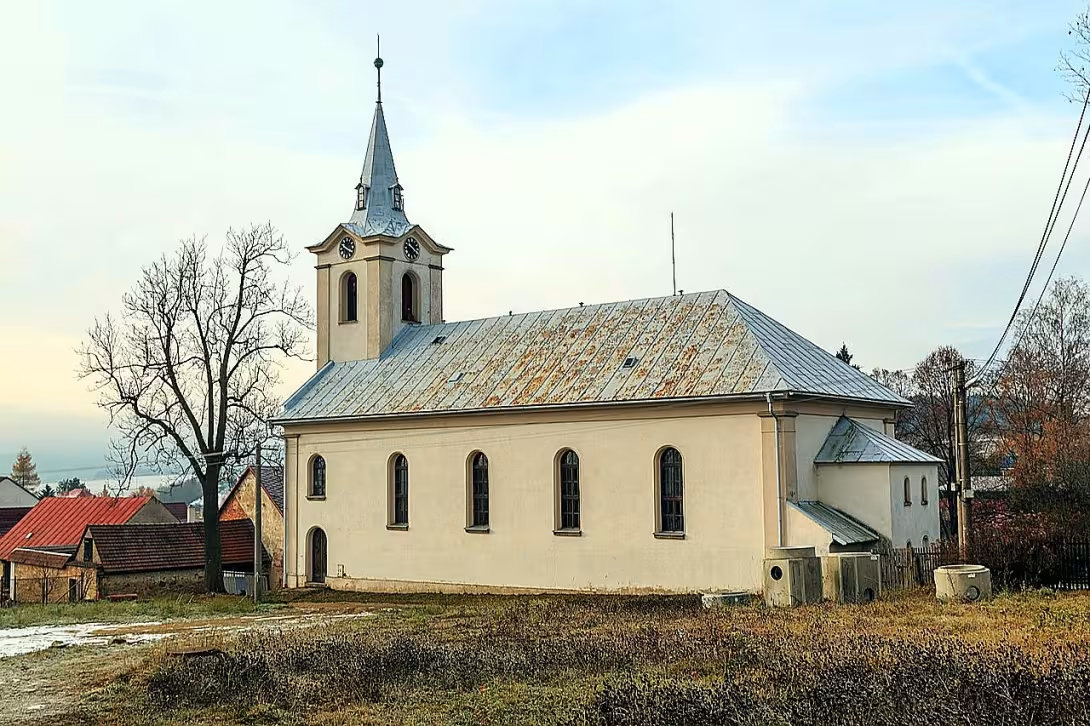
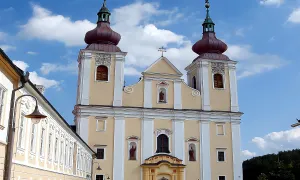
The Evangelical Church in Sněžné is a significant cultural monument of the Czech Brethren Church, located south of the main square in this charming town. Built in 1788 following Emperor Joseph II's Tolerance Patent, it reflects both the architectural style and religious tolerance of its time. This church stands out for its historical importance and as a testament to Enlightenment ideals that promoted greater religious freedom within the Habsburg Monarchy during the late 18th century.
The origins of this church trace back to the period after the Tolerance Patent, which allowed various Protestant congregations to establish themselves across Bohemia. In Sněžné, the Evangelical Reformed congregation was founded in 1782, leading to the construction of a prayer house that evolved into the church by 1788. This marked an important shift towards religious diversity and acceptance in the region.
Architecturally, the church is a single-nave rectangular structure with a four-sided tower attached to its western façade. The original design underwent significant changes during a major renovation from 1858 to 1861. During this period, the building was extended and elevated, an apse added, and a new tower constructed. These modifications culminated in a ceremonial opening on November 3rd, 1861. Further interior redesigns were carried out from 1951 to 1954 by architect Bohumil Bára, reflecting ongoing adaptations for its congregation.
Throughout its history, the church has remained under the administration of the Czech Brethren Church, serving as a spiritual home for its community. The establishment of an Evangelical cemetery in 1853 near the church underscores its role within the local religious landscape, sharing boundaries with a Roman Catholic cemetery separated by a wall.
Key events in the history of this monument include the initial establishment of the congregation and subsequent construction phases that transformed it into the structure seen today. These developments highlight the church's evolution from a simple prayer house to an architecturally significant building reflecting broader societal changes towards religious tolerance.
Today, the Evangelical Church in Sněžné is not only a place of worship but also a cultural monument protected as part of Czech heritage. Its historical significance and architectural features make it a worthwhile visit for those interested in exploring Bohemian history and religious diversity. Visitors are invited to appreciate its serene beauty and reflect on the enduring legacy of tolerance that it represents.
Then and now
Drag the slider to compare how the landmark may have looked when it was built with the view today.
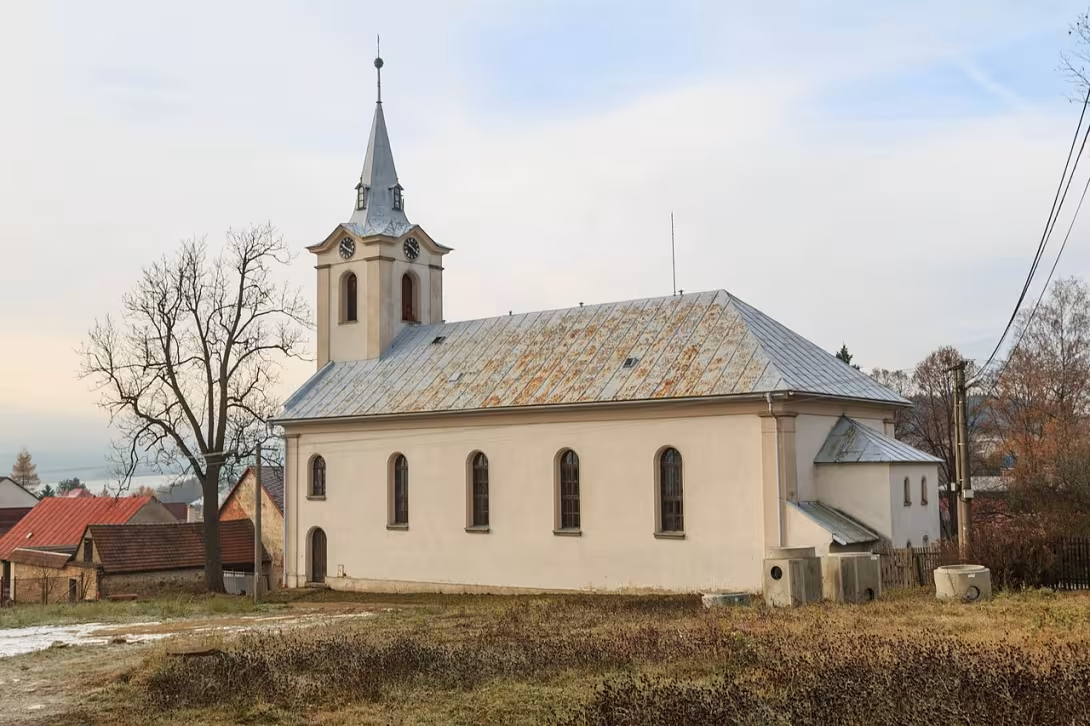

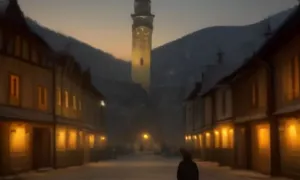
The historical appearance on the left is an AI-generated visualisation and serves as inspiration only.
Historical milestones
- 1782
- Establishment of the Evangelical Reformed congregation following the Tolerance Patent.
- 1788
- Construction of the prayer house that would become the church.
- 1858
- Renovation and expansion of the church began.
- 1861
- Completion of the renovation with a ceremonial opening on November 3rd.
- 1951
- Interior redesign by architect Bohumil Bára commenced.
- 1954
- Completion of the interior redesign.
Architectural development
The church was originally built as a single-nave rectangular structure with a four-sided tower attached to the western façade. It underwent significant changes during its renovation from 1858-1861, which included an extension and elevation of the building, addition of an apse, and construction of a new tower. The interior was redesigned in 1951-1954 by architect Bohumil Bára.
Historical events
The Evangelical Reformed congregation was established in Sněžné in 1782 following the Tolerance Patent, leading to the construction of a prayer house in 1788.
A significant renovation and expansion took place between 1858-1861, culminating in a ceremonial opening on November 3rd.
Points of interest
- Despite being built after the Tolerance Patent of 1781, the Evangelical Church in Sněžné was constructed during a time when religious tensions were still prevalent, symbolizing a bold step towards acceptance and coexistence within the Habsburg Monarchy.
- The church's architectural evolution reflects broader societal changes; its major renovation between 1858 and 1861 included an apse and new tower, mirroring shifts in both aesthetic preferences and community needs during that period.
- Architect Bohumil Bára played a crucial role in the church’s history by redesigning its interior from 1951 to 1954, showcasing how mid-20th-century architectural trends influenced religious spaces even as they continued serving traditional spiritual purposes.
- The establishment of an Evangelical cemetery near the church in 1853 highlights the growing permanence and acceptance of Protestant communities in Sněžné, marking a significant development in local burial practices and interfaith relations.
- A unique aspect of the church’s location is its proximity to a Roman Catholic cemetery, separated only by a wall, which serves as a physical reminder of both division and coexistence between different faiths within the same community.
Guide
This guide is narrated by a synthetic voice generated by artificial intelligence.
Show guide text
This text was created by artificial intelligence and has not been editorially reviewed. It may contain inaccuracies.
Welcome in front of the Evangelical Church in Sněžné. You are standing before a unique cultural monument that reflects the architectural style and religious tolerance of its time. The church is located south of the main square, at the heart of the historic village.
Let's delve into history. In 1782, an evangelical reformed community was established in accordance with the Tolerance Patent. A prayer house was built in 1788, which would later become a church. At that time, religious tolerance was still waning, but the church in Sněžné symbolized the courage to accept and coexist within the Habsburg Monarchy.
Notice how the church reflects the architectural style of its era. The façade is adorned with simple pilasters and a semicircular arch. Take a look at the façade, where you can see details from the renovation period between 1858-1861. During this time, the church was expanded and heightened; a new apse and tower were added. Pay attention to the tower located on the eastern side of the church. It is a dominant feature of both the church and the entire town.
Now focus on the interior of the church. In 1951, architect Bohumil Bára began an interior redesign that was completed in 1954. The interior space of the church is a unique example of architectural evolution.
The Church in Sněžné is full of interesting stories and personalities. Although there are no historical figures directly associated with this church, its architectural development and location at the heart of the village make it a significant cultural monument.
An interesting fact is that despite its origins during a time when religious tensions still lingered, the Church in Sněžné symbolizes the courage to accept and coexist. Explore the area around the church and feel the atmosphere of peace and tranquility that is present here.
Thank you for your attention. I hope you enjoyed the Church in Sněžné. Take a look at other parts of the village and discover its secrets.
Tips for visitors
The best time to visit the Evangelical Church in Sněžné is during late spring or early autumn, when the weather is mild and pleasant for walking around the area. The natural lighting at these times of year enhances the architectural details of the church, making it ideal for photography enthusiasts. Additionally, visiting outside peak tourist seasons can provide a more serene experience with fewer crowds.
Public transportation options are accessible and include buses that connect to nearby towns and villages. If using public transport, verify the latest schedules online for a smooth journey.
When visiting the Evangelical Church, consider bringing comfortable walking shoes as you may want to explore the surrounding area, including the adjacent cemeteries and main square. A camera or smartphone is recommended for capturing the church’s architectural beauty, especially during golden hour when sunlight creates stunning contrasts. Additionally, bring a light jacket in case of temperature changes.
For photography enthusiasts, the best spots around the Evangelical Church are at its entrance and from the south side where you can capture the church against the backdrop of the cemetery wall. The soft morning or late afternoon light provides excellent conditions for highlighting the church’s features. Be mindful of any restrictions on photography within the church itself.
Nearby, within a 30-minute walk, is the Roman Catholic cemetery that shares a boundary with the Evangelical cemetery. This area offers an interesting contrast and historical context to explore. For families with children, consider visiting Sněžné’s main square where there are benches for resting and local shops or cafes for refreshments. Engaging children in learning about the history of these sites can make the visit more enriching.
Frequently asked questions
Can the monument be visited?
Religious buildings are usually open mainly during services; at other times a visit is normally arranged with the parish or the operator. We have not verified specific times.
Where is the monument?
Location: Sněžné, Kraj Vysočina. The map on this page shows the exact spot.
Why is the monument protected?
It is listed in the Central List of Cultural Monuments of the Czech Republic as a cultural monument (register no. 1000154151).
Businesses nearby
Do you run a restaurant, accommodation, shop, museum, rental, wellness or other visitor service near this monument? Show yourself directly to the people heading to it — this is how they will see you in the app and on the web:
Events nearby
Zdroj akcí: otevřená data měst a obcí ČR (Národní katalog otevřených dat) a kalendář akcí Národního památkového ústavu.
Nearby
The church is located south of Sněžné's main square and is near an Evangelical cemetery established in 1853. It shares a boundary with a Roman Catholic cemetery, separated by a wall.
Accommodation nearby
Themed route
Evangelical Church in Sněžné and Surroundings
1. Evangelical Church in Sněžné Type: church Worth visiting for its unique architecture and history. The church is a dominant feature of the village of Sněžné, and its construction is associated with the arrival of evangelicals in the region.
2. Evangelical Cemetery Type: cemetery Worth visiting for its history and as a place to reflect on life and death. The evangelical cemetery was established in 1853 and lies next to the church.
3. Roman Catholic Cemetery Type: cemetery Worth visiting for its architecture and as a place to compare two religious traditions. The Roman Catholic cemetery is separated from the evangelical cemetery by a wall.
Seasonal recommendations
Jaro
Specific: In the spring, the church in Sněžné is surrounded by beautiful nature as trees begin to bloom and life returns around the church. The atmosphere is calm and quiet, as if the church is waking up from its winter slumber. The lighting of the church is soft and warm, creating a pleasant ambiance for visiting.
Practical Tips: The best time to visit the church is in the spring morning or afternoon when there are fewer people. We recommend bringing a camera so visitors can capture the beauty of the spring nature. Don't forget to explore the surrounding area where you can see blooming trees and flowers.
Léto
Specific: In the summer months, the church in Sněžné is enveloped by a lively atmosphere as locals and visitors spend time on walks and outings. The lighting of the church is bright and airy, creating a pleasant ambiance for visiting. Nature around the church is at its peak, with blooming flowers and lush greenery.
Practical Tips: We recommend visiting the church in early morning or late afternoon sunlight when there are fewer people. Don't forget to bring a UV-protective case for your camera so it won't be damaged by the sun. Morning walks around the church are also great opportunities to observe birds and flowers.
Podzim
Specific: In autumn, the church in Sněžné is surrounded by beautiful colors as tree leaves turn golden and red hues. The atmosphere is calm and quiet, as if the church is preparing for its winter slumber. The lighting of the church is soft and warm, creating a pleasant ambiance for visiting.
Practical Tips: The best time to visit the church is in autumn morning or afternoon when there are fewer people. We recommend bringing a camera so visitors can capture the beauty of the autumn nature. Don't forget to explore the surrounding area where you can see beautiful leaf colors and trees.
Zima
Specific: In winter, the church in Sněžné is surrounded by a calm and quiet atmosphere, as if the church is asleep. The lighting of the church is soft and warm, creating a pleasant ambiance for visiting. Nature around the church is snow-covered and serene, creating an exceptional atmosphere.
Practical Tips: We recommend visiting the church in early morning or late afternoon sunlight when there are fewer people. Don't forget to bring warm clothing and a scarf so you won't be harmed by the cold. Morning walks around the church are also great opportunities to observe snow and winter nature.
Visualizations and artistic views


The visualisations are generated by artificial intelligence and serve as inspiration.
Photos from the area
Real photos taken near the monument


Zdroj a licence jsou uvedeny u každého snímku.
Tips from visitors
No tips yet. Be the first!
Log in and add your tip.
Sources and literature
Photos: Petr1888 / CC BY-SA 4.0 — Wikimedia Commons. The author and licence also appear when you hover over the image.
Faktickým podkladem tohoto textu byl článek na Wikipedii, jehož autory jsou přispěvatelé Wikipedie. Článek je dostupný pod licencí CC BY-SA 4.0.
Location on the map

Příběhy a pověsti
Legendy, pověsti a příběhy spjaté s touto památkou
Fotografie návštěvníků
Zatím žádné fotografie. Buďte první, kdo přidá fotografii z návštěvy!
Log in a přidejte svou fotografii nebo hodnoťte.
Za ověřenou návštěvu v aplikaci získáte víc bodů — poznáme podle GPS, že jste na místě.
Reviews and comments