



Tvrz (Vříšť) Fortress
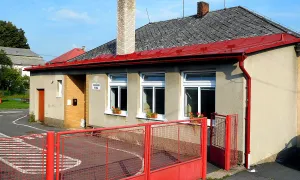
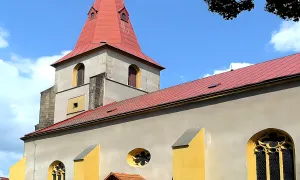
The manor house, often referred to as the fortress, lies in the village Výště, which is part of the town Sněžné in the district Žďar nad Sázavou near the road II / 354. The date of its creation is not known, but the core of the construction is considered medieval. Since 1970, the building has been protected as a cultural monument.
There are few reports of the oldest history of construction. The National Heritage Institute states that the core of the building comes from the Middle Ages. Although the first written mention of the village of Vříště dates back to 1666, the existence of the settlement can be moved up to the 14th century thanks to the mention of the river Vříšák (now Frysávka). It is possible that the manor house itself was created after 1666 in connection with the development of the Kadovský ironworks and hamrys subject to the New Town Manor.
The architecture of the building is determined by the medieval core, whose exact construction time cannot be clearly determined. The construction has undergone several reconstruction over time, including extensive work in the early 21st century and further reconstruction in 2019.
In the past, the building performed an important administrative function as the seat of the New Town Manor's master and mining office; was thus the administrative center of the local hardware store. After the disappearance of the Kadov ironworks in 1875 the object changed its purpose and served the retired officials of the estate. At some time there was also a poet Petr Křička.
After extensive reconstruction started in August 2019, there is a manufacturer of herbal mixtures and syrups within the family farm Sedmiště. The traffic also includes Apartments Sedmištřiska Vříště. Before this renewal, they tried unsuccessfully to run a guesthouse with a restaurant in 2011- 2014.
The monument presents an interesting connection between the medieval core and the industrial history of the region. It is a suitable destination for visitors who are looking for traces of an old hardware store and a quiet environment of the village of Vříště.
Historical milestones
- 1666
- First written mention of the village of Vříště.
- 1875
- The disappearance of the Kadov ironworks.
- 1970
- The building is protected as a cultural monument.
- 2019
- Starting operation after extensive reconstruction.
Architectural development
The construction contains a medieval core whose exact period of creation cannot be determined. The building underwent several reconstructions, including extensive work in the early 21st century and reconstruction in 2019.
Historical events
1666: First written mention of the village of Vříště. 1875: The demise of the Kadov ironworks. 1970: The object is declared a cultural monument. 2019: Start of operation after extensive reconstruction.
Points of interest
- The fortress of Vříště is considered a medieval core and since 1970 it has been protected as a cultural monument.
- The oldest mention of the settlement The spring dates back to the 14th century, although the first written mention dates back to 1666.
- The fort served as an administrative centre for the hardware store of the New Town estate and was later used by retired officials.
- Poet Petr Křička stayed in the building at some point in her history.
- After the reconstruction started in August 2019, there is the operation of the Sedmiště Family Farm, which includes the production of herbal mixtures and syrups.
Guide
Show guide text
This text was created by artificial intelligence and has not been editorially reviewed. It may contain inaccuracies.
Welcome to this extraordinary building that carries traces of centuries. You are standing right in front of the Sorcery, the place where history touches the present in every detail of the surrounding landscape. At first glance, you may think you're looking at a simple, quiet house, but if you stop and perceive the atmosphere of this place, you begin to feel the weight of the time that flows relentlessly. This building is not just a cluster of walls, it is a silent witness to the changes that passed through this valley, from the time of medieval masters to today's peaceful village existence. Feel the strange combination of power and humility this object emits.
Let us now together move deeper into the past and try to discover the secrets that this fortress hides. Although this building is now referred to as a mansion, its roots are much older and deeper. Although the first clear written mention of the village of Vříště dates back to 16 hundred and sixty-six, historical findings tell us that the village itself existed here in the 14th century. This means that this place was inhabited long before it entered the official chronicle. The very core of the building you're currently observing is considered medieval. This is a fascinating idea that the basic structure on which the current object stands was laid at a time when the world was still formed under the strain of knighthood and early agriculture. Although the exact date of the creation of the entire fortress remains in the fog and historians are still looking for answers, it is the uncertainty that gives this place its unique touch of mystery.
Now pay attention to how this building served people in the past and how it played a role in the economy of the whole area. This fortress was not only a seat, but mainly a strategic and administrative centre. At a certain time, it was a key point for the local industry, specifically for the hardware industry, which was under the administration of the New Town estate. Imagine the activity, the constant movement of people, tools and raw materials that have been around this place in the past. It was an area where production and management were decided, a place that was at the heart of economic life in the region. But this era of industrial importance had its end. In the year one thousand eight hundred seventy-five, the Kadovsky ironworks were destroyed, and with that, a huge turn in the life of this place. The building no longer served as an industrial hub, but its significance did not disappear. Instead of ironworks, officials who managed the surrounding land and human fates within the estate began to reside here. The fortress has thus turned from a place of hard work into a place of administrative power and peace.
If you look at the structure itself now, try to perceive its shape and structure. Although we don't know the names of the particular architects who designed or modified this building, we can read the story of her many reconstructions in her lines. Feel the interesting combination of the stability of the ancient medieval core and the subsequent modifications that gave the building its present appearance. The construction has undergone many changes to meet the needs of its owners and the changing world. From the fort to the men's house, from the center of the hardware store to the mansion of the officials. Notice how the building adapted to its functions without losing its original nature. It is a fascinating example of how architecture can adapt to the needs of time while retaining its own identity. Even though the building was recently, in the year two thousand nineteen, undergoing extensive and meticulous reconstruction, you still feel the ancient weight and stability that people put into it hundreds of years ago.
Every important place has its own stories and personalities that give it a soul. Even this fortress has its own trace of the human spirit. The poet Petr Křička lived here briefly. Imagine him looking for inspiration in these spaces, watching the surrounding countryside, and how his words tried to capture the moments that we now see as history. His presence here gives the place some poetic depth. Maybe even if you look at the walls or the surrounding space now, you can feel an echo of his thoughts and feelings. This short but important trail of artist reminds that even in places intended for administration and work can find refuge and inspiration for the human soul.
But what's most interesting about this place? Maybe it's just the ambiguity that follows us from the very beginning. When exactly was the fort built? Who was her first owner? This question remains without a clear answer, and that is precisely what its magic lies in. It's like composing a mosaic where we're missing some key pieces, which forces us to imagine. Another interesting thing is that since the year one thousand nine hundred seventy this object has been protected as a cultural monument. This is proof that its value is not only in its usefulness, but above all in its ability to tell about the past and remind us of our roots. This protection ensures that even in a changing world this part of history will be preserved for future generations.
Today, however, life in this place is quite different from at the time of ironworks or officials. The Fortress of Vříště today serves as a family farm and accommodation facility. It's a place where history once again meets day-to-day work, the rhythm of nature and the relaxation of people. This cycle of life, which is constantly being repeated here, is perhaps the most beautiful part of this place. It requires us to look at him differently, not just as a dead object of the past, but as a living part of the present.
Now I'd like to ask you to move on slowly and continue to explore this area. Feel the calm that exists here, and look at the world around you through the eyes of someone who knows that beneath the surface of every thing lies deeper meaning and ancient stories. Enjoy the atmosphere of this place and allow yourself to drift through its history. Thank you for spending time with this historic monument. We wish you a pleasant journey and wonderful moments on your next discovery.
Tips for visitors
The best time to visit is spring and autumn months when the surrounding nature around the river The spring offers the most beautiful colors. For photography we recommend late afternoon, when soft light best highlights the details of the medieval core building.
You can easily reach the monument by car on Road II / 354, where it is possible to park near the building. The location is also available by public transport; We recommend checking the current connections and timetables in the Internet search engine.
We recommend you bring comfortable shoes suitable for the field, especially if you plan to walk along Frysávka. For families with children, the surroundings of the river are ideal for a short trip and exploring nature near the historic mansion.
In the immediate vicinity of the monument is the river Vríště, also known as Frysávka, which is a great addition to the tour of the fortress itself. Due to the position on road II / 354, access to the building is very fast and easy.
Frequently asked questions
Can the monument be visited?
Some buildings of this kind are open for guided tours, others serve another purpose or are privately owned. We have not verified whether and when this monument is open – please ask the operator.
What are the opening hours and admission?
We have not verified the opening hours or admission. Current information is published by the operator.
Where is the monument?
Location: Sněžné, Kraj Vysočina. The map on this page shows the exact spot.
Why is the monument protected?
It is listed in the Central List of Cultural Monuments of the Czech Republic as a cultural monument (register no. 1000129256).
Businesses nearby
Do you run a restaurant, accommodation, shop, museum, rental, wellness or other visitor service near this monument? Show yourself directly to the people heading to it — this is how they will see you in the app and on the web:
Events nearby
Zdroj akcí: otevřená data měst a obcí ČR (Národní katalog otevřených dat) a kalendář akcí Národního památkového ústavu.
Nearby
V blízkosti se nachází říčka Vříšť (Fryšávka) a silnice II/354.
Accommodation nearby
Themed route
1. Road II / 354, type: communication. It serves as the main access route to the monument in the village Sněžné. 2. Tvrz (Vříšť), type: fortress. The main destination of the visit and a significant historical object. 3. River Sparrow (Fryshavka), type: water flow. A natural element in the immediate vicinity of the fortress that complements the landscape.
Seasonal recommendations
In spring, The whirlwind awakens along with the surrounding nature. Growing trees and lush greenery create a pleasant environment for a tour. The light is softer in this period and the colors act very naturally. We recommend wearing layered clothes because the wounds can still be cold while the afternoon will be pleasant. Due to lower attendance, the ideal time to visit the morning is when everything is in the best condition.
Summer months bring intense sunlight and full vegetation around the fortress, which provides a pleasant shade. The atmosphere is alive and full of energy. Due to the increased number of visitors in the main summer season, it is best to arrive immediately after opening to avoid the biggest crowds and the biggest heat. Dress lightly and remember enough drinking water to make your journey pleasant even during the hottest hours of the day.
The autumn period offers a melancholy and quiet atmosphere around the historic building. The golden and brown shades of leaves around the fort create an amazing contrast with its walls, especially in low sunlight. It is advisable to prepare waterproof shoes and warmer layers of clothing because moisture and morning mist may be common. The best time to observe color transformation is in the morning.
In winter there is a fort The roar is very raw and majestic, especially if the landscape is covered with snow. The atmosphere is quiet and lonely, allowing a deeper perception of history without disturbing influences. Due to the shorter day and lower temperatures we recommend to come at a time when there is the most light and not forget the very warm clothes and quality accessories. Visiting at this time is the most peaceful, but requires good preparation for the cold.
Visualizations and artistic views


The visualisations are generated by artificial intelligence and serve as inspiration.
Photos from the area
Real photos taken near the monument

Zdroj a licence jsou uvedeny u každého snímku.
Tips from visitors
No tips yet. Be the first!
Log in and add your tip.
Sources and literature
Photos: Petr1888 / CC BY-SA 4.0 — Wikimedia Commons. The author and licence also appear when you hover over the image.
Faktickým podkladem tohoto textu byl článek na Wikipedii, jehož autory jsou přispěvatelé Wikipedie. Článek je dostupný pod licencí CC BY-SA 4.0.
Location on the map


Příběhy a pověsti
Legendy, pověsti a příběhy spjaté s touto památkou
Fotografie návštěvníků
Zatím žádné fotografie. Buďte první, kdo přidá fotografii z návštěvy!
Log in a přidejte svou fotografii nebo hodnoťte.
Za ověřenou návštěvu v aplikaci získáte víc bodů — poznáme podle GPS, že jste na místě.
Reviews and comments