



Fara ve Svratce Parish house
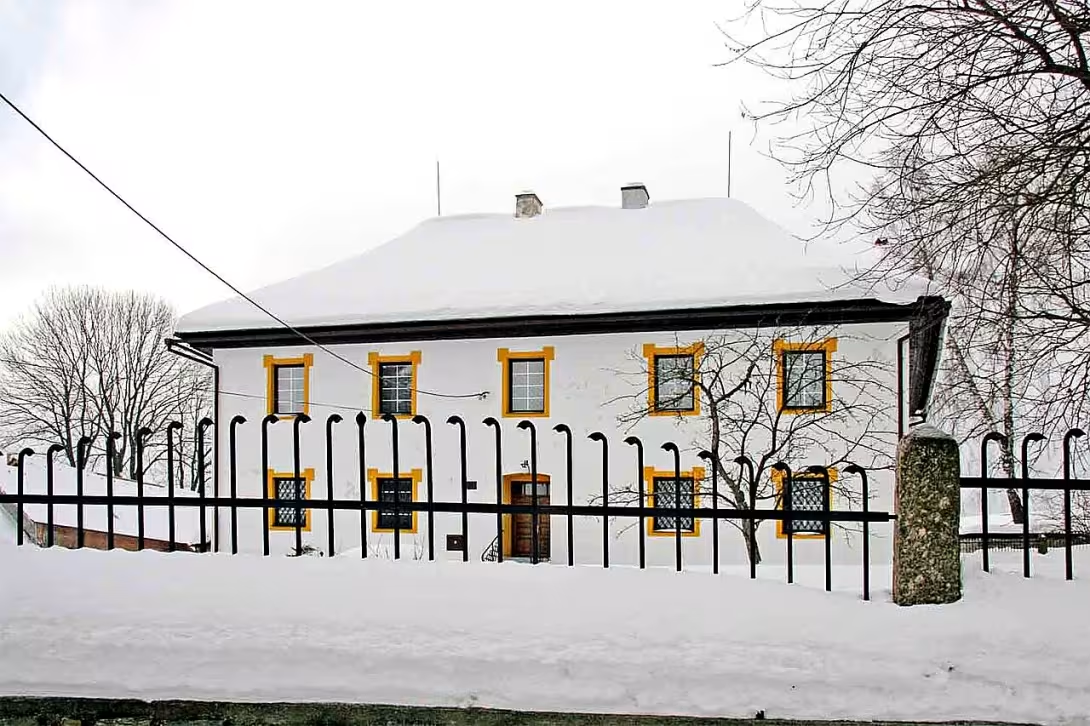
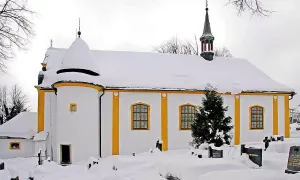
Fara ve Svratce is a late Baroque building from 1788- 1790, located in the village Svratka in the district of Ždár nad Sazavou. The Ministry of Culture of the Czech Republic declared it a cultural monument in 1995. Together with the Church of the Birth of St. John the Baptist at the square of the National Uprising, it is a significant historical entity.
Written references to the parish and church date back to 1350. During the Hussite wars, the object became oppressive. During the 30-year war, Svratka lost part of the population and its own church administration. Since 1624, the sprat church has been filial to hlinic, where the Roman Catholic priest Jan Hájek worked in counterreformation. He ran a matrix for several surrounding filial churches, including Svratka. The 1673 records show that the scrunchies had to do 12 cheeses and 15 and a half of butter ribs. His own priest returned to the village only in 1737 on the basis of an erectile act of 24 April of the same year; He managed together for Svratka, Heralese and the Hollow Fish.
The present building of the rectory was built in 1788-1790 simultaneously with the reconstruction of the church. It is performed in the late Baroque style and underwent repair in the 1990s. The architecture is sober and lacks significant decorating. The farm area also includes an economic building.
Fara was closely linked to the local school. The first mention of the school in the parish garden dates back to 1735, later, in the second half of the 18th century, a two-storey building was built opposite the church. Administrative records have been kept systematically; the matrix was founded in 1737 and the commemorative book in 1836.
Today the rectory is a respected cultural monument. During the pre-Christmas and Christmas periods, a living Bethlehem is regularly held in the parish garden, which is already a tradition. Fara ve Svratce represents an authentic example of rural Baroque construction and is an important witness to the ecclesiastical development in the region. Her visit offers insight into the history of local administration and community.
Then and now
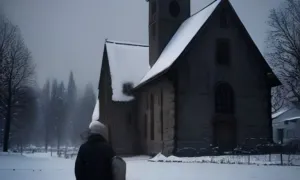
Drag the slider to compare how the landmark may have looked when it was built with the view today.
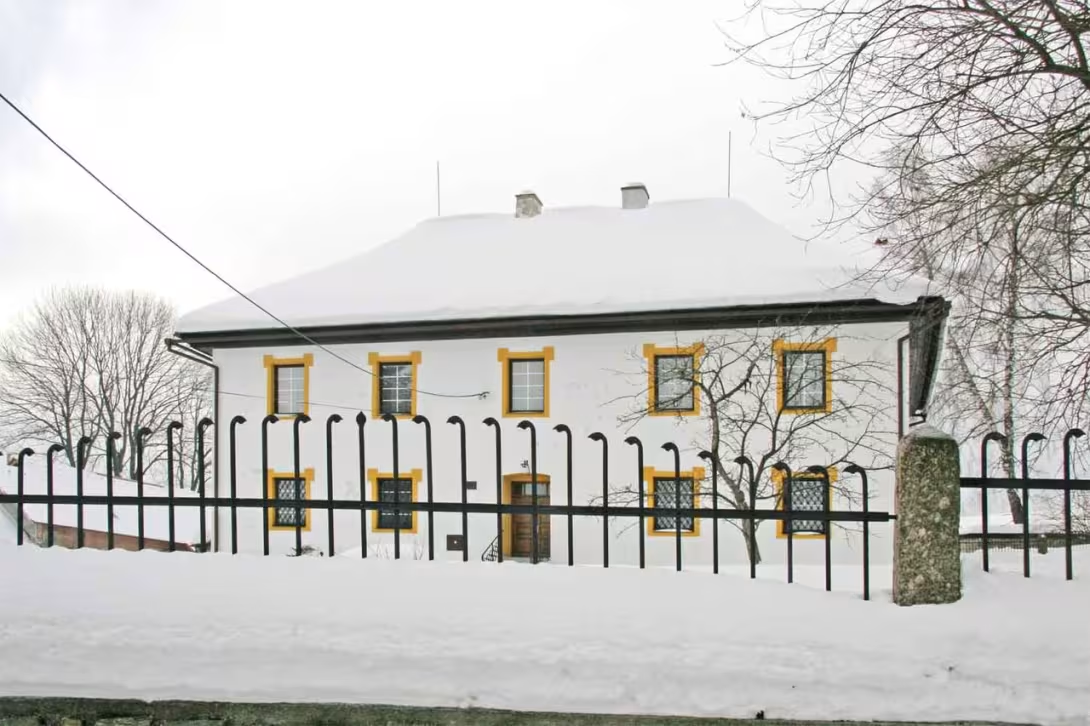

The historical appearance on the left is an AI-generated visualisation and serves as inspiration only.
Historical milestones
- around 1350
- First written mention of the parish and church
- 1624
- The church became filial to the Hlinic
- 1735
- First mention of school in the parish garden
- 1737
- Return to your own vicar and establish a mantle
- 1788-1790
- Status of the present farm building
- 1995
- Declaration of the building for a cultural monument
Architectural development
The present parish building was built during the reconstruction of the church in the late Baroque style. There were repairs in the 1990s that did not include significant decorative elements.
Historical events
- 1350
- Fara is mentioned in writing together with the church.
- 1624
- The Svratecký church became filial to the Hlinsky church.
- 1737
- Based on an erection certificate, Svratka returned his own priest.
Points of interest
- Fara ve Svratce is a late Baroque building built in 1788-1790. - The Czech Ministry of Culture declared it a cultural monument in 1995. - Written references to the parish and church date back to 1350. - His own priest returned to the village of Svratka only in 1737 on the basis of an erection certificate of 24 April of the same year. - The first mention of the school in the parish garden dates back to 1735, later a two-storey building was built opposite the church.
Guide
Show guide text
This text was created by artificial intelligence and has not been editorially reviewed. It may contain inaccuracies.
Welcome to The Swinger. Stop for a moment, take a deep breath and let the atmosphere of this place surround you. Right now, you're standing in front of a building that is a silent witness to centuries of history, to the parish. Look at her. In front of you is a building that tells the story of faith, community and time changes. It is a house that is not just a common residence, but the center of the spiritual and social life of the locals. Feel her presence here, at the National Uprising Square, where history and present are joined.
When you look at this building, you see an example of late Baroque architecture. This construction was carried out between 1788 and 1790. Try to imagine when these walls began to build. It was the end of the eighteenth century, a period of great change and thinking about the new order of the world. It is at this time that the current form of the rectory has emerged, which welcomes us today with its calm and balanced face. Although we do not know the names of particular builders or architects, their work still gives us a sense of stability and endurance.
Now pay attention to the overall appearance of the building. Look at her facade and feel the rhythm of the windows and the overall mass of the house. The late Baroque, in which the rectory is built, is characterized by some elegance, but at the same time it is beginning to move towards more sobriety. Notice how the building fits into the vicinity of the square and how closely connected it is with the Church of the Birth of St. John the Baptist, located next door. These two buildings form one inseparable whole, which defines the character of the whole centre of the village.
Now let's move much further back in time. Although the current building dates back to the late eighteenth century, the history of this place dates back to the Middle Ages. We date the first written references to the parish and church in this location until 1350. Imagine how many generations of people have passed through here, how many prayers have been spoken and how many life breaks have taken place here over these nearly 700 years. It is fascinating to think that already in the middle of the 14th century there was a centre of spiritual guidance that served the local people.
But history has not always been simple and linear. There was a significant change in 1624. The church then became filial to the clay. This means that Svratka lost its full autonomy and was subordinate to the parish in Hlineck. It was probably a significant change for the municipality because spiritual care and administration were not so direct and accessible. In such a case, the rectory ceases to be the main centre and becomes rather a turning point.
What's interesting is what happened in the eighteenth century. In 1735, the first mention of the school was made directly in the parish garden. This tells us that the parish was not only a place for priests, but it also became a centre of education and education. Imagine children who were taught in the garden of the rectory at that time, in an environment where religion was intersected with the first basic education. It was a time when the school was closely linked to the church and the vicar was often one of the most educated people around.
The breaking moment came in 1737. It was this year that the priest returned to the village of Svratka. It was not random, but it was on the basis of so-called erections, the official documents that formally allowed this return and the establishment of a separate parish. With the return of the vicar, the matrix was founded, which was a key step for the population records. From this moment on, the birth, marriage and death of local people began again, making the rectory archivist of human destinies in this area.
It was this long tradition and the importance of the site that led to the building being built in 1788 to 1790, which you see before you now. It was an answer to the needs of time and an effort to create a dignified background for the spiritual leader of the village. This building then survived all the storms of history, war and regime changes. Its value was also recognised in modern times, which culminated in 1995 when the Ministry of Culture of the Czech Republic officially declared the farm building a cultural monument. This act has given a binding promise that this architecture will be protected for future generations.
If you're standing outside this building today, you might wonder who lived in it and what secrets its walls contain. Although we do not have the names of specific personalities in our records that are linked to this parish as large historical figures, there is a force of anonymity present. Every priest who worked here, and every teacher who taught in the garden, left his mark. This ignorance gives the place some charm and mystery. It's a story about people doing their job, taking care of the community and keeping the continuity of faith and culture in the heart of the Svratka.
Notice how calm this building is. It's a contrast to today's rush world. The rectory invites us to stop. It's a place where time stops in baroque arches and in the silence of old walls. It's fascinating how one building can link the year 1350 to 1995 and the day you listen to this guide.
Now, before you go any further, I suggest you go around the building one more time and perceive its relation to the surrounding space. Look at the neighborhood with the church and imagine how people were flowing between these two buildings in the past during Sunday parties or holidays. Feel the atmosphere of the square, which is the heart of the village, and remember that the rectory is its most important historical pillar.
This concludes a short journey through the history of the parish in Svratka. I hope you felt a connection to this place and that baroque elegance and centuries of tradition inspired you to explore again. Svratka has many other hidden corners and stories waiting to be revealed. I invite you to continue to explore the surroundings, visit the neighboring church and be guided by the beauty of this region.
Thank you for your attention and I wish you a pleasant rest of the day full of new experiences and discoveries. Goodbye.
Tips for visitors
The best time to visit the parish in Svratka is in the spring or autumn season, when the weather is pleasant and the sun illuminates the building in a special way. This time of year also offers the most beautiful views of the surrounding landscape.
Transport by public transport is also an appropriate way to get to Svratka; a specific connection can be found using an online search engine.
When visiting, take with you suitable footwear and clothing that will match local weather. Don't forget the photos on the camera or mobile phone to capture the beauty of the rectory.
Photography is particularly impressive in the early morning or evening when the sun's rays are projected through the windows and emphasize architectural details. The best places for photos are mainly the western side of the rectory or from nearby search places.
The surrounding area is recommended to visit the historic pond, which is easily accessible and offers beautiful areas for relaxation. It is advisable for families with children to organise a visit so that the surrounding nature can be properly explored.
Frequently asked questions
Can the monument be visited?
This is a residential or farm building, not a museum with opening hours. Please view it from public space and respect the owners' privacy. We have no information about access to the interior.
Where is the monument?
Location: Svratka, Kraj Vysočina. The map on this page shows the exact spot.
Why is the monument protected?
It is listed in the Central List of Cultural Monuments of the Czech Republic as a cultural monument (register no. 1000120045).
Businesses nearby
Do you run a restaurant, accommodation, shop, museum, rental, wellness or other visitor service near this monument? Show yourself directly to the people heading to it — this is how they will see you in the app and on the web:
Events nearby
Zdroj akcí: otevřená data měst a obcí ČR (Národní katalog otevřených dat) a kalendář akcí Národního památkového ústavu.
Nearby
🏰 Historic sites (68)
- Sv. Václav 0.1 km
- Památník padlých 0.2 km
- Galerie Albert 0.4 km
- pomník Jana Paila 1.3 km
- Pečeť obce Křižánky 3.8 km
- památná lípa k 650. výročí založení obce Herálec 3.8 km
- Památník první světové války 3.9 km
- Křížová cesta Kameničky 5.0 km
- sv. Florián 5.0 km
- sv. Jan Nepomucký 5.0 km
- Obětem světové války 5.1 km
- Antonín Slavíček 5.1 km
- Galerie Antonína Slavíčka 5.1 km
- Karel Václav Rais 5.1 km
- Galerie na Milovské huti 5.3 km České Milovy 32 +420 724 278 233 web
- Památce milovských sklářů 5.3 km
- Železný sloup 5.8 km
- Josef Obolecký 5.9 km
- Žákova hora 6.5 km
- Památce padlých lesníků 6.6 km
🍽️ Restaurants and dining (103)
- Restaurace U Berušky 0.2 km +420 604 994 453 web
- U Šilerů 0.3 km
- STC - Svratka 0.6 km +420 606 555 155 web
- hotel Žákova Hora 3.5 km
- Restaurace pod Bílou skálou 3.5 km web
- Hostinec Za Řekou 3.6 km +420 737 052 583 web
- MonCafé 3.7 km web
- Penzion U dvou jelit 4.8 km
- Čtvrtá kolej 5.0 km
- František&Josef Café 5.9 km web
- Večernice 6.3 km
- Poslední míle 6.3 km +420733246696 web
- U Šlechtů 6.5 km +420 566 644 339
- Milovská restaurace 6.6 km
- U Šlechtičen 6.9 km
- Hostinec U Kosků 7.7 km
- U Kolouška 7.7 km web
- Hlučál 7.8 km
- Kavárna Hofr 7.8 km
- Tisůvka 8.6 km web
🏨 Accommodation (77)
- Hotel Mánes 0.5 km web
- Hotel Svratka 1.6 km
- Penzion Na Křižánkách 3.0 km web
- Chata u řeky Svratky 3.3 km web
- Chalupa na Kyšperce 3.4 km web
- Žákova Hora 3.5 km
- Penzion pod Bílou skálou 3.5 km web
- Farma U Vojtků 3.8 km +420 777075055 web
- Farma u Vojtků 3.8 km 00420777075055
- Penzion Javůrek 4.2 km web
- Chalupa Křižánky 4.4 km web
- Poslední míle 6.3 km web
- OREA resort Devět skal 6.5 km
- Camp Krouna 6.9 km web
- Hotel Gaudeamus 7.3 km
- Solitary 7.4 km
- Farma pod kopcem 7.4 km
- Hotel Podlesí 7.5 km web
- Ubytování Henychovi 7.8 km +420728783830 web
- Chata VHS Brno 8.1 km web
🚲 Rentals and sport (7)
- Nízký lanový park Borová 9.3 km
- Sportovní areál Olšinky 10.1 km
- Orel 10.5 km
- Pod stodolou 14.2 km
- Hokejarena 14.7 km Heydukova 438 +420 723 668 954 web
- Cyklo Jožák 14.9 km Palackého náměstí 247 +420 469 350 551
- Cyklo Aréna Vysočina 14.9 km
🥾 Hiking and nature (159)
- U osla 1.6 km
- Holcova studně 1.9 km
- U oběšeného 2.5 km
- Na Čermačkách 2.5 km
- Otava 2.6 km
- Zámecká studánka 2.6 km
- Studánka Hraběnka 2.9 km
- Březový vrch 2.9 km
- Filipovský potok 3.1 km web
- Hřeben 3.3 km
- Na Míšku 3.6 km
- Volákův kopec 3.8 km
- Bučina - Spálený kopec 4.1 km
- U žida 4.1 km
- Vojtěchův kopec 4.2 km
- Bubnovaný kopec 4.2 km
- Vysoká studně 4.4 km
- Slavěna 4.5 km
- Bílá skála 4.5 km
- Bílá skála 4.5 km
Accommodation nearby
Themed route
Thematic cruise route from the village Svratka
1.Fara ve Svratce (rectory) Type: religious building Why is worth a visit: This rectory is a representative of Baroque architecture with rich interiors. Its history and importance to the local community make it an essential objective for anyone interested in the heritage of the region.
2. Church of St. James (rectory) Type: religious building Why is it worth a visit: Even though it is part of the rectory, St. James's Church excels with a unique architectural design and historical value. Its interior contains works of art from the previous centuries.
3. Municipal Office in Svratka (historical buildings) Type: administrative building Why is it worth visiting: This building is an example of local architecture and history. Its appearance and location at the centre of the village makes it an interesting destination for the knowledge of local life.
4. Old school in Svratka (historical buildings) Type: educational building Why is it worth visiting: The old school is a monument to past generations and their education. Its history and architecture give an impression of the lifestyle and importance of education in the region.
5. Municipal park in Svratka (park) Type: green area Why is worth a visit: The park offers a quiet atmosphere and an opportunity to relax after exploring historical places. It is an ideal place to relax and enjoy the beauty of the surrounding environment.
This route offers a view of cultural and historical aspects of the municipality Svratka, each point having its own unique value.
Seasonal recommendations
Spring: In the spring period Fara ve Svratce is brightly lit by sunlight, which emphasizes its historical architecture and natural beauty surrounding the environment. Flowers in the park are starting to bloom, which gives the green areas color beauty. Look for this place in the spring when there are fewer people and the atmosphere is calm. It is recommended to bring light clothes with the possibility to add layers because temperatures are still variable.
Summer: In summer, the rectory gains its full glare under the sunshine. Parks and green areas around them become the ideal place for picnic or relaxation in nature. Summer is the time when larger crowds of visitors gather here, especially in holidays and on Wednesday week. It is recommended to arrive at the rectory early in the morning or late in the afternoon to avoid the peak mountains of visitors. Do not forget the protective sun cream and light clothes suitable for warm soil.
Autumn: In autumn the rectory in Svratka turns into an attractive haven with finely coloured leaves, which provides a beautiful background. The sun is milder and temperatures are comfortable for long walks. This period has fewer visitors compared to summer time, which allows for a calmer experience. It is recommended to bring clothes suitable for cold soil and perhaps even short rains, because autumn can suddenly be rainy.
Winter: Winter brings a rectory in Svratka in a whole new light. The sun's rays illuminate the snow surfaces and shining ice shapes, creating a magical atmosphere. Winter is a time when you need to wear warm clothes and protective shoes for snow. Visiting the parish this season can be particularly attractive thanks to a quiet environment without large crowds of visitors.
Visualizations and artistic views


The visualisations are generated by artificial intelligence and serve as inspiration.
Photos from the area
Real photos taken near the monument


Zdroj a licence jsou uvedeny u každého snímku.
Tips from visitors
No tips yet. Be the first!
Log in and add your tip.
Sources and literature
Photos: Zp at Czech Wikipedia / CC BY-SA 3.0 — Wikimedia Commons. The author and licence also appear when you hover over the image.
Faktickým podkladem tohoto textu byl článek na Wikipedii, jehož autory jsou přispěvatelé Wikipedie. Článek je dostupný pod licencí CC BY-SA 4.0.
Location on the map
Příběhy a pověsti
Legendy, pověsti a příběhy spjaté s touto památkou
Fotografie návštěvníků
Zatím žádné fotografie. Buďte první, kdo přidá fotografii z návštěvy!
Log in a přidejte svou fotografii nebo hodnoťte.
Za ověřenou návštěvu v aplikaci získáte víc bodů — poznáme podle GPS, že jste na místě.
Reviews and comments