






Francouzská (Zábrdovice (Brno-střed)) Street
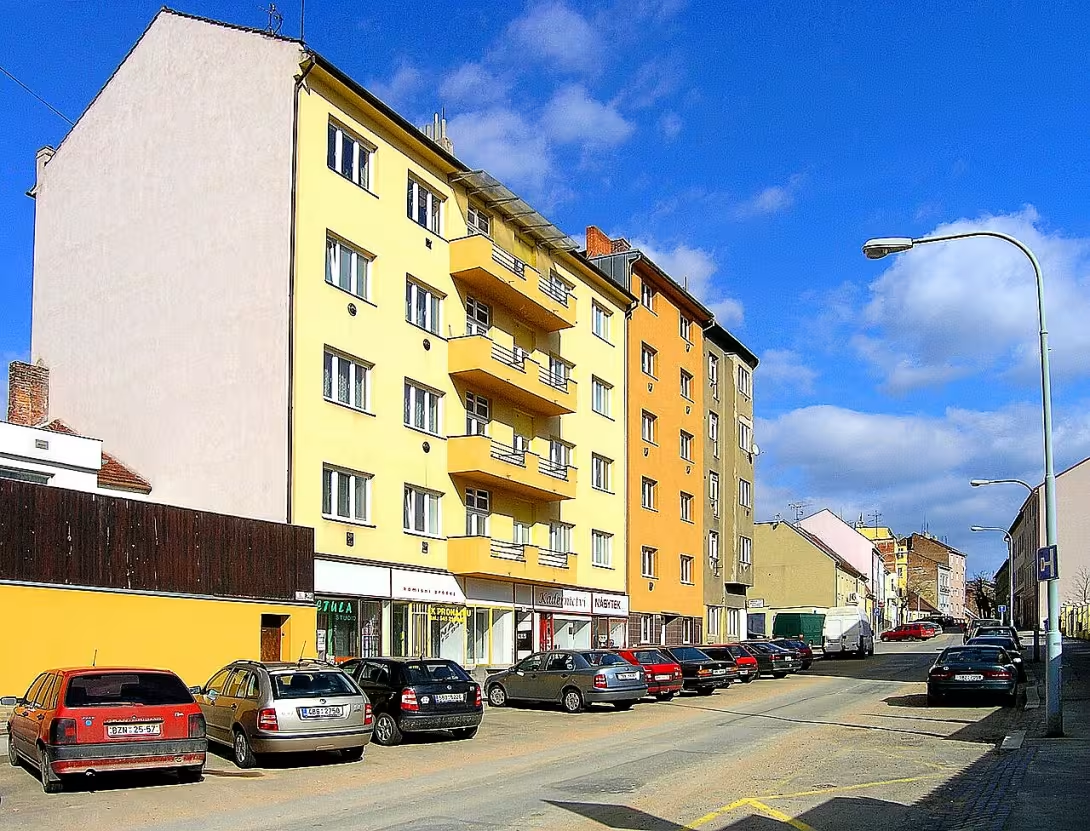
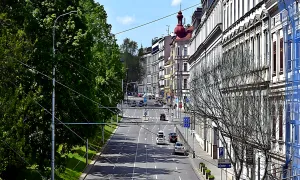
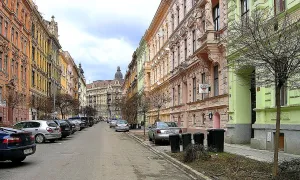
The French street is situated in the wider centre of Brno in the district of Zábrdovice; Its eastern section lies in the city area Brno- north, while the western part creates the border between Brno-north and Brno-centre. It was originally linked to the northern axis of the Brno suburb of Lower and Upper Cejl, which in the first half of the 19th century carried the German name Ober Zeil. In 1854, according to the monarch Franz Joseph, Franz- Josef-Strasse was named and registered under this name until the creation of the Czechoslovak Republic. In December 1918, shortly after the break-up of the Austrian-Hungarian Empire, the street was named French in honor of the French Allied Power. During the German occupation in May 1939 she returned to the German name Franz-Schubert-Strasse, and her initial section was removed due to a new penetration into the district of Montenegro. She was definitely named French in 1946. To date, it is not among the main transport arteries, but serves as a valuable alternative for connections from Moravian Square to Zábrdovice.
The most important event connected to the street is the archaeological find of a paleolithic funeral, which was discovered in 1891 when building a sewer at a crossroads with Přadlácký Street. This finding represents one of the most important proofs of life in our territory at an ice age. The burial of man was given an unusually rich and diverse inventory: animal bones (mammoth blades, tusks and ribs, rhino skulls and horse teeth), practical objects (stone disc, part of the reindeer antler serving as a flint blade hammer) and, above all, objects of a ritual and decorative nature - over 600 shells of kelnaki and 14 stone, bone or mammoth targets, some of which can be interpreted as symbols of sunlight or female. The funeral was covered with red dye, and the buried man was apparently an important figure of his time. The skeleton is believed to be part of a culture called a pavioven (according to locations from South Moravia), dating back to about 25,000 years. Some bones had traces of periodontitis disease.
The most valuable artifact of the found file is a small figure of a man about 20 centimeters tall, carved out of a mammoth's neck. It is a unique technical and artistic realization - the figure was composed of three parts (head with distinctive eye sockets, torso and left arm) which have been connected lengthwise, making it the oldest known piece of plastic consisting of multiple components. Male images are extremely rare in prehistory, so this puppet is a particularly valuable document. Until today, part of the file has been preserved in the form of these parts and the entire inventory, which is now stored in Anthropos collections in the Moravian Museum in Brno. The funeral was also dedicated to literary attention - the writer Eduard Štorch described him in expressiveness in his book for youth Mammoths Hunters.
The newer history of the street is tied to the period of the first Czechoslovak Republic and World War II. The so-called Shramek houses were located on the French street, which at the time served as the headquarters of the Czechoslovak Eagle. However, this building was completely destroyed during the bombing of the Royal Air Force in 1944. Among the personalities connected to the street is a mention of the university professor and resistance specialist Jan Florian, who was born in the number 5 street of Franz Joseph (historical German name). Florian lived between 1897 and 1942 and paid for his guilds by death - he was executed by the Nazis at the concentration camp Mauthausen.
Today, the street and its surroundings are revived by the park Stardička Eugen Horváth, which connects the French with the street Stardová and which enjoys the extraordinary position of the first park in the Czech Republic named after a Roma personality. In the surrounding area there is also Drom, the centre of the Roma community in Brno, which makes this location a place to meet various cultural traditions.
Then and now
Drag the slider to compare how the landmark may have looked when it was built with the view today.
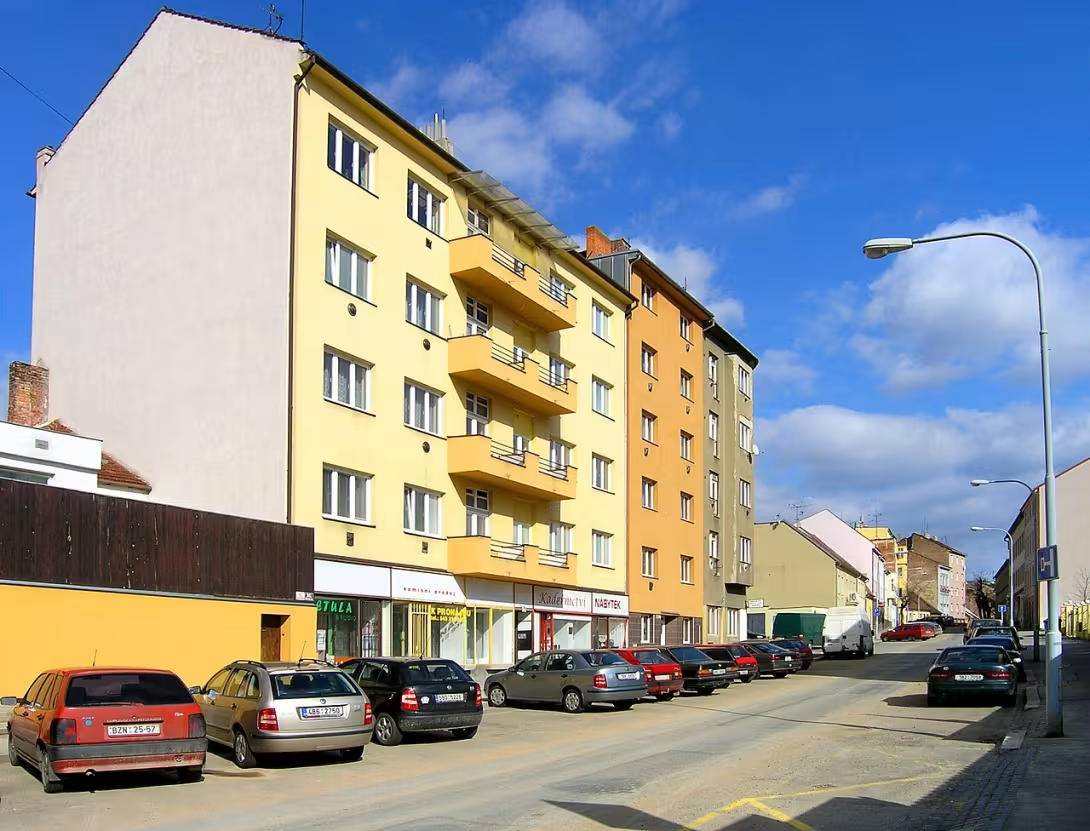
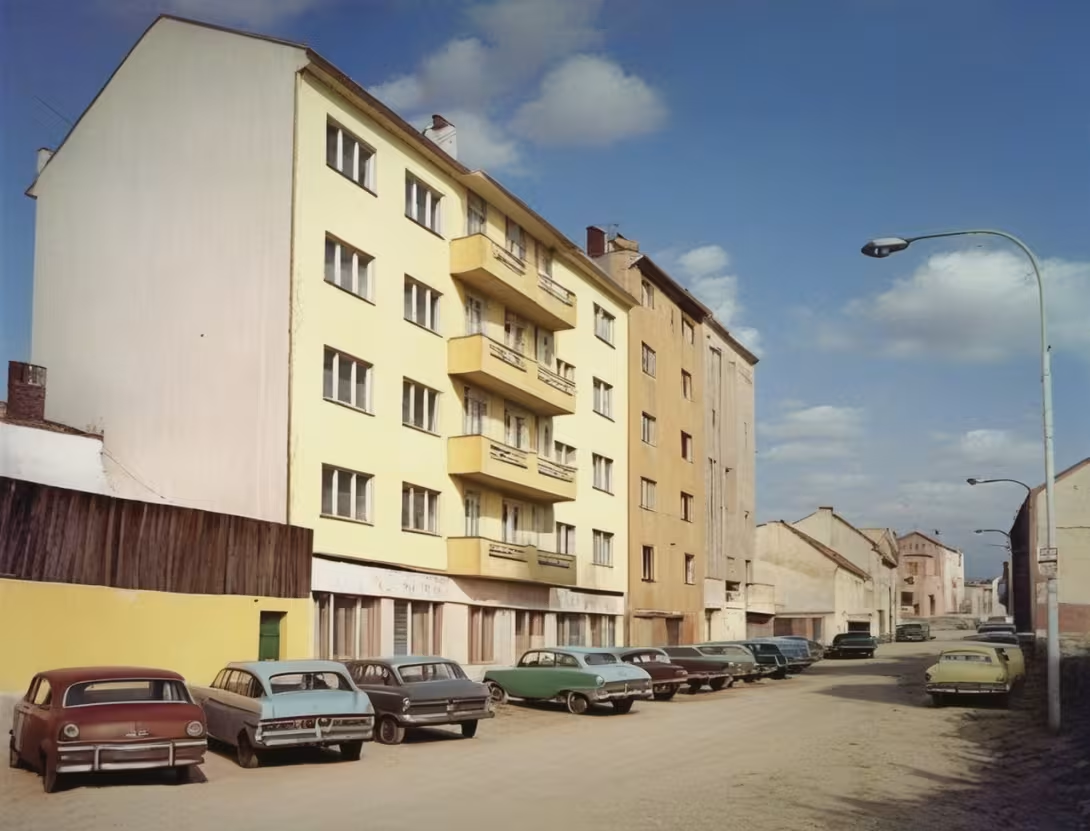
The historical appearance on the left is an AI-generated visualisation and serves as inspiration only.
Historical milestones
- around 23,000 B.C. I.
- Funeral of a man from the culture of baboons with a rich inventory
- 1854
- Street named Franz Joseph (Franz-Joseph-Strasse)
- 1891
- Discover Paleolithic Funeral during Sewerage Construction
- Dec 1918
- Street named French after Allied Power
- May 1939
- Return to the German name Franz-Schubert-Strasse during the occupation
- 1946
- Final acceptance of the French name
Architectural development
The street was built in 1946.
Historical events
- 1891
- Uncovering a paleolithic burial.
- 1946
- Change the street name to French.
Points of interest
- French street was named in 1918 in honor of the French Allied power. - In 1891, a paleolithic funeral was discovered with a rich inventory that included over 600 shells of kelnates and 14 targets. - The funeral is linked to the ancient culture of baboons and dates back to about 25,000 years. - The most valuable artifact of the funeral was a small figure of a man carved out of a mammoth's cage, the oldest known piece of plastic made up of multiple components. - In French street were the so-called Šramek houses, which served as the headquarters of the Czechoslovak Eagle headquarters during the first Czechoslovak Republic and World War II.
Guide
This guide is narrated by a synthetic voice generated by artificial intelligence.
Show guide text
This text was created by artificial intelligence and has not been editorially reviewed. It may contain inaccuracies.
Welcome to Zabrdovic, Brno. Right now, you're standing in French Street, a place that can act at first glance as an ordinary urban road, but beneath your feet lies a secret that brings us back thousands of years to the depths of time. Stop for a moment, take a breath and try to feel the atmosphere of this place. Modern life flows around you, cars ride, and people rush into their affairs, but right here, in this particular location, the layers of history that are distant from each other meet. It's fascinating to think that the concrete and asphalt you're walking on are just a thin crust over the world that's been forgotten for tens of thousands of years.
Let's first look at what's visible and tangible, which is on the street itself and her name. The street name in which you are located is not just a random address, but a real mirror to the stormy history of our countries and the political changes that have affected the regions in recent centuries. If we went back in time to the year one thousand eight hundred fifty-four, you wouldn't say you were in French. The street was named in honor of emperor Franz Joseph and was named Franz Joseph Strasse. It was a symbol of the loyalty of the Habsburg dynasty and the period stability of the Austrian Empire.
But everything changed in December of the year a thousand nine hundred and eighteen. After the end of World War I and the birth of the independent Czechoslovakia, there was a wave of renaming, which was to cut off the old empire and celebrate new freedom. The street has acquired its current French name as an expression of gratitude and respect for the French allied power that has helped to win and liberate. This name remained here until May of the year one thousand nine hundred thirty-nine, when the dark time of the occupation came. During this period, according to the new regime, it returned to the German name, but this time the street carried the name of the famous composer, Franz Schubert Strasse. Only in the year one thousand nine hundred forty-six, after the end of World War II, was the name of the French, under which we know it today. Notice how one single street can tell a story about the rise and fall of empires, the hopes of a new state and the pain of occupation.
But now I want to invite you to move your attention from the surface deeper into the ground. Forget buildings and asphalt. Imagine falling through layers of soil until there were no cities, no roads, no industry. Just a wild landscape, glacial influences and people who hunted animals and fought for survival in a harsh environment. It is here, in this location, that one of the most important archaeological findings in our region has occurred.
It all started in a thousand eight hundred ninety-one. It was not a planned archaeological research, but a coincidence that often accompanied the greatest discoveries. During the construction of the sewer, which was at that time a modern technological advance for Brno, workers encountered something unusual. In the depths of the earth, they found the funeral of a man who rested here for about five and twenty thousand years. Imagine the shock of those people when they realized that right now they were uncovering the rest of someone who lived in paleolithic times, in an era where mammoths were still wandering the earth.
This find was no ordinary burial. It was a ritual storage of a man from the so-called baboon culture. What the archaeologists found suggests this man was not in the community of anyone. It was accompanied by a rich inventory of items that at that time served as charity or status symbols. Among the items found there were over 600 shells of kelnatek and 14 targets. Imagine the amount of these tiny objects that were carefully stored around the body. Such wealth in the grave suggests that it was an important figure, perhaps a leader of tribes, a shaman, or a respected hunter, whom his group deeply respected and respected even after death.
To this fascinating discovery is the name of Jan Floriana, an expert who has been studying these findings and has helped us understand their importance. Thanks to his work and the work of other researchers, we know that this funeral is not just about one person, but is key to understanding the social structure and spiritual world of the Ice Age people. These ritualistic objects tell us the story of faith in the afterlife, of relationships within a small group of people, and of an aesthetic sense that mankind developed thousands of years ago.
Now try to imagine this incredible time gap. You're standing in a place where twenty-five thousand years ago someone with deep sadness and reverence buried his loved one, surrounded him with hundreds of precious shells, and maybe told him the last words in a language no one knows anymore. Then came thousands of years of silence, a layer of dust and sediments, until finally, in the nineteenth century, workers came with shovels and rebuilt this story. It's almost freezing and beautiful, as different worlds intersect at one point in space.
This monument is not in the form of a monumental building that you might admire looking up. It's a monument invisible, hidden, mysterious. It is a reminder that history is not only in books or museums, but is present in every square foot of land we walk on. The mystery of this paleolithic man, his identity, and the exact meaning of the hundreds of shells, still compels us to think about what will be left of us.
Now that you know what's under the surface of French Street, I suggest you continue to explore the area. Feel the contrast between the modern city and the ancient site. You may be looking at the pavement with completely different eyes when you realize that right now you were standing over one of the oldest testimonies of human existence in Brno.
Thank you for spending some time with us in the middle of the day. We wish you a pleasant further journey along the Brno Zabrdovic and hope that this short journey to the Paleolithic inspired you to further discover the secrets of our city. Goodbye.
Tips for visitors
The best time to visit is in the morning or late afternoon, when the natural light is the best for observing the surroundings and capturing the atmosphere of the place.
The location is available by car and by public transport; Check the current connection and parking possibilities in French street in the map search engine.
When walking we recommend to bring comfortable shoes suitable for urban terrain and plenty of drinking mode.
For photographers are the most interesting details of the urban environment combined with information about the prehistoric finding, ideally during the golden hour for the best lighting conditions.
For families with children, this place is ideal to discuss the paleolithic and rituals of ancient people, which can be a great addition to teaching history.
Frequently asked questions
Is Francouzská (Zábrdovice (Brno-střed)) open to the public?
Yes, the monument is open to the public. The tour is possible in February to November and the opening hours are from 9:00 to 5:00.
How do I get to the place by car / public transport?
You can arrive in memory by car or city transport. The nearest public transport stop is the station 'Zábrdovice' on route 1.
How much is the entrance fee and is it paid on the spot?
Payment shall be made on the spot in the form of cash or credit card.
Is the tour suitable for children and seniors?
Yes, the tour is suitable for all ages. Special materials are prepared for children and ladders and other aids are available for seniors.
How long does the tour take?
The tour takes approximately 30 minutes. If necessary, the visit period may be extended to 1 hour.
What are the opening times and booking is required?
The memorial is open from February to November, every day from 9:00 to 5:00. Reservation is not necessary, but it is recommended for groups over 10 people.
What's interesting in the immediate vicinity?
In the immediate surroundings there are other historical monuments and natural elements such as forests and ponds. There is also a museum or gallery nearby.
For kids
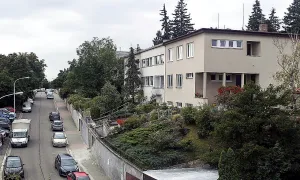
Imagine coming back 80 years and finding yourself in Brno, the district of Zabrdovice. It's called French instead, and it looks like a little house with a white facade and red windows. But remember, this is no ordinary house! This is where there is a unique burial from the Paleolithic era.
Businesses nearby
Do you run a restaurant, accommodation, shop, museum, rental, wellness or other visitor service near this monument? Show yourself directly to the people heading to it — this is how they will see you in the app and on the web:
Events nearby


Zdroj akcí: otevřená data měst a obcí ČR (Národní katalog otevřených dat) a kalendář akcí Národního památkového ústavu.
Nearby
The surrounding landscape, other monuments and natural elements around Brno.
Accommodation nearby
Trips and activities nearby
Guided tours, tickets and activities nearby from GetYourGuide
Affiliate link: if you buy from the partner, we may receive a commission. The price for you does not change.
Search tours and activities →Themed route
Thematic cruise route: French (Zábrdovice) and surroundings
1. French (Zábrdovice) * Type: * Archaeological site * Why is it worth visiting: * This site is one of the most important archaeological sites in the Czech Republic. Here you can explore the remnants of the Old Bohemian Castle, which bears its name after the French military siege of 1742. It is a unique opportunity to sink into the history and archaeology of the region.
2. Zábrdovice Memorial Forest * Type: * Forest area * Why is it worth visiting: * This forest is not only a natural hiding place, but also a place of historical value. It is a place where the archeological site of France is located and offers beautiful walks between old trees. Ideal leisure activity for the whole family.
3. Church of St. Gilji * Type: * Religious construction * Why is it worth visiting: * This church is one of the oldest sacral objects in Brno. Its history dates back to the 13th century, making it an important cultural and architectural monument. It's a place of peace and beauty where you can enjoy the view of the surrounding green valley.
4. Zábrdovice Brewery * Type: * Brewery * Why is it worth a visit: * Visit this traditional brewery where you can try local beer and other specialties. It's a great way to relax after exploring archaeological sites and the natural beauty of the surroundings. The brewery also offers the opportunity to explore the beer production process.
5. French cistern (Zábrdovice) * Type: * Internal premises of archaeological sites * Why is it worth a visit: * Here you can see the exhibition and more information about the location history. It is an ideal place to understand the context of archaeological discoveries and deeper immersion in the history of the region. The tank also offers space for rest and refleksi.
This route will allow you not only to explore the archeological sites of the French, but also to discover other attractions around Zabrdovice.
Seasonal recommendations
Spring: During spring, the archeological site of Zabrdovice in Brno is transformed into a vibrant flowery paradise, where newly grown grass and shrubs surround the historical location. The sun illuminates the place warmer than in the winter months, which contributes to a clear color contrast between ancient structures and living nature. A mild garment with the possibility to add a warm T-shirt is suitable for visiting, because spring weather can be medium and variable. The best time to explore the monument is in the early afternoon when the sun illuminates archaeological findings with optimal light and crowds are not yet purchased.
Summer: Summer brings the highest number of tourists to the Zabrdovice site looking for relief from urban life in green and quiet. The sunlight illuminates archaeological findings in full beauty, but also brings a warm atmosphere. Visitors should be dressed lightly and appropriately - wide hats, sunglasses and plenty of drinking water are essential for comfortable walks. The best time to visit is morning or evening to avoid heat and crowds common in the main summer season.
Autumn: In autumn, green meadows are acquired around the archaeological site of Zabrdovice of darker shades, adding a place of melancholy and quiet. The sun sets earlier, thereby affecting the atmosphere of the monument. It is advisable to wear top clothing for a visit because autumn weather can be colder and damp. The best time for a walk is an early afternoon, when nature is still in full beauty and crowds are not so much.
Winter: Winter brings a calm atmosphere to the archaeological site of Zabrdovice, where snow covers the earth and ancient structures create unique visual effects. The sunlight is weaker and less long, which gives a melancholy touch instead. Visitors should be well dressed - warm clothes, wool shirt and protective shoes are necessary for comfort when walking on cold weather. The opening hours are shorter, so it is recommended to visit the memory earlier in the day and take advantage of the milder temperatures of the early afternoon.
Visualizations and artistic views


The visualisations are generated by artificial intelligence and serve as inspiration.
Photos from the area
Real photos taken near the monument


Zdroj a licence jsou uvedeny u každého snímku.
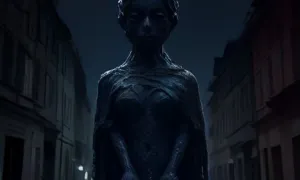
Atmosphere of the place
This atmospheric visualisation of the place and period was generated by artificial intelligence. It is not real footage of the location.
Tips from visitors
No tips yet. Be the first!
Log in and add your tip.
Sources and literature
Photos: Czech Wikipedia user Packa / CC BY-SA 3.0 — Wikimedia Commons. The author and licence also appear when you hover over the image.
Faktickým podkladem tohoto textu byl článek na Wikipedii, jehož autory jsou přispěvatelé Wikipedie. Článek je dostupný pod licencí CC BY-SA 4.0.
Location on the map

Příběhy a pověsti
Legendy, pověsti a příběhy spjaté s touto památkou
Fotografie návštěvníků
Zatím žádné fotografie. Buďte první, kdo přidá fotografii z návštěvy!
Přihlaste se a přidejte svou fotografii nebo hodnoťte.
Za ověřenou návštěvu v aplikaci získáte víc bodů — poznáme podle GPS, že jste na místě.
Reviews and comments