



Francouzský pomník Monument
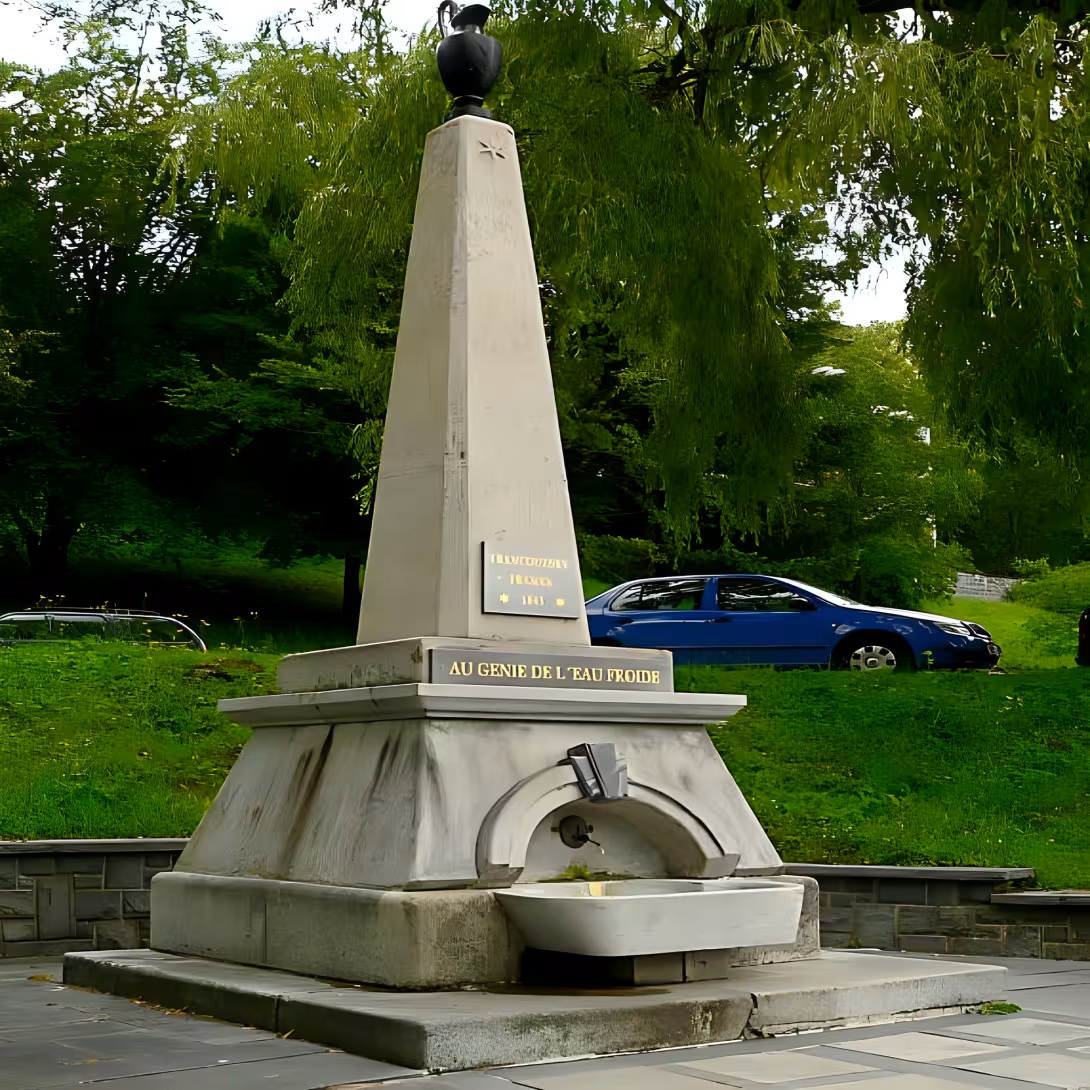
The French Monument in Jeseník is a sculptural-stone monument from the first half of the 19th century that continues to attract the attention of historians and tourists. Built in 1841, it is associated with Vincenz Priessnitz, the founder of modern hydrotherapy. Its significance in the spa industry and artistic value make it a unique cultural monument.
The monument was donated by Colonel de Blaramberg, who later became the chief architect for the reconstruction of Bucharest. The aim was to celebrate cold waters and their healing properties, which at that time generated great interest across Central Europe. Originally located near a spring now known as Géniovo prameniště, it was relocated in 1908 due to water scarcity.
Architecturally, it consists of a stone pedestal adorned with a granite obelisk topped by a cast-iron amphora. Below the top is a star and inscriptions containing the French words "Au génie de l'eau froide," emphasizing its connection to cold waters. The first restoration took place in 1873 by Jan Ripper, followed by a renovation in 2004 when the inscription on the obelisk was replaced.
In 1964, the cultural value of the monument was recognized and officially registered as a protected site. In 2004, an IN MEMORIAM inscription for Mrs. Miroslava Bečková and Dr. Oskar L. Stern was added, highlighting its connection to local personalities.
Today, the French Monument in Jeseník is accessible to visitors and worth visiting not only for its historical significance but also as part of the region's rich spa tradition. The monument commemorates a time when Jeseník became a center for hydrotherapy and gained international recognition through Vincenz Priessnitz's methods.
Visiting the French Monument is an opportunity to explore its architectural and historical aspects, gaining a deeper understanding of the spa tradition in Jeseník. This site reminds us of the importance of cold waters in healthcare and their impact on local industry development. The monument is not only a relic of the past but also an inspiration for future generations who will preserve the legacy of spa culture and its significant figures like Vincenz Priessnitz.
Historical milestones
- 1841
- Building and festive discovery of the monument on July 24th.
- 1848
- The ordination of the memorial on April 5th.
- 1873
- The first restoration of the memorial by Jan Ripper.
- 1908
- Moving the monument from the site of Genius's spring today.
- 1964
- A list of cultural monuments.
Architectural development
The construction consists of a stone base and granite needle with cast iron amfora and a star below the top. In 1873, Jan Ripper was first restored. In 2004, the emblem of the state spa was replaced by the French spring 1841.
Historical events
In 1841 the monument was festively revealed and in 1848 consecrated. In 1908 he was moved from the original site due to a lack of water in the spring. On 8 April 1964 it was officially registered as a cultural monument.
Points of interest
- The memorial was built in 1841 and is connected to Vincenzo Priessnitz, founder of modern hydrotherapy. - It was donated by plukovník de Blaramberg, who later acted as the main architect in the reconstruction of Bucharest. - Due to a lack of water, it was moved in 1908 from a place called the Genius Spring. - It consists of a stone pedestal with a granite needle and cast iron amfora on top. He was officially listed as a monument in 1964.
Guide
Show guide text
This text was created by artificial intelligence and has not been editorially reviewed. It may contain inaccuracies.
Welcome to Jeseník, where history of healing and gratitude meets at one particular point. Right now, you're standing in front of an object that may not be the largest in the whole city, but it has a story of recognition, international relations and deep respect for the human genius. The Francouzský pomník stands before you. The first thing you must be interested in is his strange, noble form. Look at him as a whole. You see a solid stone pedestal that holds the whole structure, and above it stands a granite needle whose pointy shape heads towards the sky. And now, please focus your view up to the very top. There you'll see a cast iron Amphora, an ancient water container. This Amphora is the key to understanding the entire monument, because water was the most important treasure in this city and this time of year.
Let us now move back in time almost two yards, to the first half of the nineteenth century. We're in 1841. At that time, Jeseník was the centre of attention of the whole of Europe thanks to one man, Vincenzi Priessnitz. In case you haven't heard, he was the founder of modern hydrotherapy, a man who believed in the healing power of water and cold tiles. His method attracted people from various layers of society, from simple workers to nobles and kings. It is in this atmosphere of recognition and gratitude that this monument was created. It wasn't just an ordinary construction project, it was a gift. A gift that expressed deep respect for Vincent Priessnitz's work. The ceremonial unveiling took place on 4 July 1841. Imagine the crowd of people, enthusiasm and pride that ruled Jeseník at the time. A few years later, on the fifth of April in 1848, the monument was officially consecrated, thereby gaining a spiritual dimension.
Now pay attention to the details you see right in front of you. Notice the material. The vein from which the needle is made is known for its hardness and resistance. That's not a coincidence. Jehlan was meant to symbolize the eternity and endurance of the glory Priessnitz built. The stone base then serves as a stable base, which anchors the monument in the ground. And the cast iron Amphora on top? At that time, the cast iron was modern and valuable material. Amfora as a symbol of a water container directly refers to the nature of hydrotherapy. It's like the monument itself says that health and life are stored in clean water. The whole object is a harmonious combination of heavy stone and precision-worked metal.
But who was the mysterious donor who made this monument possible? Here comes plukovník de Blaramberg history. He was a man with a fascinating life. Not only did he appreciate the healing skills of Vincenz Priessnitz and decided to thank him in this way, but his ambition and talent did not end in a military career. Later in his life, the Colonel devoted himself to architecture and became the main architect in the reconstruction of the remote city of Bucharest. So when you look at this monument, remember that it was a person who understood space, form and aesthetics. It is a fascinating idea that one man could build a symbol of gratitude in Jeseník and then form the face of the entire capital in another part of Europe.
However, the history of this place is not only about construction, but also about changes. If you try to find a spring around the monument today, you'll find it's not there. And that's very interesting, because originally, the monument stood completely elsewhere. He was in a place called Genius's spring. It was symbolic, the monument stood right by the water that brought glory to the entire region. But time is relentless and nature changes. Nine hundred and eight years ago, an unforeseen situation occurred. There was a lack of water at the original location. It would be paradoxical if a monument celebrating hydrotherapy stood at a dry spring. That's why in the year nine hundred and eight the monument was carefully moved to the place where it stands right now. Imagine the effort that this heavy stone object carried in the early twentieth century to preserve its dignity in a new place.
Over the years, of course, the memorial required care. In the year eight hundred seventy-three Jan Ripper leaned towards him, who carried out the first great renewal. Thanks to such care, the monument came to nine hundred and sixty-four, when it was officially listed as cultural monuments. That means the state has recognised its irreplaceable value for our history and culture.
Now, if you look at this granite needle and cast iron Amphora again, try to perceive the atmosphere of that time. Imagine the people in the period clothing who came here with hope of healing. This monument is not just a pile of stone and metal, it is a monument to human hope and recognition of a brilliant discovery. He's a silent witness to how a small Jesenice corner became the world's center of medicine.
Now that you know the story of the French memorial, I suggest you slowly bypass the entire object. Feel the texture of granite under your fingers, if the surroundings allow it, and watch from different angles as the Amphora on top draws against the sky. It's a moment of peace in the middle of a modern city that connects us to the past.
Thank you for stopping by for this fascinating testimony of history. I hope you are interested in this short trip in time and that you are now seeing this monument with other eyes. Jeseník still has many other secrets waiting to be revealed. I ask you to continue to explore the area, look for further clues from Vincenz Priessnitz and be inspired by the spirit of this city. I wish you a pleasant continuation of your journey and a beautiful day spent in our spa. Goodbye.
Tips for visitors
The best time to visit the French memorial in the Spa Jeseník is autumn and spring when nature is the most beautiful and fewer people. This period also offers mild weather for long walks.
Public transport is also an option; specific connections and times can be found in the previous search engine.
When visiting the monument, remember shoes suitable for walking on hilly soil, sun protection and umbrella if necessary. You can photograph especially from morning or evening when light is lighter and the shadow of the monument is better.
In the vicinity of the French monument you can visit the Genius spring, which is close and offers beautiful natural landscapes. For families with children it is convenient to walk around the area where children can play freelance and enjoy nature.
Frequently asked questions
Can the monument be visited?
This is a structure in a public space that can usually be seen from outside free of charge. We have not verified that this particular one is freely accessible.
Where is the monument?
Location: Jeseník. The map on this page shows the exact spot.
Why is the monument protected?
It is listed in the Central List of Cultural Monuments of the Czech Republic as a cultural monument (register no. 1000143982).
Businesses nearby
Do you run a restaurant, accommodation, shop, museum, rental, wellness or other visitor service near this monument? Show yourself directly to the people heading to it — this is how they will see you in the app and on the web:
Nearby
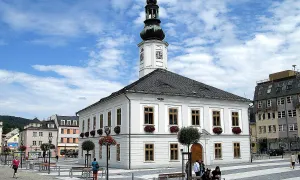
Lázně Jeseník, Géniův pramen.
Accommodation nearby
Themed route
1. Genius Spring Type: Natural spring. Why: A place with famous healing water that attracts visitors.
2. Spa Jeseník Type: Spa area. Why: It offers a quiet atmosphere and a view of historical buildings.
3.Francouzský pomník Type: Memorial. Why: The main destination of the journey, which resembles important historical events.
Seasonal recommendations
Spring: In the spring season, Francouzský pomník is transformed into a special place full of new life and colors. Flowers begin to bloom, giving the surroundings an attractive shiny touch, while the sun rays illuminate the stone reliefs of the monument in fine colours. Nature wakes up and surrounds the memory of a fog, which adds a romantic touch. It is recommended to visit the monument at the beginning of the day when there is less likelihood of crowds and sunlight amplifies the beauty of the monument. Enough warm clothes will be appropriate for a cold morning.
Summer: In summer Francouzský pomník in Jeseník is a popular destination for visitors who enjoy bright summer days and natural beauty surrounding. The sun illuminates every detail of the monument in the best light, while warm air adds something relaxing and relaxed to the atmosphere. In the main summer season it is recommended to visit the monument early in the morning or evening to avoid large crowds. Don't forget the sun protection and plenty of water.
Autumn: Autumn season offers a unique view of the French monument in Jeseník with a colorful palette of leaves that turns green into yellow, orange and red. The sunny days illuminate the stone structure of the monument in warm light, while the cold air adds a mild melancholy to the atmosphere. The peak of autumn is suitable for visiting when fewer people meet and you can enjoy a quiet moment in nature. Warm clothes will be necessary due to colder conditions.
Winter: In winter months Francouzský pomník is transformed into a place full of peace and mystery. The snow sheets decorate the area, giving the monument a certain touch of snow, while the stones become frosty shiny under the sunlight. The atmosphere is calm and quiet, which allows you to enjoy unique views without large crowds. Visit the monument in the morning for the best experience and you must not forget warm clothes because winter conditions can be cold.
Visualizations and artistic views

The visualisations are generated by artificial intelligence and serve as inspiration.
Photos from the area
Real photos taken near the monument


Zdroj a licence jsou uvedeny u každého snímku.
Tips from visitors
No tips yet. Be the first!
Log in and add your tip.
Sources and literature
Photos: Jakub Harcuba The original uploader was Harcuba at Czech Wikipedia. (Original text: Jakub Harcuba) / CC BY-SA 3.0, rozlišení zvýšeno umělou inteligencí — Wikimedia Commons. The author and licence also appear when you hover over the image.
Faktickým podkladem tohoto textu byl článek na Wikipedii, jehož autory jsou přispěvatelé Wikipedie. Článek je dostupný pod licencí CC BY-SA 4.0.
Location on the map
Příběhy a pověsti
Legendy, pověsti a příběhy spjaté s touto památkou
Fotografie návštěvníků
Zatím žádné fotografie. Buďte první, kdo přidá fotografii z návštěvy!
Log in a přidejte svou fotografii nebo hodnoťte.
Za ověřenou návštěvu v aplikaci získáte víc bodů — poznáme podle GPS, že jste na místě.
Reviews and comments