



Katovna (Jeseník) House
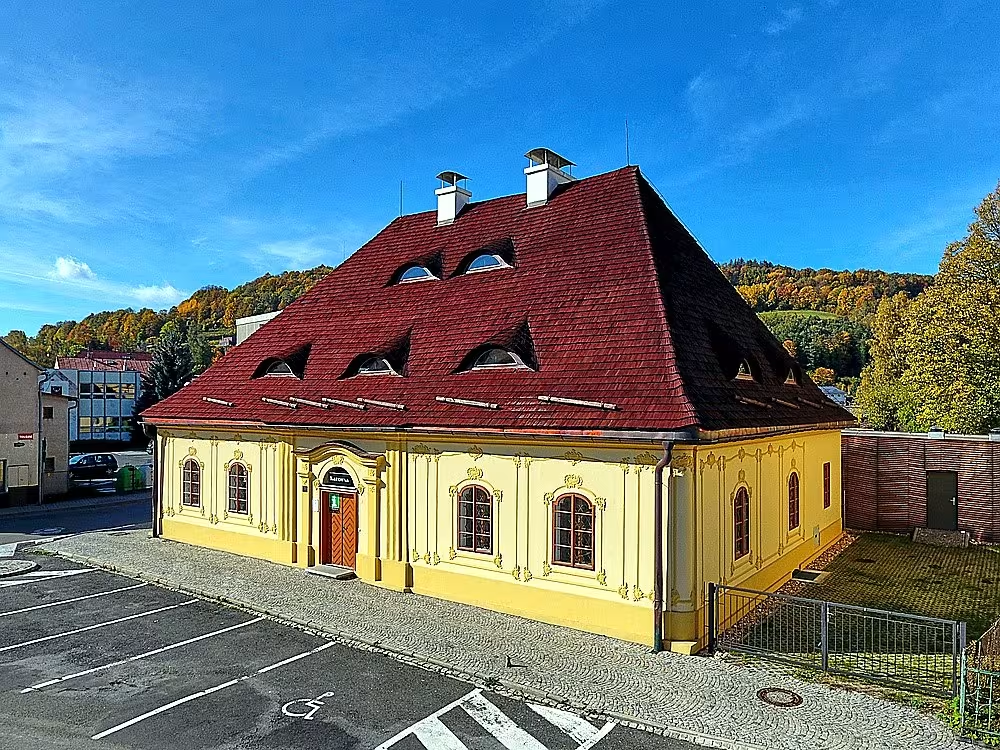
Katovna in Jeseník is a Baroque townhouse on Palacky Street, which today serves as an interesting place connecting history with modern presentation. The building from the end of the 18th century is protected as a cultural monument, although its original purpose - kata mansion - is not historically documented. Today visitors will find an interactive exhibition about the common history of Jeseník and the Polish Glucholaz, which belonged to the Niská Principality.
This monument is particularly important as a rare example of late Baroque architecture with rococo elements preserved in the centre of the historic city. The building typically represents the urban development from the time of the reconstruction of Jeseník after war conflicts, when the region developed within an absolute system. Although the name "Katovna" is legendary and historical sources do not confirm its origin, it has remained and resembles the dark aspects of the city administration.
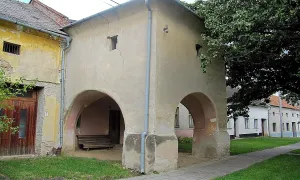
The architecture of the building is characterized by a compressed rectangular plan with an oversized Silesian roof covered with shingles. The roof is broken by tiny arch skylights that match the current use of the attic. The main facade is divided by four window axes with quasi-Casual windows, while the side facade has three window axes. The entrance consists of a flat porticus with an arc front which gives the construction a representative character. The interiors are well-arranged, which is consistent with the urban development of the time.
The exhibition in Katovna represents a modern approach to the presentation of the history of the Niský principality, which included both Czech Jeseník and Polish Glucholazy. Exposure themes - spa, gold, Silesia, church and tourism - are linked to historical events in both regions. Visitors can interactively test their knowledge and get a memorial certificate, making the exhibition an attractive place for tourists and students of history. The building also serves as an information centre for city visitors.
Katovna is one of the few preserved examples of Baroque architecture in Jeseník, which also serves for educational and cultural purposes. The city situated near the Jeseník National Park offers other historical monuments that complement the atmosphere of the region. In the past, the neighbouring Polish city of Nysa was the capital of the Principality of Niska and still reminds us of the common heritage of both sides of the border.
Katovna thus proves how a historical building can be a bridge between the past and the present. The exhibition about the Niské principality not only brings common history closer, but also shows how modern technologies can enrich knowledge of the region. For those interested in the history of Silesia, this monument is a necessary stop connecting architecture, culture and education.
Historical milestones
- around 1750-1780
- The position of the Baroque townhouse on Palacky Street in Jeseník, typical of reconstruction of the city after war conflicts.
- 18th century (end)
- The building served as a representative urban development within the absolute system, with rococo elements.
- after 1990
- The launch of an interactive exhibition on the common history of Jeseník and Polish Glucholaz, associated with the Principality of the Netherlands.
Architectural development
The building was built probably in the late 18th century when the city was restored, the architecture corresponds to the late Baroque with rococo ornaments. The older core from the 17th century is not excluded, but is not documented. Currently it serves as an exhibition with multimedia elements and an information centre for tourists.
Points of interest
- The building is a Baroque townhouse from the late 18th century, which serves as a cultural monument.
- Although it is called Katovna, its original purpose as the seat of the executioner is not historically proven.
- The building is a rare example of late Baroque architecture with rococo elements in the centre of Jeseník.
- The exhibition connects the history of Czech Jeseník and Polish Glucholaz, which belonged to the Niská Principality.
- Visitors can interactively test their knowledge and obtain a memorial certificate.
Guide
Show guide text
This text was created by artificial intelligence and has not been editorially reviewed. It may contain inaccuracies.
Welcome to this mysterious and yet noble house, which seems to you to be something from the last century. You're standing in front of a building called Katovna today, and even though it's said to be a penitentiary, its true history is much more interesting. In front of you is a baroque townhouse with fine rococo details that can tell you stories about life in Jeseník two centuries ago.
Let's see his look. The building stands on a floor plan of a compressed rectangle, which means it's a little flattened, but that doesn't give it any charm. It is particularly remarkable to have a roof solution - high Silesian roof construction with small windows called skylights, which is covered with shingles. These skylights were originally used for ventilation and lighting of the attic, but today they are just another interesting thing for visitors. The main front of the house is divided by four window axes, which means it has four main window fields. The windows are decorated with quasi-Casual frames, which are frames with lightly cut edges that give the windows a fine decorative look.
Now pay attention to the entrance. The entrance part of the house consists of a flat porticus, i.e. a semi-circular end shelter with two pillars or pilasters on the sides. Above it is an arc front, a triangular shield with a small arch on top. This detail gives the facade a representative and slightly festive look, which corresponds to the importance of the house in the then town.
Let's take a closer look at the history of this house. It was built around 1750 to 1780, at a time when Jeseník tried to restore and develop after war conflicts. The building is a typical example of baroque architecture, which at that time spread throughout Europe. The Baroque is characterized by wealth of detail, dynamic shapes and distinctive decoration, which is well seen in this house. However, in its appearance you will find also fine rococo elements which appeared later, around the end of the 18th century. Rococo is a style that is much lighter and more elegant than Baroque, with fine curves and pastel colours.
The house served as a representative township building within an absolute system, which means it was built for richer townspeople who wanted to show their status and wealth. At that time, townspeople were gaining increasing influence and had the opportunity to build such representative houses. The building was therefore a symbol of social status rather than a place for specific activities such as felling.
Now let's look at some of the key stories associated with this house. Although it is said that there was a executioner, the man who carried out the death penalty does not confirm it. That makes him a place with a certain mystery. Instead, we believe it was simply a representative house of a rich townsman. However, it is this ambiguity that attracts attention and raises questions that may lead visitors to further explore history.
One of the greatest attractions of this house is its rare character. This is a rare example of late Baroque architecture with rococo elements in the centre of Jeseník. Such combinations of styles are quite rare in this area and thus the house represents a valuable piece of cultural heritage. In addition, since 1990, there has been an interactive exhibition that combines the common history of Jeseník and Polish Glucholaz, which were linked to the Principality of Niský. This exposure can bring you closer to the relationship between these two cities and their common history.
So there is a place before you that is full of secrets and history. Although its original purpose is not entirely clear, its architecture and location in the city centre make it unique. If you are more interested in its history, you will find that it is a place that reflects life and social change in Jeseník over two centuries ago.
Before you deviate, look again at the general impression that the house gives you. Note how its high roof structure sticks over the surrounding houses, how the windows are decorated with fine frames and how the entrance part of the house acts as a gateway to the past. This house is like a living document of history that can tell you stories about life in the past, about social changes and how the city evolved.
If you like this building and want to learn more, visit the exhibition inside. Here you will find out about the common history of Jeseník and Glucholaz, which are linked to the Principality of Nis. You'll be surprised how much these two cities have in common and how intertwined their history is.
Thank you for taking the time to visit this place today. Jeseník and its surroundings offer you many other interesting sights and stories. Be welcome to our city and enjoy its rich history. When you look at other sights, remember to look at other hidden pearls that Jeseník hides. When we meet again, we will look forward to another discovery together. Goodbye!
Tips for visitors
The best time to visit the Katovna in Jeseník is in spring or autumn when there is pleasant weather and fewer tourists. It can be hot in the summer, so wear light clothes. In autumn, you can experience the beautiful colors of the surroundings and a quieter atmosphere. In winter the monument is open, but some outer parts can be closed due to snow or ice. Always check the current status on site before visiting.
It is recommended to arrive by car because public transport may not be so frequent. The current connection and traffic options can be found in the transport search engine.
When visiting the cathouse, wear comfortable shoes, because the building has several rooms with different floors. Next, prepare your camera or mobile phone to take pictures of your memory. There is often light in the interior, so take a small headlight or light your phone. If you want to photograph the outside of the building, the best light can be found in the morning or in the evening when the light is softer and less sharp.
The best places for photography are mainly the facade of the building with its baroque elements and the Silesian roof. The details around the entrance and window openings are also interesting. If you want to capture the overall impression of the monument, take a short walk along the surrounding streets where other historic houses are located. Always read any restrictions information carefully before taking a photo.
There are several interesting places in the area of the cathouse that are worth visiting. In 30 minutes you can reach the Polish town of Nisa, which offers rich history and picturesque streets. In Jeseník alone you can see the Baroque square and other historic houses. For nature lovers it is advisable to visit Jeseník National Park, located near the city. Families with children can enjoy visiting local museums or walking around the historical centre.
For families with children, a visit to the Katovna in Jeseník is interesting thanks to its historic atmosphere and the opportunity to become acquainted with the history of the city. Children can look at the old home features and see how people lived in the past. It is also possible to find a small playground or parks around the monument where children can relax and have fun. When visiting, it is worth taking with you some small toys or books so that you can relax in the interior while learning.
Frequently asked questions
Can the monument be visited?
Some buildings of this kind are open for guided tours, others serve another purpose or are privately owned. We have not verified whether and when this monument is open – please ask the operator.
What are the opening hours and admission?
We have not verified the opening hours or admission. Current information is published by the operator. Official website: https://www.jesenik.org/turista/152-historie-budovy.html
Where is the monument?
Location: Jeseník, Olomoucký kraj. The map on this page shows the exact spot.
Why is the monument protected?
It is listed in the Central List of Cultural Monuments of the Czech Republic as a cultural monument (register no. 1000132400).
Businesses nearby
Do you run a restaurant, accommodation, shop, museum, rental, wellness or other visitor service near this monument? Show yourself directly to the people heading to it — this is how they will see you in the app and on the web:
Nearby
- Historicke město s řadou kulturních památek, včetně barokního náměstí a dalších historických domů. Nachází se v blízkosti přírodních parků a lesů, jako je Jeseníkský národní park.
- Sousední polské město, které bylo v minulosti hlavním městem Niského knížectví. Dnes je známé jako Nysa a je součástí polského Slezska.
Accommodation nearby
Themed route
Thematic cruise route around Katovna in Jeseník
1. Katovna - Katovna House Name: Katovský house in Jeseník, historical monument from the 19th century. It is a unique example of a rural house with typical architecture and an important history associated with local settlements. It still serves as a cultural centre where exhibitions and events take place.
2. Jeseník Square Name: Baroque square in the heart of Jeseník, a ornamental place with historical houses and monuments. It is an ideal place to walk and admire architecture from the past. The Baroque Church of St. John Nepomuk is also in the vicinity, which is worth visiting for its beauty and history.
3. Jeseník National Park (nearby forest area) Návez: Forest trails in the vicinity of Jeseník, for example the Great brook or Jesenice hills. These areas offer beautiful natural scenery, possibilities for hiking and wildlife observation. Suitable for family trips or rest in the forest.
4. Jeseník - historical houses and park Návez: Jeseníká park and surroundings of the Square of Liberty, where there are several historical houses from the 18th and 19th centuries. These buildings are an important part of the urban heritage and provide the atmosphere of the old town. Suitable for photographing and exploring local history.
Seasonal recommendations
Spring Nature is awakening in Katovna, when the first spring flowers bloom and the forests become green. The house feels warm and quiet when visitors meet on peaceful walks. The lighting is pleasantly soft and therefore it is advisable to visit the memory early in the morning, when there are fewer crowds and nature has not yet started to flourish fully. It is recommended to dress in light but warm clothes that allow movement even in mild cold. The best time is at the beginning of spring, when the weather is most stable.
Summer In the main summer months, Katovna is full of life, where the surrounding area is moved by the sun and warm air. In the house it is advisable to enjoy cooler rooms where you can relax from hot weather. The lighting is more intense, so it is good to visit the memory early in the morning or in the evening when there are fewer people. Light, airy clothes with long sleeves and wide sunglasses are recommended. The best time is in the first half of summer when temperatures are still pleasant.
Autumn Autumn brings mild temperatures and beautiful colored forests that create a magical atmosphere. It is advisable to enjoy warm tea and read when you feel more at ease. The lighting is warmer and more natural, which gives the place comfort. It is recommended to visit the monument in the period when they begin to prepare for winter, i.e. in the second half of autumn. Dress up in warm but transparent clothes that allow you to move even in mild cold. The best time is November, when the weather is most stable.
Winter In winter Katovna is quiet and magical, where the surrounding area is covered with snow and the forest shines with white layers. In the house it is advisable to enjoy warm drinks and read when you feel comfortable. The lighting is intensified by light bulb, which gives the place a Christmas and quiet atmosphere. It is recommended to visit the memory in advent time, when a visitor program is often organised in the house. Hot clothes are recommended to protect you from cold, and short opening times, which are often limited in winter. The best time in December is when the weather is most stable and the atmosphere is most pleasant.
Visualizations and artistic views


The visualisations are generated by artificial intelligence and serve as inspiration.
Photos from the area
Real photos taken near the monument


Zdroj a licence jsou uvedeny u každého snímku.
Tips from visitors
No tips yet. Be the first!
Log in and add your tip.
Sources and literature
Photos: Tomáš Neuwirth / CC BY-SA 4.0 — Wikimedia Commons. The author and licence also appear when you hover over the image.
Faktickým podkladem tohoto textu byl článek na Wikipedii, jehož autory jsou přispěvatelé Wikipedie. Článek je dostupný pod licencí CC BY-SA 4.0.
Location on the map

Příběhy a pověsti
Legendy, pověsti a příběhy spjaté s touto památkou
Fotografie návštěvníků
Zatím žádné fotografie. Buďte první, kdo přidá fotografii z návštěvy!
Log in a přidejte svou fotografii nebo hodnoťte.
Za ověřenou návštěvu v aplikaci získáte víc bodů — poznáme podle GPS, že jste na místě.
Reviews and comments