



Galerie Josefa Sudka Gallery
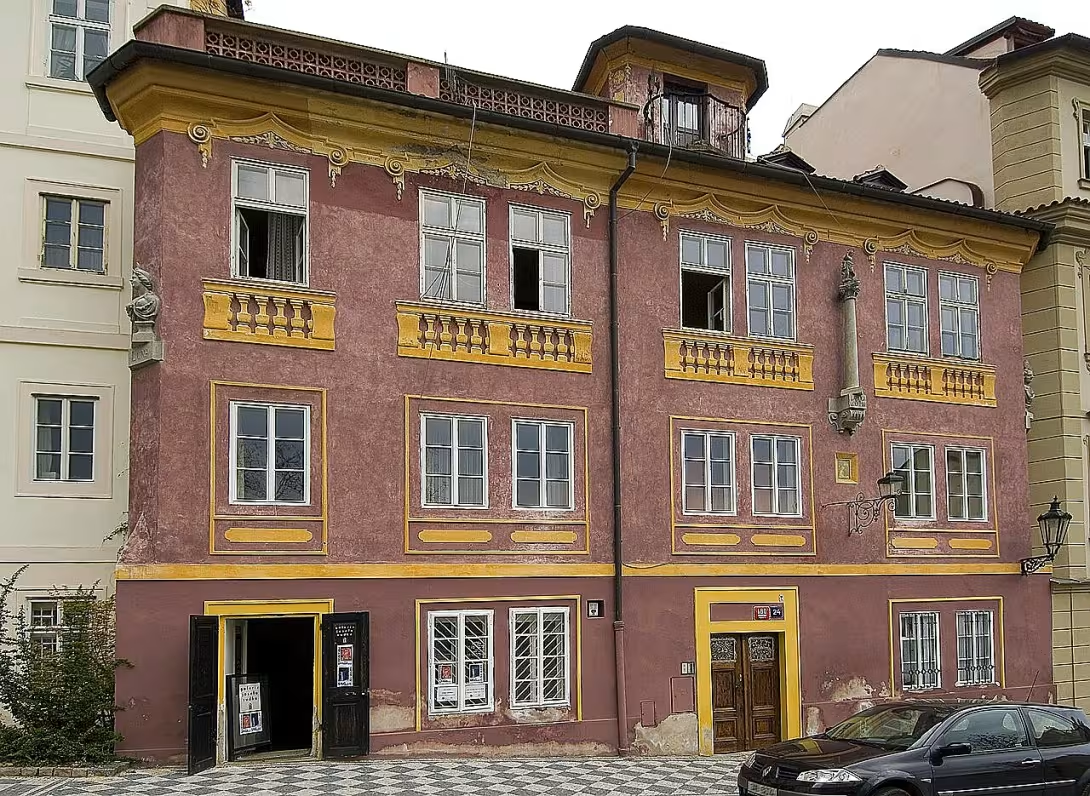
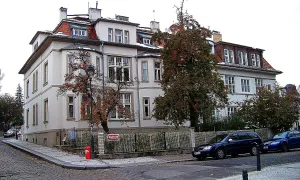
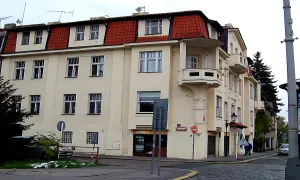
Galerie Josefa Sudka is a publicly available institution in the municipality of Hradčany at the Prague Constitution. It is located in the historical premises of the House U Luna and focuses on the work of the important Czech photographer Josef Sudek as well as on photographic production in general. This branch of the Museum of Arts in Prague resembles the place where the artist lived and formed. It also serves as a space for the presentation of modern Czech photography.
The premises of the castle house U Luna, also called the house U Stone Column, inhabited Josef Sudek from 1959 until his death in 1976. 1995 brought a period of dynamic development of democratic society and cultural institutions in the Czech Republic after the fall of the communist regime. This enabled the rehabilitation of important figures of the Czech culture of the twentieth century and making their legacy available to the public. In this context, a photo gallery was opened in the premises of the artist's apartment in 1995.
Details of building development and architectural style of the U Luna house are not specified in the available documentation. It is, however, known as the interior environment in the life of a photographer. The apartment was gradually filled with many paintings, frames, glass cups, boxes and photographic equipment.
The owner and manager of the building is the Museum of Arts in Prague. This gradually took over a substantial part of the artist's photographic estate between 1978 and 1988 and took over the premises of the apartment itself in 1989.
In the life of Josef Sudek, he used to be the place of countless meetings and the center of meetings of leading artists and intellectuals of the time. The friendly circuit included the poet Jaroslav Seifert, painter Jan Zrzavý, architect Otto Rothmayer and many creators of various disciplines. In this apartment, a number of famous compositions were created from the cycles of Airborne Memories, Easter Memories, Labyrinth and Glass Labyrinth. From there the author went on his photographic journey through Prague gardens, parks and peripherals. The chronology of events includes 1959, when the photographer settled in the apartment, 1978 as the beginning of the estate transfer, 1989 marked the takeover of the premises by the museum and 1995, when the gallery was opened.
Today, the gallery serves as a stable institution with an exhibition program. Its foundation is the work of Josef Sudek including photographic cycles, thematic circuits and comparative exhibitions. In addition, the personalities of modern Czech photography are presented with emphasis on interwar creation and history of photographic pragensities from the mid-nineteenth century to the present day. So far, personalities such as Josef Sudek, František Drtikol or Arnošt Pikart have been presented. Due to the location on the Úvoze there is Prague Castle, Hradčany, Malá Strana and Petrín Sets.
The visit Galerie Josefa Sudka offers a unique view of the environment, where it formed one of the most important personalities of Czech photography of the twentieth century. Come discover authentic premises of the castle apartment and current exhibitions from the world of Czech photography.
Historical milestones
- 1959
- The Czech photographer Josef Sudek started living in the premises of the castle house U Luna.
- 1978
- The gradual transfer of the artist's photographic estate to the Museum of Arts began.
- 1989
- The Museum of Arts took over the premises of the artist's apartment.
- 1995
- Photographic Galerie Josefa Sudka was made available in the premises.
Historical events
1959: Josef Sudek settled in an apartment at the Luna house. 1989: The Museum of Arts took over the premises of the artist's apartment into its administration. 1995: Photographic Galerie Josefa Sudka was made available in the premises.
Owners
Museum of Arts in Prague
Points of interest
- The gallery is located in the historical premises of the House U Luna at the Úvoze in the village Hradčany in Prague and is a branch of the Museum of Arts in Prague. - The House of Luna, also called the House of the Stone Column, lived in Josef Sudek from 1959 until his death in 1976 and the photography gallery was opened in 1995. - In the life of the photographer, his apartment was gradually filled with many paintings, frames, glass cups, boxes and photographic equipment. - The apartment used to be a meeting place for leading artists and intellectuals, including the poet Jaroslav Seifert, painter Jan Zrzavý or architect Otto Rothmayer. - The owner and manager of the building is the Museum of Arts in Prague, which took over the artist's estate between 1978 and 1988 and took over the premises in 1989.
Guide
Show guide text
This text was created by artificial intelligence and has not been editorially reviewed. It may contain inaccuracies.
Welcome to the castle. You are standing in front of the House of Luna, which is located at the Úvozka in Prague and contains an important cultural monument, which is Galerie Josefa Sudka. Take a look at this historic facade and let the atmosphere of old Prague breathe on you. You are in a place where history of Czech art has been written and where time has produced an extraordinary human and creative story.
Let us now immerse ourselves in the origin and historical context of this place. It all began in nineteen hundred fifty-nine, when the extraordinary Czech photographer Josef Sudek moved into these premises. This humble and tireless light and shadow catcher lived here and formed until his death in nineteen hundred seventy-six. The house, also known as the Stone Column House, was then transformed into a living artery of Prague's cultural events. It was not just ordinary housing, but the real center of meeting the leading artists and intellectuals of the time. There were people meeting here who formed the form of our modern art. Later, in nineteen hundred and seventy eight, a gradual transfer of the artist's rich photographic estate to the Museum of Arts in Prague began. Then, in nineteen hundred and eighty-nine, when the museum took over the premises of the artist's apartment in its own administration, the road to fulfilling Sudko's legacy opened up. Several years later, in nineteen hundred and ninety-five, the photographic Galerie Josefa Sudka was officially made available to the public in these premises, which still operates today as a branch of the Museum of Arts in Prague.
Now pay attention to the construction itself and explore the details you have right in front of you. You are standing in front of a historic castle house whose architects remain unknown in history, but their work speaks for itself. Take a look at this ancient facade, perceive the solid walls and the shaping of a building that will carry the name of a great photographer forever. Try to imagine what it was like when Josef Sudek came through here every day with a heavy wooden camera over his shoulder. This building has no need for depth and authenticity. Every stone remembers a time when ideas were born here that exceeded the borders of our country. Let your eyes rest on the details of the exterior and imagine how modest the interior once hid a vast spiritual world.
Let's move on to stories and famous personalities that are deeply connected to this place. Josef Sudek wasn't alone in this house. The door to his apartment was open to the most important creators of the time. The poet Jaroslav Seifert often came here, whose verses still smell Prague and human kindness. He was meeting with the painter Jan Red, whose unmistakable manuscript admires the world. Among the regular guests were also the architect Otto Rothmayer, with whom Sudek shared a deep sense of the beauty of detail and geometry of everyday day. The photographer František Drtikol, another pillar of Czech photographic avant-garde, or Arnošt Pikart, was not missing. Imagine the endless conversations over a cup of coffee, viewing negatives, sharing joy and creative suffering in the castle's silence. This place was not just an address, it was a spiritual sanctuary where the history of Czech art was created.
Stop for a moment and see the interesting thing that surrounds this gallery. The House of Luna, also called the House of the Stone Column, carries a special paradox. The man who made Prague famous with his dark, but incredibly light images has lived a great deal of his life in these historic areas of the Constitution. Although Sudek suffered from severe physical disability and lost his right arm in the First World War, he was able to create a work of unimaginable value with heavy instruments. And it was this apartment, modest and yet full of art, that became the vessel of its genius. When the museum took over the premises and set up a gallery here, it made a promise that Sudek's spirit would never disappear from the Hradcany.
At the end of our meeting, I want to invite you to further explore. When you continue your walk around Hradčany and old Prague, remember Josef Sudek, his view of the world through the lens, his love of Prague corners and gardens. Thank you for your attention, I believe this recording was an enrichment for you, and I bid you farewell to the many wonderful experiences of discovering the sights of our beautiful metropolis. Goodbye.
Tips for visitors
The best time to visit this cosy gallery is in the morning during the working days when there is the greatest peace of mind for the perception of exhibited photographic works and the atmosphere of the former apartment of a famous artist. Bring comfortable shoes to walk on old paving blocks and small cash in case of payment on site, as the cashier does not always have to accept credit cards. Inside the historic space of the House U Luna, focus on the detailed footage of interiors with unique daylight flowing through small windows, which refers to the creation of the master of the camera itself. In the vicinity within 30 minutes walk you can visit the nearby majestic Prague Castle, picturesque street in Hradčany and Úvoze, the historic Little Party or climb into the green Petrin orchards, while for families with children we recommend a rather slow and easy walk outside, because the inner spaces of the small chamber gallery require peace and are not fully adapted for the wilder children's games.
Frequently asked questions
Can the monument be visited?
Some buildings of this kind are open for guided tours, others serve another purpose or are privately owned. We have not verified whether and when this monument is open – please ask the operator.
What are the opening hours and admission?
We have not verified the opening hours or admission. Current information is published by the operator.
Where is the monument?
Location: Hradčany, Hlavní město Praha. The map on this page shows the exact spot.
Why is the monument protected?
It is listed in the Central List of Cultural Monuments of the Czech Republic as a cultural monument (register no. 1000151781).
Businesses nearby
Do you run a restaurant, accommodation, shop, museum, rental, wellness or other visitor service near this monument? Show yourself directly to the people heading to it — this is how they will see you in the app and on the web:
Events nearby

Zdroj akcí: otevřená data měst a obcí ČR (Národní katalog otevřených dat) a kalendář akcí Národního památkového ústavu.
Nearby
Pražský hrad, Hradčany, Úvoz, Malá Strana, Petřínské sady
Accommodation nearby
Trips and activities nearby
Guided tours, tickets and activities nearby from GetYourGuide
Affiliate link: if you buy from the partner, we may receive a commission. The price for you does not change.
Search tours and activities →Themed route
I propose a thematic cruise route focused on famous photography and a walk in the historical surroundings.
1. Prague Castle Type: Memorial and historical residence Why is it worth a visit: The extensive complex in the village Hradčany offers wonderful views and monumental architecture. You can admire the ancient temples and the courtyard.
Hradčany Type: Historical Quarter Why is it worth a visit: picturesque streets full of old houses and palaces breathe an unrepeatable atmosphere. Walk through this neighborhood takes you back to the past.
3.Galerie Josefa Sudka Type: Gallery Why is it worth a visit: The main destination of our trip is located in a house where one of the most important Czech photographers of the twentieth century lived and worked. In chamber rooms you can admire great exhibitions focused on art photography.
4. Escape Type: Historical street Why is it worth a visit: The steep and picturesque road connects Hradčany with the Little Party. It offers unique views of the old building and stone walls.
5. Small Page Type: Historical Quarter Why is it worth a visit: The charming neighborhood under the walls attracts its narrow streets and historic houses. It is an ideal place for peaceful contemplation and end walking.
6. Petrin Sets Type: Park and natural area Why is it worth a visit: The large green areas on the slope above the city offer shady alleys and a quiet environment. From here you can enjoy beautiful views of the entire route of your day.
Seasonal recommendations
Spring awakens Hradčany after cold months and surrounding gardens start to green. The sun's rays penetrate inside through historical windows amazingly gently and create ideal conditions for observing black and white images of the camera master. In this period, you will encounter few tours, so you will enjoy the exhibition in complete peace. Take a light coat "@ / boiler @" or sweater, because old houses still keep winter cold, and head out in the morning when the air is purest.
Summer brings great excitement and crowds of tourists to the nearby castle. But the exhibition hall itself acts as a pleasant refuge from the afternoon heat, because thick walls maintain a constant internal temperature. The daylight is very bright, which makes shadows stand out in the adjacent quiet courtyard. Wear breathable clothes and fixed shoes on uneven paving cubes. The best time to enter is right after opening, so you can escape the biggest heat and heat of the day.
Autumn turns Hradčany into a painting canvas full of yellow and red colors. Subevening fog and low sun provide a deep, almost nostalgic atmosphere that perfectly corresponds to the exhibited photographic design. It's windy outside, so you'll appreciate a warmer coat, a scarf, and a tight pair of wet shoes. Plan the visit for the late afternoon, when the angle of the falling light changes and the interior is in the most intimate mood without unnecessary haste.
Winter fills the historic center with silence, which sometimes only disturb the snowstorm. Inside the chamber space there is a warm and calm atmosphere, enhanced by artificial lighting carefully aimed at walls with artistic parts. It is necessary to count on shorter operating time, so time your arrival well for the early afternoon. Don't forget to wear a winter coat, hat and gloves as the outside road from the tram to the frozen sidewalk will check your equipment.
Visualizations and artistic views


The visualisations are generated by artificial intelligence and serve as inspiration.
Photos from the area
Real photos taken near the monument

Zdroj a licence jsou uvedeny u každého snímku.
Tips from visitors
No tips yet. Be the first!
Log in and add your tip.
Sources and literature
Photos: Kirgyt12 / CC BY-SA 3.0 — Wikimedia Commons. The author and licence also appear when you hover over the image.
Faktickým podkladem tohoto textu byl článek na Wikipedii, jehož autory jsou přispěvatelé Wikipedie. Článek je dostupný pod licencí CC BY-SA 4.0.
Location on the map

Příběhy a pověsti
Legendy, pověsti a příběhy spjaté s touto památkou
Fotografie návštěvníků
Zatím žádné fotografie. Buďte první, kdo přidá fotografii z návštěvy!
Log in a přidejte svou fotografii nebo hodnoťte.
Za ověřenou návštěvu v aplikaci získáte víc bodů — poznáme podle GPS, že jste na místě.
Reviews and comments