



Geschaderův dům House
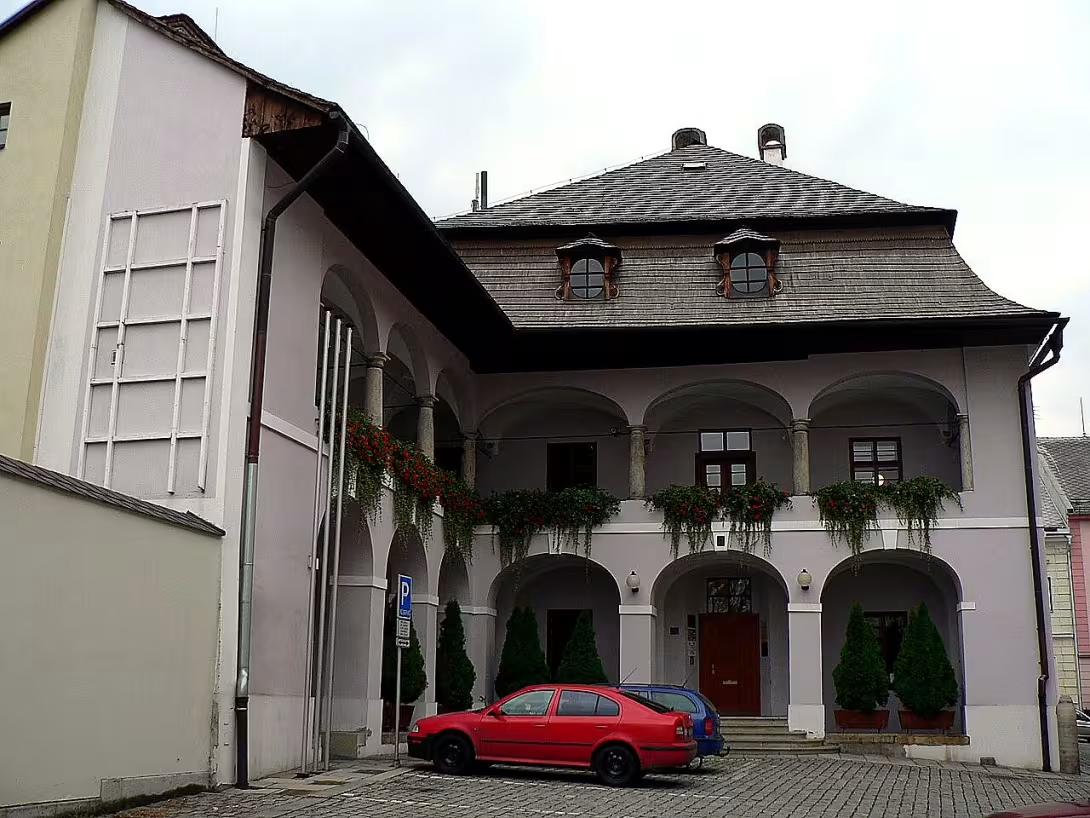
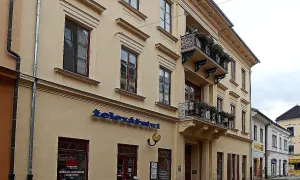
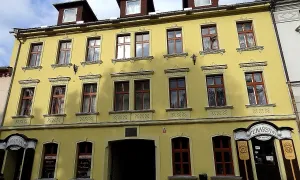
Geschaderův dům is a classicist townhouse in the historical center of Šumperka. The oldest written record of it dates back to 1535. The building is historically protected and today serves as a European House of Meeting. In her Gothic cellar there is an exhibition dedicated to witch trials.
The beginnings of the house are linked to the Dominican monastery, to which the building probably originally belonged. In the 16th century he went into private ownership. The first known owner was probably the governor of the Jérotin estate Jan Šalin. In the mid-17th century the house was purchased by Valentin Peschke, a manufacturer of textile fabric called trip.
The current form of construction is the result of a large reconstruction from the end of the 18th century, the completion of which was due to Anton von Tersch. The object combines the original Gothic foundations with the classicist above ground. Between 1994 and 1995 the building underwent a complete reconstruction, which enabled its current social use.
The list of owners includes the Dominican monastery, Jan Shalin, the Peschke family, Franz Ferdinand Gaup, Anton von Tersch and the businessman Alois Geschader, after which the house bears its name. Since 1901, the city of Šumperk became the owner. During the 20th century the building served as a city museum and from 1959 to 1988 as a seat of the district archive.
The important character associated with the history of the house was Heinrich Peschke, son of Valentine Peschke. As a city speedster, he was one of the city's most influential personalities in the 1970s. During the witch trials, he was accused of witchcraft. After several years of torture, he died without the Inquisitor Henry Blolig of Edelstat getting his confession. This historical figure became a model for Henry Pesh in the novel Witch Hammer. After Heinrich Peschke's death, he won the house of the judge and the prince's speedster Franz Ferdinand Gaup.
Today the house functions as the European House of Meeting and the seat of the Society of Czech-German Understanding Šumperk - Jeseníky. Since 2010, the exhibition of Witchcraft processes has been made available in the Gothic cellar. It uses guidePORT technology and is part of the Witchcraft Cycling Race.
Geschaderův dům is an important testament to the transformation of Shumper history, from Renaissance beginnings to the tragic events of the 17th century. Visiting the building offers an opportunity to become familiar with the history of the region through modern technologies in authentic spaces.
Historical milestones
- 1535
- Oldest known record of the house.
- 1901
- The city of Šumperk has become the owner of the building.
- 1995
- The opening ceremony of the House of European Meetings.
- 2010
- Opening the exhibition of Witchcraft processes in the Gothic cellar.
Architectural development
The original Gothic foundation of the house is complemented by the classical above-ground part, which was created by extensive reconstruction at the end of the 18th century. The building underwent a complete reconstruction between 1994 and 1995, which enabled its current social use.
Historical events
In the seventies of the 17th century, the owner of the house Heinrich Peschke was charged with witch trials and died after torture. In 1995, the house was opened as a European meeting house after the overall reconstruction. Since 2010, exposure to witch processes has been made available in the Gothic cellar.
Owners
Dominican monastery, Jan Šalin, Valentin Peschke, Heinrich Peschke, Franz Ferdinand Gaup, Anton von Tersch, Alois Geschader, City Šumperk.
Points of interest
- The oldest written records of the building dates back to 1535. - In the Gothic cellar of the house there is an exhibition dedicated to witch trials that uses modern technology. - The house is named after the trader Alois Geschader, who was one of his owners. - Heinrich Peschke, who lived in the house, was in the seventies of the seventeenth century an urban speedster and became a model for a literary figure in a novel about witch trials. - The building in the past served as a city museum and as a seat of the county archive.
Guide
Show guide text
This text was created by artificial intelligence and has not been editorially reviewed. It may contain inaccuracies.
Welcome to the historic heart of Šumperk. Right now, standing here, in front of this important building, allow me to take you on a journey through time. You are standing right in front of the Geschader house, a place that is not just an ordinary house, but a living witness of the centuries that have taken place here. Feel this atmosphere, feel the calm of the old town, which spreads around you, and look at this facade, which looks at you with its history. This object is one of the most important buildings in the whole centre and its presence here gives the city's grain its unmistakable face.
When you look at this structure, you might not just see stones and plaster, but you see layers of history that are forming on one side. If we tried to find the roots of this place, we would have to go back very far into the past. The oldest traces we can find of this house in the written records go back to the year 15-35. Imagine how long this house has stood here, how many generations have seen it, how many people have passed through its threshold. But what you see before you right now is the result of major changes. The current form of the building, its character and its appearance are the result of a major reconstruction that took place at the end of the eighteenth century. That's when the house turned into what we now see as a classicist townhouse. This style, which radiates in its form, brings to the street a sense of order, elegance and stability, which was very important for the then rising township.
Now pay attention to the architecture right in front of your eyes. Although we cannot know the names of the particular builders who designed this construction in its present form, we can enjoy its classical style. Feel the harmony and symmetry the house radiates. It's a typical example of a building that should have expressed the status and importance of its owner. It is a house that was built not only as a shelter from the rain, but as a symbol of success and social standing within the city. Look at his face and try to imagine how the details of his appearance changed over the years, how the color of his walls changed and how his role in this city changed.
But the history of this place is not just a story about architecture and building. It's also a story about people, their destinies, their power, and their fear. This house is inextricably linked to one of the darkest times of human history, the age of witch trials. At the time there was a town express Heinrich Peschke. His name is linked to this house in the context of a time when there was fear of invisible forces throughout Europe and in our countries and human lives were threatened by suspicion of witchcraft. Imagine the tension, the uncertainty that probably existed in these streets and in this house. It is a fascinating and frosty connection, where the place that is now used to meet people once witnessed such tragic events.
But history isn't just about fear. It's also about flower and business. The house is named after another important man, a merchant named Alois Geschader. He was one of his owners and his name became part of the identity of this place. Thanks to him the house became a symbol of prosperity and business life, which was crucial for Šumperk at some time. So this house has two conflicting energies: a dark history of processes and a brighter history of business success.
If you now decide to step deeper into this object, prepare yourself for something absolutely extraordinary. I want to prepare you to meet the past in its purest and oldest shape. There is a Gothic cellar within the building. It's a space that looks completely different from what you see on the street. It's where time stopped. It is in this ancient cellar today that there is a very interesting exhibition that is dedicated to the very witch trials. What's most impressive about this place is the connection between the old and the new. Even if you're standing in ancient stone spaces, exposure uses modern technology to help you understand and experience history. It's a fascinating experience where old stones meet the latest ways to tell stories.
This house also has a modern role to play. Today is no longer just a history that we are looking at, but it is a living place. It serves as the European House of Meeting and the seat of various companies. It's a place where history meets the present, where people from different parts of the world and different disciplines meet to build the future. It's a beautiful contrast to his darker past.
So before you lies a house that is like a book with many leaves. Every leaf tells a different story. From the oldest records of the year fifteen hundred thirty-five, to the reconstruction at the end of the eighteenth century, to today's use as a place of meeting and education. You can feel the presence of speedsters, merchants and ordinary people who lived and worked here.
So I'm not delaying you now, and I'm leaving you to explore this house and its surroundings on your own. I strongly recommend that you descend into that Gothic cellar to see with your own eyes how modern technology can revive ancient history. Let yourself be carried away by the atmosphere of this place and pay attention to the details that will interest you. Thank you for choosing to visit this historic monument and for taking this short journey through time with us. We wish you a pleasant continuation during Šumperka tour.
Tips for visitors
To visit, choose a sunny morning, where the light highlights the classical facade of the house and the details of its architecture. In the historical centre of Šumperka there is a pleasant atmosphere for walking at this time.
When taking pictures, focus on capturing the overall view of the house from the opposite side of the street, which will allow its historical character to stand out. The best light conditions for exterior images occur during spring or autumn months when the sun is not too high.
Take with you comfortable shoes suitable for moving around the city tile and possibly a camera with a wider lens to get the whole building into the frame with the surrounding installation.
For families with children, the surroundings are ideal for a simple walk through the historic centre of the city, where children can discover interesting architectural elements and soak up the atmosphere of ancient times.
In the surroundings you can use the Witchcraft Cycling for active trips or explore the natural beauties in the Jeseníky area, offering many possibilities for trips to nature.
Frequently asked questions
Can the monument be visited?
Some buildings of this kind are open for guided tours, others serve another purpose or are privately owned. We have not verified whether and when this monument is open – please ask the operator.
What are the opening hours and admission?
We have not verified the opening hours or admission. Current information is published by the operator.
Where is the monument?
Location: Šumperk. The map on this page shows the exact spot.
Why is the monument protected?
It is listed in the Central List of Cultural Monuments of the Czech Republic as a cultural monument (register no. 1000134272).
Businesses nearby
Do you run a restaurant, accommodation, shop, museum, rental, wellness or other visitor service near this monument? Show yourself directly to the people heading to it — this is how they will see you in the app and on the web:
Events nearby


Zdroj akcí: otevřená data měst a obcí ČR (Národní katalog otevřených dat) a kalendář akcí Národního památkového ústavu.
Nearby
Historické centrum města Šumperka, Čarodějnická cyklotrasa, oblast Jeseníků.
Accommodation nearby
Themed route
Thematic cruise route from Šumperka
1. Main objective: Geschaderův dům - Type: Historical monuments - Why is it worth a visit: Geschaderův dům is a key part of the historical centre Šumperka. This Baroque palace, which was previously the seat of the Geschadra family, offers a view of the city's rich architectural and cultural heritage.
2. Historical Center of Šumperka - Type: City Walk - Why is it worth a visit: After visiting the Geschader house, take a look at the historical centre where many other Baroque and Renaissance buildings are located. This place offers a beautiful atmosphere of past times and is ideal for moments of relaxation in one of the local squares.
3. Witchcraft Cycling - Type: Cyclopath - Why is it worth a visit: This cycling route leads through the picturesque landscapes of the surrounding Jeseníks and offers a unique view of the local folklore. It's an ideal way to explore the natural beauty of the area and find places full of legends about witches.
4. The Jesenice Region - Type: Nature - Why is it worth visiting: Jeseníky are not only a beautiful natural body, but also offer many possibilities for recreational activities. After the bike race look at the surrounding forests and mountains where you can enjoy beautiful views or try some fun activity in nature.
This route offers a combination of historical exploration and natural experiences, which is the ideal choice for those who want to meet Šumperk and its surroundings.
Seasonal recommendations
Spring in Šumperk brings a gradual awakening of nature to the surroundings of Geschader's house, which comes to life in grey alleys. Light is soft and diffuse during this period, often intersecting through clouds, creating a calm and thoughtful atmosphere ideal for observing architectural details without sharp shadows. Flowers in the window niche and the first green shoots in the trees provide the historical facade with freshness and contrast to dark plaster. For visitors, this period is suitable for slow walks where temperatures are in a mild range, but the mornings and evenings may be cold, so it is advisable to carry a light jacket or scarf. The best time to visit is in the morning when the air is purest and light gradually amplifies, revealing the texture of bricks and stone. Avoid rainy days that can cause slippery pavements and make small relief visible.
Summer months offer the longest days and brightest lighting, which dramatically highlights the color and structure of the building. The sun throws short and sharp shadows in the morning, which may be difficult to photograph, but on the other hand reveals the depth of architectural elements. The atmosphere is more lively, the surrounding gardens and parks are in full bloom and greenery, creating a pleasant contrast to historical development. For a comfortable tour is ideal morning or late afternoon time when heat is more tolerable and fewer people are moving around the city. Clothes should be light and breathable, suitable for higher temperatures, and protection of the head from the sun is essential.
Autumn brings to Šumperk the characteristic colour of leaves that surround trees into golden, orange and red shades. This natural background creates visual harmony with the historic house and gives the whole view a romantic touch. The light is lower and warmer in this period, often golden, which underlines the ancient nature of the monument. The atmosphere is colder and quieter, with frequent fog that can create a mystical impression. For visitors, autumn is ideal for longer walks because temperatures are still pleasant, but no longer as hot as summer. It is recommended to dress layered in order to be easily adapted to changing weather, and firm shoes, because the leaves on the pavement can be slippery. The best time is the late afternoon when the sun falls to the horizon and creates long shadows that modulate the facade of the building.
Winter in Šumperk brings sharp contrasts between white snow and dark historical development. The lighting is short and pale, often grey, which may seem gloomy, but it also highlights the massive strength and strength of the building. The atmosphere is quiet and quiet, the snow cover dampens the sounds of the city and creates a sense of isolation and privacy. For visitors, winter is tough on clothing, requires a warm winter jacket, gloves, hat and waterproof shoes. The best time to visit is in the morning when the light is brightest and the temperatures are highest. If the snow cover is strong, the movement around the area may be limited, so it is important to monitor the weather forecast. Winter light is less suitable for detailed colour observation, but excels in capturing the shapes and volume of the building.
Visualizations and artistic views

The visualisations are generated by artificial intelligence and serve as inspiration.
Photos from the area
Real photos taken near the monument


Zdroj a licence jsou uvedeny u každého snímku.
Tips from visitors
No tips yet. Be the first!
Log in and add your tip.
Sources and literature
Photos: Martin Vavřík / Public domain — Wikimedia Commons. The author and licence also appear when you hover over the image.
Faktickým podkladem tohoto textu byl článek na Wikipedii, jehož autory jsou přispěvatelé Wikipedie. Článek je dostupný pod licencí CC BY-SA 4.0.
Location on the map

Příběhy a pověsti
Legendy, pověsti a příběhy spjaté s touto památkou
Fotografie návštěvníků
Zatím žádné fotografie. Buďte první, kdo přidá fotografii z návštěvy!
Log in a přidejte svou fotografii nebo hodnoťte.
Za ověřenou návštěvu v aplikaci získáte víc bodů — poznáme podle GPS, že jste na místě.
Reviews and comments