






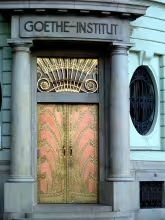
The Goethe-Institut Česko is a cultural center located on Masarykovo nábřeží in Prague's New Town, near the National Theatre. Established in 1990 as part of the global network of Goethe-Instituts, it promotes German language learning and fosters international cultural cooperation within the Czech Republic. The building, constructed between 1903 and 1905 in the Secessionist style by architect Jiří Stibral with sculptures by Ladislav Šaloun, has a rich history, having previously housed various diplomatic missions.
Originally built for První česká zajišťovací banka from 1903 to 1905, this period marked significant architectural development in Prague. The Secessionist style reflects broader European trends of the early 20th century. After nationalization by Czechoslovak authorities in 1945, it served as the Bulgarian embassy until 1948 and later housed the East German embassy from 1949 to 1990.
Architecturally, the building is a notable example of Secessionist style, characterized by elegant lines and decorative elements. Designed by Jiří Stibral with sculptures by Ladislav Šaloun, it stands as a five-story structure approximately 25 meters high. The façade features intricate sculptural work that enhances its aesthetic appeal. This cultural monument is listed under the number 41409/1-2086 and was registered before 1988.
Ownership of the building has seen dramatic changes over the years. Initially built for První česká zajišťovací banka, it underwent nationalization in 1945. It then served as a diplomatic mission first for Bulgaria and later East Germany until 1990. Since 1991, it has been home to Goethe-Institut Česko.
Throughout its history, the building has witnessed significant events. Initially serving financial purposes, it transitioned into a diplomatic role during the mid-20th century before becoming a cultural hub in the early 1990s. This transformation reflects broader historical shifts within Europe and Prague itself.
Today, Goethe-Institut Česko is accessible to the public, offering various services and activities that make it worth visiting. It provides German language instruction, educational programs for teachers, and certified language examinations. Additionally, it hosts cultural events such as author readings and film screenings, often translated or subtitled for Czech audiences. The building also houses a German library, exhibition spaces, and Café Goethe, enhancing its appeal as a vibrant cultural center.
The Goethe-Institut Česko stands not only as a testament to Prague's architectural heritage but also as a beacon of cultural exchange and education. Its rich history and ongoing contributions make it an essential destination for anyone interested in the intersection of language, culture, and history. Visitors are invited to explore its offerings and experience firsthand the dynamic atmosphere that this unique institution provides.
Historical milestones
- 1991
- The building became the headquarters of Goethe-Institut Česko.
Architectural development
The Secessionist-style building on Masarykovo nábřeží was designed by Jiří Stibral with sculptures by Ladislav Šaloun. Initially serving as the headquarters for Prvně česká zajišťovací banka, it underwent various transformations to accommodate diplomatic missions before becoming a cultural center.
Historical events
The building was constructed between 1903 and 1905 for První česká zajišťovací banka.
In 1945, the building was nationalized by Czechoslovak authorities.
From 1991 onwards, it has been used as the headquarters of Goethe-Institut Česko.
Owners
Originally built for První česká zajišťovací banka (1903-1945), the building was nationalized in 1945 and later served as the Bulgarian embassy (1945-1948) and East German embassy (1949-1990). Since 1991, it has been the home of Goethe-Institut Česko.
Points of interest
- The Goethe-Institut building was originally constructed for První česká zajišťovací banka, reflecting its initial role in the financial sector before transitioning into diplomatic and cultural functions.
- Despite being a prominent example of Secessionist architecture, the building's design by Jiří Stibral features intricate sculptures by Ladislav Šaloun, showcasing an artistic collaboration that adds to its historical significance.
Guide
Show guide text
Welcome to the Goethe-Institut Česko, a remarkable cultural beacon nestled in Prague's vibrant New Town on Masarykovo nábřeží, just a stone's throw from the iconic National Theatre. As you stand here, take a moment to absorb the grandeur and historical essence of this architectural gem that has stood as a testament to international cooperation since 1990.
The Goethe-Institut Česko is part of an extensive global network dedicated to fostering German language learning and cultural exchange worldwide. In 1991, just a year after its establishment, this building became the official headquarters for the institute in the Czech Republic. Its role has been pivotal in bridging cultures and promoting mutual understanding between Germany and the Czech lands.
Now, let's turn our attention to the architecture that surrounds you. The structure before your eyes was originally constructed between 1903 and 1905, designed by the talented architect Jiří Stibral. Notice its elegant Secessionist style, characterized by clean lines and an artistic flair typical of early 20th-century European design. As you look around, observe how this architectural choice reflects a period of cultural renaissance and innovation.
The building's history is as intriguing as its architecture. Initially serving as the headquarters for První česká zajišťovací banka, it played an important role in the financial sector before transitioning into its current diplomatic and cultural functions. This transformation highlights the dynamic nature of this location, adapting through time to meet new societal needs.
While many historical figures have passed by these halls over the years, specific personalities tied directly to this site remain largely unknown. However, the stories embedded within its walls speak volumes about the evolving relationship between nations and cultures—a narrative that continues to unfold today.
One fascinating aspect of this building is its journey from a financial institution to a cultural hub. This evolution is not just a change in function but also a symbol of broader societal shifts occurring throughout Europe at the turn of the century. It's a reminder of how places can adapt, serving new purposes while preserving their historical essence.
As you conclude your visit here, I invite you to explore further and discover more about this incredible site. Whether through its cultural programs or simply by appreciating its architectural beauty, there is always something new to learn and experience at the Goethe-Institut Česko. Thank you for joining me on this journey, and may it inspire your curiosity as you continue exploring Prague's rich tapestry of history and culture.
Tips for visitors
The best time to visit the Goethe-Institut Česko is during late spring or early autumn, when Prague's weather is pleasant for exploring outdoor cultural landmarks nearby. This period also coincides with various cultural events and exhibitions hosted at the institute itself, offering visitors a richer experience of German-Czech cultural exchange.
Transportation to the Goethe-Institut Česko is convenient by both public transport and car. The area around Masarykovo nábřeží is well-served by trams and buses, with several lines passing nearby; you can check specific routes using a transportation app or website. For those driving, there are parking options in the vicinity, although it's advisable to verify current availability and rates online.
When visiting, consider bringing comfortable walking shoes as you'll likely explore more of Prague’s New Town beyond the institute itself. A camera is also recommended for capturing the architectural beauty of the area and any exhibitions or events taking place at the Goethe-Institut. Don't forget to bring a light jacket or sweater, as indoor temperatures can vary.
Photography enthusiasts will find several spots around the Goethe-Institut Česko ideal for capturing Prague's historic charm. The institute itself offers stunning views of the Vltava River and the National Theatre, especially during golden hours in the morning or late afternoon when the light is soft and warm.
In a 30-minute walk from the Goethe-Institut, visitors can explore several nearby attractions including the iconic National Theatre, which showcases a range of performances. The area around Národní třída offers vibrant cultural venues and historic buildings worth exploring. For families with children, consider visiting the nearby Prague Castle or the interactive exhibits at the Museum Kampa, both offering engaging experiences for all ages.
Businesses nearby
Nearby
Located in Prague's New Town near the National Theatre, the area is rich in cultural landmarks including other historic buildings and vibrant cultural venues.
Accommodation nearby
Trips and activities nearby
Guided tours, tickets and activities nearby from GetYourGuide
Search tours and activities →Themed route
Tematická výletní trasa: Kulturní zázraky Nového Města Prahy
1. Goethe-Institut Česko - *Typ:* Kulturní instituce - *Proč stojí za návštěvu:* Goethe-Institut je centrem pro kulturní výměnu a podporu jazyka německého. Navštivte toto místo, abyste se dozvěděli o českých-německých kulturních projektech a zapojili se do různorodých akcí zaměřených na umění, hudbu a literaturu.
2. Národní divadlo - *Typ:* Historické divadlo - *Proč stojí za návštěvu:* Nachází se přímo naproti Goethe-Institutu a je ikonou českého architektonického umění. Jeho významná fasáda a bohatá historie ho činí nezbytným pro každého, kdo se zajímá o kulturní dědictví Prahy.
3. Štůlba - *Typ:* Historická budova - *Proč stojí za návštěvu:* Tato historická budova je známá svou fascinující architekturou a bohatou historií. Je to jedno z nejstarších domů v Praze, které představuje zajímavý pohled do minulosti Nového Města.
4. Staroměstská radnice - *Typ:* Historická památka - *Proč stojí za návštěvu:* I když se nachází mimo okolní oblast, je dostatečně blízko a slouží jako krásné závěrečné místo pro vaši cestu. Je to ikonický symbol Prahy s výhledem na Staroměstské náměstí a je známá svou gotickou architekturou.
Tato trasa nabízí pohled na kulturní bohatství Nového Města, kombinující historii s moderním uměním a kulturou.
Seasonal recommendations
Jaro: V jarním období nabývá Goethe-Institut Česko něžného osvětlení, které zdůrazňuje detaily architektury a vytváří přívětivou atmosféru. Květiny začínají kvést kolem instituce, čímž se okolí promění v živý pavučinový vzor barevných listů a květin. Tento čas roku je ideální pro návštěvu díky mírnému počasí, které umožňuje pohodlné procházky bez potřeby teplého oblečení. Navzdory začínajícím turistickým proudům zůstává návštěvnost stále příjemně mírná, což vám umožňuje užít si institut bez přetížení davem. Doporučujeme navštívit ráno nebo později odpoledne, abyste se vyhnuli jakémukoli možnému slunečnímu záplavu.
Léto: Během letního období je Goethe-Institut Česko osvětlený dlouhými dny a živým svitem, což přináší jeho architektonické prvky do plného záření. Létě se institut stává oblíbeným místem pro turisty, kteří chtějí užít si teplé počasí a kulturní nabídky hlavního města Praha. Vzhledem ke zvyšujícím se davům je vhodné navštívit ranně nebo večer, aby byla zajištěna pohodlnější návštěva. Dřívější příchod může být také klíčový pro minimalizaci čekání na vstupenky a zajištění dostatek času na užití institutu. Vzhledem k teplým měsícům doporučujeme lehké, ale útulné oblečení s ochranou proti slunci.
Podzim: Podzimní návštěva Goethe-Institut Česko nabízí jedinečný pohled na instituci v růžovém a žlutém světle, které je charakteristické pro tuto sezónu. Listopad přináší kouzlo padajících listů a mírné počasí, což způsobuje, že návštěva institutu se stává klidným únikem od teplejšího letního davu. Přestože podzim přináší klesající počasí, je vhodné mít na paměti lehké deštník nebo oblečení pro chladnější večery. Tento čas roku je také ideální pro návštěvu kvůli mírným davům a příjemnému počasí, které umožňuje užít si institut v klidu.
Zima: Zimní období přináší chladnější atmosféru kolem Goethe-Institut Česko, kde městské osvětlení a sněhové pokrývky zvyšují jeho půvab. Zima v Praze je známá svou klidnou atmosférou, což činí institut ideálním místem pro návštěvu bez obavy z přetížení davem. Otevírací doba se může být kratší kvůli chladnému počasí, takže je důležité si ověřit aktuální časy otevření. Navštěvníci by měli mít na paměti teplé oblečení a zimní boty, aby se udrželi pohodlně během návštěvy. Dřívější příchod je doporučený, abyste si využili plného času pro prozkoumání institutu a jeho nabídek.
Visualizations and artistic views


Vizualizace jsou generovány umělou inteligencí a slouží jako inspirace.


Atmosphere of the place
Atmospheric visualization of the setting and era
Tips from visitors
No tips yet. Be the first!
Log in and add your tip.


Reviews and comments