






Gröbova vila Villa
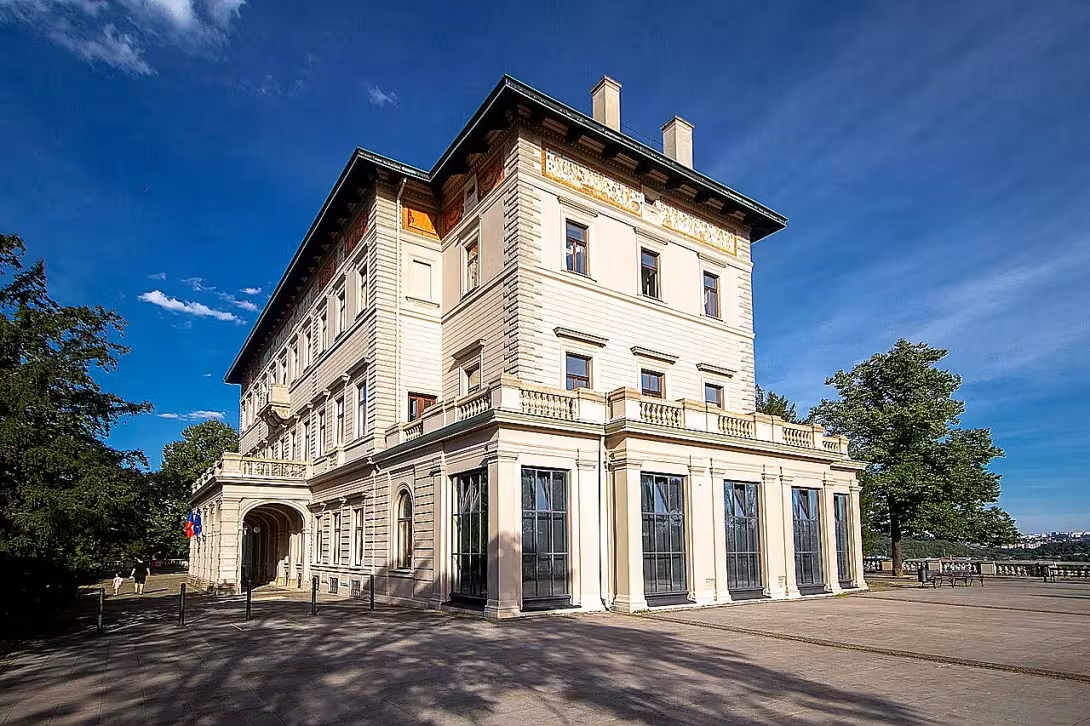
Gröbova vila, also known as Grébovka or Grebovka, is a two-story Renaissance-style villa located in Havlíčkovy sady, Prague. Constructed between 1870 and 1874 by architect Antonín Barvitius, the villa stands out for its embodiment of Czech Renaissance architecture with Palladian influences and Italianate design elements such as terraces and water features. Its strategic position offers a commanding view over the Botič valley, making it one of Prague's most picturesque villas.
The origins of Gröbova vila trace back to the late 19th century when Moritz Gröbe acquired parcels including the site for his summer residence, known then as "Villa Gröbe." The foundation stone was laid on June 1st, 1871. Initially serving as a private retreat, the villa later became notable for hosting members of the Habsburg family between 1902 and 1905, including Princess Elisabeth Habsburg.
Architecturally, the villa is an exemplary representation of Czech Renaissance architecture with Palladian influences. Designed by Antonín Barvitius and featuring interior designs by Josef Schulz, it showcases a blend of Italianate elements such as terraces, water features, and a shallow rizalit on its southern side. The building's façade includes a five-bay portico on the northern side and is adorned with frescoes and sculptures that enhance its aesthetic appeal.
Ownership of Gröbova vila transitioned over time, beginning with Moritz Gröbe until his death in 1891, after which it passed to his heirs. In 1905, the villa was sold to the Vinohrady municipality, which opened Havlíčkovy sady as public gardens that year. The villa's history includes significant events such as damage from Allied bombing on February 14th, 1945, resulting in a fire that destroyed its roof and both floors.
Following World War II, the villa underwent reconstruction between 1951 and 1953 under the guidance of architect Pavel Smetana. This period saw modifications reflecting socialist realism, including changes to the interior spaces and structural elements. A major restoration project from 2002 to 2005 aimed to restore its original Renaissance style, culminating in a public unveiling on May 24th, 2005.
Today, Gröbova vila stands as a testament to architectural history and cultural heritage within Prague's urban landscape. Its rich past and stunning design make it a worthwhile visit for those interested in architecture, history, or simply seeking a serene environment amidst the city's bustling atmosphere. Visitors are invited to explore this historical monument and appreciate its enduring beauty and significance.
Then and now
Drag the slider to compare how the landmark may have looked when it was built with the view today.
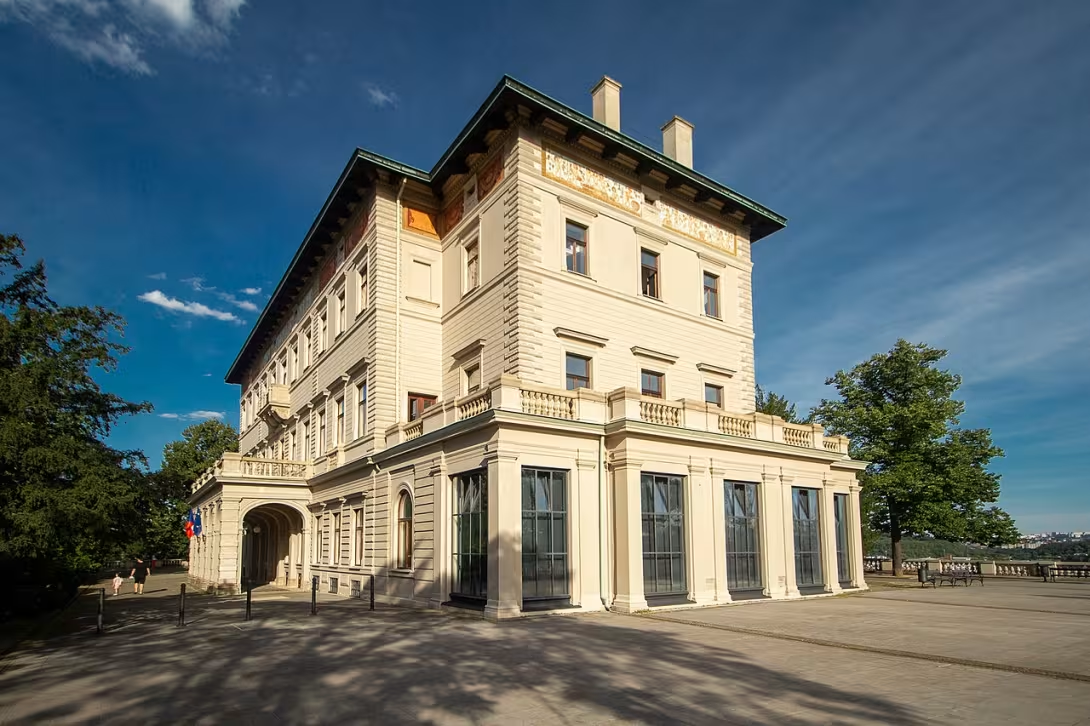
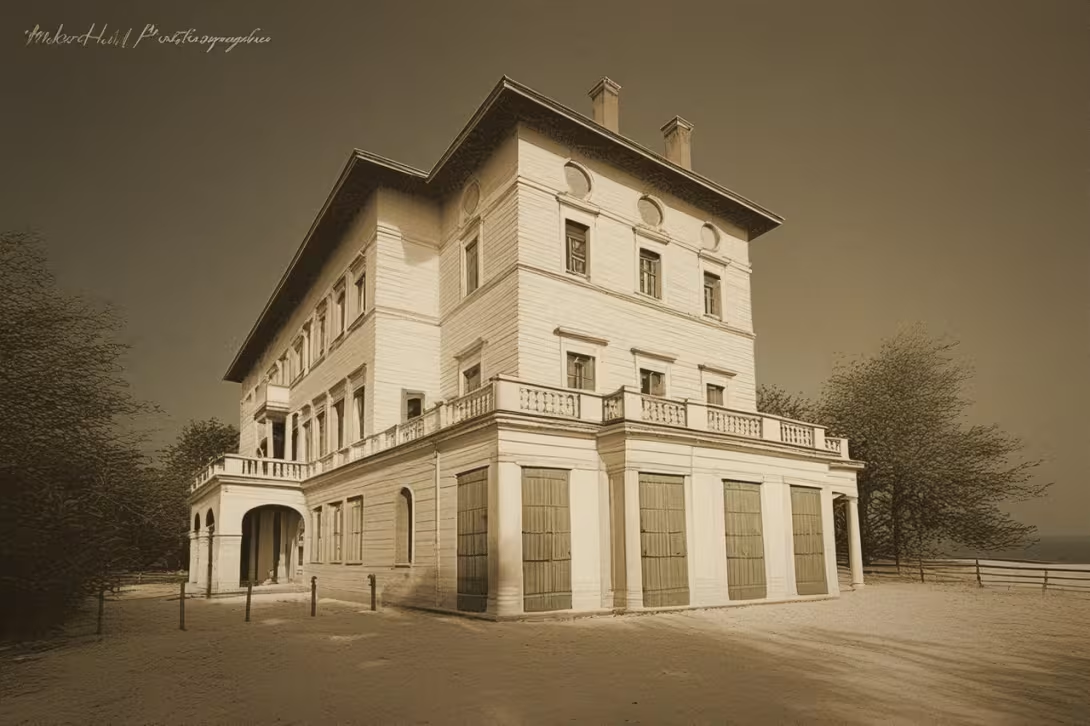
The historical appearance on the left is an AI-generated visualisation and serves as inspiration only.
Historical milestones
- 1871
- Foundation stone of the villa was laid on June 1st.
- 1945
- The villa was damaged by Allied bombing on February 14th, resulting in a fire that destroyed its roof and both floors.
Architectural development
Originally constructed as a summer residence for Moritz Gröbe in the late 19th century, the villa underwent significant changes over time. After being damaged during World War II, it was reconstructed between 1951-1953 with modifications reflecting socialist realism. A major restoration project from 2002 to 2005 aimed to restore its original Renaissance style.
Historical events
- 1871
- Foundation stone of the villa was laid on June 1st.
- 1945
- The villa was damaged by Allied bombing on February 14th, resulting in a fire that destroyed its roof and both floors.
- 2005
- Reconstruction of the villa was completed, restoring it to its original style and character.
Points of interest
- Gröbova vila is unique for its blend of Czech Renaissance architecture with Palladian and Italianate influences, making it a rare example of this eclectic style in Prague.
- The villa was originally built as a summer residence for Moritz Gröbe, but it gained historical significance by hosting members of the Habsburg family, including Princess Elisabeth Habsburg, between 1902 and 1905.
- Despite suffering damage from Allied bombing during World War II on February 14th, 1945, which destroyed its roof and both floors, Gröbova vila was meticulously restored to its original Renaissance style in a major project completed in 2005.
- Architect Antonín Barvitius designed the villa with input from interior designer Josef Schulz, resulting in an impressive combination of exterior frescoes and sculptures that enhance its visual appeal.
- After World War II, the villa underwent significant alterations reflecting socialist realism under architect Pavel Smetana's guidance during reconstruction between 1951 and 1953.
Guide
This guide is narrated by a synthetic voice generated by artificial intelligence.
Show guide text
This text was created by artificial intelligence and has not been editorially reviewed. It may contain inaccuracies.
Gröbova vila, which Prague residents call Gröbovka or Grébovka, stands in Havlíčkovy sady at the border of Vinohrady, Vršovice and Nusle. This two-storey Renaissance revival building stands on a plateau above the Botiče valley. It forms the axis of a garden composition with terraces, staircases, pavilions and water features, which together with the villa evokes the atmosphere of the Italian south.
Since the second half of the thirteenth century, wine had been grown on these sunny slopes, and later two farmsteads, Horní and Dolní Landhauska, were established here. In eighteen seventy, Prague entrepreneur Moritz Gröbe purchased them and had a summer residence built on the site of Horní Landhauska. The terrain was raised with earth from excavations of a nearby railway tunnel, in the construction of which Gröbe participated.
The villa was designed by Antonín Barvitius, the interiors by Josef Schulz, and it was built by František Havel. The inspiration came from Italian Renaissance suburban villas, where nobility and clergy spent their summers. On the north side, the building has a mighty portico with a five-arched pillared passageway and a welcoming terrace. From the southern terrace, a double-flight staircase leads down to the vineyard. Below the low roof runs a fresco band with motifs of children by Viennese painter Kugler. The sculptures were created by Bohuslav Schnirch and Josef Vorlíček. Inside there are thirty large rooms and a marble staircase with a coffered ceiling.
After Gröbe's death in eighteen ninety-one, his heirs leased the property to the Habsburgs from nineteen oh two to nineteen oh five. Princess Alžběta, granddaughter of Emperor František Josef the First, stayed here with her husband. In nineteen oh five, the municipality of Vinohrady purchased the villa, and in May nineteen oh six opened the park as Havlíčkovy sady.
The villa then housed the forestry department of the College of Agriculture, later a dormitory for non-Prague children, and during the war the Hitler Youth. During the bombing on February fourteenth, nineteen forty-five, it was struck by incendiary bombs and fire destroyed the roof and both storeys. The restoration from nineteen fifty-one to nineteen fifty-three took place in the spirit of socialist realism. A hammer and sickle appeared on the ceiling and the original paintings were covered over. The villa served as the Central House of Pioneers and Youth, later among other things as a dance and singing conservatory.
In two thousand one, the CEELI Institute leased the villa, committing to invest almost five million dollars in repairs. The reconstruction according to a project by the Arkom studio under the direction of Hedvika Hronová was to restore the villa to its original appearance and was completed in two thousand five.
Frequently asked questions
Can the monument be visited?
This is a residential or farm building, not a museum with opening hours. Please view it from public space and respect the owners' privacy. We have no information about access to the interior.
Where is the monument?
Location: Praha 2, Hlavní město Praha. The map on this page shows the exact spot.
Why is the monument protected?
It is listed in the Central List of Cultural Monuments of the Czech Republic as a cultural monument (register no. 1000152270_0001). It is protected as part of a larger listed ensemble.
Businesses nearby
Do you run a restaurant, accommodation, shop, museum, rental, wellness or other visitor service near this monument? Show yourself directly to the people heading to it — this is how they will see you in the app and on the web:
Events nearby

Zdroj akcí: otevřená data měst a obcí ČR (Národní katalog otevřených dat) a kalendář akcí Národního památkového ústavu.
Nearby
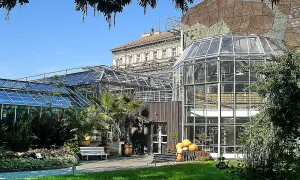
Gröbova vila is situated in Havlíčkovy sady park, surrounded by residential areas. The park itself offers a serene environment with gardens, terraces, and water features.
Accommodation nearby
Trips and activities nearby
Guided tours, tickets and activities nearby from GetYourGuide
Affiliate link: if you buy from the partner, we may receive a commission. The price for you does not change.
Search tours and activities →Themed route
Tematická výletní trasa: Gröbova vila a okolí
1. Gröbova vila (Vila)
Proč stojí za návštěvu: Známá svou architekturou z roku 1910, tato vila je dílem architekta Antonína Engelbrechta a slouží jako připomínka historie Prahy. Je to ideální místo pro ty, kdo mají rádi elegantní design a historické památky.
2. Havlíčkovy sady (Park)
Proč stojí za návštěvu: Rozlehlý park nabízí klidné chodníky, krásně udržované zahrady a vodní prvky, které poskytují útočiště od městského života. Je to skvělá příležitost pro relaxaci a procházku mezi barevnými květinami a starověkými stromy.
3. Vodní nádrž (Water Feature)
Proč stojí za návštěvu: Tato vodní nádhera je centrem Havlíčkových sadů, nabízející klidný a odpojující prostor. Je to ideální místo pro ty, kdo hledají mír a krásu přírody uprostřed města.
4. Terrasy (Gardens)
Proč stojí za návštěvu: S jejich půdorysy plnými květin a elegantních sadových řad, tyto terasy nabízejí příležitost prohlédnout se na různorodé rostliny a užít si panoramatický pohled na okolí. Jsou ideálním místem pro fotografování nebo jen pro klidné sedění.
5. Zámecká alejka (Garden Pathway)
Proč stojí za návštěvu: Tato cesta vede skrze zelené území parku, nabízející pohledy na jeho nejkrásnější prvky. Je to ideální pro ty, kdo milují chodit a objevovat nová místa s přírodním rámcem.
Tato trasa vám nabídne kombinaci historie, architektury a přírody, umožňující plnohodnotný zážitek ve městském prostředí.
Seasonal recommendations
Spring: Visiting Gröbova Villa during spring offers a picturesque experience as the surrounding gardens burst into life with colorful blooms and lush greenery, creating an enchanting atmosphere perfect for photography enthusiasts. The mild weather makes it ideal to explore both indoors and outdoors comfortably. As the villa's natural beauty is enhanced by longer daylight hours, early morning visits are recommended to avoid larger crowds that tend to gather later in the day. Light layers are advisable due to fluctuating temperatures.
Summer: Summer at Gröbova Villa provides a vibrant setting with extended daylight hours allowing for thorough exploration of its historical interiors and outdoor spaces. The villa's gardens become lush and inviting, making it an excellent time for leisurely strolls. However, this season also attracts more visitors, so arriving early in the morning is advisable to enjoy a quieter experience. Light, breathable clothing is recommended due to warmer temperatures, along with sun protection like hats or sunglasses.
Autumn: Autumn at Gröbova Villa offers a serene and colorful ambiance as the foliage transforms into rich hues of red, orange, and gold. This season provides an ideal backdrop for capturing stunning photographs amidst fewer visitors compared to summer. The cooler weather is perfect for comfortable exploration without the need for excessive layering. Early afternoon visits are recommended to enjoy the warmest part of the day while avoiding any potential evening chill.
Winter: Winter at Gröbova Villa presents a unique charm with its historic architecture set against a backdrop of snow-covered landscapes, creating a magical atmosphere. The shorter days mean that visiting earlier in the day is advisable to make the most of available daylight and ensure you have enough time to explore. It's important to dress warmly in layers and wear comfortable footwear suitable for potentially icy paths. Indoor areas can offer respite from the cold while still allowing visitors to appreciate the villa’s history and artistry.
Visualizations and artistic views


The visualisations are generated by artificial intelligence and serve as inspiration.
Photos from the area
Real photos taken near the monument


Zdroj a licence jsou uvedeny u každého snímku.
Tips from visitors
No tips yet. Be the first!
Log in and add your tip.
Sources and literature
Photos: VitVit / CC BY-SA 4.0 — Wikimedia Commons. The author and licence also appear when you hover over the image.
Faktickým podkladem tohoto textu byl článek na Wikipedii, jehož autory jsou přispěvatelé Wikipedie. Článek je dostupný pod licencí CC BY-SA 4.0.
Location on the map
Příběhy a pověsti
Legendy, pověsti a příběhy spjaté s touto památkou
Fotografie návštěvníků
Zatím žádné fotografie. Buďte první, kdo přidá fotografii z návštěvy!
Log in a přidejte svou fotografii nebo hodnoťte.
Za ověřenou návštěvu v aplikaci získáte víc bodů — poznáme podle GPS, že jste na místě.
Reviews and comments