






Transgas Building complex
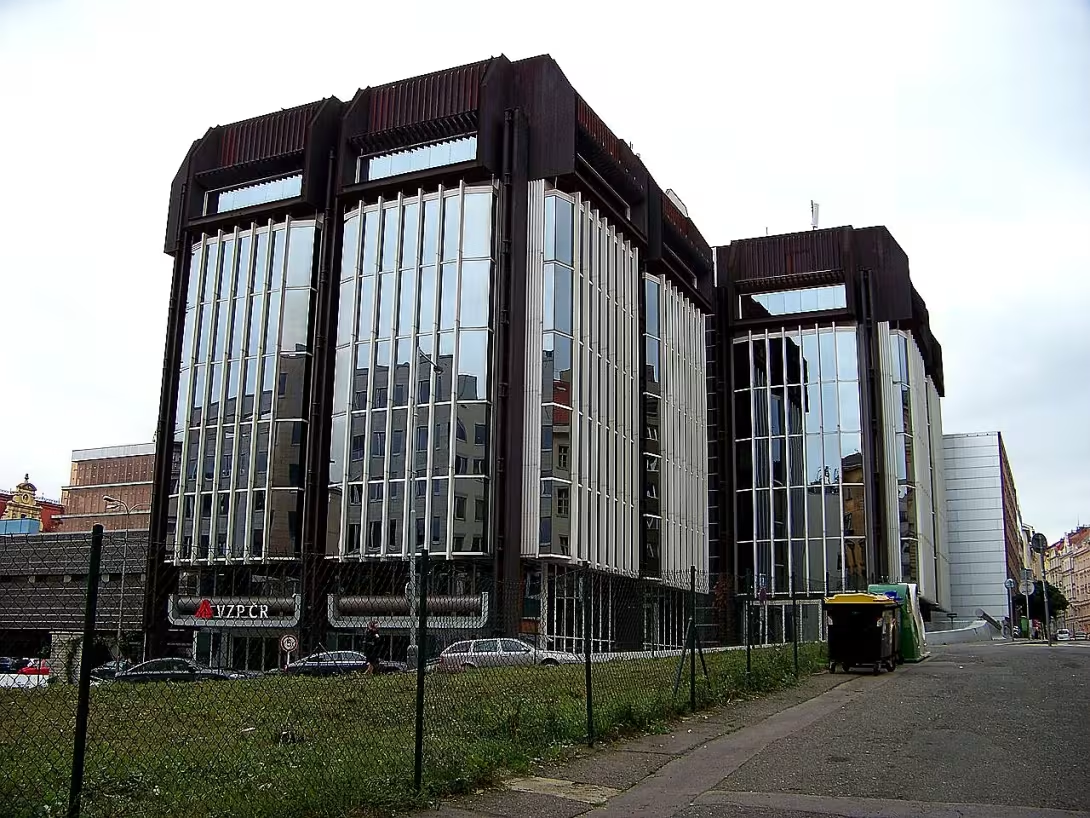
Transgas was a high‑tech architectural complex with brutalist elements located in Praha 2. Built between 1972 and 1978, it housed the central control and dispatch rooms for the Soviet gas pipeline. It is regarded as a key example of late modernism and Western technicism in the Czech Republic.
The site’s development began with an architectural competition in 1966. The Czechoslovak government commissioned the project after a 1970 agreement to construct a 1,030 km pipeline delivering Soviet gas to Western Europe. This massive undertaking required a sophisticated telemetry control centre, which the facility was designed to provide. It was erected on Vinohradská třída, near the National Museum and the Český rozhlas headquarters, after demolishing existing apartment blocks.
The ensemble, designed by architects Jiří Eisenreich, Jindřich Malátek, Václav Aulický, Jan Fišer, and Jiří Kozák, comprised three buildings: two nine‑story towers and a central cubic dispatch block. The towers featured dark‑steel frames with long windows, exposed concrete, and self‑riveting ATMOFIX steel. The dispatch block was dark grey, its heavy insulating façade covered with 18,000 granite paving stones. A fountain by Ivo Loos formed part of the complex, and the surrounding railings were symbolically made from gas‑pipeline pipes.
Originally, the Federal Ministry of Fuel and Energy and the National Enterprise Tranzitní plynovod used the site. Later, organizations such as Všeobecná zdravotní pojišťovna and Světová odborová federace occupied it. In 2015, the Slovak developer group HB Reavis bought the property, planning to replace the structures with modern offices.
A notable technical detail of the dispatch block was the need for extensive isolation of its computers to shield them from vibrations generated by the nearby Vinohrady railway tunnels. In January 2017, art historians from Czech universities petitioned the Culture Minister to halt demolition, describing the building as an exceptional continuation of Western brutalism.
The Czech Ministry of Culture approved demolition in November 2017. Despite protests and preservation efforts by the city of Prague, demolition began in February 2019 and finished in 2020. The site is now being used for a new office complex.
Although the buildings are gone, Transgas remains an important reference for the study of brutalist architecture and industrial design, illustrating the technical and political ambitions of late‑20th‑century Prague.
Historical milestones
- 1966
- An urban and architectural competition was announced for the site.
- 1972
- Construction of the complex began.
- 1974
- The central dispatch building was completed.
- 1978
- The entire complex was completed.
- 2019
- Demolition of the buildings commenced.
- 2020
- Demolition of the complex was completed.
Architectural development
The complex was a composition of various forms, including two nine-story towers and a central dispatch building. It utilized self-riveting ATMOFIX steel and exposed concrete. The dispatch building featured a heavy insulating facade made of 18,000 granite paving stones.
Historical events
In 1966, an architectural competition was held for the site. The complex was constructed between 1972 and 1978. The demolition of the buildings took place between 2019 and 2020.
Owners
The complex was used by the National Enterprise Tranzitní plynovod and later housed organizations such as the Světová odborová federace and Všeobecná zdravotní pojišťovna.
Points of interest
– It housed the central control and dispatch rooms for the Soviet gas pipeline. – The complex consisted of two nine-story towers and a central cubic dispatch block. – The dispatch block's heavy insulating façade was covered with 18,000 granite paving stones. – The surrounding railings were symbolically made from gas-pipeline pipes. – Computers in the dispatch block required extensive isolation to shield them from vibrations generated by the nearby Vinohrady railway tunnels.
Guide
Show guide text
This text was created by artificial intelligence and has not been editorially reviewed. It may contain inaccuracies.
Welcome to Praha 2. Please, take a moment to settle in and look around the space where you are currently standing. You have arrived at a site that, for several decades, was home to one of the most daring and controversial architectural statements in the city. While the physical structures are no longer here to tower over you, the ghost of the Transgas complex still lingers in the urban fabric of this neighborhood. As you stand here, I invite you to use your imagination to reconstruct a vision of a place that once blended raw industrial power with the high-tech ambitions of the late twentieth century.
To understand what once occupied this ground, we have to travel back to the mid-sixties. In 1966, an urban and architectural competition was announced for this very site. The goal was not merely to build an office, but to create a nerve center for the energy of the state. This was a period of intense modernization, and the resulting project was a radical expression of Brutalism, a style that favored raw materials and bold, honest forms. The construction of the complex finally began in 1972, and it took several years of meticulous work to bring this vision to life. By 1974, the central dispatch building was completed, and by 1978, the entire ensemble stood finished, marking a definitive moment in the late modernist landscape of Praha.
The vision was brought to fruition by a distinguished team of architects, including Václav Aulický, Jiří Eisenreich, Ivo Loos, Jindřich Malátek, Jan Fišer, and Jiří Kozák. Together, they designed a complex that was far from a traditional office block. It was a composition of three distinct buildings that played with geometry and scale. If you were standing here in the 1980s, your eyes would have been drawn upward to two imposing nine-story towers. These towers provided a vertical rhythm to the site, acting as sentinels over the surrounding streets. But the true heart of the complex was the central cubic dispatch block. This building was not just a functional space; it was a sculptural object, a heavy, grounded cube that radiated a sense of permanence and security.
Now, let us focus on the details that made this site so unique. As you look at the area where the dispatch block once stood, imagine a façade of immense weight and texture. This cubic structure was wrapped in a heavy insulating skin, which was then covered by an astonishing eighteen thousand granite paving stones. Imagine the sheer scale of that effort—thousands of individual pieces of stone meticulously placed to create a seamless, monolithic surface. This choice of material was intentional; it gave the building an air of invulnerability, fitting for a place that housed the most critical energy infrastructure of the era. Furthermore, if you look toward the perimeter of the former site, try to visualize the railings that once surrounded the complex. These were not merely functional barriers; they were designed as symbolic elements, adding a layer of artistic intent to the industrial rigidity of the architecture.
But why was such a fortress-like complex built here in the heart of Praha 2? The answer lies in the geopolitical and industrial realities of the time. Transgas was not just a set of buildings; it was the brain of the energy system. It served as the central dispatch for the Transgas pipeline and housed the Federal Ministry of Fuel and Energy. Most significantly, within those walls were the central control and dispatch rooms for the Soviet gas pipeline. This meant that the buildings you are standing before the site of were once the critical link in the energy chain between the Soviet Union and the rest of the region. The architecture reflected this importance—it was a blend of industrial utility and high-tech sophistication, designed to protect the technology and the people managing the flow of energy across borders.
There is a certain irony in the life of the Transgas complex. For years, it was viewed by some as a cold, imposing symbol of a bygone political era, while others saw it as a masterpiece of late modernism, a rare example of how the city embraced the brutalist movement. It stood as a testament to a time when architecture was used to project strength, stability, and technological progress. The tension between its raw, concrete-and-granite aesthetic and the bustling life of Praha 2 created a unique atmosphere—a pocket of industrial austerity in the middle of a historic city.
However, as the city evolved, so did the perception of the complex. The very qualities that made it a landmark—its boldness, its uncompromising scale, and its association with the Federal Ministry—eventually led to its downfall. In 2019, the process of demolition began. Piece by piece, the two towers and the great granite cube were dismantled. By 2020, the demolition was complete, leaving behind an open space and a void in the architectural history of the district.
As you stand here now, you are witnessing the cycle of the city. What was once a radical vision of the future became a relic of the past, and eventually, it was cleared to make room for something new. The Transgas complex reminds us that architecture is not just about stone and steel, but about the values and the politics of the time in which it was built. The eighteen thousand granite stones are gone, and the nine-story towers no longer cast their shadows, but the story of the Soviet pipeline and the ambition of architects like Václav Aulický and Jiří Eisenreich remains part of the soil beneath your feet.
I encourage you to take a final look around this space. Think about the contrast between the silence of the current site and the humming energy that once vibrated through the dispatch rooms. Feel the scale of the void left by the demolition. It is a poignant reminder of how quickly the landscape of a city can change and how the definitions of beauty and utility shift over the decades.
Thank you for joining me on this brief journey through the memory of the Transgas complex. As you move on to your next destination in Praha 2, keep an eye out for the remaining traces of modernism that still dot the city, each telling its own story of ambition and change. Enjoy the rest of your walk and the many discoveries that await you in the streets of this magnificent city. Farewell.
Tips for visitors
Since the Transgas complex has been demolished, the best time to visit the area is during daylight hours to observe the urban transformation and the surrounding architecture. For photography, the best spots are along Vinohradská třída, where you can capture the contrast between the former site and the remaining landmarks in the neighborhood.
The location is accessible via both public transport and by car; for the most up-to-date information regarding connections, please check a transit app or a local transport search engine. Parking in this part of Praha 2 can be limited, so using public transport is often more convenient.
While the original brutalist ensemble is no longer present, you can explore significant landmarks within a short distance, such as the National Museum and the headquarters of Český rozhlas. These sites offer a rich cultural experience nearby.
When visiting, it is recommended to bring comfortable walking shoes for exploring the city streets. For families with children, the area provides an opportunity to see major urban landmarks, though there are no specific facilities directly on the former site.
Businesses nearby
Events nearby
Zdroj akcí: otevřená data měst a obcí ČR (Národní katalog otevřených dat) a kalendář akcí Národního památkového ústavu.
Nearby
The site was located on Vinohradská třída, near the headquarters of Český rozhlas and the National Museum.
Accommodation nearby
Trips and activities nearby
Guided tours, tickets and activities nearby from GetYourGuide
Affiliate link: if you buy from the partner, we may receive a commission. The price for you does not change.
Search tours and activities →Themed route
Thematic Tour Itinerary Featuring Transgas
1. Transgas Gasometer
- Type: Industrial Heritage Site - Why Visit: The Transgas gasometers are a remarkable example of industrial architecture and engineering prowess, showcasing the innovative use of space for natural gas storage in an urban setting. These structures not only highlight Prague's industrial history but also offer panoramic views from their observation decks.
2. Český rozhlas Headquarters
- Type: Broadcasting Center - Why Visit: Located near Transgas on Vinohradská třída, the headquarters of Český rozhlas is a significant cultural landmark in Prague. It represents the rich history and evolution of Czech broadcasting, offering insights into media development over the decades.
3. National Museum
- Type: Cultural Institution - Why Visit: Situated close to both Transgas and Český rozhlas, the National Museum is a treasure trove of art, history, and science. It provides visitors with an understanding of Czech culture and heritage through its diverse collections and exhibitions.
4. Vinohradská třída
- Type: Urban Street - Why Visit: As you explore the area around Transgas, take time to stroll along Vinohradská třída. This vibrant street is lined with shops, cafes, and cultural venues, offering a lively atmosphere that reflects the dynamic spirit of Prague's Vinohrady district.
5. Observation Deck at Transgas
- Type: Viewing Platform - Why Visit: Return to Transgas for an unforgettable experience on its observation deck. This vantage point provides stunning views over Prague, allowing visitors to appreciate the cityscape and architectural beauty from a unique perspective.
This itinerary offers a blend of industrial heritage, cultural exploration, and urban vibrancy, all within close proximity in Prague 2.
Seasonal recommendations
Spring: Visiting the site of Transgas, despite its demolition, offers a unique opportunity to explore Prague 2's evolving landscape as it awakens from winter. The gentle warmth and longer daylight hours create an inviting atmosphere for outdoor exploration, with nature beginning to bloom around the area. This season is ideal for capturing the subtle changes in light that highlight the historical significance of the site against its modern surroundings. Visitors should consider wearing layers to accommodate the variable spring weather, which can range from mild to chilly. Early mornings or late afternoons are recommended times to visit when crowds are fewer, allowing for a more reflective experience.
Summer: Summer at the Transgas site is marked by vibrant life and activity in Prague 2, with the warmth encouraging visitors to explore the area's history amidst its lively atmosphere. The long days provide ample opportunity to delve into the site’s significance under clear skies, although it's advisable to plan visits during early mornings or late afternoons to avoid peak tourist hours and the midday heat. Comfortable walking shoes and light clothing are recommended for navigating the urban landscape comfortably. This season is perfect for those looking to combine historical exploration with enjoying Prague's dynamic summer vibe.
Autumn: The Transgas site in autumn presents a picturesque setting, as Prague 2 transforms under a palette of warm colors and crisp air. The changing leaves and cooler temperatures create an atmospheric backdrop that enhances the contemplative experience of visiting a place steeped in history yet no longer standing. This is a serene time to reflect on the site's past amidst the tranquility that autumn brings. Visitors should dress warmly, as evenings can become quite chilly, and consider bringing a light jacket for comfort during their exploration. The reduced number of tourists during this season also makes it an ideal time for those seeking a quieter visit.
Winter: Winter at the Transgas location offers a stark yet beautiful contrast between history and the present, with Prague 2 enveloped in a serene blanket of snow or frosty air. The site's historical significance is underscored by the quietness that winter brings to the area, providing a contemplative atmosphere for visitors. It's advisable to dress warmly in layers and wear comfortable footwear suitable for potentially icy conditions. Given shorter daylight hours and possible closures due to weather, planning visits during midday can maximize your time at the site. Winter is an excellent season for those looking to experience Prague’s historical sites in a peaceful setting, away from the bustle of peak tourist seasons.
Visualizations and artistic views


The visualisations are generated by artificial intelligence and serve as inspiration.
Photos from the area
Real photos taken near the monument

Zdroj a licence jsou uvedeny u každého snímku.
Tips from visitors
No tips yet. Be the first!
Log in and add your tip.
Sources and literature
Fotografie: ŠJů / CC BY-SA 3.0 — Wikimedia Commons. The author and licence also appear when you hover over the image.
Faktickým podkladem tohoto textu byl článek na Wikipedii, jehož autory jsou přispěvatelé Wikipedie. Článek je dostupný pod licencí CC BY-SA 4.0.
Location on the map
Příběhy a pověsti
Legendy, pověsti a příběhy spjaté s touto památkou
Fotografie návštěvníků
Zatím žádné fotografie. Buďte první, kdo přidá fotografii z návštěvy!
Přihlaste se a přidejte svou fotografii nebo hodnoťte.
Za ověřenou návštěvu v aplikaci získáte víc bodů — poznáme podle GPS, že jste na místě.
Reviews and comments