



Botanická zahrada Přírodovědecké fakulty Univerzity Karlovy Park
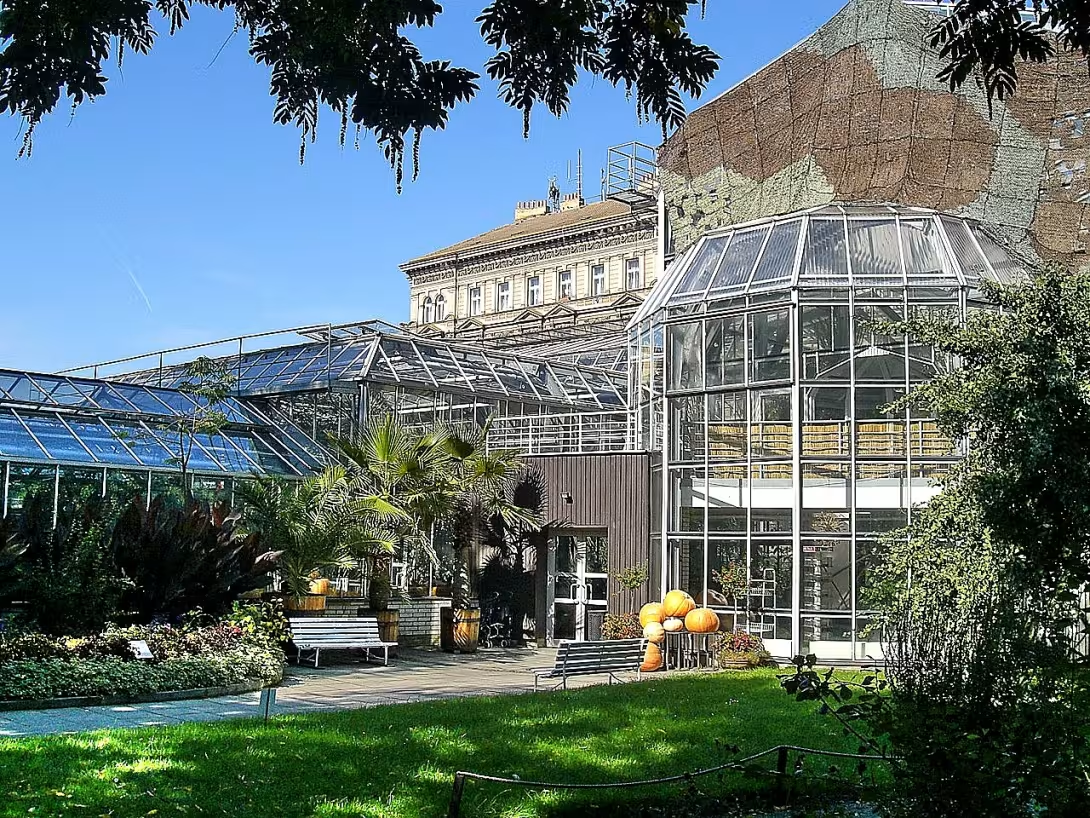
The Botanická zahrada Přírodovědecké fakulty Univerzity Karlovy is a historic park located in Prague 2. It holds the distinction of being the oldest continuously operating botanical garden in the Czech Republic, established by Josef Bohumír Mikan in 1775 on Smíchov. Following a flood in 1890, it was relocated to Nové Město and now spans 3.5 hectares, housing approximately 13,000 plant species.
The garden's origins date back to the late 18th century during Europe's Enlightenment—a period marked by scientific and cultural advancements emphasizing reason, science, and education. Josef Bohumír Mikan founded the Botanická zahrada on Smíchov in 1775. Its relocation to Nové Město after a devastating flood in 1890 was significant. This move involved acquiring land from the Česká společnost pro zvelebování zahradnictví, which had been developing the site since 1845. Post-World War II developments saw the integration of Czech and German sections until it became solely part of Charles University.
Architecturally, the garden has evolved significantly over time. Initially established on Smíchov, its relocation to Nové Město allowed for expansion and modernization. The new site included facilities such as greenhouses built by the Česká společnost pro zvelebování zahradnictví starting in 1845. After World War II, Czech sections were integrated with German ones until they became solely part of Charles University.
Ownership and administration have seen notable changes throughout its history. Founded by Josef Bohumír Mikan in 1775, the garden was managed by Přírodovědecká fakulta Univerzity Karlovy after its relocation to Nové Město. The garden's management has been instrumental in maintaining its status as a leading botanical research and educational site.
The Botanická zahrada is rich with events and curiosities that highlight its significance. It hosts regular exhibitions featuring cacti, carnivorous plants, orchids, exotic birds, and aquarium fish. Additionally, guided tours are available in the greenhouse every Tuesday morning, providing visitors with insights into the diverse plant life housed within.
Today, the Botanická zahrada remains a vibrant educational resource and tourist attraction. Located near Dienzenhoferovy sady and close to tram stop Botanická zahrada on a line heading towards Nuselské údolí, it is easily accessible within Prague's urban landscape. With approximately 100,000 visitors annually, the garden continues to play a crucial role in botanical education and research. Its rich history, diverse plant collections, and educational programs make it a must-visit destination for anyone interested in botany or seeking a tranquil escape within the city.
The Botanická zahrada Přírodovědecké fakulty Univerzity Karlovy stands as a testament to centuries of botanical research and education. Its historical significance, combined with its ongoing contributions to science and public knowledge, make it an invaluable cultural asset. Visitors are invited to explore this remarkable garden, where history and nature converge in a unique and educational experience.
Then and now
Drag the slider to compare how the landmark may have looked when it was built with the view today.
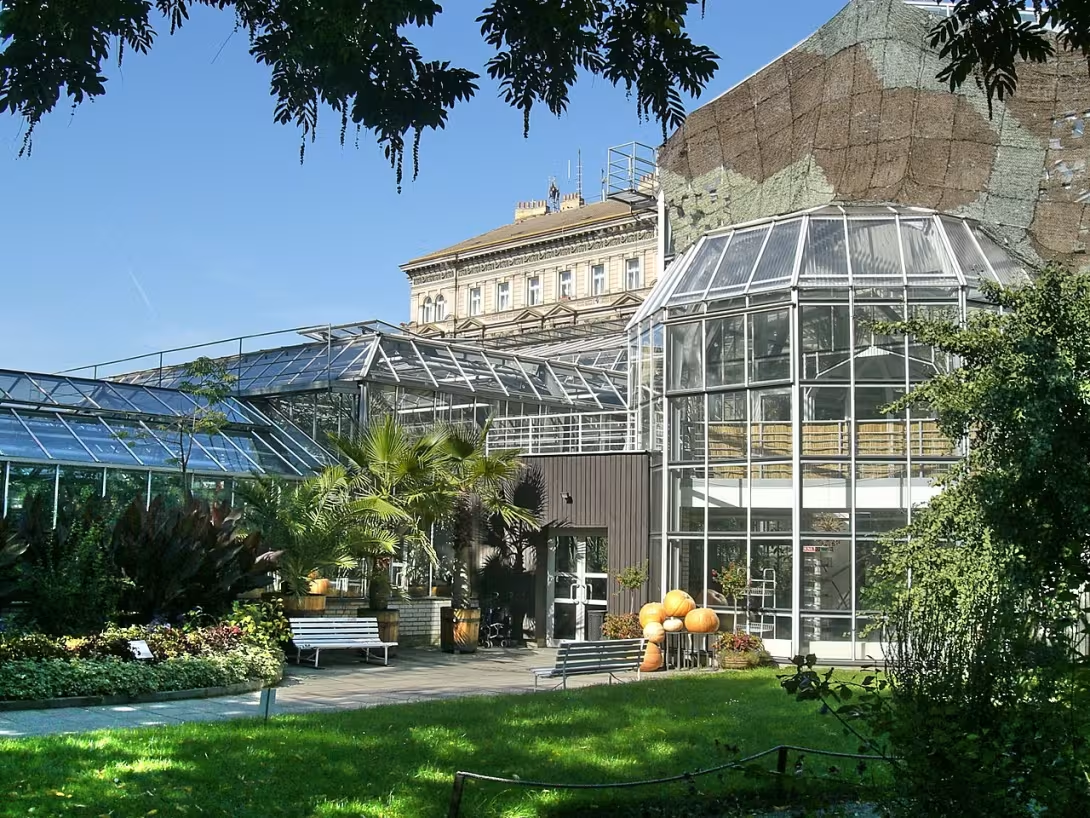
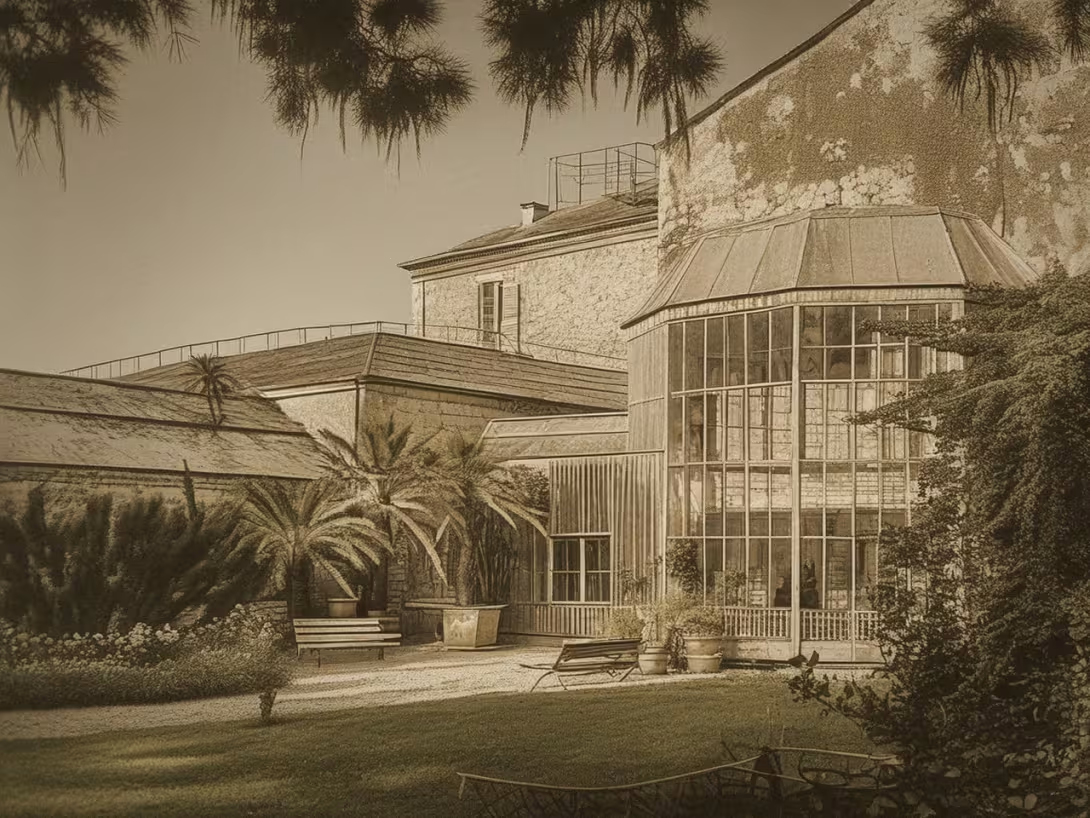
The historical appearance on the left is an AI-generated visualisation and serves as inspiration only.
Historical milestones
- 1775
- Establishment of the Botanical Garden on Smíchov by Josef Bohumil Mikan.
- 1845
- The Czech Society for the Advancement of Horticulture began developing lands in Nové Město.
- 1890
- The Botanical Garden was relocated to Nové Město after a flood.
- after World War II
- Integration of Czech and German sections, becoming part of Charles University.
Architectural development
Initially established on Smíchov, the garden was relocated and expanded in Nové Město following a devastating flood. The new site included modern facilities such as greenhouses built by the Česká společnost pro zvelebování zahradnictví starting in 1845. After World War II, Czech sections were integrated with German ones until they became solely part of Charles University.
Historical events
Established in 1775 on Smíchov by Josef Bohumír Mikan.
Relocated to Nové Město after the flood of 1890.
Owners
Founded by Josef Bohumír Mikan in 1775
Managed by Přírodovědecká fakulta Univerzity Karlovy since relocation to Nové Město
Points of interest
- The Botanická zahrada was originally founded on Smíchov in 1775 by Josef Bohumír Mikan, who played a significant role during the Enlightenment period in Europe, emphasizing scientific progress and education.
- After the devastating flood of 1890, the garden's relocation to Nové Město involved acquiring land from the Česká společnost pro zvelebování zahradnictví, which had been developing the site since 1845. This society contributed significantly to the garden’s modernization and expansion.
- The integration of Czech and German sections after World War II is a unique aspect of its history; this merger eventually led to the garden becoming solely part of Charles University, reflecting post-war cultural and administrative changes in Prague.
- Among its diverse plant collections, the Botanická zahrada hosts regular exhibitions featuring cacti, carnivorous plants, orchids, exotic birds, and aquarium fish, showcasing a wide variety of unique species that attract botany enthusiasts from around the world.
- Guided tours are available every Tuesday morning in the greenhouse, offering visitors an educational experience with insights into the diverse plant life, making it a popular attraction for both locals and tourists seeking to learn more about botany.
Guide
This guide is narrated by a synthetic voice generated by artificial intelligence.
Show guide text
This text was created by artificial intelligence and has not been editorially reviewed. It may contain inaccuracies.
The Botanical Garden of the Faculty of Science of Charles University is the oldest continuously operating botanical garden in the Czech Republic. It ranks among three significant botanical gardens in Prague. On an area of three and a half hectares, it is cared for by approximately twenty gardeners and curators, and about one hundred thousand people visit it each year.
The establishment of a university garden was pursued around seventeen fifty-two by the first professor of medicine and botany, Scotti de Compostella. However, it was founded only in seventeen seventy-five by Josef Bohumír Mikan on Smíchov, in the vicinity of today's Jiráskův Bridge approach. The remnant of this original garden is today's Dienzenhofer Gardens. In the mid-nineteenth century it was managed by Vincenc František Kosteletzký and it was allegedly considered the best botanical garden north of the Alps. It had nine greenhouses and approximately thirteen thousand species and varieties of plants.
A flood at the beginning of September eighteen ninety seriously damaged the garden. Moreover, Smíchov was rapidly developing industrially, so the garden relocated to Nové Město below the Slupská slope. Since eighteen forty-five, the Czech Society for the Promotion of Horticulture had been developing a garden there. The plot was divided between the Czech and German universities. The Czech part acquired the lower garden with original greenhouses and in eighteen ninety-eight also a long orchid greenhouse. The German part built new technical greenhouses around nineteen hundred on the upper slopes.
During the Second World War, the Czech garden was attached to the German one. An Allied air raid on February fourteenth, nineteen forty-five completely destroyed the German greenhouses and damaged the Czech ones. These were then reconstructed between nineteen forty-six and nineteen forty-nine. At the end of the nineteen nineties they underwent restoration, which according to the wishes of heritage preservationists returned them to their appearance from the nineteen forties.
In the outdoor exhibition grow approximately three thousand species of plants. The most valuable part is the collection of Central European flora established in nineteen four. It includes forest flora with one of the garden's oldest woody plants, the manna ash. Further there is a limestone rockery with a cave, stream and pond, and a serpentine rockery where a rescue program for the rare meadow viper takes place.
The garden also has a Carpathian rockery and an exhibition of approximately two hundred seventy useful plants, medicinal, edible, textile or dye plants. You will find here also a rich collection of conifers and one of the first dawn redwoods brought to Europe. Worth noting is a giant bonsai of the ginkgo variety Praga, about one hundred thirty years old. The Refugium, separated by walls, then serves as a peaceful place with a reading corner.
Tips for visitors
The best time to visit the Botanická zahrada Přírodovědecké fakulty Univerzity Karlovy is during late spring or early autumn when the weather is mild and the garden's flora is in full bloom. During these seasons, you can enjoy a variety of flowers and plants without the discomfort of summer heat or winter cold. Additionally, visiting on weekdays can provide a more tranquil experience compared to weekends.
Public transport is highly recommended; tram line 22 heading towards Nuselské údolí stops at 'Botanická zahrada', making it convenient for visitors. Always check the latest public transportation routes and schedules online to plan your visit.
When visiting the Botanická zahrada, consider bringing comfortable walking shoes as there are several paths to explore within the garden. A hat or umbrella might be useful depending on weather conditions. If you're interested in learning more about specific plants, a notebook for jotting down observations could enhance your experience. Don't forget water and snacks if you plan to spend several hours exploring.
For photography enthusiasts, early morning is ideal as the soft light enhances the beauty of the garden's landscapes and plant life. The central areas with open lawns provide excellent opportunities for capturing wide-angle shots, while shaded paths offer unique lighting conditions for close-up photos. Be mindful of other visitors when taking pictures to ensure everyone can enjoy their visit.
Families with children will find the Botanická zahrada both educational and enjoyable. The garden features a variety of plant species that can spark curiosity in young minds. For those looking to extend their day, Dienzenhoferovy sady is within walking distance and offers additional green space for relaxation or play. These nearby areas provide an opportunity to explore more of Prague's natural beauty.
Frequently asked questions
Can the monument be visited?
Parks and gardens are often open to the public, but some have opening hours or are part of a closed site. We have not verified the entry conditions.
What are the opening hours and admission?
We have not verified the opening hours or admission. Current information is published by the operator.
Where is the monument?
Location: Praha 2, Hlavní město Praha. The map on this page shows the exact spot.
Why is the monument protected?
It is listed in the Central List of Cultural Monuments of the Czech Republic as a cultural monument (register no. 1000004036_0003).
Businesses nearby
Do you run a restaurant, accommodation, shop, museum, rental, wellness or other visitor service near this monument? Show yourself directly to the people heading to it — this is how they will see you in the app and on the web:
Events nearby


Zdroj akcí: otevřená data měst a obcí ČR (Národní katalog otevřených dat) a kalendář akcí Národního památkového ústavu.
Nearby
Located near Dienzenhoferovy sady and close to tram stop Botanická zahrada on a line heading towards Nuselské údolí. The area is part of Prague's vibrant urban landscape.
Accommodation nearby
Trips and activities nearby
Guided tours, tickets and activities nearby from GetYourGuide
Affiliate link: if you buy from the partner, we may receive a commission. The price for you does not change.
Search tours and activities →Themed route
Botanická zahrada Přírodovědecké fakulty Univerzity Karlovy (park)
Start at the Botanická zahrada and explore the beautiful gardens surrounding the Faculty of Science, University of Charles. This peaceful oasis in the heart of the city offers a serene escape from the hustle and bustle of urban life.
From the garden, head to the nearby Dienzenhoferovy sady (about 5-minute walk). These charming gardens are a hidden gem, offering a tranquil atmosphere and a glimpse into the city's rich history.
Next, take a short tram ride to the Nuselské údolí and explore the scenic valley. This picturesque area offers a unique blend of nature and urban charm, with plenty of opportunities for walking and relaxation.
Finally, return to the city center and visit the Petřín Tower, a iconic landmark offering stunning views of the city. While not directly related to the botanical garden, the tower is a must-see attraction in Prague and provides a great conclusion to your tour.
Seasonal recommendations
Jaro
In the spring season, Botanická zahrada Přírodovědecké fakulty Univerzity Karlovy is brimming with flowers and trees awakening from their winter slumber. The atmosphere is full of optimism and vitality. Lighting is natural; sunlight refreshes and illuminates the blooms and foliage. Practical tip: visit the garden early in the morning to avoid crowds of tourists and enjoy peaceful strolls through the garden.
Léto
During the main summer season, the garden buzzes with life and energy. Flowers and trees are in full bloom, and nature is at its peak. Lighting is strong; sunlight refreshes and illuminates the garden. Practical tip: arrive early to avoid crowds of tourists and enjoy peaceful strolls through the garden. Don't forget to bring a sun hat and water to prevent sunburn and dehydration.
Podzim
In autumn, the garden is full of colors and scents. The foliage changes into beautiful hues, and nature is vibrant with life. Lighting is pleasant; sunlight refreshes and illuminates the garden. Practical tip: visit the garden before it rains to avoid wet weather and enjoy peaceful strolls through the garden. Don't forget to bring an umbrella to stay dry in case of rain.
Zima
In winter, the garden exudes tranquility and silence. Trees are bare, and flowers are dormant. Lighting is artificial as sunlight is weak. Practical tip: visit the garden dressed warmly to avoid the cold and enjoy peaceful strolls through the garden. Don't forget to bring a warm beverage to prevent exhaustion.
Visualizations and artistic views


The visualisations are generated by artificial intelligence and serve as inspiration.
Photos from the area
Real photos taken near the monument


Zdroj a licence jsou uvedeny u každého snímku.
Tips from visitors
No tips yet. Be the first!
Log in and add your tip.
Sources and literature
Photos: Chmee2 / CC BY-SA 3.0 — Wikimedia Commons. The author and licence also appear when you hover over the image.
Faktickým podkladem tohoto textu byl článek na Wikipedii, jehož autory jsou přispěvatelé Wikipedie. Článek je dostupný pod licencí CC BY-SA 4.0.
Location on the map




Příběhy a pověsti
Legendy, pověsti a příběhy spjaté s touto památkou

Fotografie návštěvníků
Zatím žádné fotografie. Buďte první, kdo přidá fotografii z návštěvy!
Log in a přidejte svou fotografii nebo hodnoťte.
Za ověřenou návštěvu v aplikaci získáte víc bodů — poznáme podle GPS, že jste na místě.
Reviews and comments