



Hausberk (Horní Planá) Castle
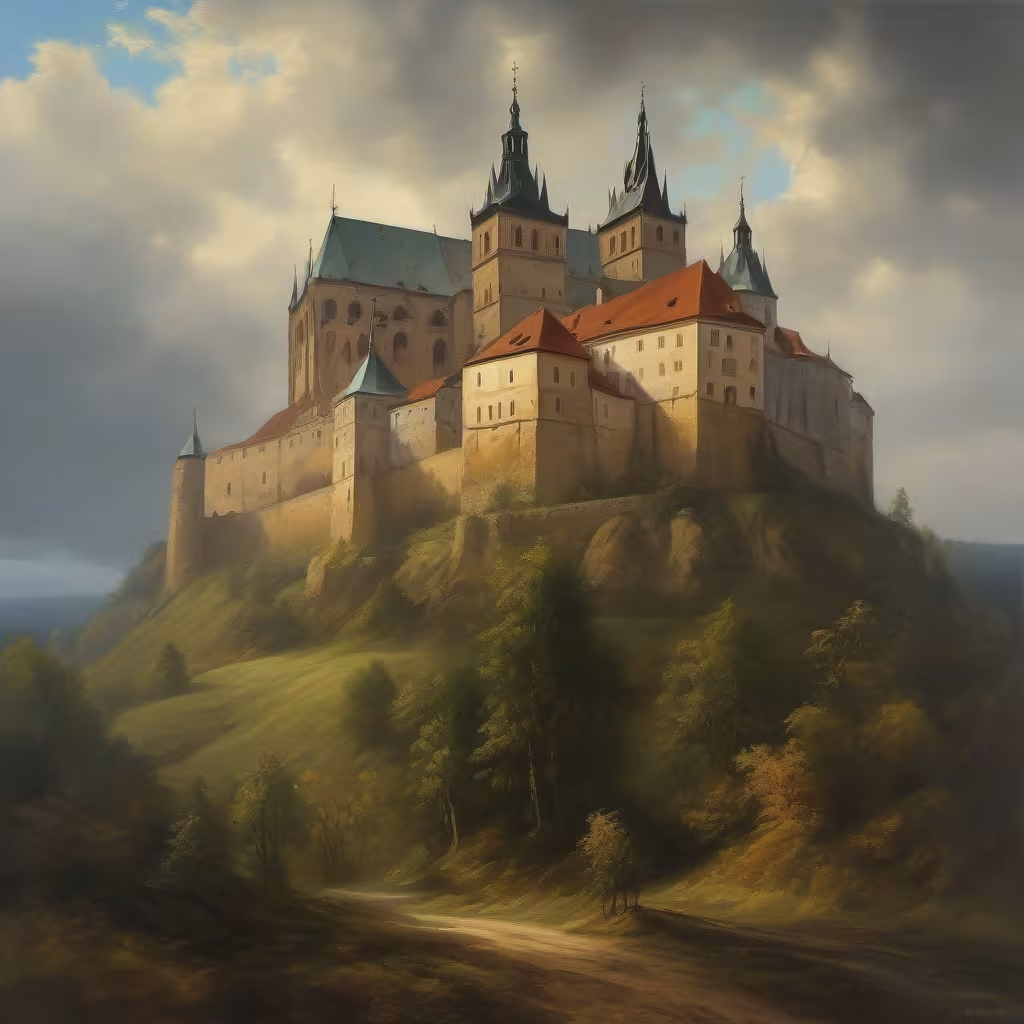
Hausberk, also known as Hradiště, is a vanished castle located in the Šumava region of the Český Krumlov District in Jihočeský kraj. Situated on a mountain peak within Maňávka's cadastral area near České Krumlova, it was established around 1300 and served as a strategic stronghold overseeing the upper Vltava River. Despite its historical significance, detailed records of its history remain scarce. The site is now recognized for its archaeological remnants, which are protected as cultural heritage.
The origins of Hausberk trace back to the 13th century when it was likely founded by a local ruler. This period in Bohemia's history saw increased fortification efforts across Europe as local rulers sought to secure their territories within the Holy Roman Empire under the Přemyslid dynasty. The castle's strategic location on a mountain peak suggests its role in overseeing and controlling the surrounding area, particularly the upper Vltava River.
Architecturally, Hausberk was accessed via a narrow ridge from the west, featuring a defensive ditch and a plateau measuring approximately 26 × 26 meters. Its rugged terrain and modest size indicate that it served primarily as a lookout rather than a full-fledged fortress. The site's layout included a five-meter-wide ditch before the main plateau, which was further protected by a rocky ridge. These elements highlight its defensive purpose during its active period in the 13th century.
Ownership and administration of Hausberk saw significant changes over time. Around 1360, it is hypothesized that Probst Dětřich z Portic established the castle for protecting nearby villages. However, by 1395, these villages were acquired by the Zlatá Koruna Monastery, leading to the decline and eventual disappearance of Hausberk. The modest dimensions and challenging location of the site suggest it was not well-suited for its intended protective role.
The historical role of Hausberk remains largely speculative due to limited documentation. It is one of the Šumava mountain castles studied by Tomáš Durdík, who categorized it among the region's strategic hilltop fortifications. Despite these studies, many aspects of its history and function remain uncertain, adding an element of mystery to this site.
Today, Hausberk stands as a testament to medieval fortification efforts in the Šumava region. While no significant structures remain above ground, the archaeological remnants are protected as cultural heritage sites. The castle's location offers visitors a glimpse into the rugged and mountainous landscape typical of the area near České Krumlova. Although it may not boast grand architectural features, its historical significance and the mysteries surrounding its past make it a worthwhile destination for those interested in medieval history.
Hausberk invites exploration and reflection on the strategic considerations of medieval rulers. Its remnants offer a unique opportunity to connect with the region's rich history, even as much remains shrouded in mystery. Visitors are encouraged to explore this site to appreciate both its historical context and the natural beauty of the Šumava landscape.
Historical milestones
- 1300
- The castle was likely founded in the 13th century.
- 1360
- Hypothesized establishment by Probst Dětřich z Portic for village protection.
- 1395
- Acquisition of surrounding villages by Zlatá Koruna Monastery.
Architectural development
Hausberk was accessed via a narrow ridge from the west, featuring a defensive ditch and a plateau measuring approximately 26 × 26 meters. The site's rugged terrain and modest size suggest it served primarily as a lookout rather than a full-fledged fortress. Archaeological evidence indicates its active period was confined to the 13th century.
Historical events
The castle was likely founded in the 13th century by a local ruler.
Around 1360, it is hypothesized to have been established by Probst Dětřich z Portic for protecting nearby villages.
By 1395, these villages were acquired by the Zlatá Koruna Monastery, leading to the castle's decline.
Points of interest
- Despite its strategic location for overseeing the upper Vltava River, Hausberk was never fully developed into a large fortress, suggesting it might have been more of an outpost or lookout than a major stronghold.
- The castle's decline is linked to the acquisition of nearby villages by Zlatá Koruna Monastery in 1395, which may indicate that religious institutions played a significant role in altering local power dynamics and land ownership during this period.
- Tomáš Durdík's categorization of Hausberk among strategic hilltop fortifications highlights its inclusion in broader medieval military strategies across the Šumava region, despite limited direct historical records.
- The challenging terrain and modest dimensions of Hausberk imply that it was not ideally suited for defensive purposes, which might explain why it eventually fell into disuse and disappeared from historical prominence.
- As one of the few remaining archaeological sites in the Šumava mountains with protected remnants, Hausberk offers a unique glimpse into medieval fortification techniques and the strategic considerations of rulers during its era.
Guide
This guide is narrated by a synthetic voice generated by artificial intelligence.
Show guide text
This text was created by artificial intelligence and has not been editorially reviewed. It may contain inaccuracies.
Hausberk, which is also called Hradiště, is a ruined castle on the Šumava in the Český Krumlov district. It stood on a hilltop named Hrad in the cadastral territory of Maňávka near Český Krumlov, approximately one and a half kilometers northwest of Perneku. Only terrain remains of the castle have survived, which are protected as a cultural monument.
No written records have been preserved about the history of this guard castle. We only know that it controlled the upper course of the Vltava River. Archaeological research showed that it was settled in the thirteenth century, and its founder was most likely a ruler. The castle expert Tomáš Durdík classifies it among the Šumava mountain castles.
Historian František Kubů came up with a different idea. He attempted to identify Hausberk with the castle Waltershausen, which is mentioned in sources, but whose location has not yet been determined by anyone. According to this hypothesis, around the year 1360, the provost of the Vyšehrad chapter Dětřich z Portic founded the castle to protect the surrounding provost villages. In 1395, the Zlatá Koruna monastery, to which they had previously belonged, recovered these villages, and the castle then disappeared. However, two things speak against this interpretation. The castle was small and stood in an extreme location, so it would hardly have been capable of such protection. And archaeological finds document its existence only in the thirteenth century.
The remains of the castle give a good idea of its appearance. The access path led from the west along a narrow ridge. Approximately fifteen meters before the castle, the ridge is interrupted by a ditch five meters wide. Behind it, the ridge connects to a platform measuring twenty-six by twenty-six meters. Its northwestern edge is bordered by the remains of a rampart. On the northeast, another rocky ridge adjoins the platform.
Tips for visitors
The best time to visit Hausberk is during the late spring or early autumn months, specifically from May to June or September to October. During these periods, the weather is generally mild and pleasant, making it ideal for exploring the rugged terrain around the castle ruins. Additionally, the foliage in these seasons provides a picturesque backdrop that enhances the scenic beauty of the area.
For those preferring public transport, buses can be used to reach nearby České Krumlova, from where you can continue your journey on foot or by local shuttle services. It's advisable to verify current transportation schedules and routes online before your visit.
When planning a trip to Hausberk, it is recommended to bring comfortable walking shoes as the path involves some steep climbs and uneven terrain. Additionally, carrying a map of the area can be helpful for navigation. Given the mountainous location, weather conditions can change rapidly, so packing layers or a light rain jacket is advisable.
For photography enthusiasts, Hausberk offers several vantage points that capture its dramatic setting against the Šumava landscape. The best lighting is typically found during the golden hours of early morning and late afternoon when the sunlight creates stunning contrasts and shadows across the ruins. Exploring different angles from various spots around the castle can yield a variety of compelling shots.
Families with children will find that Hausberk offers an engaging experience, though it's important to prepare for some physical activity due to the terrain. Nearby attractions within 30 minutes include the picturesque village of České Krumlova and its historic town center, which is perfect for a leisurely stroll or a visit to local shops. The area also provides opportunities for nature walks suitable for all ages.
Frequently asked questions
Can the monument be visited?
This is a ruin. Such sites are often freely accessible, but some can only be visited with a guide or are closed for safety reasons. We have not verified the current situation – take care and respect any restrictions.
Where is the monument?
Location: Horní Planá, Jihočeský kraj. The map on this page shows the exact spot.
Why is the monument protected?
It is listed in the Central List of Cultural Monuments of the Czech Republic as a cultural monument (register no. 38125/3-1367).
Businesses nearby
Do you run a restaurant, accommodation, shop, museum, rental, wellness or other visitor service near this monument? Show yourself directly to the people heading to it — this is how they will see you in the app and on the web:
Nearby
Hausberk is located in a rugged, mountainous area near České Krumlova. The surrounding landscape includes natural features typical of the Šumava region, though no other significant monuments are immediately nearby.
Accommodation nearby
Trips and activities nearby
Guided tours, tickets and activities nearby from GetYourGuide
Affiliate link: if you buy from the partner, we may receive a commission. The price for you does not change.
Search tours and activities →Themed route
Hausberk Thematic Tour
1. Hausberk (Horní Planá) - Castle Begin your journey at the historic Hausberk castle, a stunning example of Gothic architecture nestled in the rugged terrain near České Krumlova. This fortress offers visitors an immersive experience into medieval history with its well-preserved structures and scenic views over the surrounding Šumava region.
2. Castle Grounds - Park Explore the expansive grounds of Hausberk, where nature blends seamlessly with history. The park area provides a tranquil setting to appreciate the castle's majestic presence amidst lush greenery, offering walking paths that reveal hidden corners and panoramic vistas of the mountainous landscape.
3. Castle Tower - Observation Point Ascend to the top of the Hausberk tower for breathtaking views across the Šumava region. This observation point is a must-visit for photography enthusiasts and those seeking to capture the grandeur of the castle against the backdrop of the rugged, mountainous terrain.
4. Castle Courtyard - Historical Exhibit Visit the Hausberk courtyard, where historical exhibits provide insights into the castle's storied past. This area offers a glimpse into medieval life with displays that highlight the architectural and cultural significance of this iconic fortress.
5. Castle Chapel - Architectural Marvel Conclude your tour at the Hausberk chapel, an exquisite example of Gothic architecture within the castle complex. The chapel's intricate design and serene atmosphere make it a perfect spot for reflection and appreciation of the artistic craftsmanship that defines Hausberk.
Seasonal recommendations
Spring: Visiting Hausberk Castle during spring offers a unique experience as nature begins to awaken around the ruins. The blooming wildflowers and fresh greenery create a vibrant backdrop, enhancing the castle's historic charm with picturesque views of the surrounding landscape. As daylight hours increase, visitors can enjoy softer lighting that highlights the intricate details of the architecture without harsh shadows. This season may see moderate crowds as people take advantage of the pleasant weather to explore outdoor sites. It’s advisable to wear comfortable walking shoes and bring a light jacket for cooler mornings or evenings.
Summer: Summer is an ideal time to visit Hausberk Castle due to the long daylight hours, allowing ample time to explore the expansive ruins. The lush greenery and vibrant flora provide a stunning natural setting that complements the castle's historic ambiance. However, this season also attracts larger crowds, especially during peak travel times in July and August, so arriving early can help avoid the busiest periods. Visitors should wear comfortable clothing suitable for warm weather and consider bringing sunscreen and water to stay hydrated throughout their visit.
Autumn: Autumn transforms Hausberk Castle with a stunning display of fall foliage, turning the surrounding landscape into a kaleidoscope of reds, oranges, and yellows. The cooler temperatures make for a pleasant exploration experience, as visitors can comfortably walk around without the heat of summer. While the crowds tend to be smaller compared to summer, it's still wise to check opening times as they may vary with shorter daylight hours. Layered clothing is recommended to accommodate varying weather conditions throughout the day.
Winter: Winter offers a serene and atmospheric experience at Hausberk Castle, with snow-covered ruins providing a magical setting that feels like stepping into history. The quietness of this season allows for peaceful exploration, although accessibility may be affected by snow or ice, so checking conditions beforehand is advisable. Visitors should dress warmly in layers and wear sturdy boots to navigate potentially slippery paths safely.
Visualizations and artistic views

The visualisations are generated by artificial intelligence and serve as inspiration.
Tips from visitors
No tips yet. Be the first!
Log in and add your tip.
Sources and literature
Faktickým podkladem tohoto textu byl článek na Wikipedii, jehož autory jsou přispěvatelé Wikipedie. Článek je dostupný pod licencí CC BY-SA 4.0.
Location on the map


Příběhy a pověsti
Legendy, pověsti a příběhy spjaté s touto památkou
Fotografie návštěvníků
Zatím žádné fotografie. Buďte první, kdo přidá fotografii z návštěvy!
Log in a přidejte svou fotografii nebo hodnoťte.
Za ověřenou návštěvu v aplikaci získáte víc bodů — poznáme podle GPS, že jste na místě.
Reviews and comments