



Heroldovy sady Park
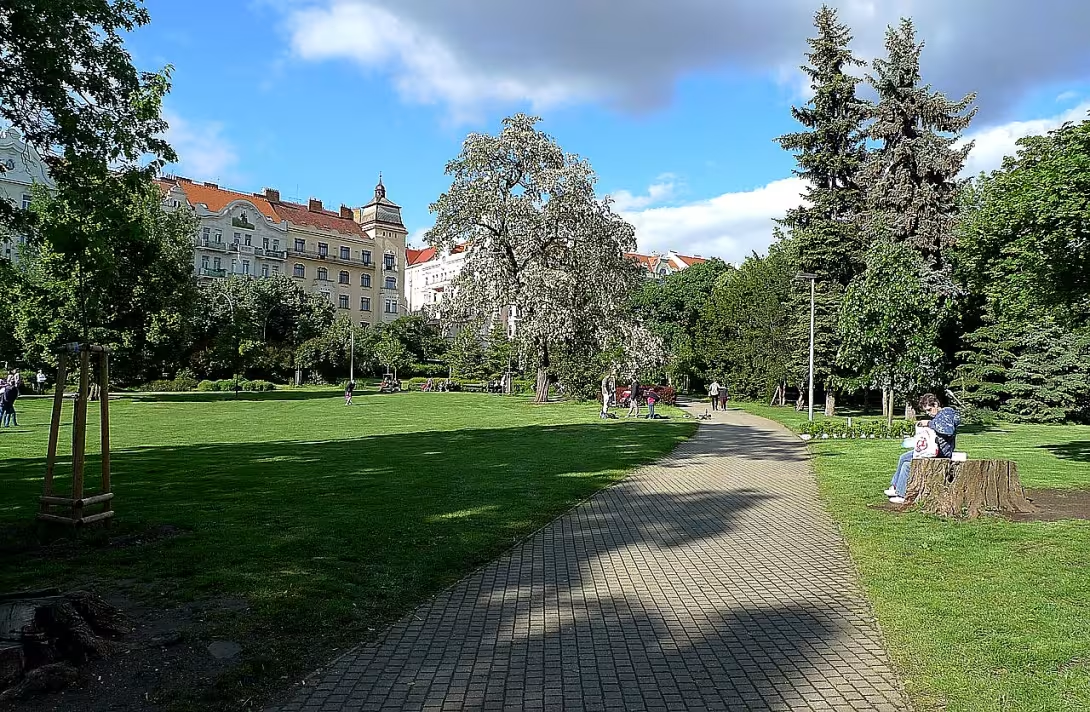
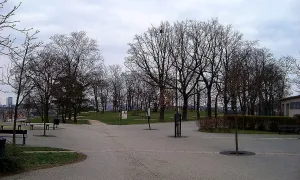
Heroldovy sady is situated in Prague 10-Vršovice between the streets of Kodánská, Dutch and Vršovická square. Their area is 1,43 hectares and lies at an altitude of 224 to 235 metres. The park is divided into two parts - the reconstructed half under Kodanski Street and the area around the Vršovický castle also known as the Ranger. Today in the parks, the maple milk grows, the lepian linden, the black pine, the spiny spruce, the warm ash, the thorn and the red and the japanese larch.
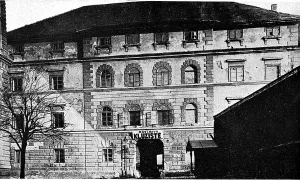
The history of this place is a fascinating picture of Czech social and economic changes. In the 14th century there were vineyards, part of which belonged to the order of German knights. The fundamental twist came in 1842 when Jindřich Rangheri bought the land from Baron James Wimmer and planted a mulberry orchard. From the trees he obtained food for silkworm, which he kept in a newly built two-storey silk factory. After Rangheri's death, however, the factory and the orchards died and the land was sold to small farmers.
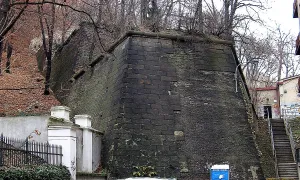
The turning point was 1882, when the municipality bought the land, including the castle, and turned the desolate orchard into a public park. The decisive year was 1885, when Vršovice was promoted to town. The festival in the park, which was then called the City Sets, was honored and the park was built with a stone needle commemorating the promotion of the village and the merit of Mayor Herold. In the following decade there was a gradual transformation - since 1892, the park has partly built on the north side of the school buildings. Between 1899 and 1900 there was a reconstruction of the former factory in a neo-Renaissance style into a historic castle and the surrounding area was renovated including demolishing the walls separating the park from Vršovický Square and building a two-arm staircase on the slope.
The second part of the park grew between 1905 and 1906 according to plans of city gardener František Zítek under today's street Kodánský. The area of the orchards was thus extended to 30,000 square meters. In May 1908, the local organisation of the National Liberation Party introduced Herold's linden and placed the mayor's memorial. After the First World War, the park got further modifications and banana trees became part of it, which not only took over, but even blossomed in 1926. In the 1930s, the oldest part of the orchards were repaired, but World War II damaged the park considerably - there were built military shelters and fire tanks.
After 1948 the park stал was part of the ideological changes - its name was changed to the Nadezhda Nadezhda Constatinovna Krupskaya, in honor of the wife of Vladimir Ilyich Lenin. Only after 1989 did the park get the name of the founder again. At the end of the 1990s, a tiered fountain consisting of circular and semi-circular pools was created here according to Pavel Šimko's design, which was dismantled in 2011. In the park today you will also find Lip of the Republic planted in 1998. Since 2013 there is the first "park" library in the parks where visitors can exchange books.
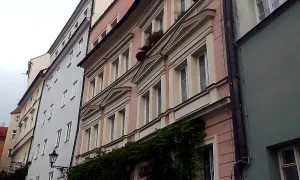
Heroldovy sady represents an oasis of calm in a densely built neighborhood and is a testament to the rich past of a Prague location. There are many interesting buildings around the park including Vršovický castle, St. Nicholas church and Alois Jirásek theatre. The park offers a walk through more than a hundred and fifty years of urban history and the possibility of relaxing in nature.
Then and now
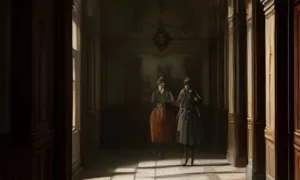
Drag the slider to compare how the landmark may have looked when it was built with the view today.
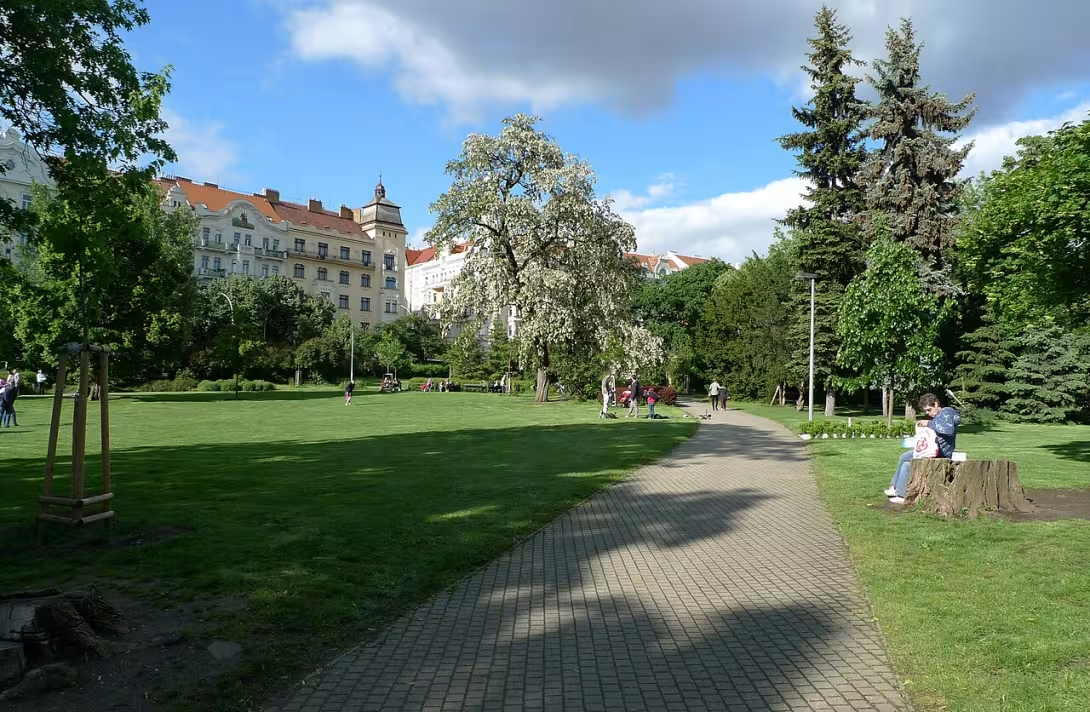

The historical appearance on the left is an AI-generated visualisation and serves as inspiration only.
Historical milestones
- 1842
- Jindřich Rangheri bought a place and planted a mulberry orchard.
- 1882
- The village bought the land and the desolate orchard was converted into a public park.
- 1899
- The reconstruction of the former factory began in the form of a historic castle in a neo-Renaissance style.
- 1908
- The removal of Herold's linden and the location of the monument of Mayor Josef Herold.
Architectural development
Originally a mulberry orchard with a factory, which was rebuilt in 1899- 1900 into a Neo-Renaissance style. The second part of the park was modified in 1905-1906 according to plans of gardener František Zítek. In the late 1990s, a tiered marble fountain was created in the park.
Historical events
1882: the purchase of municipal land and the creation of a public park; 1899-1900: rebuilding the factory into a historic castle; 1905-1906: the creation of the second part of the park according to plans by František Zítek; 1989: Return to original name Heroldovy sady.
Owners
14th century: order of German knights; 1842: Jindřich Rangheri; 1882: village Vršovice
Points of interest
- In the 14th century there were vineyards, part of which belonged to the order of German knights. - In 1842 Jindřich Rangheri planted a silkworm silkworm orchard. - In the park was built a stone needle reminiscent of the promotion of Vršovice to the town and the merit of Mayor Herold. - After World War I, banana trees were part of the park, which even blossomed in 1926. - Military shelters and fire tanks were built in the park during World War II.
Guide
This guide is narrated by a synthetic voice generated by artificial intelligence.
Show guide text
This text was created by artificial intelligence and has not been editorially reviewed. It may contain inaccuracies.
Heroldovy Sady is a public park in Vršovice, situated between Kodaňská and Holandská streets and Vršovické náměstí. It covers an area of one point four three hectares and is divided into two sections: a reconstructed half below Kodaňská Street and the area around Vršovický zámečko, which is called Rangherka. Various trees grow here, including Norway maples, small-leaved limes, black pines, blue spruces, ash trees, acacias, yews, and Japanese tree lilacs. The park bears the name of Josef Herold, a significant mayor of Vršovice from eighteen eighty-four to eighteen eighty-six.
In the fourteenth century, there were vineyards here, and some of them belonged to the order of German knights. In eighteen forty-two, Jindřich Rangheri purchased the land. He planted a mulberry orchard here, which he used to feed the mulberry silkworm, and in a new two-storey factory, he produced silk. After his death, the factory and orchard fell into ruin and the land was sold off to small farmers.
In eighteen eighty-two, the municipality purchased the land including the zámečko and turned the abandoned orchard into a public park. When Vršovice was elevated to the status of a market town in eighteen eighty-five, grand celebrations were held here. These celebrations are commemorated by a stone pyramid, which also honours the achievements of Mayor Herold. Already in eighteen ninety-two and eighteen ninety-three, schools partially built on the park from the north side. Around nineteen hundred, the former factory was rebuilt in Neo-Renaissance style into the form of a zámečko, the walls separating the park from the square were demolished, and a double staircase was created on the slope. In nineteen five and nineteen six, a second section of the park was added below present-day Kodaňská Street, according to plans by city gardener František Zítek. In nineteen eight, Herold's linden tree was planted here and the mayor's monument was installed. The linden tree later had to be removed due to poor health.
After the First World War, banana trees were also cultivated in the park, and in nineteen twenty-six they actually bloomed. However, part of the area was given up for the Sokol cinema Vzlet, a training ground, and a nursery school. During the Second World War, the park practically disappeared due to air raid shelters and fire reservoirs, and restoration began in nineteen forty-seven. After nineteen forty-eight, it was named Sady Naděždy Konstantinovny Krupské, the wife of Vladimír Ilyich Lenin, who visited a Czech politician František Modráčka nearby in nineteen one. The original name returned only after nineteen eighty-nine.
At the end of the nineties, a tiered fountain with marble elements was created below the zámečko, but it was removed during the zámečko's reconstruction in twenty eleven. Since nineteen ninety-eight, the Lípa republiky has grown here, and since twenty thirteen, a free library operates in the park, where anyone can bring books and take them away.
Tips for visitors
For the best experience we recommend a visit in the afternoon when the sun passes through the trees and creates a pleasant atmosphere for walks. At this time the park is the most peaceful and natural elements seem most attractive.
Transport to this part of Prague is very comfortable.
Take comfortable shoes suitable for walking on green surfaces and repellent if you plan to stay longer in nature. We also recommend taking drinks and snacks with us for a more comfortable time.
If you look at photography, the best light can be found around sunset when shadows create interesting shapes. Ideal places for pictures are near trees and open areas of the park.
In the area you can visit for example Vršovický castle, Cinema take off or St. Nicholas Church. For families with children, the park is ideal for free movement and safe use in the fresh air.
Frequently asked questions
Can the monument be visited?
Parks and gardens are often open to the public, but some have opening hours or are part of a closed site. We have not verified the entry conditions.
What are the opening hours and admission?
We have not verified the opening hours or admission. Current information is published by the operator.
Where is the monument?
Location: Praha, Hlavní město Praha. The map on this page shows the exact spot.
For kids
Imagine you're a little adventurer on a survey of the ancient royal park where people have been meeting and playing for thousands of years. This park is known as Heroldovy sady and lies in a densely wooded part of Prague called Vršovice. But he wasn't always what we know today.
If you look into the past, you'll find vineyards full of fresh and sweet grapes. It was like a little garden paradise where knights with long shields and high hats had fun with a glass of wine. These vineyards belonged to German knights, which means that once strangers decided how to behave this land.
Businesses nearby
Do you run a restaurant, accommodation, shop, museum, rental, wellness or other visitor service near this monument? Show yourself directly to the people heading to it — this is how they will see you in the app and on the web:
Events nearby

Zdroj akcí: otevřená data měst a obcí ČR (Národní katalog otevřených dat) a kalendář akcí Národního památkového ústavu.
Nearby
Vršovický chámka, Vršovická považna, Church of St. Nicholas, Husova Choir Vršovice, Cinema Takup, Elementary School of Karel Čapka.
Accommodation nearby
Trips and activities nearby
Guided tours, tickets and activities nearby from GetYourGuide
Affiliate link: if you buy from the partner, we may receive a commission. The price for you does not change.
Search tours and activities →Themed route
I propose a thematic tour of attractions in Prague Vršovice.
1. Vršovický château Type: Historical building Why is it worth a visit: This monument-protected building forms a significant dominant feature of the whole area and offers a view of the history of the local vršovice buildings. It's in the immediate vicinity of our main target.
Heroldovy sady Type: City Park Why is worth a visit: The main destination of our route, a large and picturesque park that provides a pleasant environment for relaxing, walking and meeting residents. The mentioned castle is located in its premises.
3. Vršovicka bookmark Type: Architectural monument Why is it worth a visit: The former money mouth is a demonstration of quality interwar functionalist architecture. Her building enriches the urban nature of the neighborhood.
4.Hus Choir Vršovice Type: Sacral construction Why is it worth a visit: The distinctive functionalist temple of the Czechoslovak Hussite Church will capture its monumental tower and interesting building solution. He's one of the major architectural dominance around here.
5. Cinema Take Type: Cultural Center Why is it worth a visit: The former cinema has undergone a successful reconstruction and today serves as a living space for cultural and community events. The restored building follows the rich social tradition of the place.
Seasonal recommendations
Spring in Herold orchards brings awakening nature, when the whole park is covered in shades of pink and white thanks to flowering ornamental apples and sakums. The sun rays penetrate the freshly growing trees and create fine shadow patterns on the landscaped lawn, with the atmosphere fresh and full of energy after a long winter. In this period you will meet fewer tourists here than in the centre, but on weekends it is lively, so it is ideal to start in the morning. Lighter layered clothing with solid shoes is suitable, because the roads can be wet after spring rains.
Summer offers lush greenery, which provides a welcome shadow beneath the grown platters and chestnuts, while evening lighting creates a romantic mood ideal for peaceful walks at sunset. The atmosphere is very relaxed here in warmer months, people sit on grass or use benches to relax at the historic castle. Since the days are getting hot, it is recommended to visit early in the morning or vice versa in the late afternoon when temperatures fall. Wear breathtaking summer clothes, don't forget to wear sunglasses and a bottle of drinking, as shady places near the historic orange region are quickly occupied.
Autumn turns Heroldovy sady into a colourful palette, dominated by yellow, orange and brown tones of leaves that rustle under your feet. The low afternoon sun depicts a warm light ideal for photography and the overall atmosphere is calm, melancholy and challenging for reflection. The crowds rarely come here at this time, which guarantees an uninterrupted stay. The practical board includes a warmer wind-resistant jacket and fixed shoes into fallen leaves that can slide in the morning, and the best time for visiting is around noon when the last rays of autumn warm.
Winter brings silence and sharp elegance to the park, especially when the snow cover covers the slopes towards the Botico and historical elements appear in minimalist cleanliness. The lighting is early, early afternoon it gets dark and artificial lamps along the main roads create a melancholy underevening atmosphere. Visiting is minimal, you'll meet a local dog man. Quality winter clothes, hats, gloves and non-slip shoes are needed for a walk in the freezing weather, while the best time for a visit is around noon, when the outside is warmer and the most daylight.
Visualizations and artistic views


The visualisations are generated by artificial intelligence and serve as inspiration.
Photos from the area
Real photos taken near the monument

Zdroj a licence jsou uvedeny u každého snímku.
Tips from visitors
No tips yet. Be the first!
Log in and add your tip.
Sources and literature
Photos: Petr Vilgus / CC BY-SA 3.0 — Wikimedia Commons. The author and licence also appear when you hover over the image.
Faktickým podkladem tohoto textu byl článek na Wikipedii, jehož autory jsou přispěvatelé Wikipedie. Článek je dostupný pod licencí CC BY-SA 4.0.
Location on the map
Příběhy a pověsti
Legendy, pověsti a příběhy spjaté s touto památkou
Fotografie návštěvníků
Zatím žádné fotografie. Buďte první, kdo přidá fotografii z návštěvy!
Log in a přidejte svou fotografii nebo hodnoťte.
Za ověřenou návštěvu v aplikaci získáte víc bodů — poznáme podle GPS, že jste na místě.
Reviews and comments