



Jívová Street
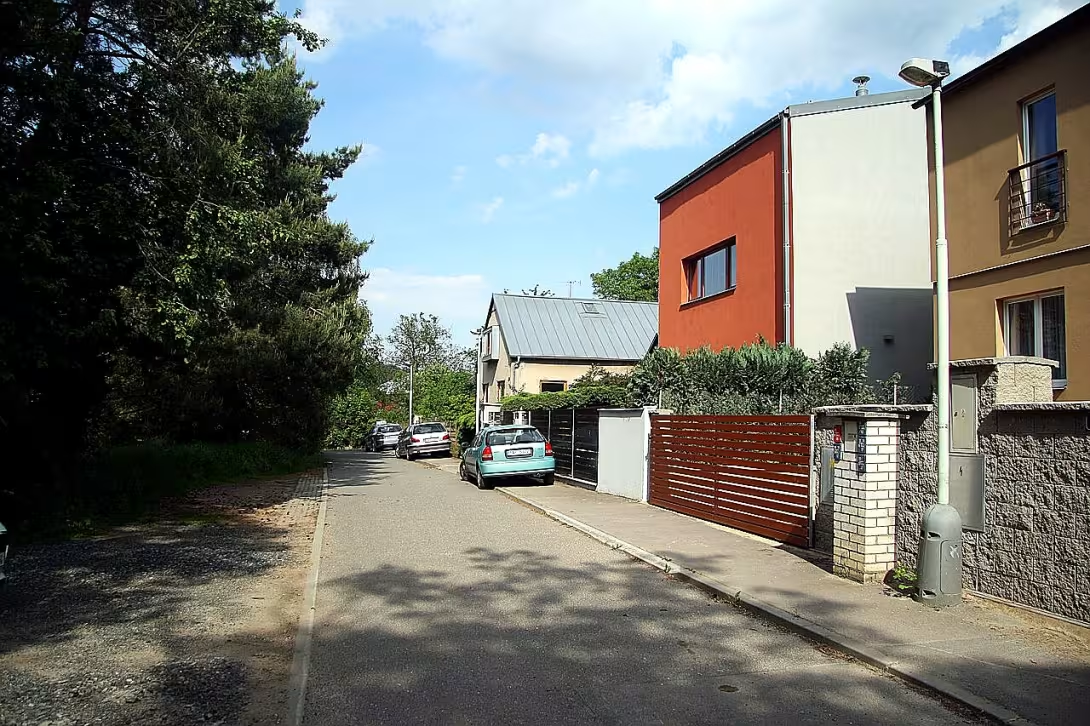
Jívová is a street in Prague. It originated in 1975 and is named after willow grub. This location connects Za Mosty and Jahodnický. It is characterized by low housing with gardens.
Construction in this area started in the 1920s as part of the development of emergency colonies Za Most and Za Horou. The street Jívová itself was created only in 1975 when it was the Czechoslovak Socialist Republic. Its name belongs to a group of deep-sea streets named after trees and their fruits. This group includes the streets of Svestková, Srková, Jasan or Cherry.
The building consists primarily of ground and one-storey houses with gardens. The street has a north-south course and is very well bent. There is a greenery in the western part towards the railway line. In some parts the character of the street changes and resembles a reinforced field road, with a pavement missing in some sections.
One of the most significant elements of the site is its narrow southern section. This part is intended solely for foot movements and is partly made up of stairs. The streets in this direction lead to Mandloin Street.
This location in the district of Praha is part of the historical development of Prague's urban areas. Its specific character and connection with natural names make it a suitable place for walking.
Then and now
Drag the slider to compare how the landmark may have looked when it was built with the view today.
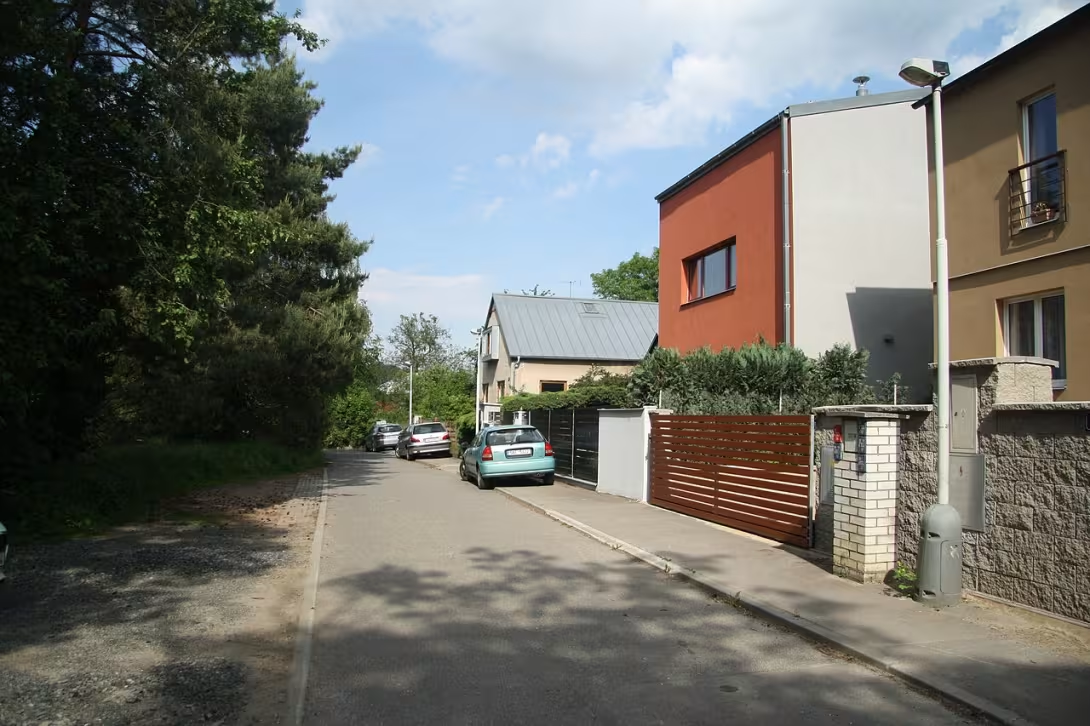
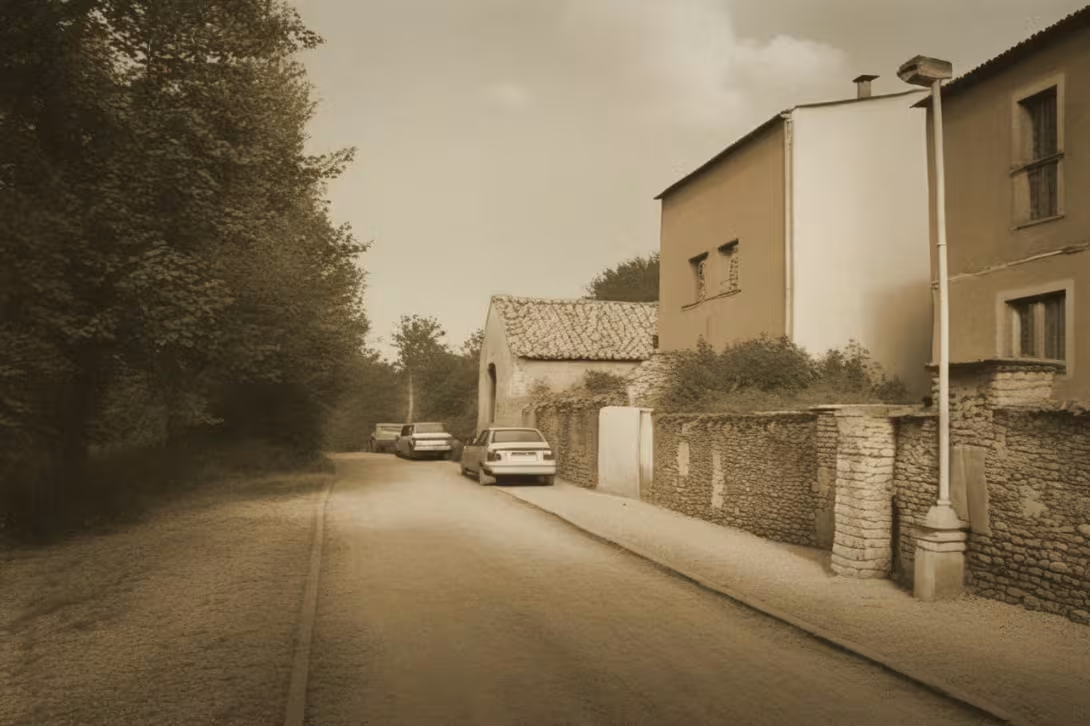
The historical appearance on the left is an AI-generated visualisation and serves as inspiration only.
Historical milestones
- 1920
- Start of construction of emergency colonies around
- 1975
- _
Architectural development
Construction in this area began in the 1920s in the form of emergency colonies. The street itself was created in 1975. The character of the building consists of low houses with gardens.
Historical events
In 1975, the street was created and named after the willow gouge.
Points of interest
- The street was built in 1975 and is named after a willow grub. - Her name belongs to a group of streets named after trees and their fruits. - The building consists mainly of ground and one-storey houses with gardens. - The street is north-south, and it's very well bent. - The narrow southern section is intended exclusively for foot movement and is partly made up of stairs.
Guide
This guide is narrated by a synthetic voice generated by artificial intelligence.
Show guide text
This text was created by artificial intelligence and has not been editorially reviewed. It may contain inaccuracies.
Welcome to Prague's Deputies. You are standing right on Jívová, which surrounds you with its peaceful and homely atmosphere. When you look around you now, you will notice that you are not in the typical center of a big city with high houses and a noisy house, but in a place that is much more human. There's a path ahead of you that's not direct, but it's got a very interesting, well-veiled process. This shape of the street gives her some charm and makes her a place where one naturally stops and starts to perceive the surroundings. Watch as the road vents north and south, which creates a pleasant rhythm of your walking.
Let us now look together at how this place was created and what its historical context is. Although the street can be very cozy and organically, its official origin and name date to the year nine hundred seventy-five. It is therefore a relatively young part of the Prague street network. However, the area in which you are currently in has far deeper roots. To understand why this place looks what it looks like, we have to go back much further in time, specifically until the 1920s. It was at that time that the construction of so-called emergency colonies began to develop in this area. These were projects aimed at providing affordable housing for people who urgently needed a roof over their heads at the time. This historical line of construction significantly affected the character of the whole of Deep Běbětín and this particular part where people tried to build their own homes with a piece of green.
Now pay attention to the architecture and development that you see right in front of you and around you. Note that there are mainly ground and one-storey houses. It is a very specific type of development, which is increasingly disappearing nowadays. Look at the houses and note that most of them include their own gardens. It is these green areas that are crucial for the overall impression of the Jive Street. Imagine how these gardens served and served the inhabitants as a place to relax and take care of nature within a great city. Although we do not know the specific names of architects who designed these houses, it is clear that the goal was to function and create a healthy environment for families. Look at the facade of the house and see how harmonically they complement the surrounding greenery. The whole area seems united, even though every house tells its own story about the people who live here.
If you're looking for clues of famous personalities or major historical dramatic events in this street, you may be disappointed because Jívová Street is not associated with the specific names of major historical figures. But it is her greatest strength. This place is not a monument to one person, but a monument to everyday life, everyday effort and a peaceful home. It's the history of ordinary people who built their lives here, grew their gardens and raised their children. It is the history of the community which was gradually formed in the development of Prague's peripheral territory.
Let me now interest you in one interesting thing concerning the very name of this street. Note that you are on Jívová. She got her name by willow, which is a tree that is very popular in our landscapes and symbolizes life. However, the name of this street was not chosen randomly or in isolation. Jívová belongs to a wider group of streets in this location which are named by trees and their fruits. It is a kind of botanical system in the naming industry, which aims to reflect the proximity of nature and green, which has always played a great role in Deepness. It's fascinating to think that even in urban planning, they were trying to have some kind of thematic unity that would link people to nature.
If you continue your journey, notice also the spatial layout. The street connects two other roads, namely Za Most Street and Jahodnický Street. Watch as the road gradually narrows. If you go south, you'll find a narrow section that has its specific destination. It is this variability in the width and shape of the street, combined with its espionage, that makes walking on the Jive an inconspicuous but pleasant experience.
Now that you know the story of this place, I suggest you just walk the rest of the street slowly. Feel the silence that exists here and observe the details in the gardens that people allow you to see. Try to imagine what this area looked like at the time of the emergence of the emergency colonies over a century ago and how it changed until the year nine hundred seventy-five, when the street was officially named. It is a journey from the need for basic shelter to the creation of a quiet residential area.
Thank you for coming through with me a piece of Prague's Deepness. I hope you enjoyed this short journey to peace and simplicity. It is now up to you whether you will continue further towards Strawberry Street or you will return back to Za Most Street. I wish you a pleasant continued walk and a beautiful day in Prague. Goodbye.
Tips for visitors
The best time to visit is spring or summer, when the gardens at the houses are in full bloom and the surroundings are very green. The location is available by car and by public transport; Check the current connection in the search engine.
Take a walk with comfortable shoes, because you will be moving down the street with an independent course. We also recommend that you carry a map of the surrounding area so that you can easily navigate in the spaces of Depubitin.
For the best photos we recommend morning or late afternoon light, which gently illuminates ground and one-storey houses. The most interesting pictures offer the street movement and views of the surrounding building.
During a short walk, you can visit nearby streets named after trees, such as Švestková or Jasanova, or visit the nearby railway line.
For families with children it is ideal to observe different types of trees around, which can be a pleasant educational game while walking together in this quiet neighborhood.
Frequently asked questions
Can the monument be visited?
This is a structure in a public space that can usually be seen from outside free of charge. We have not verified that this particular one is freely accessible.
Where is the monument?
Location: Praha, Hlavní město Praha. The map on this page shows the exact spot.
For kids
Imagine going back to the past. You returned to the Middle Ages, exactly 1450. We are located in a small village Jívová in Vysočina, where you will find the ruins of the castle.
This place was once home to rich lords and their families. They lived here in a beautiful castle with high walls and towers. Imagine that you are part of this family and you can attend various events such as the celebration of the birth of a king or the wedding of a lord.
Businesses nearby
Do you run a restaurant, accommodation, shop, museum, rental, wellness or other visitor service near this monument? Show yourself directly to the people heading to it — this is how they will see you in the app and on the web:
Events nearby


Zdroj akcí: otevřená data měst a obcí ČR (Národní katalog otevřených dat) a kalendář akcí Národního památkového ústavu.
Nearby
V okolí se nachází železniční trať a další ulice pojmenované podle stromů, jako jsou Švestková nebo Jasanová.
Accommodation nearby
Trips and activities nearby
Guided tours, tickets and activities nearby from GetYourGuide
Affiliate link: if you buy from the partner, we may receive a commission. The price for you does not change.
Search tours and activities →Themed route
1. Jívová, the main destination, this place is the center of your trip and offers a tour of the surroundings. 2. railway line, transport node, here you can follow the passage of trains in this area. 3. Plušková, street, walk this way will allow you to better know the local integration. 4. Jasan, street, this road forms the final section of your route.
Seasonal recommendations
In the spring, the area wakes up and the trees start to green, which gives the place freshness. The light is soft and pleasant in this period to observe details from the outside. I recommend arriving early in the morning when the coast is clear and there are not so many people around. Dress in layers because the morning temperatures can still be cold.
In the summer days everything is green and the sun shines the strongest, which creates a bright, but sometimes even sharp atmosphere. The best time to visit is late afternoon when the heat is milder and the light is golden. In the main summer season, most people are in public spaces, so prepare your headgear and water.
Autumn brings gold colors and red shades of leaves that create a melancholy and calm atmosphere. The morning fog can create a very interesting look around the monument. It is advisable to carry waterproof shoes and warmer clothing because wet and cooling air are typical during this period.
In winter, the monument works very quietly, especially if the landscape is covered with frost. The daylight is low, which creates interesting shadows on the facades. Since the days are short, I recommend a visit planned around noon. Dress very warm, including coat, scarves and gloves to handle the cold.
Visualizations and artistic views


The visualisations are generated by artificial intelligence and serve as inspiration.
Photos from the area
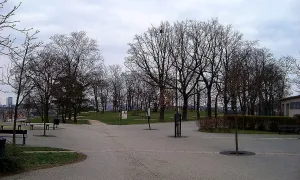
Real photos taken near the monument


Zdroj a licence jsou uvedeny u každého snímku.
Atmosphere of the place
This atmospheric visualisation of the place and period was generated by artificial intelligence. It is not real footage of the location.
Tips from visitors
No tips yet. Be the first!
Log in and add your tip.
Sources and literature
Photos: Jiří Sedláček / CC BY-SA 4.0 — Wikimedia Commons. The author and licence also appear when you hover over the image.
Faktickým podkladem tohoto textu byl článek na Wikipedii, jehož autory jsou přispěvatelé Wikipedie. Článek je dostupný pod licencí CC BY-SA 4.0.
Location on the map


Příběhy a pověsti
Legendy, pověsti a příběhy spjaté s touto památkou
Fotografie návštěvníků
Zatím žádné fotografie. Buďte první, kdo přidá fotografii z návštěvy!
Log in a přidejte svou fotografii nebo hodnoťte.
Za ověřenou návštěvu v aplikaci získáte víc bodů — poznáme podle GPS, že jste na místě.
Reviews and comments