



hlubočepské viadukty Viaduct
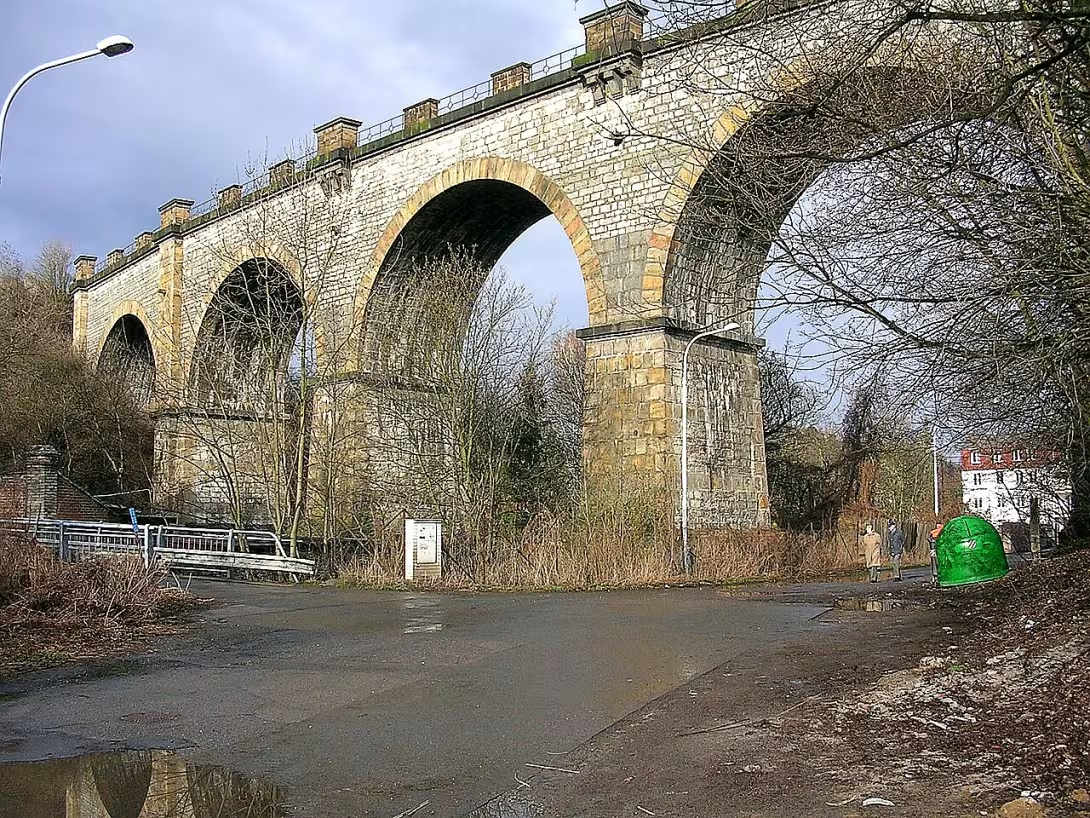
The Viaducts are a pair of railway bridges located in the area Hlubočepy in Prague and considered as technical monuments from the 19th century. These structures were part of the Bustřahrad railway, connecting Smíchov Station with Hostivice. Viaducts are known for their technical solutions and historical importance for rail transport, which has started to work here since 1872.
The emergence of the Hlučepské viaducts is linked to the development of the railway network in Central Europe during the industrial revolution. In the Czech Republic there was an intensive construction of new lines, which were to connect capital cities and regions. The Viaducts were built in 1870-1872 according to the design of Wilhelm Asta and the Klein brothers in order to create an effective connection that took into account the steep terrain of Hlučep.
The viaducts are presented as arc structures. The south-east viaduct is longer and higher, measures 115 metres in length and reaches a height between 23 and 25 metres with seven arches. On the contrary, the northwest viaduct is shorter, its length is 92 meters and its height is 20 meters, with five arches. Both structures are protected as cultural monuments due to their historical and technical value.
The history of viaducts is linked to their ownership and administration, which has not changed since the position. Viaducts were part of the Bustloudskaya railway and served for freight and passenger transport. Both viaducts were reconstructed in 2018- 2019, in which, for example, the steel structure at the south-east viaduct was replaced.
Key events include the start of freight and passenger transport on the line in 1872. The track is now referred to as Prague Semmering, which refers to its mountain character and developed loop via viaducts. In the vicinity of the south-eastern viaduct, there is also a natural monument to the railway section, which in addition increases its tourist attractiveness.
Today, the Viaducts are available for visit and attract attention with their historical significance and architectural beauty. They are not only technical monuments, but also part of local culture and heritage. Exploring them means traveling to the past and appreciating the engineering ingenuity of the 19th century.
The deep-chepan viaducts are a reminder of an important period in the development of railway transport and construction, which affected not only Czech history but also the wider European context. Their visit offers a unique view of the technical innovations of the past and a reminder of the importance of the railway in the development of modern society.
Historical milestones
- 1870
- The beginning of the construction of the Hlubochep viaducts.
- 1872
- Start of freight and passenger transport on the line Bustěhrad railway.
- 2018
- The beginning of the reconstruction of both viaducts.
- 2019
- Completion of the reconstruction of the Hlubočepský viaducts.
Architectural development
Viaducts were built in 1870-1872 according to the design of Wilhelm Asta and the Klein brothers. The south-east viaduct is longer and higher, with seven arcs, while the north-west viaduct has five arcs. Both structures were reconstructed in 2018- 2019.
Historical events
- 1872
- Start of freight transport on the line.
- 1872
- Start of passenger traffic on the line.
Points of interest
- The deep-chepan viaducts are a pair of railway bridges considered to be technical monuments from the 19th century. - The Viaducts were part of the Bustřehrad railway station connecting Smíchov Station with Hostivice and started working since 1872. - They were built in 1870-1872 according to the design of Wilhelm Asta and the Klein brothers for effective connection through the steep terrain of Hlučep. - The south-east viaduct is longer and higher, measures 115 metres in length and reaches a height between 23 and 25 metres with seven arches. - The track is now called Prague Semmering because of its mountain character and developed loop via viaducts.
Guide
Show guide text
This text was created by artificial intelligence and has not been editorially reviewed. It may contain inaccuracies.
Welcome to Hlučepice, where we are facing a unique technical monument of the 19th century - a pair of Hlučeph Viaducts. Under your feet, history and engineering have spread over time. These railway bridges are an exceptional piece of architecture, which you can now explore.
Let's dive into their history. In 1870 the construction of these structures began as part of the Bustřehrad railway, a project which connected Smíchov Railway Station with Hostivice. Already in 1872, viaducts were ready for operation and started serving both personal and freight transport. Wilhelm Ast, a well-known architect, along with his brothers' firm, designed these arc structures, which are now considered technical monuments.
Look up and notice their architectural details. The viaduct arches bridge Hlučepská street, which is not only a functional solution, but also an aesthetic enterprise. These structures show how technology and art could be combined in the 19th century.
Although we do not know much about historical personalities directly associated with viaducts, it is clear that their construction required great skill and exceptional technology of that time. Viaducts were a key part of the development of railway transport in Prague and became a symbol of progress.
The interesting thing is that the viaducts have been renovated throughout their existence. In 2018, the modernisation of the two structures began and was completed in the following year, allowing them to preserve their historical appearance even for future generations.
Now that you've looked at the Deep-Cep viaducts, inviting them to continue their research. Prague is full of other historical and architectural gems waiting for discovery. I hope this guide inspired you to deepen your interest in this fascinating place. Goodbye and have a nice trip!
Tips for visitors
The best time to visit the Hlučepe viaducts is in the spring or autumn season when vegetation is at its peak and the sun rays are less overheated. This time of year also offers beautiful colours of trees and bushes in the surrounding area, highlighting the historical architecture of viaducts.
You can check the current connection in the traffic service search engine.
When visiting viaducts, it is advisable to take with you shoes or shoes suitable for walking on uneven terrain, as the surrounding natural environment can be such. You should also consider wearing protective glasses and sunglasses, especially during the summer.
The best places at the beginning of the morning or in the evening when the light is soft and shadowy are for shooting the deep-chepe viaducts. Photograph from different angles to capture the historical appearance of the structures and their contemporary reconstruction.
This area offers nice pavements and views of the surrounding countryside. It is advisable for families with children to prepare some toys or games that can be played outside, which will shorten the time spent in nature.
Frequently asked questions
Can the monument be visited?
This is a structure in a public space that can usually be seen from outside free of charge. We have not verified that this particular one is freely accessible. According to the heritage register restoration is under way, so access may be restricted.
Where is the monument?
Location: Hlubočepy, Hlavní město Praha. The map on this page shows the exact spot.
Why is the monument protected?
It is listed in the Central List of Cultural Monuments of the Czech Republic as a cultural monument (register no. 1000152345).
Businesses nearby
Do you run a restaurant, accommodation, shop, museum, rental, wellness or other visitor service near this monument? Show yourself directly to the people heading to it — this is how they will see you in the app and on the web:
Events nearby

Zdroj akcí: otevřená data měst a obcí ČR (Národní katalog otevřených dat) a kalendář akcí Národního památkového ústavu.
Nearby
Přírodní památka Železniční zářez
Železniční trať směrem do Hostivic
Accommodation nearby
Trips and activities nearby
Guided tours, tickets and activities nearby from GetYourGuide
Affiliate link: if you buy from the partner, we may receive a commission. The price for you does not change.
Search tours and activities →Themed route
Thematic cruise route: Deep-Cep viaducts and surroundings
1. Main Goal: Deep-Chep Viaducts Type: Historical railway construction Why is worth a visit: Viaducts are an impressive example of engineering art from the beginning of the 20th century, which combines the history of railway transport with modern use for cyclists and tourists.
2. Natural monument Railway notch Type: Natural monument Why is it worth a visit: This location offers a unique view of the natural landscape that was shaped by the railway. It is an ideal place to relax and observe wild flora and fauna in a quiet atmosphere.
3. Railway line towards Hostivic Type: Historical Railway Why is it worth a visit: Visitors can explore the history and importance of this route, which is an important part of regional transport. Ideal for cyclists or pedestrians who want to explore the surrounding countryside.
4. Natural zone around the Railway cut Type: Natural area Why is worth a visit: This zone offers opportunities for camping and outdoor activities in a friendly environment. It's a great way to dive into peace and relax your mind.
5. Background on the road towards Hostivice Type: Background for tourists Why is it worth a visit: This place serves as a starting point for further exploring surrounding natural and cultural attractions. It is an ideal place to relax and plan the next stages of your trip.
This route offers a combination of historical and natural experiences, making it ideal for diverse interests and preferences of visitors.
Seasonal recommendations
Spring: In the spring season, hlubočepské viadukty is transformed into a lively floral landscape park, where flowering shrubs and trees form a colourful palette. Sun rays reflect from young leaves, adding freshness and enthusiasm to the atmosphere. It is advisable to visit viaducts in the early spring season when there are fewer people before the crowd starts to increase. It is recommended to wear clothes according to temperature and bring them with me on any rainy day.
Summer: In summer, the deep-chepan area is full of life, where viaducts stand in full sunlight. This time of year offers long days and ideal conditions for walking and relaxing in outdoor places. Due to high temperatures it is advisable to visit viaducts in the morning or evening to avoid intense sunlight and crowds. Don't forget the UV protection and enough drinking water.
Autumn: In autumn they offer viaducts full of fine colours, when leaves go from living green to different orange and red varieties. The atmosphere is calm and relaxing, making this time ideal for relaxing walks. Due to colder conditions, it recommends meaningful clothing with a blanket for head and hand, while wind days may require additional protection.
Winter: Winter autumn offers a unique view of viaducts, where roofs and structures cover with light snow, which adds a romantic atmosphere to the picture. Hot clothes, goggles and shoes are essential for comfort during a visit in these freezing conditions.
Visualizations and artistic views


The visualisations are generated by artificial intelligence and serve as inspiration.
Photos from the area
Real photos taken near the monument


Zdroj a licence jsou uvedeny u každého snímku.
Tips from visitors
No tips yet. Be the first!
Log in and add your tip.
Sources and literature
Photos: User:ŠJů / Public domain — Wikimedia Commons. The author and licence also appear when you hover over the image.
Faktickým podkladem tohoto textu byl článek na Wikipedii, jehož autory jsou přispěvatelé Wikipedie. Článek je dostupný pod licencí CC BY-SA 4.0.
Location on the map
Příběhy a pověsti
Legendy, pověsti a příběhy spjaté s touto památkou

Fotografie návštěvníků
Zatím žádné fotografie. Buďte první, kdo přidá fotografii z návštěvy!
Log in a přidejte svou fotografii nebo hodnoťte.
Za ověřenou návštěvu v aplikaci získáte víc bodů — poznáme podle GPS, že jste na místě.
Reviews and comments