

zámek Hlubočepy Chateau
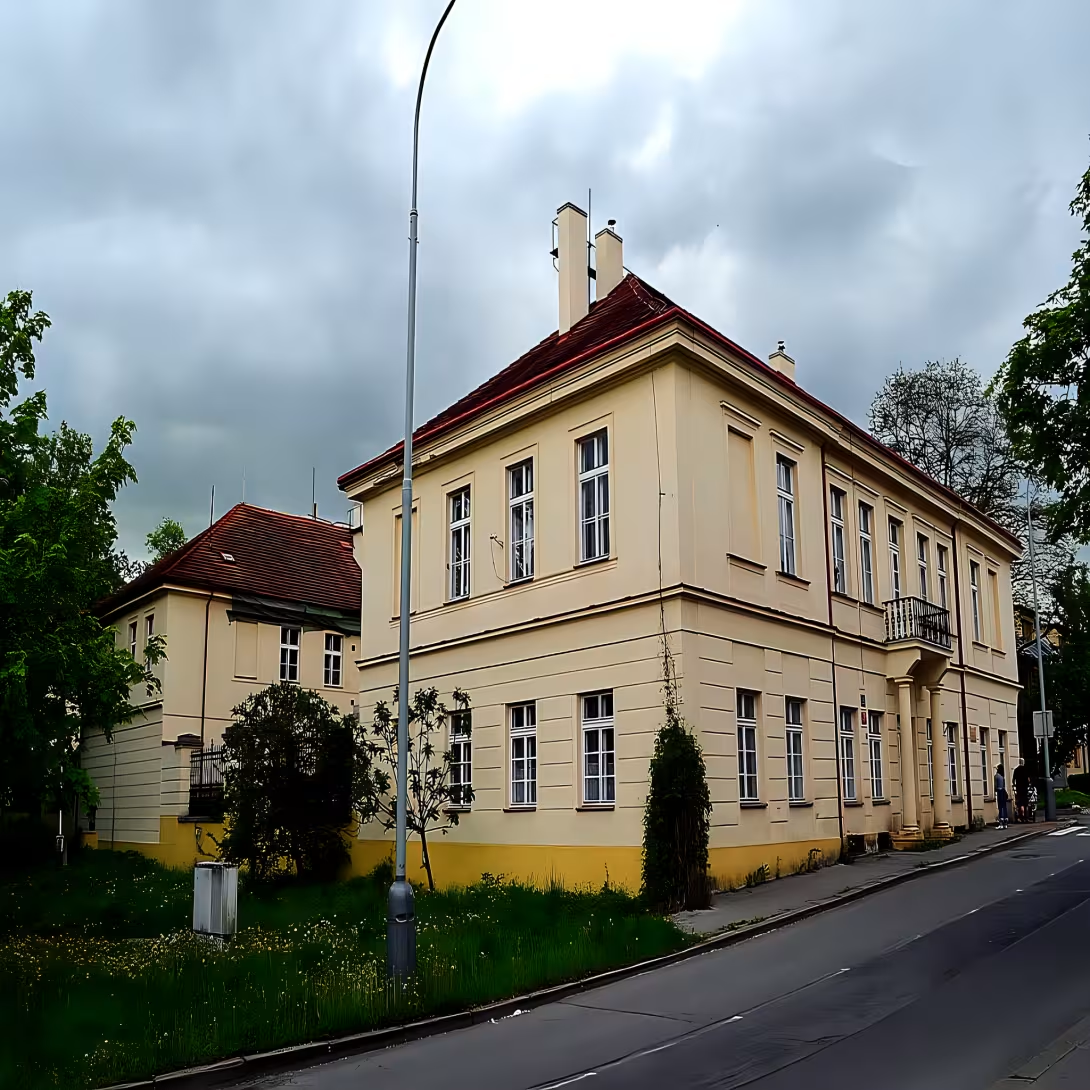
The Hlučepská 2 / 33 chateau has a rich history. Its beginnings probably date back to 1571, when Jan Kutovec z Úrazu founded the original fortress here. The building thus acquired its first form, which would undergo interesting transformations in the following centuries.
In 1623, ownership changed. The fortress was bought by an influential man of his time - Imperial Council Pavel Michna z Vacínova. But his son later decided not to keep it. In 1669, he pawned it to the Jesuit Order for 3,000 gold Rhine. The Jesuit building was immediately rebuilt into a chateau that became the centre of their local estate in Hlučepích.
The Jesuit administration lasted more than a hundred years. After the abolition of the Jesuit Order in 1773, the property was transferred to a study fund. In the following period, the building gained a contemporary classical appearance, probably in the time when it was owned by Count František Antonín Desfours.
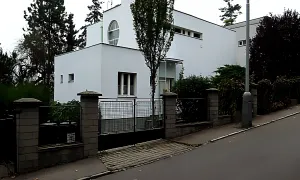
Today the chateau stands as a protected real estate cultural monument. The list of monuments of the Czech Republic is listed under the name "Castle Raudnitz's House." Its history - from the noble fortress of the 16th century to the Jesuit chateau to the aristocratic classicism - represents the testimony of changing architectural tastes and social changes of Prague.
Then and now
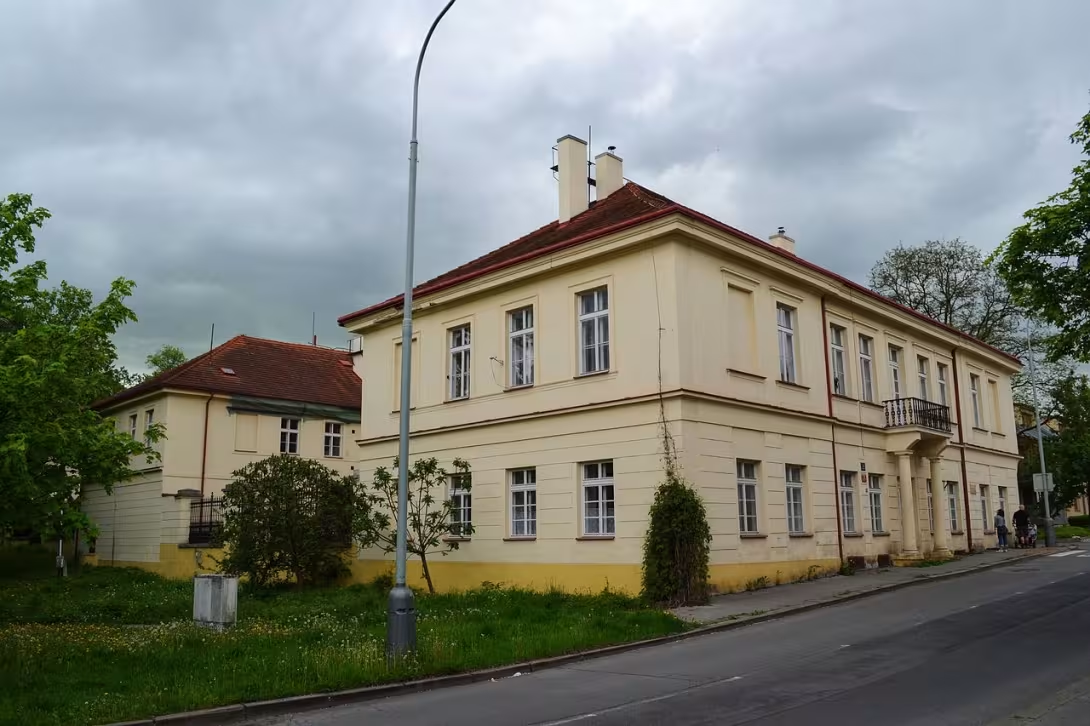
Drag the slider to compare how the landmark may have looked when it was built with the view today.
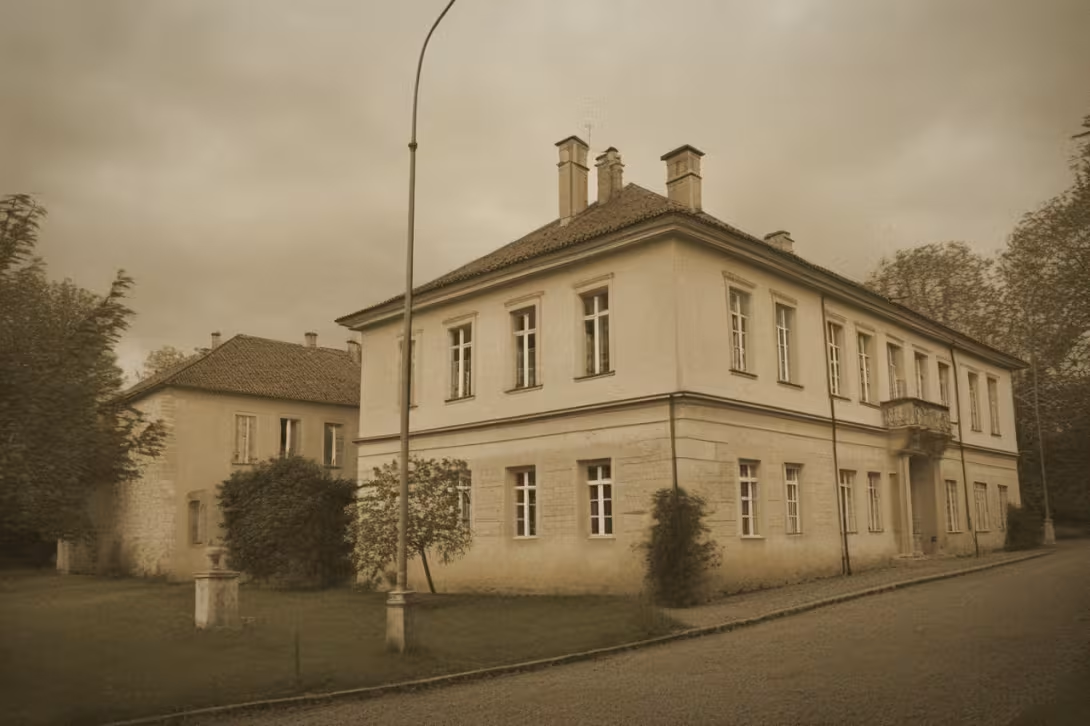
The historical appearance on the left is an AI-generated visualisation and serves as inspiration only.
Historical milestones
- 1571
- The founding of Jan Kutovka's original fort from the accident.
- 1623
- The purchase of the building by the Imperial Council by Pavel Michna from Vacín.
- 1669
- Rebuilding the fort to the Jesuit chateau.
- 1773
- The abolition of the Jesuit Order and the transfer of assets to a study fund.
Architectural development
The original building was founded as a fortress in 1571. In 1669, Jesuit was converted to a chateau and later acquired a classical form, probably for the possession of Count Desfour. It is a single-storey object on the ground plan of the letter E.
Historical events
1669 rebuilding the fortress to the chateau jesuitymi, 1773 abolishing the jesuit order and taking over the property by study fund.
Owners
Jan Kutovec z Úrazu (1571), Pavel Michna z Vacínova (1623), Jesuits (from about 1669), Study Fund (from 1773), Count František Antonín Desfours
Points of interest
- The original fortress was probably founded here by Jan Kutovec z Úrazu in 1571. - In 1669, the building was stopped by the Jesuit Order for 3,000 gold Rhine who converted it to a chateau. - The contemporary classical appearance of the building is likely to have been acquired during the time of ownership of Count František Antonín Desfour. - The chateau is a protected cultural monument and in the list of monuments it is led under the name "Fortress Raudnitz's House.".
Guide
This guide is narrated by a synthetic voice generated by artificial intelligence.
Show guide text
This text was created by artificial intelligence and has not been editorially reviewed. It may contain inaccuracies.
Welcome to Deep Cups. You're standing in front of a building that dominates the surrounding landscape with its peaceful and balanced appearance. In front of you is zámek Hlubočepy, which many also know as Raudnitz's house. If you look at it now, you'll see a structure that reflects the purity and order of later classicism. It is a place where in every stone there is a layer of history, and although today it is harmonious and elegant, the way to this form was long and full of change.
Stop for a moment and feel the atmosphere of this place. In order to understand what we are seeing, we need to go back deep into the past, namely to the year one thousand five hundred seventy-one. It was this year that the foundation of everything that stands here today was laid. But at the time, it was not an elegant mansion as you know, but a fortress. The fortifications at that time were symbols of power and security, a fortified dwelling to protect its inhabitants. It was founded by Jan Kutovec z Úrazu, which created a fixed point in the landscape. Imagine, then, that in place of this fine chateau once stood robust walls and deep trenches that separated the inner space from the outside world.
But time passed, and so did the owners. In the year six hundred twenty-three, the object came into the hands of a man named Pavel Michna z Vacínova, who acted as the Imperial Council. It was a man of influence and significance, which probably brought new energy and status to the building. But the greatest transformation came only later, in the year one thousand six hundred sixty-nine. It was during this period that there was a major twist when the original fort was converted into a chateau. This change was made by the Jesuit Order, which won the building for the price of 3,000 gold Rhine. For the Jesuits, this house was not only a common residence, but it became the center of their estate, a place of administration and power in this area.
Now please pay attention to the architecture of the building that surrounds you. Take a look at the overall design of the facade. What you see today is not the result of Jesuit care, but of late classicism from the mid-nineteenth century. Classicism is characterized by what you also perceive - clarity, symmetry and absence of unnecessary ornaments. Everything here is balanced and it seems very noble. Notice how the building lines lead your eyes to the sky and how harmonically the building is inscribed in space. It is an architecture that aims not to impress its complexity, but rather to convince its purity and logic. It is this form that makes the building a cultural monument of the Czech Republic, which is a recognition of its value for all of us.
Now let's think about the people who left their trail. We mentioned Jan Kutovec and Pavel Michna, but in later times the name of Count František Antonín Desfours was added to this place. It is very likely that during the time of his possession the chateau has acquired the look that you admire right now. Imagine what discussions were held in these premises and what decisions were made here. The chateau witnessed the ups and downs of various generations and order.
An interesting point in history is the year one thousand seven hundred seventy-three. At that time, the Jesuit Order was abolished, an event with a huge impact on the whole of Europe. The property of the Jesuits, including this chateau, went into a study fund. This means that the building has ceased to serve as a centre of the religious estate and has started to perform other functions, which probably also affected how it was maintained and developed over the next decades.
If you stand before this construction today, you might wonder why everything here is so balanced. It is a fascinating contrast - from the gross fortress of the sixteenth century to the Jesuit chateau to the Classicist mansion of the nineteenth century. Each of these editions left an invisible print. The mystery remains the names of the particular architects who proposed these changes because they are not listed in the records. It is a fascinating idea that a building with such a distinctive character was shaped by the hands of masters whose names we have forgotten, but their work is still very tangible.
Note how light is reflected from the walls and how the lock works depending on the time of day. It's a place that encourages you to think about the timeliness of time and the durability of stone. From Jan Kutovka's fortress to the golden Rhine Jesuit coins to the aesthetics of Count Desfour - everything has come together at this one point in Prague space.
Thank you for accompanying me in this brief view into the history of the chateau Hlubočepy. I hope that this journey from the fort to the Classicist House has intrigued you and that you are now seeing this building in a new light. Now you can explore the surroundings at your own pace, perceive the silence of this place and be inspired by its history. I wish you a pleasant rest of the day and a wonderful experience while exploring the hidden treasures of our capital city. Goodbye.
Tips for visitors
The best time to visit is late spring or autumn, when the classical appearance of the building contrasts beautifully with the colors of the surrounding nature. Transport to Prague to part Hlubočepy is possible by car and public connections; Check specific routes in current timetables.
On arrival we recommend to bring comfortable shoes, which is suitable for walking in the surrounding park. For photo lovers, the best places are the facade of the building in the morning or late afternoon light, which will highlight the details of architecture.
Near the monument there is an extensive park which is an ideal place for relaxing and walking in nature. It's the only recommended place to visit in the immediate vicinity.
For families with children, the surrounding park offers space for safe movement and joint exploration of the outdoor part of the historical building, which can be a pleasant experience for all generations.
Frequently asked questions
Can the monument be visited?
Some buildings of this kind are open for guided tours, others serve another purpose or are privately owned. We have not verified whether and when this monument is open – please ask the operator.
What are the opening hours and admission?
We have not verified the opening hours or admission. Current information is published by the operator.
Where is the monument?
Location: Hlubočepská 2/33, Hlubočepy, Praha, Hlavní město Praha. The map on this page shows the exact spot.
Why is the monument protected?
It is listed in the Central List of Cultural Monuments of the Czech Republic as a cultural monument (register no. 40283/1-1351).
Businesses nearby
Do you run a restaurant, accommodation, shop, museum, rental, wellness or other visitor service near this monument? Show yourself directly to the people heading to it — this is how they will see you in the app and on the web:
Events nearby

Zdroj akcí: otevřená data měst a obcí ČR (Národní katalog otevřených dat) a kalendář akcí Národního památkového ústavu.
Nearby
Okolní krajina je tvořena pražskou aglomerací a blízkými čtvrtěmi. Další památkou v okolí je kostel svatého Václava.
Accommodation nearby
Trips and activities nearby
Guided tours, tickets and activities nearby from GetYourGuide
Affiliate link: if you buy from the partner, we may receive a commission. The price for you does not change.
Search tours and activities →Themed route
Here is the design of the cruise route:
1. Chateau Hlubočepy (lock) - The main destination of the trip, where you can view the historical building and its architecture. 2. Park (park) - Extensive green area near the chateau, which is ideal for relaxing and walking in nature.
Seasonal recommendations
In the spring, the surroundings of the building will awaken to life and the gardens will bloom. Nature around the building offers fresh colors and fine light that is ideal for observing architecture. It is recommended that footwear suitable for wet ground and visit in the morning when the air is the cleanest.
Summer brings intense sun and rich green trees that provide a pleasant shade. It is advisable to choose light clothes and look for time with low temperature levels, for example early morning to avoid heat.
Autumn turns the landscape into a sea of gold and red colors, creating a melancholy mood. The lighting is softer and golden, which highlights the facade details. It is practical to carry a lighter jacket or a wind coat and choose days with bright skies.
In winter there is peace and freezing purity in the surroundings, which can be supplemented by a layer of snow. The environment is mysterious and the skeleton of surrounding trees is exposed. Hot shoes and layered clothes are essential, and the best thing is to visit the place in times when the sun shines at most.
Visualizations and artistic views


The visualisations are generated by artificial intelligence and serve as inspiration.
Photos from the area
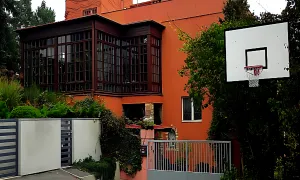
Real photos taken near the monument


Zdroj a licence jsou uvedeny u každého snímku.
Atmosphere of the place
This atmospheric visualisation of the place and period was generated by artificial intelligence. It is not real footage of the location.
Tips from visitors
No tips yet. Be the first!
Log in and add your tip.
Sources and literature
Photos: Sefjo / CC BY-SA 3.0, rozlišení zvýšeno umělou inteligencí — Wikimedia Commons. The author and licence also appear when you hover over the image.
Faktickým podkladem tohoto textu byl článek na Wikipedii, jehož autory jsou přispěvatelé Wikipedie. Článek je dostupný pod licencí CC BY-SA 4.0.
Location on the map
Příběhy a pověsti
Legendy, pověsti a příběhy spjaté s touto památkou
Fotografie návštěvníků
Přidat fotografiiZatím žádné fotografie. Buďte první, kdo přidá fotografii z návštěvy!
Máte k místu vzpomínku nebo zajímavý příběh?
Log in a přidejte svou fotografii nebo hodnoťte.
Za ověřenou návštěvu v aplikaci získáte víc bodů — poznáme podle GPS, že jste na místě.
Reviews and comments