






Vila Pavla Růžičky Villa
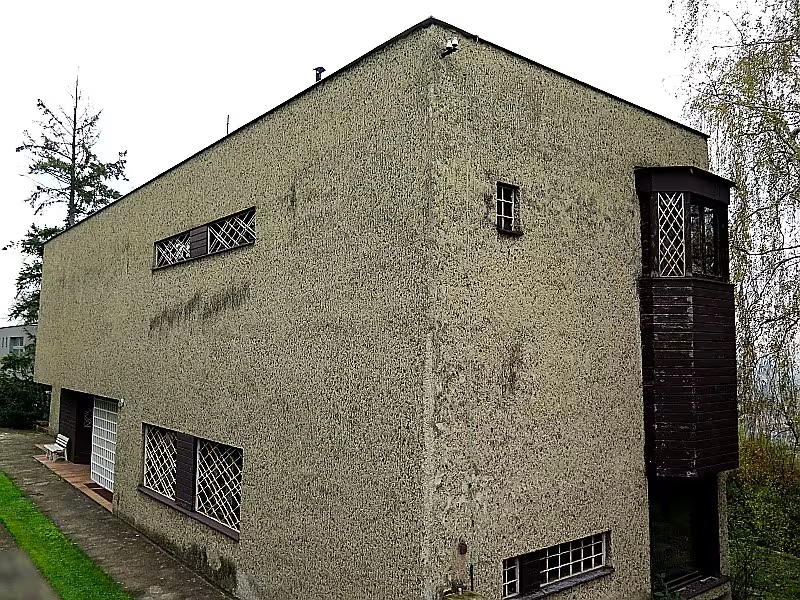
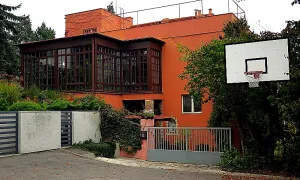
Vila Pavla Růžičky is a puristically solved late-functionalist building located in the Prague residential district of Barrandov. The building was designed by architect Vladimír Grégr in 1936 for diplomat Pavel Rožiček. Since 25 November 1992 the villa has been protected as a cultural monument of the Czech Republic.
The foundation of the house falls into the period of the first Czechoslovak Republic, when Barrandov became a prestigious location for the then elite. The project for diplomat Pavel Růžiček and his wife Svatava was developed by architect Vladimír Grégr in 1936. Pavel Růžička was an important person; He served as a military attache in Japan, a consul in Dublin, Ireland, and a member of the Ministry of Foreign Affairs. After February 1948, when he was to be transferred back to Prague for political reasons, he resigned and elected exile.
The construction has an irregular elongated plan. Thanks to the sloping terrain, it acts as a ground floor to the street, while the garden is double-storey. The facade stands out with purist grit and rough grain structured plaster. The street part is without further details, divided only by longitudinal belt windows on the ground floor and the first floor. The architectural elements include a wooden, partly glazed bay on the southwest facade, covered with a door with a luxury wall and a terrace with a roof supported by wooden pillars. The layout of the house is effectively divided; the living rooms on the first floor are located in the garden and are accessible from the intermediate corridor.
After World War II, the famous Czech director Vladimír Čech lived in the villa. In the 1980s, a garage was built in the northwest corner of the property. Currently, the building is owned by the Kolowrat-Krakowski family. Between 2014 and 2017, the building underwent a major reconstruction, which preserved its original purist character.
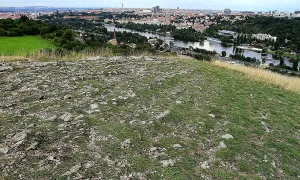
Vila Pavla Růžičky represents a valuable example of functionalist architecture, which documents the building development of Barrandova in the interwar period. Visiting this location offers the opportunity to explore the house in the context of surrounding residential buildings and nearby natural monuments such as Barrandov rocks or Prokopská valley.
Historical milestones
- 1936
- Design and construction of the villa by architect Vladimir Gréger.
- 1992
- The villa was declared a cultural monument of the Czech Republic.
- 2014
- Start of three-year reconstruction of the building.
Architectural development
The villa was built in 1936 on an irregular plan. In the 1980s, a garage was built in the northwest corner of the property. Between 2014 and 2017, the building underwent a complete reconstruction, which preserved its purist character.
Historical events
1936: Project and construction of the villa. 1992: Declaration for cultural heritage. 2014-2017: Extensive reconstruction of the building.
Owners
Pavel Růžička, Kolowrat-Krakowski family
Points of interest
- The villa is a puristically solved late functionalist building, which since 25 November 1992 is protected as a cultural monument of the Czech Republic. - Thanks to the sloping terrain, the house acts as a ground floor to the street, while the garden is double-storey. - The architectural elements include a wooden, partially glazed bay, covered door with a luxury wall and a terrace with a roof supported by wooden pillars. - After World War II, the famous Czech director Vladimír Čech lived in the villa. - From 2014 to 2017, the building underwent a major reconstruction, which preserved its original purist character.
Guide
Show guide text
This text was created by artificial intelligence and has not been editorially reviewed. It may contain inaccuracies.
Welcome to Hlučepy, one of Prague's most important residential districts, where nature meets the ambitions of modern architecture. You're standing in front of the Villa of Paul Rose. The first impression that radiates from it is peace, order and unshakable elegance. Look at her shapes. It's a house that doesn't scream, but it talks to us in a quiet, confident, modern voice. Do you perceive the purity of the lines and the absence of unnecessary ornaments? It is in this minimalism that the whole essence of this place lies.
Let us now return together in time almost 90 years back to the year one thousand nine hundred thirty-six. It was this year that the design and subsequent construction of this house was created. The author was the renowned architect Vladimír Grégr. He designed the construction for diplomat Pavel Růžička. Imagine the atmosphere of Barrando at that time, which was a symbol of luxury, modern lifestyle and intellectual elite. At that time, a new way of thinking about housing was promoted in Prague, where historical copies of old styles were dumped and truth was sought in material and function. Vila Pavla Růžičky is the embodiment of this search.
Now pay full attention to the architecture itself. The villa is developed in a late-functionalist style with a purist approach. You might be asking what it actually means in practice. Look at the facade. Notice her strength. No sculptures, no decorative columns or statues. Everything here is subordinate to function and geometric purity. Note the rough grain plaster that gives the surface a specific texture and depth, and typical belt windows. These windows are not only an aesthetic element, but they were used to penetrate the interior with maximum natural light, which was crucial for functionalism.
One of the most fascinating aspects that you can observe right now is the way the house uses the sloping terrain. It's an architectural trick that you perceive depending on where you're looking at the house. Here, where you're standing, towards the street, the building acts as a ground floor. It's a discreet, almost inconspicuous entrance to the private world. However, if you were to move to the opposite side of the garden now, you would find that the house there acts as a two-storey. This playfulness with the terrain allows the house to be at the same time an inconspicuous neighbor in the street and a spacious, open home in a private garden. Note also details such as wooden and partially glazed elements, which finely complement the rigidity of concrete and plaster.
Who lived here and what was life like behind these walls? The main character was of course Pavel Růžička, the diplomat for which the house was built. Imagine his profession, requiring tact, precision and representativeness. It is these qualities that mirror the architecture of his home. Svatava Růžičková worked with him. Home was probably a resting place from diplomatic duties, but at the same time a place to meet the social elite at the time. The name of Vladimir Čecha also appears in connection with the house. These people breathed life into the walls and made the architectural project a real home in which personal dreams intertwined with the vision of architect Vladimir Grégro.
The villa survived a decade and its value was officially recognised in a thousand nine hundred and ninety-two. It was then declared a cultural monument of the Czech Republic. This means that the state recognised its irreplaceable contribution to Czech architecture and decided to protect it for future generations. It's interesting that even after years, the house kept its integrity and its original character. However, in order for the villa to continue to stand as a witness of its time, it was necessary to take care of it. In the year two thousand fourteen so began the extensive three-year reconstruction of the building. The goal was to return the construction of her original Articles, repair the materials and ensure that the purist purity you see before you is preserved even for those who come here in 50 or 100 years.
The interesting thing that may interest you is the date of the protection of the monument, November twenty-fifth, one thousand nine hundred and ninety-two. At that moment, the house stopped being just private property and became part of the national heritage. When you look at the building, try to imagine the path it traveled from Vladimir Grégro's first sketch in the year one thousand nine hundred thirty-six to today's form. It's a journey from brave modern to oblivion to today's recognition and care.
Now I'm just recommending that you go around the building in peace, feel its rhythm, and try to imagine what life was like behind those belt windows. Feel the atmosphere of this place where the silence of Hlubochep meets the strict discipline of functionalism. Vila Pavla Růžičky shows that less is really more and that true beauty lies in the trueness of the material and the functionality of space.
Thank you for accompanying me on this short journey to modern architecture. I hope this view of Villa Pavel Růžička inspired you to further discover the hidden jewels of Prague. I wish you a pleasant further walk Hlubočepy and a beautiful day full of new experiences. I will say goodbye to you and leave you in the silence of this fascinating place.
Tips for visitors
To visit the villa we recommend to choose the morning hours during the working week when the surrounding residential area is quieter and the lighting conditions are ideal for observing the purist details of the facade.
The location is available by car and by public transport; Check the current connection and parking possibilities in the nearby streets in the search engine before the journey as parking capacity in the residential area is limited.
Use the morning or late afternoon light to photograph the villa to highlight the geometric line of the building. You can get the best footage from the street in front of the building, but take care of the privacy of the people and respect the ban on private property.
In the vicinity of the villa there is a natural monument of Barrandov Rock and Prokopská Valley, which are suitable for walks, and historic Barrandova terraces, which complement the atmosphere of this functionalist neighborhood.
When visiting children, we recommend to combine a tour of architecture with a trip to nature in the Prokopská Valley, where there is enough space for movement. Don't forget about fixed shoes and plenty of fluids, especially if you plan to take a long walk in rocky terrain.
Businesses nearby
Events nearby

Zdroj akcí: otevřená data měst a obcí ČR (Národní katalog otevřených dat) a kalendář akcí Národního památkového ústavu.
Nearby
Barrando terraces, natural monument of Barrando rock, Prokopská valley.
Accommodation nearby
Trips and activities nearby
Guided tours, tickets and activities nearby from GetYourGuide
Affiliate link: if you buy from the partner, we may receive a commission. The price for you does not change.
Search tours and activities →Themed route
1. Barrando terraces - Gastronomic and architectural complex. A place with an amazing view of the city that resembles the atmosphere of the first republic. 2. Barrando rocks - Natural landmark. Stupendous rock formations known for their paleontology findings. 3. Vila Pavla Růžičky - Villa. The main destination of the journey, which will capture its unusual architecture and history. 4. Prokopská valley - Natural area. A quiet zone for nature walks, which offers rest from urban activity.
Seasonal recommendations
Spring: Vila Pavla Růžičky in Hlučepich offers a wonderful view of flowering gardens in spring, where changing colors and fragrant flowers form an attractive background. Sun rays illuminate architectural details of the villa, which is the perfect time for photography. Visitors are recommended to wear light clothes with the possibility of adding a layer to colder days while noticing that due to spring tourism visitors can be numerous. The best time to visit is usually the afternoon when the sun lights up everything around you.
Summer: In the summer months, Vila Pavla Růžičky offers attractive shelter from heat under the shadows of old trees and still life. The atmosphere is full of life, where various events or concerts can appear in the park. Visitors are advised to come early in the morning or late in the afternoon to avoid the noon heat and crowds that may be large in the main summer season. Don't forget the sun protection and enough hydration mode.
Autumn: In autumn, the surroundings of the villa turn into warm colours, providing a unique background for visiting. Sundays are ideal for walking around the park and enjoying a quieter atmosphere without a summer crowd. Visitors are advised to wear warmer clothes because autumn can be cold, especially in Western Bohemia. Don't forget to prepare a protective cover or umbrella if the sky starts to waste.
Winter: In winter, Vila Pavla Růžičky offers a quiet space for visiting with less visitors. The architecture of the villa is illuminated, which creates a magical atmosphere and is an ideal time for photography. Visitors are advised to wear warm clothes with moisture and snow protection because winter freezing conditions can be an obstacle. The opening hours of this season can be shorter, so make sure you check the current opening times.
Visualizations and artistic views

The visualisations are generated by artificial intelligence and serve as inspiration.
Photos from the area
Real photos taken near the monument


Zdroj a licence jsou uvedeny u každého snímku.
Tips from visitors
No tips yet. Be the first!
Log in and add your tip.
Sources and literature
Fotografie: Sovicka169 / CC BY-SA 4.0 — Wikimedia Commons. The author and licence also appear when you hover over the image.
Faktickým podkladem tohoto textu byl článek na Wikipedii, jehož autory jsou přispěvatelé Wikipedie. Článek je dostupný pod licencí CC BY-SA 4.0.
Location on the map
Příběhy a pověsti
Legendy, pověsti a příběhy spjaté s touto památkou
Fotografie návštěvníků
Zatím žádné fotografie. Buďte první, kdo přidá fotografii z návštěvy!
Přihlaste se a přidejte svou fotografii nebo hodnoťte.
Za ověřenou návštěvu v aplikaci získáte víc bodů — poznáme podle GPS, že jste na místě.
Reviews and comments