






Holešovické lázně Building
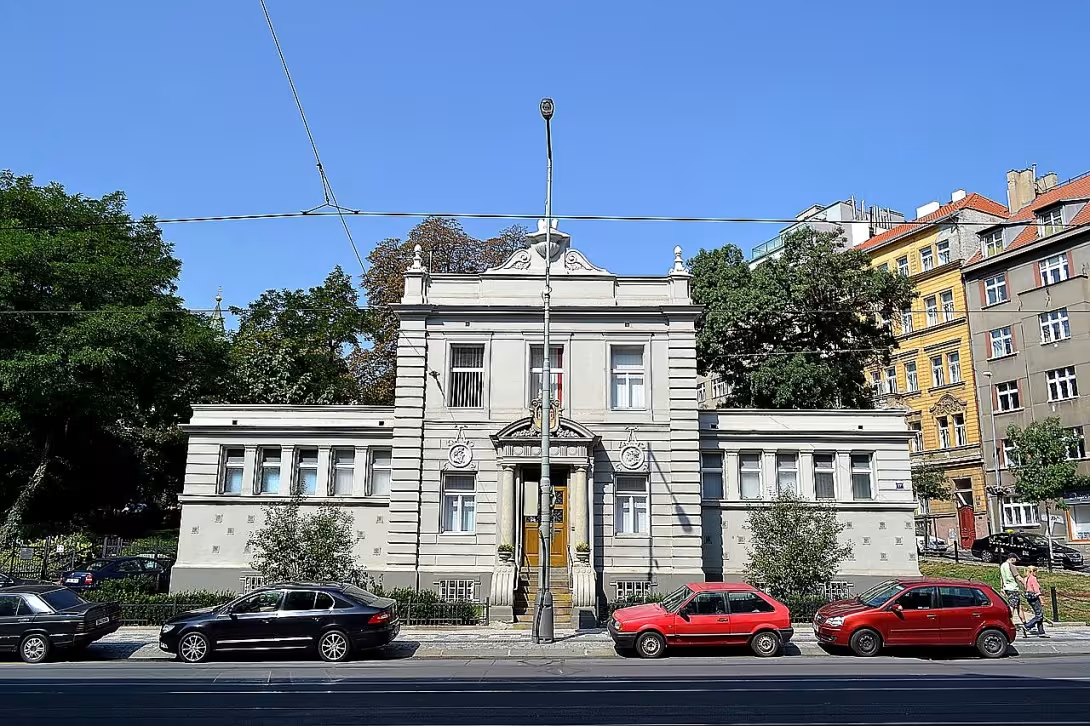
Holešovické lázně in Prague Holešovice is one of interesting examples of historical architecture in the north of the capital. This Neo-Renaissance building from the beginning of the 20th century stands in the area of the former village of Bubny, near Strossmayer Square, and since 1958 it has been protected as a cultural monument. Its author is architect František Velich, who designed a representative building with Prague emblem and statue of swan on the roof. Today there is a private clinic, but its original purpose as a spa complex with a sauna in the north wing is still evident.
It was created at a time when Prague experienced a boom in urban construction. Historism, a style connecting elements from various epoch, was popular at the time for public and important buildings. Holešovické lázně is thus one of the objects that enriched the then Prague urban picture. Their construction was linked to the expansion of urban functions and the need for modern facilities for citizens.
Architecturally, it is a storey central part with lateral ground wings. The facade is decorated with Prague emblem above the entrance and the statue of the swan on the roof, which gives the building a characteristic look. The interiors retain some original elements, especially bath rooms and sauna facilities in the north wing, which were used until the 1980s. These details resemble the original purpose of the construction as a spa complex.
Only limited data were preserved on the history of ownership and administration of the building. Originally created as a private spa building, but its other fates are not documented in detail. After the original function was terminated, the building was adapted to other purposes, including the current use as a clinic. Interestingly, the north wing served as a sauna until the 1980s, reflecting a long tradition of relaxation and wellness.
Today Holešovické lázně is accessible from the outside and can be admired as an example of historical architecture. They are located near other monuments such as the Church of St. Cyril and Methodius or the Holešovický cemetery, thus forming a suitable destination for walking around Holešovice. Although it no longer serves its original purpose, it retains its representative form and recalls the time when Prague grew and modernized.
Holešovické lázně represents a valuable example of historical architecture, which refers to the period of transformation of Prague into a modern city. Their visit allows them to know not only their aesthetic value, but also the history of the spa and the development of Prague buildings. For lovers of architecture and history it is therefore worth visiting this monument and exploring its details.
Historical milestones
- 1904
- The completion of the construction of the Holešovice spa according to the design of František Velič.
- 1958
- The building was listed in the list of cultural monuments.
Architectural development
The building was built in a neo-Renaissance style with elements of historism. The central section is storey, while the lateral wings are lower. The facade is decorated with Prague city emblem above the entrance and the statue of the swan on the roof. Some original elements were preserved in the interior, such as bath rooms and sauna facilities in the north wing.
Historical events
- 1904
- The location of the building of the Holešovice spa according to the design of architect František Veluch.
- 1958
- Initiating building protection as cultural monuments.
Points of interest
- Holešovické lázně is a new Renaissance building from the beginning of the twentieth century designed by architect František Velich.
- The building is decorated with Prague emblem above the entrance and a statue of swan on the roof, which gives it a typical look.
- There was originally a sauna in the north wing, which served until the 1980s.
- The spa was created at the time of the expansion of the city building in Prague and is one of the historical buildings that enriched the then urban picture.
- Today they serve as a private clinic, but they retain the original architectural elements and commemorate their original purpose.
Guide
Show guide text
This text was created by artificial intelligence and has not been editorially reviewed. It may contain inaccuracies.
Welcome to the Holesovice Spa. You're standing in front of a building that connects the peace of the old age with an architectural touch of the new age. This building is located right here, in the place of the former village of Bubny, of course represents a house which was built in 1904 and however, its importance was broken by decades. Look at your moment - as soon as your eyes enter, it will welcome you as a friend of the legendary home.
Let's look together at what these places will say today. In 1904 the architect František Velich finished the building which was intended to serve as a spa complex. This means that people have come here not only to rest, but also to recover, to warm up, or just to enjoy a quiet moment. Architect Velich designed the central part of the building, which is decorated with a typical Prague city emblem. Notice it - you will find it right above the entrance as if the guardian of this house welcomed every new visitor. And even more interesting, there's a statue of a swan on the roof of this building. It does not only reflect the beauty, but also the serenity that this location provides.
Now pay attention to the details of the surrounding environment. The north wing of the building was originally designed for a sauna. Imagine that until the 1980s, there were places where people would accept hot air and release the tension of body and soul. That may be hard for us to understand today, but I think you can still feel the energy that has endured here.
In 1958, this building was listed as a cultural landmark. This does not only mean that she became a protected object, but also that she became an important part of our common memory. Every stone, every element that's been preserved here, tells the story of the people who lived here, worked, rested and breathed in the same air as we do today.
What I'm interested in is how a place can change and maintain its essence. These baths were not just building buildings - they were a place of meeting people, a place of health and rest. Even if we don't find any more records of the specific personalities that were working here today, we feel there have been a lot of stories. Every step you've taken in front of this building could be a new beginning to your own story.
Look down to the entrance. Notice how the entrance part is built to welcome visitors. This is no coincidence - architect Velich wanted everyone who came here to feel at home. And maybe right now, when you're standing in front of this building, you feel the same feeling people felt exactly 100 years ago.
There's something I'm interested in. Imagine if this building could talk. What story would she tell? She might be talking about people who came here during the first half of the twentieth century, those who came here looking for health, those who came here just to get some rest. And maybe she would talk about people who have been meeting here for decades until the 1980s, when the sauna still smelled like air and people could enjoy a thin sense of warmth.
Let me ask you, what would you like to know about this place? You might be wondering what life was like in this part of Prague in 1904, or what influence this object had on the surrounding community. Every question you ask leads to a new discovery. And maybe right now, standing in front of this building, you have a chance to discover something new about yourself.
Imagine that you are now part of this story. The building you see before you is like an open book. Every detail, every element you've noticed, is like a page you can read. And maybe right now, standing in front of this building, you have a chance to write your own line into this history.
If you like what you have seen so far, I suggest you continue to explore the surrounding streets and squares. Every step you take will show you a new angle, a new perspective on what this neighborhood can offer. You may discover some other interesting things that will surprise you.
Thank you for taking the time to meet with the historical monument today. I hope that this short stay at the Holešovice Spa has taught you something new and that you will take away not only memories, but also the feeling that you were part of something bigger. Whether you continue to discover this place or go to other historical monuments, I wish you many interesting discoveries and unforgettable moments.
I'll say goodbye to you: remember, history is not just about the past. It is also about what we do today and how we see it today. And maybe right now, when you're standing in front of this building, you have a chance to be part of a history that's still beginning.
Tips for visitors
Holešovické lázně are interesting both in the summer when it is warm and in the surroundings there are pleasant parks and in winter when the atmosphere of historic buildings is special. We recommend a visit from April to October, when the weather is more pleasant and the outdoor areas can be used. In winter it is possible to visit the interior of the spa house, which is suitable for a colder day.
You can easily reach Holešovice by car and public transport. Parking in the vicinity of the monument is possible in several parking lots, for example near the square or in the stromovka park. We recommend using public transport as Holešovice is well connected to other parts of Prague. Select from tram lines or buses that stop near the sights.
Don't forget to wear suitable clothes to allow you to move comfortably. In summer, it's good to have light clothes and sun protection. In winter, add warm clothes because the interior of the spa buildings can be cold. It is also advisable to carry a water glass, keys and perhaps a small book or reading material for a brief rest.
Holešovické lázně offers interesting photo options. The best places for images are the facade of the building, which is typically neo-Renaissance, and surrounding areas such as the square or park. It is advisable to take pictures at a time when the light is pleasant, for example in the morning or afternoon. In the interior, photography is allowed, but always make sure you do not break the rules of conservation. '} {' co visit nearby (within 30 minutes walk) ':' In the vicinity of Holešovice spa buildings there are several interesting places. The nearest is the church of St. Cyril and Methodius, which is an important historical monument. Another interesting place is the Holešovice cemetery, where important personalities are buried. Park Stromovka offers beautiful natural spaces ideal for walking or relaxing. The river Vltava is also nearby, where you can observe beautiful views and relax.
Businesses nearby
Do you run a restaurant, accommodation, shop, museum, rental, wellness or other visitor service near this monument? Show yourself directly to the people heading to it — this is how they will see you in the app and on the web:
Events nearby

Zdroj akcí: otevřená data měst a obcí ČR (Národní katalog otevřených dat) a kalendář akcí Národního památkového ústavu.
Nearby
Holešovické lázně se nachází poblíž Strossmayerova náměstí a v blízkosti dalších památek, jako je kostel svatého Cyrila a Metoděje nebo Holešovický hřbitov. V okolí se také nachází park Stromovka a řeka Vltava.
Accommodation nearby
Trips and activities nearby
Guided tours, tickets and activities nearby from GetYourGuide
Affiliate link: if you buy from the partner, we may receive a commission. The price for you does not change.
Search tours and activities →Themed route
Thematic cruise route for Holešovické lázně
1. Holešovické lázně - natural treatment centre This historic spa building offers relaxation in mineral springs and modern treatment procedures. Its unique architecture and therapeutic effects are ideal for relaxation and regeneration.
2. Church of St. Cyril and Methodius - historical sacral monument This Gothic church is an important cultural monument that reminds us of the spiritual heritage of Czech princes. Its architecture and decoration are an interesting example of the medieval artistic tradition.
3. Holešovice cemetery - a quiet historical place This old cemetery is full of memories of the history of the village. Its old tombstones and peaceful surroundings offer an opportunity for reflection and peaceful walks.
4. Park Stromovka - green oasis in Prague A large park with panoramic views of the city is situated above the village. It is an ideal place for picnics, walks or rest in nature.
5. Vltava - Natural and Historical Water Works Walk along the bank of the Vltava river in the vicinity of Strossmayer Square is a pleasant addition to the route. You can enjoy beautiful scenery and relaxation by the water.
Seasonal recommendations
Spring
Nature is awakening in the Holešovice Spa at this time and therefore the atmosphere is full of green and quiet. Sunshine days bring warmth that can induce a sense of lightness, and lighting in interiors is often softer and warmer than in winter. It is appropriate to dress in a light but warm dress, because it can also be cold in February. The best time to visit is early morning when there are fewer people and nature is still full of life.
Summer
In the main summer season Holešovické lázně are full of life but also crowds. Warm air and sun create a pleasant atmosphere, but it is often noisy in the interior. It is recommended that they come in due time to avoid long waiting. Suitable clothes include light, airy clothes and comfortable shoes because in summer it is often hot and visitors move more. It is also important not to overlook solar protection.
Autumn
Autumn brings a calm and warm atmosphere to the spa where nature dresses up in golden and brown tones. The lighting is more intense and therefore the interiors are often lit by bright lamps, which creates a pleasant and cozy atmosphere. Suitable clothes are warmer than summer, but not too heavy to bother. The best time to visit is in the afternoon when there are fewer tourists and nature is full of colored leaves.
Winter
In winter the Holešovické lázně is opened for a shorter time and the atmosphere is warm and cozy. Nature is covered with snow, but the interior is warm and comfortable. It is recommended to dress in warm but light clothes that do not prevent movement. The best time to visit is in the morning or afternoon when there are fewer people. Some parts of the spa can be visited even more at advent time, but it is advisable to check the actual opening hours in advance.
Visualizations and artistic views

The visualisations are generated by artificial intelligence and serve as inspiration.
Photos from the area
Real photos taken near the monument

Zdroj a licence jsou uvedeny u každého snímku.
Tips from visitors
No tips yet. Be the first!
Log in and add your tip.
Sources and literature
Photos: Sefjo / CC BY-SA 3.0 — Wikimedia Commons. The author and licence also appear when you hover over the image.
Faktickým podkladem tohoto textu byl článek na Wikipedii, jehož autory jsou přispěvatelé Wikipedie. Článek je dostupný pod licencí CC BY-SA 4.0.
Location on the map



Příběhy a pověsti
Legendy, pověsti a příběhy spjaté s touto památkou
Fotografie návštěvníků
Zatím žádné fotografie. Buďte první, kdo přidá fotografii z návštěvy!
Log in a přidejte svou fotografii nebo hodnoťte.
Za ověřenou návštěvu v aplikaci získáte víc bodů — poznáme podle GPS, že jste na místě.
Reviews and comments