






Trojský most Bridge
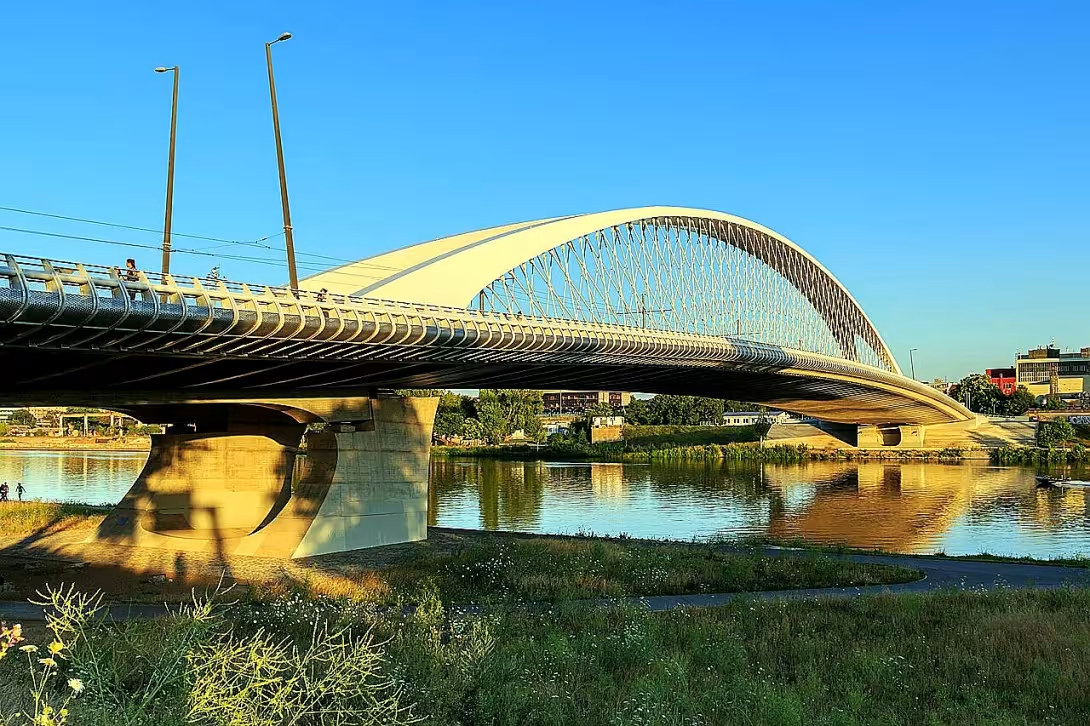
Trojský most is a road and tram bridge with a steel arc structure. The public was festively opened on 4 October 2014 and the traffic came out two days later. The bridge leads from Partisan street in Holešovice to the area of Nové Povltava and Trojská streets in Troy, serving mainly local transport and is connected to the city circuit on the northern foothills. Replaced a long-term interim solution - Trojan tram bridge called "Ramusák," which served here from 1981 until 2013.
The emergence of the modern bridge was a long process. In 2005, the City Council of the City of Prague announced an architectural and design competition, to which twenty proposals were submitted. The winning proposal, which included the first prize of 700 thousand crowns awarded in autumn 2006, came from a team consisting of Jiří Petřák, Ing. Ladislav Šášek from Mott MacDonald Praha, Doc. Ing. Arch. Roman Koucká and Ing. akad. arch. Libor Kabrt. The third prize was won by the authors of two other proposals. Five proposals were put into the second round of the competition, with a total of CZK 2.6 million. The jury of eleven members was composed of representatives of the Municipality, the City and the professional institutions.
The implementation documentation was designed by Mott MacDonald, the steel construction was designed by Excon. The bridge drop project was developed by Doc. Ing. Lukáš Vráblík from Novák & Partner. The construction started in the summer of 2010. The original plans anticipated the opening of the bridge in 2011, later the deadline was planned at the turn of 2013 and 2014. Finally, the real opening took place only in 2014.
The implementation of the project was linked to significant financial changes. The original calculation included the price of the bridge of approximately CZK 400 million, but after the contract with Metrostate, the price increased by CZK 720 million. The construction was carried out in a different form than that contained in the original procurement documents. The Office for the Protection of Competition fined the city of Prague CZK 11 million for infringement of the Public Procurement Act. Praha submitted a decomposition against the Decision on 31 December 2014.
Trojský most today serves as a modern communication connecting the northern part of Prague, which is used daily by car drivers and trams.
Historical milestones
- 2005
- List the architectural competition for the new bridge.
- 2006
- Selection of the winning design of the competition, created by Ing. Jiří Petřík, Ing. Ladislav Šášek, Doc. Ing. Arch. Roman Koucký and Ing. akad. arch. Libor Kábrt.
- 2010
- Opening of bridge construction.
- 2014
- Festive opening of the bridge and closing of operation of the provisional Ramusak.
Architectural development
The bridge is a steel construction with an arc carrier system. The construction included a cross-level intersection at the northern foothold connecting Troja to the City Circle. The implementation documentation was prepared by Mott MacDonald, the steel construction was designed by Excon. The construction was accompanied by political discussions due to an increase in the originally planned price.
Historical events
- 1981
- Start operation of the temporary Trojan Bridge (Ramusak) for trams and road transport.
- 2005
- List of architectural-design competition on the new bridge, which chose the winning solution in 2006.
- 2014
- The opening ceremony of the 4th of October bridge, the operational opening of October 6th.
Owners
City of Praha
Points of interest
- The bridge was ceremonially opened on October 4, 2014, the traffic started two days later.
- Replaced "Ramusak," a temporary Trojan tram bridge that worked here from 1981 to 2013.
- The winning design of the 2006 competition came from the team with Ing. Jiří Petřek, Ing. Ladislav Šášek, Doc. Ing. Arch. Roman Koucká and Ing. akad. arch. Libor Kábrt.
- Construction started in the summer of 2010, originally foreseen opening in 2011, later in 2013- 2014.
Guide
This guide is narrated by a synthetic voice generated by artificial intelligence.
Show guide text
This text was created by artificial intelligence and has not been editorially reviewed. It may contain inaccuracies.
Welcome to Holešovice, one of the most dynamic parts of our headquarters. Stop for a moment, take a breath and look ahead. Right now, you're standing in front of the Trojan Bridge, which is far more than just a common link between the two banks of the Vltava. It is a modern steel arch bridge that connects Holešovice with Troy with its elegant silhouette. Feel its size and the way its structure floats above the river surface. It is a building that combines functionality with aesthetic lizkościa and has become an important element of the northern Prague landscape.
Let us now look together at how this building came into being and why it is so crucial for this place. To understand the importance of today's bridge, we need to go back a few decades. For many years, something has worked here that, while fulfilling its purpose, has never been intended as a permanent solution. It was a so-called Ramusak, a makeshift tram bridge that has served here since the year one thousand nine hundred eighty-one. Imagine that the construction that was supposed to be a temporary solution lasted more than 30 years. The Ramusak was a famous symbol for the Pražans of the provisional but also the necessary artery for transport. The need to replace this old bridge of modern and stable construction has become priorities, leading to the start of the process that you see before you today.
The entire process of the creation of the Trojan Bridge began in the year two thousand and five, when the architectural competition was announced. The city sought a solution that would not only be practical, but would also fit into the architecture of Prague and not look obsolete in the future. In two thousand and six, a winning proposal was selected, which was the result of the cooperation of talented experts. This project was worth a team composed of engineer Jiří Petřej, engineer Ladislav Šášek from the company Mott MacDonald Praha, professor of engineer architect Roman Koucký and engineer of academic architect Libor Kabrt from the architectural office Roman Koucký. These men have opted for a form of steel arch, which is not only solid but also visually attractive.
Now that you're standing at the bridge, pay attention to its material and shape. Notice the dominant steel structure. The steel made it possible to create an arch that carries the weight of the bridge and at the same time gives it that specific, slightly transparent look. See how the bridge fluently connects road traffic to tram tracks. It is a complex transport hub, which must handle thousands of vehicles and trams daily, and yet does not seem cumbersome. The architectural solution that you see has been carefully thought out to minimise the impact on the surrounding environment while maximising traffic permeability in this strategic part of northern Prague.
The construction itself was a difficult process, which started in two thousand and ten. Imagine all the machines, cranes and thousands of tons of steel that were transported to this place. The work lasted several years and required precise engineering planning to avoid a complete distribution of traffic between Holešovicemi and Troy. The height of this process occurred in the year two thousand and fourteen. It was this year that the construction was completed and the opening ceremony followed.
Speaking of personalities connected to this place, we must reiterate the team of architects and engineers. Even though today we may not know the names of the particular workers who feigned these steel beams, their work is seen in every joint and every nye. The work of engineer Petřek, Shašek, architect Koucký and Kabrt is now embodied in this arch that flies over Vltava every day. It's proof of how modern engineering can solve the city's old problems.
And now I'm going to lead you to one interesting thing that may not be visible at first sight, but gives this place a story. The bridge was ceremoniously opened on October 4th in the year two thousand and fourteen. It was a big event, a celebration of modernization of Prague. However, if we read the details, we'll find that the actual traffic on the bridge didn't start until two days later. These two days were probably the last moment of silence and calm before the bridge became part of daily Prague chaos and excitement. At the same time as the opening of the new bridge, the operation of the said Ramusák was definitely over. This act closed one chapter of the Prague provisional and opened the chapter of modern infrastructure.
Now try to imagine the contrast. You stand here and you see this massive yet elegant steel structure. Now imagine the old, provisional bridge that's been standing here since '80s. The difference in stability, aesthetics and driving comfort must be unimaginable. Trojský most is not just about concrete and steel, it is a symbol of transition from old to new, from temporary to permanent.
Now, when you look around, feel how the bridge fits in. Watch how it is reflected in Vltava waters and how its appearance changes depending on the light of day. It is a place where the practical need for transport meets the ambition of architects to create something beautiful. Trojský most reminds us that even as common as crossing a river can be an aesthetic experience thanks to the right design.
Now that you know the story of this place, I suggest you go through the bridge to the end. Feel the rhythm of the trams passing through it, and observe the current of the vehicles heading towards the Troika or back to Holesovice. Follow the details of the steel elements and think about how much work and planning has been done to make this arch so firm today.
Thank you for accompanying me on this short journey through the history and architecture of the Trojan Bridge. I hope that you will like it in Holešovice and in the surroundings of Vltava and that this modern building inspired you to further discover the hidden and visible treasures of Prague. I wish you a pleasant continuation of your journey and a beautiful day spent in our city. I'll say goodbye to you and invite you to explore the area. Goodbye.
Frequently asked questions
Is Trojský most open to the public?
Yes, Trojský most is publicly available. You will find it on the right bank of Vltava in Prague.
How do I get to the place by car / public transport?
You can drive directly to the bridge, parking is available on both sides of the river. The public transport station 'Veleslavin Station' is located not far from the bridge.
How much is the entrance fee and is it paid on the spot?
Admission to Trojský most is free of charge, no fees are payable.
Is the tour suitable for children and seniors?
Yes, a tour of the Trojan Bridge is suitable for all age groups. There are several areas for relaxation and seating, which are also suitable for families with children.
How long does the tour take?
A tour of the Trojan Bridge usually takes 30-60 minutes, but you can spend more time here if you choose to walk around.
What are the opening times and booking is required?
Trojský most is open all year round, open from 6: 00 to 10: 00. There's no need for reservations.
What's interesting in the immediate vicinity?
In the immediate vicinity you will find several historical objects such as Trojan Castle, Petřín and Stromovka. There are also several restaurants and caviar nearby.
For kids
Imagine going back 12 years, until Praha was still a young town and Trojský most wasn't built yet. Imagine that you were small or small at the time, and that you were cheering or cheering on the streets of Prague as if you were in the game.
People have lived in Prague since the 10th century. They were Czech kings who ruled over this land. Praha was then an important city where important negotiations and markets took place. And among them was Trojský most, which connected two sides of the Vltava.
Businesses nearby
Events nearby

Zdroj akcí: otevřená data měst a obcí ČR (Národní katalog otevřených dat) a kalendář akcí Národního památkového ústavu.
Nearby
Around Prague
Accommodation nearby
Trips and activities nearby
Guided tours, tickets and activities nearby from GetYourGuide
Affiliate link: if you buy from the partner, we may receive a commission. The price for you does not change.
Search tours and activities →Themed route
Trojský most Type: bridge Why is it worth a visit: Modern architectural work serves as the main destination of the trip as well as the connecting point with the surrounding transport network and recreational areas.
Trojan Street and Nové Povltava Street Type: road network Why is it worth a visit: These main transport axes are located within 500 metres of the bridge and form a natural connection with other Prague.
Tunel Blanka Type: bridge / water work Why is it worth a visit: The neighbouring major transport structure represents an interesting element of modern engineering in close proximity to the route.
Trojan type: park Why is worth a visit: The natural park and recreation area are located about one kilometre from the bridge and offers a pleasant environment for relaxing and walking in nature.
Seasonal recommendations
Spring in Holešovice awakens the surroundings of the Trojan Bridge into a fresh life, when the ongoing nature along Vltava begins to green and the banks of the river attract to the first long walks without summer heat. The lighting of the bridge in the spring months highlights its modern steel construction early in the morning, when it is often held above the surface by fine herpes, or during the late afternoon. From the point of view of practical advice, this is an ideal period for visiting, because crowds of tourists are not as numerous as in the high season. We recommend wearing layered clothes and a wind-resistant jacket, as spring wind bursts on an open bridge can surprise you, and the best time for arrival is in the morning when it is pleasant to relax.
Summer brings to Trojský most and its surroundings a vibrant atmosphere full of life, accompanied by lush coastal vegetation and setting sun-colored sky into the warm tones of late evening. The specifics of this period are long days and warm nights which directly encourage the evening observation of Prague panorama from the footbridge. Due to the tourist season and local people using the surrounding cycle paths, the place is more busy, so it is best to visit early morning hours before 9: 00 or early after sunset. The practical board commands to protect itself from the sun's headgear, to have enough drinking water and to choose light breathable clothes and comfortable shoes.
Autumn turns the banks of the Vltava under the Trojan Bridge into a colourful palette of shades of yellow, orange and red, creating a unique melancholic atmosphere for the photography of architecture. The lighting of the bridge at this time benefits from earlier dimming, so the artificial lighting of its subtle shapes will stand out in the evening against the darkening sky. Crowds of people are gradually getting thinner, which is appreciated by all the lovers of quieter strays. At the autumn walk it is worth to wear a warm sweater, waterproof jacket and tight shoes, because morning fog can leave the pavement wet, and the best time for admiring the monument is around noon, when warm rays of the sun soften the cool air.
Winter gives the Trojan Bridge a quiet and rugged atmosphere, where the surrounding landscape in Holešovice is resting and the occasional snow dust contrasts with modern grey steel bridge construction. The specific winter months are the early twilight during which the city lights are being lit, reflecting on the surface of the river, and the overall communal character of the whole place. Because feeling temperature may drop significantly on the bridge and adjacent open spaces due to the cold wind from the water, quality winter clothes, hats, gloves and warm non-slip shoes are essential. The best time to visit is the afternoon shortly before dark, when without a great crowd crowd you can safely admire the winter scenery of Prague.
Visualizations and artistic views


The visualisations are generated by artificial intelligence and serve as inspiration.
Photos from the area
Real photos taken near the monument

Zdroj a licence jsou uvedeny u každého snímku.
Tips from visitors
No tips yet. Be the first!
Log in and add your tip.
Sources and literature
Fotografie: A.Savin / FAL — Wikimedia Commons. The author and licence also appear when you hover over the image.
Faktickým podkladem tohoto textu byl článek na Wikipedii, jehož autory jsou přispěvatelé Wikipedie. Článek je dostupný pod licencí CC BY-SA 4.0.
Location on the map


Příběhy a pověsti
Legendy, pověsti a příběhy spjaté s touto památkou

Fotografie návštěvníků
Zatím žádné fotografie. Buďte první, kdo přidá fotografii z návštěvy!
Přihlaste se a přidejte svou fotografii nebo hodnoťte.
Za ověřenou návštěvu v aplikaci získáte víc bodů — poznáme podle GPS, že jste na místě.
Reviews and comments