






Bubenská nádražní vodárna Water structure
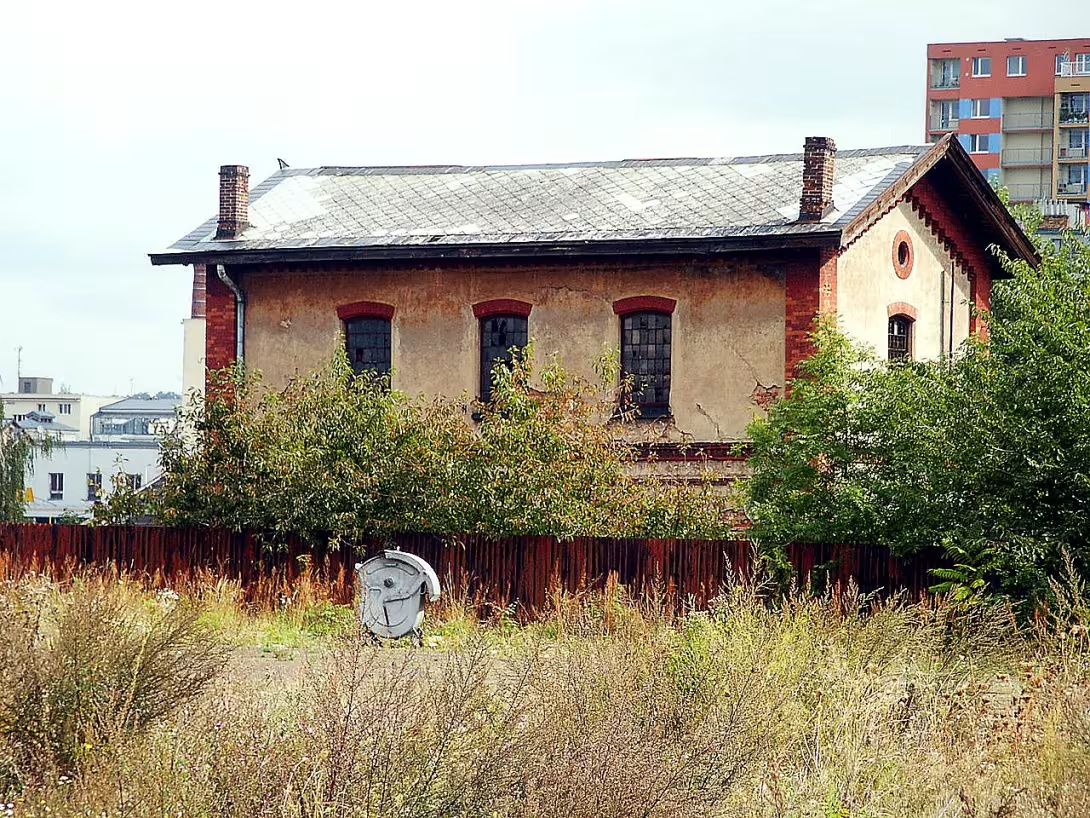
The building stands in Prague-Holešovice on Argentinian street, in the area of the former village of Drum. It was built as part of the extensive workshop complex of station Praha-Drums in 1870-1873. Construction was run by engineer Karl von Ruppert, architects were Wilhelm von Flattich and Karl Schumann. The water plant served practical purpose - it supplied the station workshops with water necessary for the operation and maintenance of vehicles.
The building was based on a typical plan that Schumann and von Ruppert developed in 1869-1870. The same type of construction appears at the railway station in Hrušovany nad Jevišovka, but the water plant in Bubně kept a specific form without side wings.
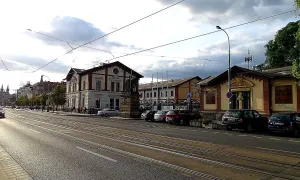
The construction is clearly linked to the railway and industrial history of Prague. The facade consists of a combination of white plaster and red grey masonry, which gives the construction a clean, legible look. They plant pilasters that emphasize vertical lines. In the shield there are round windows in shambrans, supplemented by a tooth cut - this makes the building one of the buildings with some architectural care. There are suprafenestry windows above the windows, and on the ground floor there are repeated round windows in shambles that provide lighting of the interior. The saddle roof is planted with chimneys in the corners.
The inner space had one vital function - water storage. The building contains two riveted tanks with a total volume of 240 cubic metres, which are supported by brick arches around each tank. This solution was typical of railway water plants and ensured the necessary supply of liquid.
In 2004, the Ministry of Culture of the Czech Republic declared the water plant a cultural monument. Since then, it has been among the protected buildings and is on the list of endangered cultural monuments. In 2017, the roof was repaired, which is a signal of attempts to maintain the building. Today, it is a testament to the history of railway infrastructure and industrial architecture at the turn of the 19th and 20th centuries.
Then and now
Drag the slider to compare how the landmark may have looked when it was built with the view today.
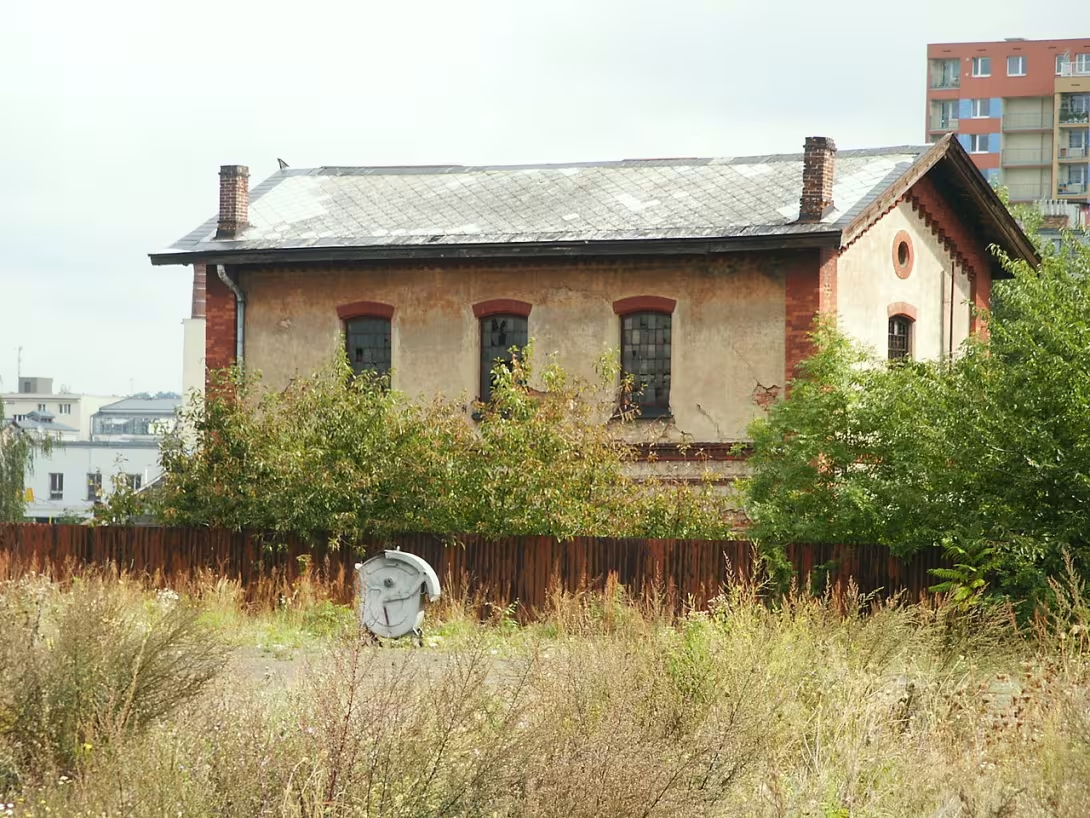
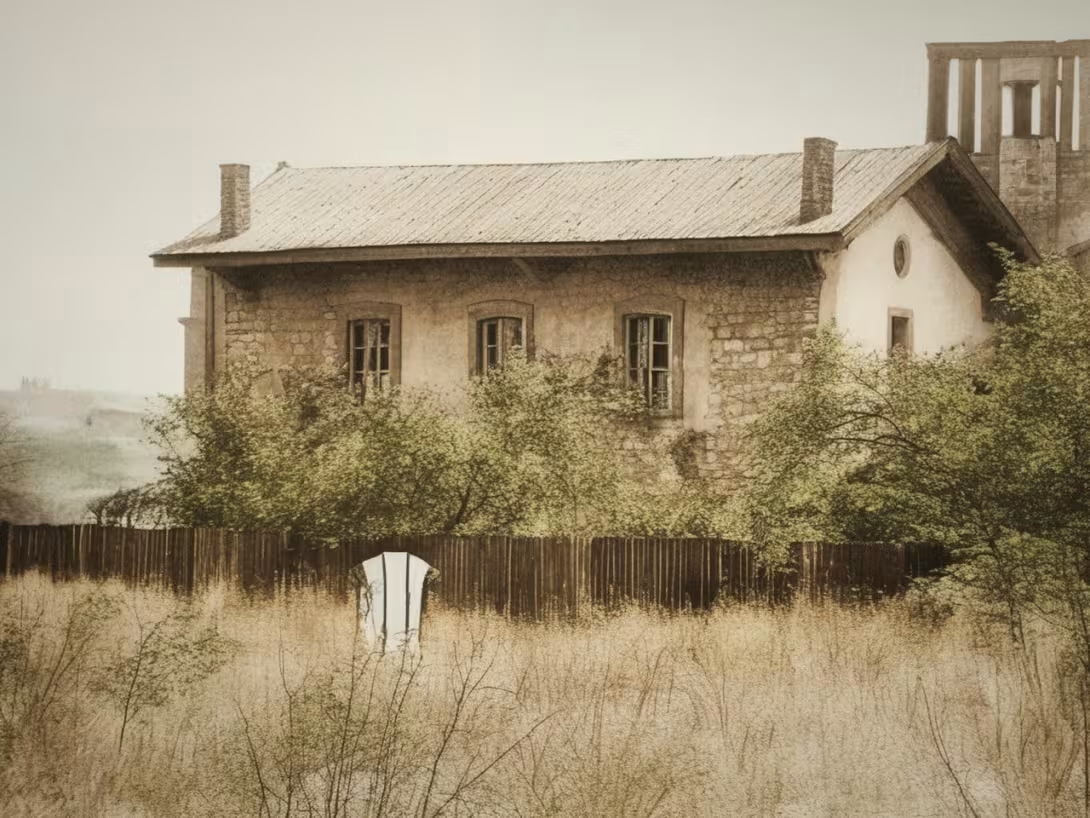
The historical appearance on the left is an AI-generated visualisation and serves as inspiration only.
Historical milestones
- 1873
- Finishing the waterworks.
- 2004
- Declaration for the cultural monument of the Czech Republic.
- 2017
- Roof repair.
Architectural development
The water plant was built according to a typical plan created in 1869-1870 by architect Karl Schumann and engineer Karl von Ruppert. The facade is made by a combination of white plaster and red grey masonry, with pilasters and round windows in the shambles. The internal structure contains two riveted tanks of 240 m ³ supported by brick arches.
Historical events
- 1873
- Finishing the water works.
- 2004
- Declaration for the cultural monument of the Czech Republic.
- 2017
- Roof repair.
Points of interest
- The building stands in Prague-Holešovice on Argentinian street and was built as part of the station Praha-Drum in 1870-1873.
- Construction was run by engineer Karl von Ruppert, architects were Wilhelm von Flattich and Karl Schumann.
- The facade consists of a combination of white plaster and red grey masonry with pilasters highlighting vertical lines, round windows in shambles and suprafenestras.
- The inner space contains two riveted tanks with a total volume of 240 cubic metres which are supported by brick arches.
- The Ministry of Culture of the Czech Republic declared the building a cultural monument in 2004 and has since been one of the protected buildings.
Guide
This guide is narrated by a synthetic voice generated by artificial intelligence.
Show guide text
This text was created by artificial intelligence and has not been editorially reviewed. It may contain inaccuracies.
Welcome! You are standing in front of the Buben Railway Station, a unique historical monument in Prague-Holešovice. Take a look upstairs and observe her walled storey building with a white plaster and red grey masonry. Note the pilastres that decorate the facade and create a harmonious appearance.
Let's move on to the historical context. Bubenská nádražní vodárna was built in 1870-1873 as part of station Praha-Drums. The construction was managed by the engineer Karl von Ruppert, while architects Wilhelm von Flattich and Karl Schumann participated in its design. The water work was designed specifically for the supply of railway workshops with water.
Now pay attention to the architecture of this building. It is a typical plan without wings, which is characteristic of the architectural trends at the time. The facade combines white plaster and red reed masonry, which creates an interesting contrast. Take a look at the facade and note the details that highlight the uniqueness of this place even more.
Bubenská nádražní vodárna has a rich history, but there are not many known personalities that are directly connected to it. Its importance lies rather in architectural and historical value.
The interesting thing is that the building stands in Prague-Holešovice on Argentinian street and was built as part of station Praha-Drum. It is a unique place that offers a view of the past and recalls the importance of railway transport in Prague.
Let's say goodbye to this beautiful monument. Bubenská nádražní vodárna is really a unique place worth visiting. Explore it more, discover its details and take the time to get a full picture of its history and architecture.
Tips for visitors
Best time to visit Drum station water works is the spring and autumn season, when the weather is pleasant for walking and photography. These months offer ideal lighting conditions to capture historical architectural details of the building.
Check current connections and routes in the traffic search engine.
In addition, it may be useful to have a camera to capture architectural details and panoramic view of the surroundings.
Consider shooting at the beginning or end of the day when the light effect is less intense and the details of the building are better visible.
In addition, other monuments such as the buildings in Holešovice, which represent the heritage of the first Czech settlement, can be found nearby.
Frequently asked questions
Can the monument be visited?
This is a structure in a public space that can usually be seen from outside free of charge. We have not verified that this particular one is freely accessible.
Where is the monument?
Location: Argentinská, Holešovice, Praha, Hlavní město Praha. The map on this page shows the exact spot.
Why is the monument protected?
It is listed in the Central List of Cultural Monuments of the Czech Republic as a cultural monument (register no. 101151).
For kids
Imagine going back to the past, when Praha was still a small town and people lived near the Vltava River. There was also this amazing object - Bubenská nádražní vodárna.
How did it look here? Who lived here? What happened here? You turned around, and you saw the village houses where the families that used to feed on agriculture lived. The Vltava River was their viable river, which supplied water for their animals.
Businesses nearby
Do you run a restaurant, accommodation, shop, museum, rental, wellness or other visitor service near this monument? Show yourself directly to the people heading to it — this is how they will see you in the app and on the web:
Events nearby

Zdroj akcí: otevřená data měst a obcí ČR (Národní katalog otevřených dat) a kalendář akcí Národního památkového ústavu.
Nearby
It is located in the area of the former village of Bubny at Argentinian address.
Accommodation nearby
Trips and activities nearby
Guided tours, tickets and activities nearby from GetYourGuide
Affiliate link: if you buy from the partner, we may receive a commission. The price for you does not change.
Search tours and activities →Themed route
Route: Bubenská nádražní vodárna and circumference
1. Bubenská nádražní vodárna (main objective) This waterworks is a unique technical piece that supplies water to the Prague station. Its construction from 1907 shows progress in the field of engineering and building arts. Water works are worth visiting for their unique architecture and history.
2. Jewish cemetery in Holešovice Located near the water plant and offers a view of the history of the Jewish community in Prague. The cemetery is an important monument to Jewish architecture and is worth visiting for its unique tombstones and historical objects.
3rd Štvanice This neighborhood is famous for its historic houses and quiet streets. It is an ideal place to walk and discover local details. It is worth visiting for its peaceful atmosphere and historic atmosphere.
4.Stadium Eden This stadium is the former home of the Bohemian Football Club 1905. It is worth visiting for its history and architecture. It is possible to look at the stadium and see its interior.
5.Railway bridge This bridge connects Holešovice with Prague Centre and offers a beautiful view of Vltava. It is worth visiting for its architecture and history.
Seasonal recommendations
Spring:
The lighting is soft and warm, which creates pleasant conditions for the tour. The best time to visit the water plant is in the morning or early afternoon when there are fewer people and you can see the water plant without a busy crowd. We recommend that you take with you comfortable shoes and a mask so that you can see and breathe well.
Summer:
The lighting is bright and bright, which creates a pleasant atmosphere for the tour. However, if you want to avoid crowds, we recommend to come before the main summer season. The best time to visit the water plant is in the morning or early afternoon, when it is still relatively quiet. Don't build an umbrella with you so you don't mind the weather.
Autumn:
Autumn is the time when nature begins to change colors around the water plant and creates a beautiful autumn color. The lighting is soft and warm, which creates a pleasant atmosphere for the tour. However, since this is the time when the advent period begins, we recommend visiting the water plant before there are spaces full of people. The best time to visit the water plant is in the morning or early afternoon, when it is still relatively quiet. Don't build up your warm clothes so you won't get cold.
Winter:
The lighting is soft and warm, which creates a pleasant atmosphere for the tour. However, since it is a time when it is cold outside, we recommend taking with us warm clothes and shoes. The best time to visit the water plant is in the morning or early afternoon when it is shorter opening time to make you feel better and less people. Don't get your sunglasses on so they don't shine in your eyes.
Visualizations and artistic views


The visualisations are generated by artificial intelligence and serve as inspiration.
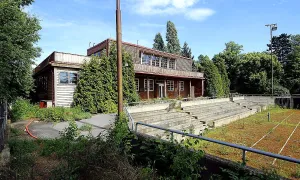
Photos from the area
Real photos taken near the monument


Zdroj a licence jsou uvedeny u každého snímku.
Atmosphere of the place
This atmospheric visualisation of the place and period was generated by artificial intelligence. It is not real footage of the location.
Tips from visitors
No tips yet. Be the first!
Log in and add your tip.
Sources and literature
Photos: JiriMatejicek / CC BY-SA 3.0 — Wikimedia Commons. The author and licence also appear when you hover over the image.
Faktickým podkladem tohoto textu byl článek na Wikipedii, jehož autory jsou přispěvatelé Wikipedie. Článek je dostupný pod licencí CC BY-SA 4.0.
Location on the map



Příběhy a pověsti
Legendy, pověsti a příběhy spjaté s touto památkou
Fotografie návštěvníků
Zatím žádné fotografie. Buďte první, kdo přidá fotografii z návštěvy!
Log in a přidejte svou fotografii nebo hodnoťte.
Za ověřenou návštěvu v aplikaci získáte víc bodů — poznáme podle GPS, že jste na místě.
Reviews and comments