



Kulturní dům Domovina Cultural centre
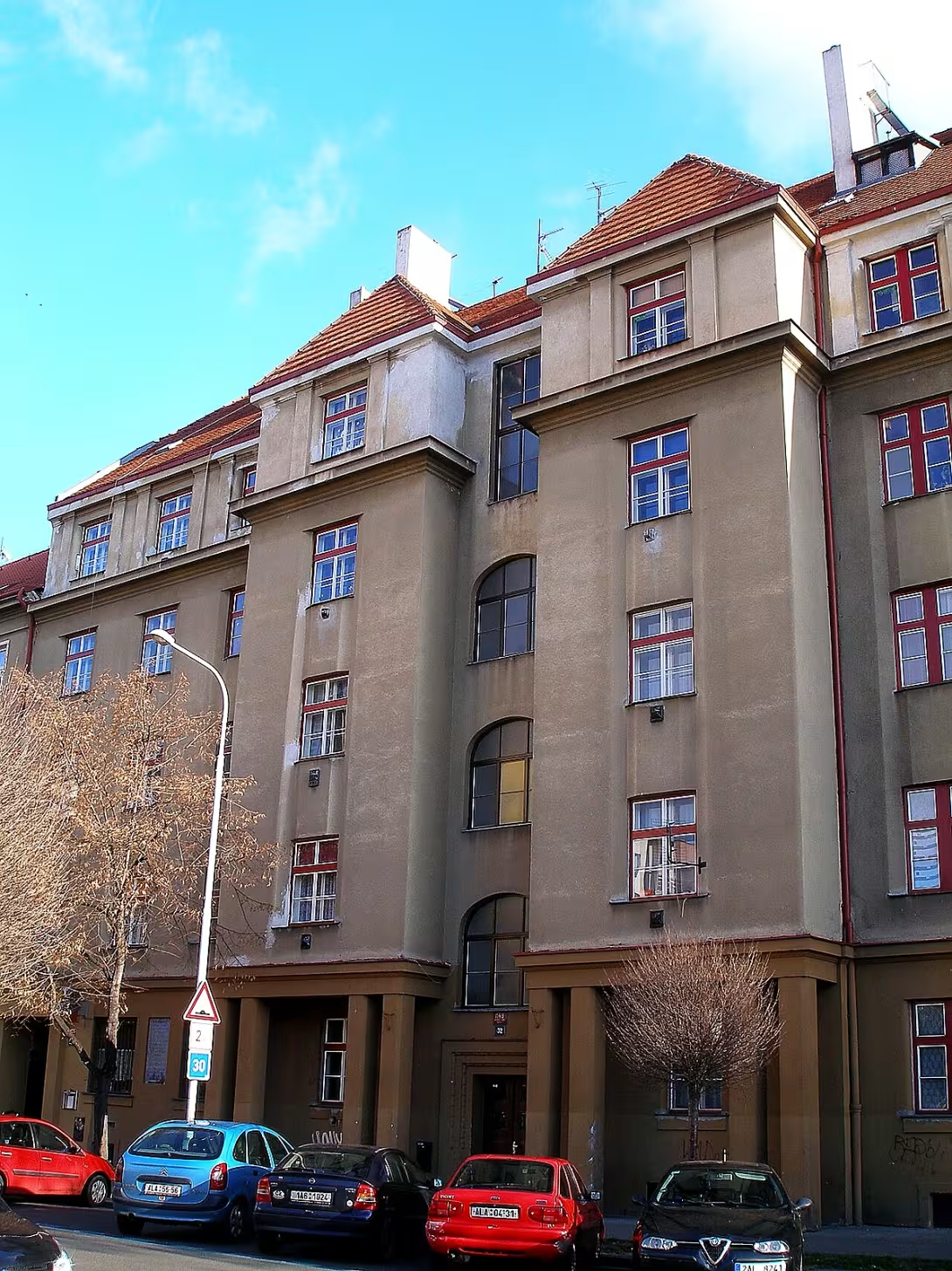
Kulturní dům Domovina is a modernist building in Prague 7-Holešovice, which was established between 1919 and 1922. The building on the corner of the streets of Dělnická and Na Maniny presents an important example of a rental house with a combined function. He served as a cultural centre and housing complex.
The building was established during the period of formation of the first republic for the housing cooperative of railway operators and workers. This period was characterised by the development of new political movements and modern architectural directions. The project was developed by architects Otto V. Máca and Karel Roštík from the famous design office Dusek-Kozak-Máca.
From the point of view of architecture it is a modernist set of houses with numbers describing 1149 and 1525. In addition to the apartments, the building was designed so that cultural activities could take place in its inner block, namely theatre performances. The facade was renovated in 2024.
There are two halls in the building. One of them worked in the cinema Domina between 1922 and 1995. The second hall was the site of a major political event. The 5th Congress of the Communist Party of Czechoslovakia took place here from 18 to 23 February 1929, on which he was elected chairman of the party Klement Gottwald. This event was commemorated in the long term by a commemorative plate on the facade, but it disappeared after the reconstruction of the facade in 2024. The object also includes a recording studio.
Since 1 January 1975, the building is protected as a cultural monument. Today, it stands as a testament to the social and cultural life of the working class in early interwar times.
The monument represents a unique combination of living and culture within one architectural unit. Her visit offers insight into the urban development of the Holešovice district and the history of Czech modernism.
Then and now
Drag the slider to compare how the landmark may have looked when it was built with the view today.
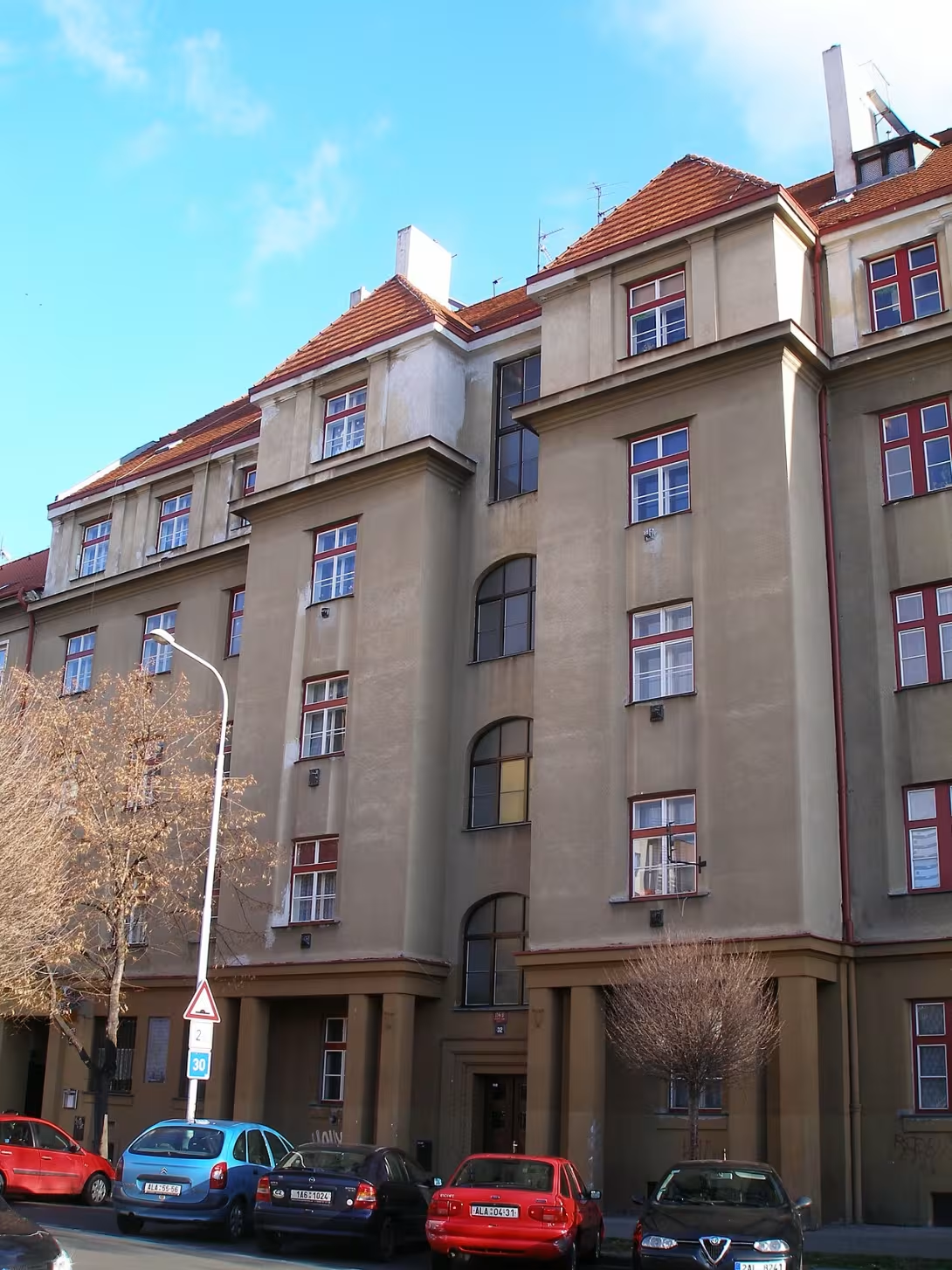
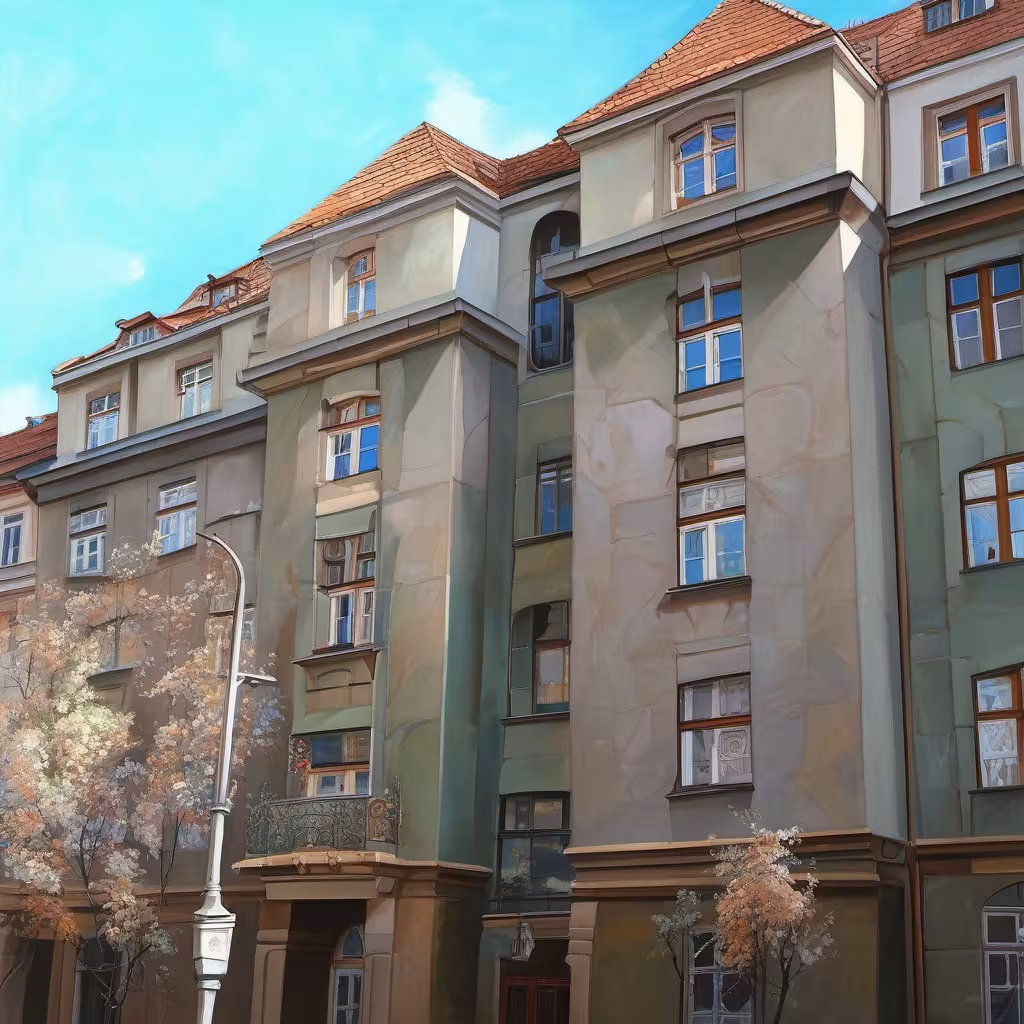
The historical appearance on the left is an AI-generated visualisation and serves as inspiration only.
Historical milestones
- 1919
- Start of building construction
- 1922
- Completion of building construction
- 1929
- The fifth Congress of the Communist Party of Czechoslovakia and the choice of Clement Gottwald
- 1975
- The building was declared a cultural monument
- 2024
- Reconstruction of the building facade
Architectural development
The building was designed by architects Otto V. Máca and Karl Roštík. This is an important example of a rental house with other functions, such as theatre activity in doors. The facade was renovated in 2024.
Historical events
The building was built between 1919 and 1922. The fifth Congress of the Communist Party of Czechoslovakia took place here in February 1929. Since 1975, the building has been listed in the list of cultural monuments.
Points of interest
- The building was built between 1919 and 1922 for the housing cooperative of railway operators and workers. - It was used as a combination of an apartment complex and a cultural centre, where the interblock was used for theatre performances. - In one of the halls worked the cinema Domina between 1922 and 1995. - In February 1929 there was the 5th Congress of the Communist Party of Czechoslovakia, where he was elected chairman of Klement Gottwald. - Since January 1, 1975, the object is protected as a cultural monument.
Guide
This guide is narrated by a synthetic voice generated by artificial intelligence.
Show guide text
This text was created by artificial intelligence and has not been editorially reviewed. It may contain inaccuracies.
Welcome to Holešovice, Prague. You're standing in front of one of the most important construction sites in this part of town, carrying the incredible power of the past decade. The Kulturní dům Domovina stands before your eyes. Feel the atmosphere of a place that is not just an ordinary building, but a living witness to the history that shaped our countries. Look at his range, his face, and how this object floats over the sidewalk, as if he wanted to tell the stories of all the people who walked through him for generations.
To understand why this house is standing right here and why it has such a look, we must return to the time when our country was born and looking for its new form. The construction of this work began in the year one thousand nine hundred nineteen, at a time of great change and hope. This house was not built for rich nobles or industrial magnates, but for the people who formed the backbone of the then state. It was a building designed for a housing cooperative composed of railway orderlies and workers. Imagine the people who were looking for certainty and stability at the time. For them, this house was not only a set of flats, but a symbol of a joint effort to improve life and create a community that shared not only living spaces, but culture and the joy of life. The whole construction process lasted several years and only in the year one thousand nine hundred twenty-two was the whole ambitious project completed.
Now pay attention to the very form of the building that now surrounds you. Notice the clean lines and the overall austerity that is so typical of a style called modernism. This style was not only about beauty, but especially about functionality and how space serves man. Two important creators, architects Otto V. Máca and Karel Roštík were behind this excellent work. If you look at the front of the building now, you can perceive its structure and rhythm. You may notice that her appearance is very fresh and clear, and that's because in the year two thousand and twenty-two, the facade went through an important renewal which gave her her original, pure character back. Feel the harmony between the living area and the cultural space. This building was designed as a complex whole, where private housing was linked to public life.
Let us now move on to the most important and serious moments that have taken place in these walls. The home was not just a home for railway workers, it became one of the most important political points of our state. In a thousand and nine hundred and twenty-two years, cultural life began to develop here, but the real tension and historical break came later. In February in the year one thousand nine hundred twenty-nine there was the fifth Congress of the Communist Party of Czechoslovakia. Imagine the atmosphere, the constant debates, the voices of people who believed that this is where the future of the nation is decided. It was during this convention that Clement Gottwald was chosen. This character and these events left an indelible mark in the building. The home witnessed political decisions that changed the course of our history and that affected every citizen. It is because of this profound significance that the building was declared a cultural monument in the year one thousand nine hundred seventy-five, which reminds us that the walls can bear the weight of events that go beyond everyday life.
But did you know that this building was the heart of entertainment for thousands of people? If you were to go inside now, you might encounter traces of culture that lasted almost a century. There was a Domina theater in one of the halls. It was open to the general public in the years one thousand nine hundred twenty-two until one thousand nine hundred ninety-five. Imagine the series of people in the silence of the halls watching the latest films coming from work to forget about the effort for a while and experience stories on the big screen. It was a meeting place where people laughed and cried together. And perhaps most interesting is how this space transformed. Even though the cinema no longer exists, the building still lives and serves people. Today it is part of a recording studio where new sounds and new stories are created. It is a fascinating combination of old and new - from big political slopes and mass cinema to fine work with voice and music in a small studio.
Now I won't keep you in this space any longer. However, home is a place that deserves to be seen further as you continue your journey. I suggest you stop and watch for a while as this modernist object intertwines with the modern life of the Holešovice district. Every detail, every line on the facade and every shadow on the wall can remind you that history is not just something in the textbooks, but something that surrounds us right now. Thank you for spending this moment with us and for being interested in this important house. I wish you a nice walk through Prague streets and many other interesting discoveries.
Tips for visitors
The best time to visit is during bright days when the sun accentuates the shape of modernist architecture of the building. Transport to Holešovice is possible by car and public connections; Check the current connection in the search engine. When visiting, we recommend taking a photographic machine because the building represents an interesting example of the construction for railway workers. The best pictures are taken from the street level where you can see the whole facade in natural daylight. In the vicinity you can explore the Praha 7 and Holešovice districts. Families with children will appreciate walking around the building and observing urban life in this part of the capital.
Frequently asked questions
Can the monument be visited?
The building is in use (offices, a school, shops and the like). The interior is generally accessible only during operating hours and tours are not usually offered; we have not verified the details. You can see the exterior from the street.
Where is the monument?
Location: Na Maninách 1149/32, Holešovice, Praha, Hlavní město Praha. The map on this page shows the exact spot.
Why is the monument protected?
It is listed in the Central List of Cultural Monuments of the Czech Republic as a cultural monument (register no. 40976/1-1802).
For kids
Imagine coming back 105 years... To Prague, where there was still a young republic and people began to build their city. At that time Kulturní dům Domovina was built, which today is an important cultural institution.
Whenever you walked through the streets of Prague, you had to see his beautiful facade with ornamental motifs and floral views. It was one of the first cultural houses in Prague where concerts, theatre performances and other cultural events took place.
Businesses nearby
Do you run a restaurant, accommodation, shop, museum, rental, wellness or other visitor service near this monument? Show yourself directly to the people heading to it — this is how they will see you in the app and on the web:
Events nearby


Zdroj akcí: otevřená data měst a obcí ČR (Národní katalog otevřených dat) a kalendář akcí Národního památkového ústavu.
Nearby
Praha 7, Holešovice
Accommodation nearby
Trips and activities nearby
Guided tours, tickets and activities nearby from GetYourGuide
Affiliate link: if you buy from the partner, we may receive a commission. The price for you does not change.
Search tours and activities →Themed route
Here is the design of the thematic route:
1. Kulturní dům Domovina (building) - The main destination of the journey where architecture and local culture can be appreciated. 2. Praha 7 (urban area) - A passable space that connects the main target to the surrounding areas. 3. Holešovice (urban district) - You will end the trip by recognizing the character of this part of town.
Seasonal recommendations
Spring: When spring comes, the surroundings of Holešovice come alive thanks to green leaves and blooming trees. The light is soft and rough in this period, which creates a pleasant mood for walking around the building. It's good to wear several layers of clothing, because the wounds can still be cold, while the afternoon gets warmer. The best time to observe the building is in the morning when the air is the cleanest.
Summer: In the summer months there is a strong sun in Prague and long days offer much time for outdoor observation. The mood of the city is alive and hot. I recommend to wear light and breathable fabrics and not forget to protect against sunlight. If you want to escape the greatest heat, choose a walk in the morning or at dusk when the air is more pleasant.
Autumn: Autumn brings gold and brown to the quarter when leaves change their colour. There is often fog that gives the surroundings a Tajemeni touch. It is important to carry a waterproof jacket and stronger shoes in case of rain or wet surface. It is ideal to visit a place in the afternoon when light changes and colors are the most impressive.
Winter: Winter season is characterized by short days and cold, often freezing air. The light is weak and gray, which may seem gloomy, but also still. For comfortable movement around it is necessary to choose very warm clothes, including coat, scarves and caps. The best plan is to plan your stay around noon when daylight is brightest.
Visualizations and artistic views


The visualisations are generated by artificial intelligence and serve as inspiration.
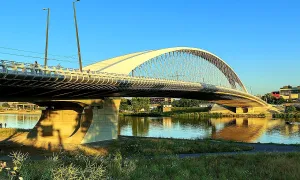
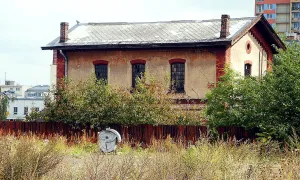
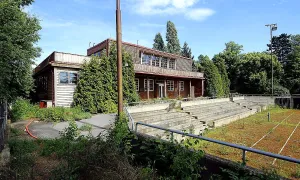
Photos from the area
Real photos taken near the monument

Zdroj a licence jsou uvedeny u každého snímku.
Atmosphere of the place
This atmospheric visualisation of the place and period was generated by artificial intelligence. It is not real footage of the location.
Tips from visitors
No tips yet. Be the first!
Log in and add your tip.
Sources and literature
Photos: Jan Polák / CC BY-SA 3.0 — Wikimedia Commons. The author and licence also appear when you hover over the image.
Faktickým podkladem tohoto textu byl článek na Wikipedii, jehož autory jsou přispěvatelé Wikipedie. Článek je dostupný pod licencí CC BY-SA 4.0.
Location on the map


Příběhy a pověsti
Legendy, pověsti a příběhy spjaté s touto památkou
Fotografie návštěvníků
Zatím žádné fotografie. Buďte první, kdo přidá fotografii z návštěvy!
Log in a přidejte svou fotografii nebo hodnoťte.
Za ověřenou návštěvu v aplikaci získáte víc bodů — poznáme podle GPS, že jste na místě.
Reviews and comments