



Hoštice Chateau
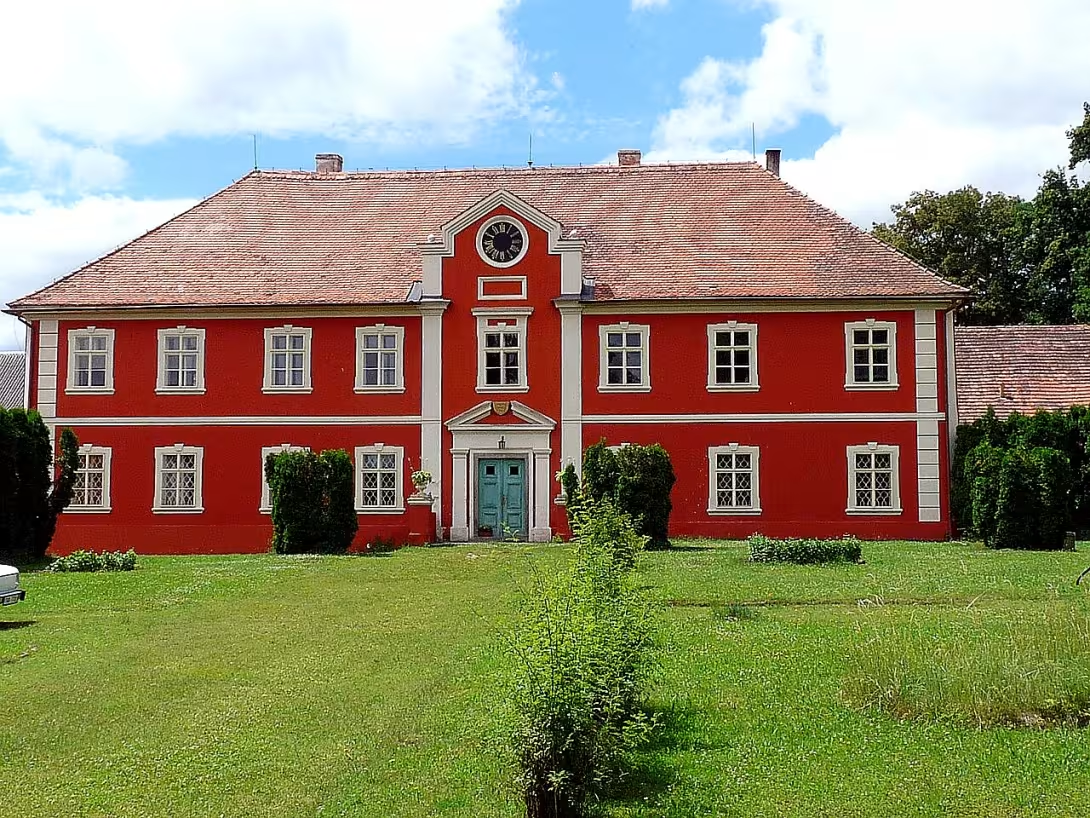
The castle Hoštice is located in the South Bohemia region south of Strakonice in a place where the existence of medieval fortress is expected from the thirteenth century. It is doubtful that there was a noble family of flags from Hoštice, whose first known representative was Držislav z Hoštic in 1274. In 1315, Hoštice became part of the Flemish Departure of Czech Kings together with 26 other villages, which was formally confirmed in 1436 by Emperor Zikmund of Luxembourg.
In the early New Testament Hoštice became the property of leading Czech noble families. In 1552 they were bought by Vilém z Rožmberka, but in 1593 Petr Vok z Rožmberka sold them to Ernest Vitanovsky of Vlčkovice. The Vitanov family lived here for more than one century. Since 1686, the estate became the property of Ladislav Chlumčanski of Vástavlk, who owned them with his family for over a hundred years. In 1777, Chlumčanská realized a partial reconstruction of the mansion in the Baroque style, which determined the appearance of the building today. Later Vojtěch Chlumčanský sold them to his brother Václav Leopold, and in 1799 Jáchym Zádubský ze Šontálu bought the castle. The last significant reconstruction took place in 1870-1880 under Henneberk, whose coat of arms are shown in the frontal tympanon.
The building is presented as a one-storey rectangular building with ground floor rooms encapsulated by cross vaults. The upstairs rooms are equipped with flat ceilings decorated with Fabiums. The original door wings with decorative metal were preserved in the interior. The main dominant of the facade is the risalit with an early baroque entrance portal. The castle area is built on walls and economic buildings and contains stables, a storey granary with a brewery cellar, a barn and a horseman, in which there are raised flat vaults. These economic buildings attest to the former importance of the estate.
The castle area remains a protected cultural object. In the twentieth century, the extension of smaller ports and other building modifications, which took place after 1948, regardless of its historical value. Yet the castle retains the typical features of its Baroque reconstruction and thus testifies to the complicated history of South Bohemian noble settlements.
Then and now
Drag the slider to compare how the landmark may have looked when it was built with the view today.
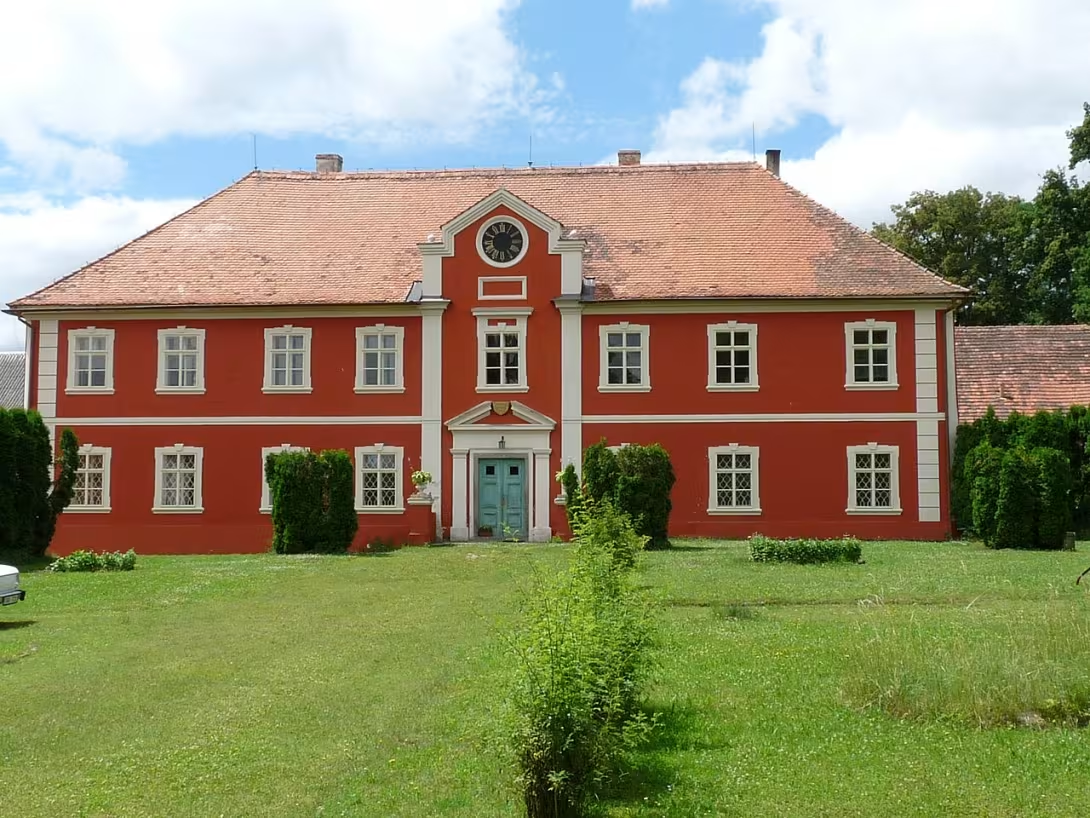

The historical appearance on the left is an AI-generated visualisation and serves as inspiration only.
Historical milestones
- 1870-1880
- Late historical adjustments by the Henneberg family
Architectural development
The castle, originally a medieval fortress, was rebuilt in the Baroque style by the Chlumčansky family from Vastavlk and later modified in the style of historism. The castle area contains a one-storey rectangular building with cross vaults, flat ceilings on the floor and door wings with the remains of fittings. The area is supplemented by economic buildings such as stables, granary, barn and horticulture.
Owners
Parents of Chlumčansky from Vastavlk
Points of interest
- The castle Hoštice is situated on the site of the supposed medieval fortress since the 13th century.
- The first known representative of the noble family of flags from Hoštice was the year 1274 Držislav z Hoštic.
- In 1315, Hoštice became part of the Flemish Departure of the Czech Kings, which was confirmed by Emperor Zikmund of Luxembourg in 1436.
- The last significant reconstruction of the castle under Henneberk took place in 1870-1880, whose coat of arms are shown in the front of the tympanon.
- The castle complex contains economic buildings such as stables, a storey granary with a brewery cellar and a horseman with flat vaults, which shows the former importance of the estate.
Guide
This guide is narrated by a synthetic voice generated by artificial intelligence.
Show guide text
This text was created by artificial intelligence and has not been editorially reviewed. It may contain inaccuracies.
Hoštice is a village south of Strakonice, and the local castle was created by converting an older fortified manor. Its present appearance was mainly determined by a Baroque renovation in the second half of the eighteenth century, carried out by the Chlumčanský family from Přestavlk, and later modifications from the years 1870 to 1880. The entire castle complex is protected as a cultural monument.
A fortified manor probably stood on the site of the castle from the thirteenth century, belonging to the lords of Hoštice. Its first known owner was Držislav z Hoštic in 1274. In 1315, Hoštice together with 26 other villages belonged to the Volyně district of the Czech queens. This status was confirmed in 1436 by Emperor Sigismund of Luxembourg.
The next mention comes from 1552, when Vilém z Rožmberka bought the village. Petr Vok z Rožmberka then sold it in 1593 to Arnošt Vítanovský z Vlčkovic. Members of his family later managed the estate here, including Hynek Jetřich Vítanovský, mentioned in 1681, his widow Johana Magdalena, and Jindřích Vilém Vítanovský. From 1686, Hoštice belonged to Ladislav Chlumčanský z Přestavlk.
The Chlumčanský family held the village for more than a hundred years. In 1777, they partially converted the manor house into the Baroque style. Ladislav's grandson Vojtěch Chlumčanský later sold the estate to his brother Václav Leopold, and in 1799, Jáchym Zádubský ze Šontálu bought Hoštice. The last major renovation took place under the Henneberg family in the years 1870 to 1880. Their coat of arms in a triangular shield above the facade commemorates this work.
In the first half of the twentieth century, small extensions were added to the castle. After 1948, the complex continued to be modified, but without regard for its cultural value.
The castle is a single-storey building with a rectangular floor plan. The rooms on the ground floor have cross vaults, while the rooms on the upper floor have flat ceilings with rounded transitions to the walls. The interior has retained original door leaves including their fittings. The façade is dominated by a protruding central section with an early Baroque entrance portal.
The complex is enclosed by walls and outbuildings. These include stables, a two-storey granary with a brewery cellar, a barn, and a riding stable. The stables and riding stable are covered with flat coffered vaults.
Tips for visitors
The best time to visit the castle Hoštice is in the spring or autumn season when flowers and trees are in their full beauty. This time of the season also offers more pleasant weather for walking around the castle.
You can verify the best connections using an online search engine or mobile travel app.
When visiting the castle, bring comfortable shoes because the terrain around the castle can be uneven. Also remember the protective sun tie or hat and plenty of water, especially in summer.
Photography is one of the main attractions of the Hoštice Castle. The best light for photos offers the period from morning to noon. Special views can be captured from the north side of the castle, where the view of the surrounding landscape is the most prominent.
There are several interesting places to explore in the vicinity of the castle. A distance of about 30 minutes is possible to visit historical villages offering a view of the traditional Czech countryside and its architecture.
Frequently asked questions
Can the monument be visited?
Some buildings of this kind are open for guided tours, others serve another purpose or are privately owned. We have not verified whether and when this monument is open – please ask the operator.
What are the opening hours and admission?
We have not verified the opening hours or admission. Current information is published by the operator.
Where is the monument?
Location: č.p. 1, Hoštice, Jihočeský kraj. The map on this page shows the exact spot.
Why is the monument protected?
It is listed in the Central List of Cultural Monuments of the Czech Republic as a cultural monument (register no. 34647/3-4123).
For kids
Imagine going back to the past, when the village Hoštice was a small town surrounded by walls. The castle, now known as Hoštice, stood at that time as a fortress, a fortress that protected the people from attacks and dangers.
Who lived here? Who was the master of the castle? It was the Chlumčansky of the Prestavelk, a family known for its bravery and courage. They were quietly trying to protect their people and property from attacks by enemy armies.
Businesses nearby
Do you run a restaurant, accommodation, shop, museum, rental, wellness or other visitor service near this monument? Show yourself directly to the people heading to it — this is how they will see you in the app and on the web:
Nearby
Ambient landscape, other monuments, natural elements up to 5 km.
Accommodation nearby
Themed route
Route: Hoštice - Žihobc - Žihobčic - Hoštice
1. Hoštice - lock The castle is worth visiting for its unique architecture and rich history. It is a dominant village and offers a beautiful view of the surroundings.
2. Žihobce - Church of St. Peter and Paul The church is worth a visit for its unique architecture and beautiful decoration. It's an important cultural and historical place.
3. Žihobchice - chapel of St. John Nepomuk The chapel is worth a visit for its unique architecture and beautiful decoration. It's a quiet and religious place.
Seasonal recommendations
Spring:
In the spring season Hoštice is irradiated by sunlight and green trees and flowers around the castle create a pleasant atmosphere. Lighting is natural, nature is in full bloom. We recommend visiting Hoštice in the spring season if you want to take advantage of pleasant temperatures and see the lock in its most beautiful form.
Summer:
In summer Hoštice is in full bloom and visitors can use many possibilities for active relaxation and entertainment. In summer, it is ideal to walk around the green park, which offers pleasant shading and relaxation.
Autumn:
In autumn the Hoštice is surrounded by greenery and yellow-coloured tree leaves, creating a pleasant atmosphere. Lighting is natural and nature is calm. We recommend visiting Hoštice in the autumn season if you want to take advantage of the quiet environment and beautiful natural scenes.
Winter:
In winter, Hoštice is surrounded by snow and winter siege, creating a calm and peaceful atmosphere. We recommend visiting Hoštice in the winter season if you want to take advantage of the quiet environment and beautiful winter scenes. The best time to visit is from 9 a.m. to 15 p.m.
Visualizations and artistic views


The visualisations are generated by artificial intelligence and serve as inspiration.
Photos from the area
Real photos taken near the monument

Zdroj a licence jsou uvedeny u každého snímku.
Atmosphere of the place
This atmospheric visualisation of the place and period was generated by artificial intelligence. It is not real footage of the location.
Tips from visitors
No tips yet. Be the first!
Log in and add your tip.
Sources and literature
Photos: Dana Tvrda / CC BY-SA 3.0 — Wikimedia Commons. The author and licence also appear when you hover over the image.
Faktickým podkladem tohoto textu byl článek na Wikipedii, jehož autory jsou přispěvatelé Wikipedie. Článek je dostupný pod licencí CC BY-SA 4.0.
Location on the map




Příběhy a pověsti
Legendy, pověsti a příběhy spjaté s touto památkou

Fotografie návštěvníků
Zatím žádné fotografie. Buďte první, kdo přidá fotografii z návštěvy!
Log in a přidejte svou fotografii nebo hodnoťte.
Za ověřenou návštěvu v aplikaci získáte víc bodů — poznáme podle GPS, že jste na místě.
Reviews and comments