






Hradec u Stoda Hillfort
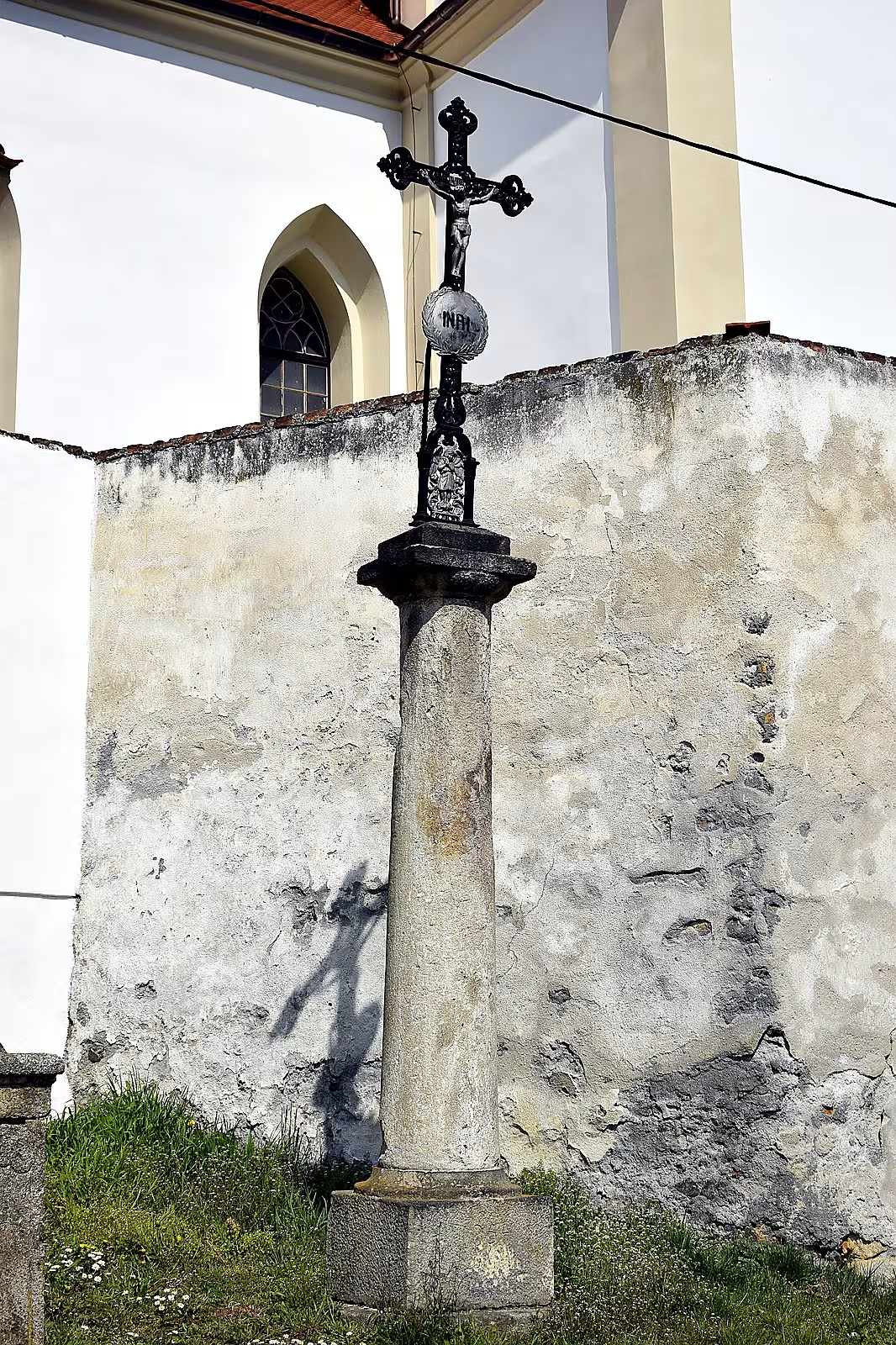
Hradec u Stoda is an early medieval fort in the southwest part of the village of Hradec in the district of Pilsen-south. This archaeological site worked from the tenth to twelfth century and is known for the remains of fortifications which are protected as a cultural monument of the Czech Republic. The site has a high historical value because it was one of the most important early medieval centres in Western Bohemia and was part of the trade route connecting Central Bohemia and Řezn.
The fort at the Stode was established in two main stages. The first one-piece fortification was built around 870, which is confirmed by dendrochronological data. After a massive fire, it disappeared and was replaced by a new two-piece castle, which was probably created in the first half of the tenth century. This transformation was intended to strengthen defence capabilities and increase the strategic value of the site.
Architecturally, it is interesting with its construction of walls made of dry laid stones and woodwork structure. The protective system consisted of moats of less than ten metres wide and forests reaching up to eight metres high on the outside. The younger stage protected an area of over 6 hectares, which included acropolis and the prepaid. The fort was situated on the island between the Radbuza River and the Touškov River, giving it natural defensive advantages.
The historical context of the site is connected with the formation of early medieval state structures in Bohemia. The locality played a key role in the business connection between Central Bohemia and Western Europe. This is evidenced by the existence of two unfortified settlements on its territory. The larger settlement was built in the ninth century and grew to the east, while the smaller one existed from the tenth to the twelfth century.
On the acropolis was built the church of St. Vavranice, which is first mentioned in 1298. It was expanded in 1669 and served as a spiritual centre for residents of the site and the surrounding area. The fort was peacefully abandoned at the end of the twelfth or beginning of the thirteenth century; then some parts of the wall were taken apart as building material.
Today, the fragments of the walls and trenches are preserved here, showing a rich history of the place. Despite modern influences such as the railway line Plzeň -Domažlice, these archaeological findings remain an important monument to the early medieval times. Hradec u Stoda is therefore not only an important cultural object but also a fascinating place for historians and tourists.
Visiting the castle offers a unique opportunity to explore the evidence of early medieval life in Bohemia. It's a place where history and archaeology combine their powers to reveal the secrets of the past. For those interested in the importance of trade routes and defence strategies in the early Middle Ages, this destination is necessary.
Then and now
Drag the slider to compare how the landmark may have looked when it was built with the view today.
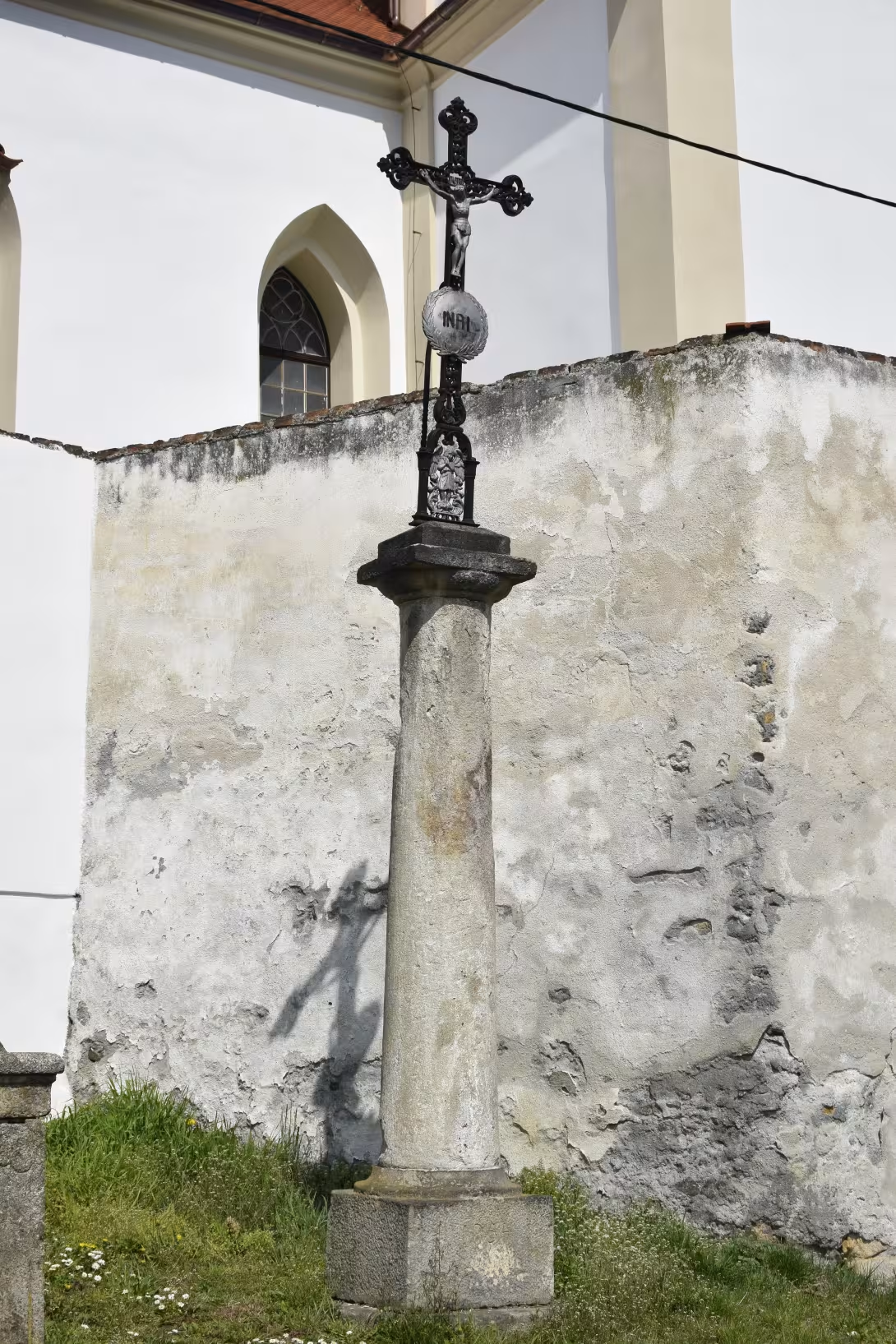
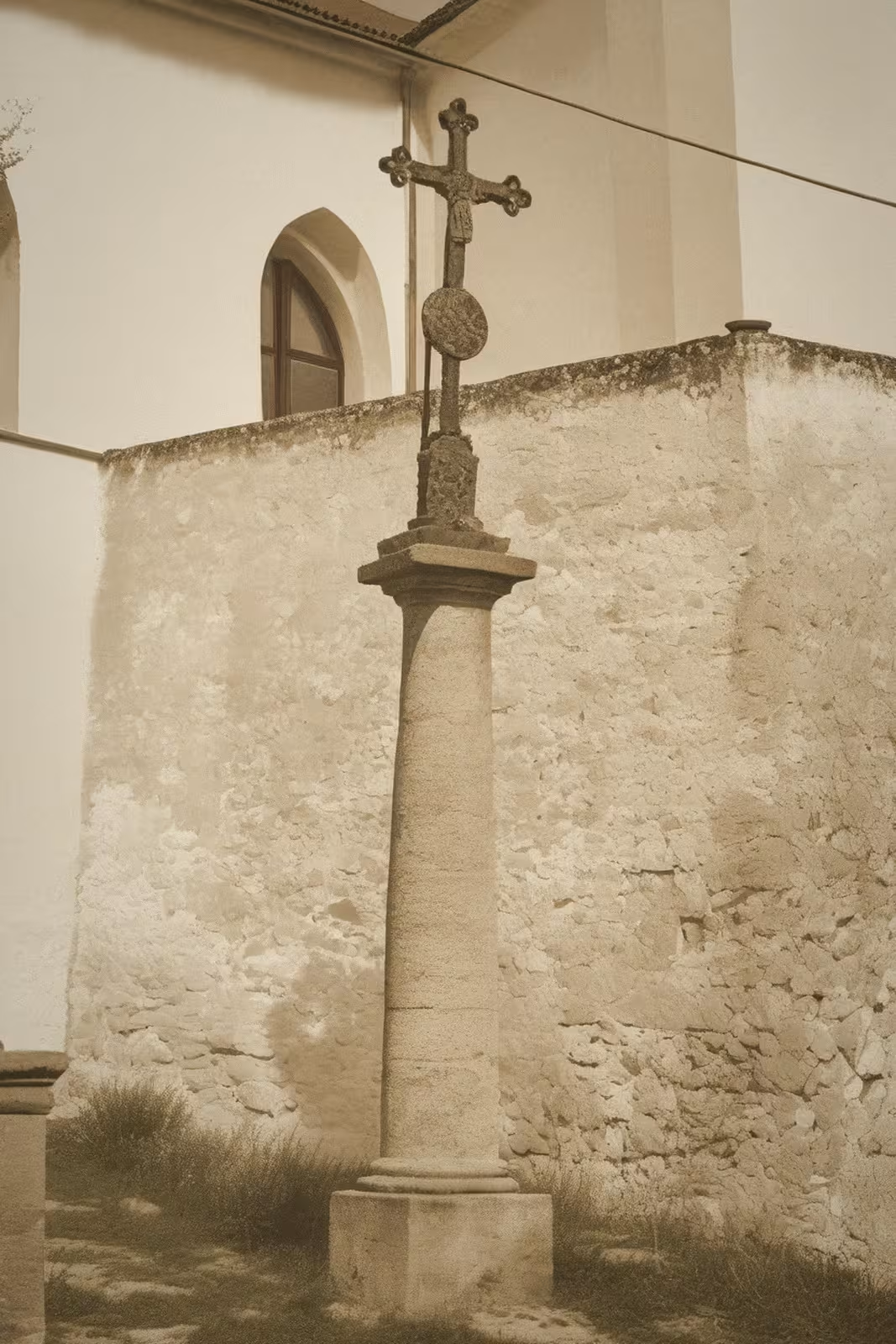
The historical appearance on the left is an AI-generated visualisation and serves as inspiration only.
Historical milestones
- 870
- The creation of an older one-piece fortification according to dendrochronological dating.
- 1298
- The first written mention of the church of St. Lawrence on acropolis.
- 1669
- A significant extension of the church of St. Lawrence.
Architectural development
The fort went through two main stages, with a younger fortification involving acropolis and a prepayment of over 6 hectares. The construction used walls made of dry laid stones and wooden grate elements. The fortification was made up of wide moats and walls reaching a height of up to eight metres.
Historical events
Około in the year 870 was the first one-piece fortification, which later disappeared by fire. In the first half of the tenth century the castle was converted into a two-part system. At the end of the twelfth or beginning of the thirteenth century, the fort was peacefully abandoned.
Points of interest
- Hradec u Stoda is an early medieval castle with fortifications protected as a cultural monument of the Czech Republic. - The locality worked from the 10th to the 12th century and was part of a business trip connecting Central Bohemia to Řezn. - The fort was created in two main stages, the first of which was confirmed by dendrochronological data around 870. - Architecturally, it is interesting with its construction from walls made of dry laid stones and woody grate structure. - The church of St. Lawrence, first mentioned in 1298, was built on the acropolis.
Guide
Show guide text
This text was created by artificial intelligence and has not been editorially reviewed. It may contain inaccuracies.
Welcome to the place where time has stopped and where every layer of the country touches thousands of years of history. You're standing in front of the Hradec u Stoda archaeological site. Before you take another step, stop for a moment and feel the surrounding landscape. Look around you and feel this strange atmosphere. You are in a sharpness, high ground, which was chosen precisely to offer protection and views. Can you feel the gentle breeze and hear the sound of water? You are surrounded by a living world, but at the same time you stand in the heart of a place that was the key point for our ancestors centuries ago. This location, situated between the flow of the Radbuzka River and the Touškov River, was not chosen by accident. The water here served as a natural barrier, as the first line of defense that protected everything that happened within these borders.
Let us now move further into the past together and understand why this place is so special. Hradec u Stoda was not just an ordinary residence. In the tenth to twelfth century it was an important early medieval castle in western Bohemia. Imagine a period when power structures were still forming and security was the key to survival. This fort was not an isolated island, but a strategic junction. It stood directly on the important trade path that connected Central Bohemia to the city of Řezno. Imagine the endless columns of cars, merchants with valuable goods, knights and pilgrims passing through here. Hradec u Stoda was a point of orientation for them, a safe port and a place where different cultures and interests met.
If you look at the very structure of this place, you can realize how much effort people have made to build it. The first, the older stage of the fortification, was built around eight hundred and seventy. This is demonstrated by modern science using a method called dendrochronology, which studies the planetary circles of wood. This means that this place was fortified much earlier than most people can imagine today. This first phase was one-piece, but over time the fort developed, becoming more complex and more resilient. Now pay attention to what you can see right in front of you. Although most of the original buildings had long since died and remained fragments, these remnants of the walls are still a tangible trace of ancient architecture. Feel their textures, their informal malleability, which tells us about the technologies and materials that people used to protect their home at the time.
Now our attention must move to the highest points of this castle, its acropolis. It is here, in the most important place, during history that the spiritual centre has settled. The first written mention of the church of St. Lawrence dates back to a thousand two hundred ninety-eight. Even though you no longer see his original building directly today, his presence here was absolutely crucial. The church wasn't just a building, it was a symbol of stability, community and faith. In the year six hundred and sixty-nine, there was a significant expansion, which shows how deeply this site was rooted in local society and later times. Imagine the ringing of these church bells that were carried through the valley and signaled to the people in the area that they were safe or that the time of prayer was coming.
Perhaps now you'll wonder who the people who lived here were. Even though history has not given us the names of particular kings, warlords or wealthy merchants, we can imagine them very closely thanks to archaeology and historical context. We can imagine the craftsmen who worked here in peace, the guards on the walls who watched at night and followed the movement on the business road, and the families who sought refuge here from danger. Every stone you see here has been laid by the human hand to create something lasting. These are the stories of the anonymous heroes of everyday life whose quest for security and prosperity defines us today.
But there is also one fascinating mystery that gives this place an even deeper dimension. Archaeological research has confirmed that the strategic importance of this site is not limited to the Middle Ages alone. The traces found here by scientists indicate that this place was already significant in the Bronze Age. That's an incredible fact. This means that people here were looking for protection and strength thousands of years before the first medieval walls were built. How come after thousands of years, people kept coming back here? What must have been so attractive in this country that people from different epoch considered it key? This continuity of space use is something you must be fascinated by in your next survey. It's like an invisible thread that connects ancient settlers to those who built walls here in the eighth century.
Now I urge you to continue your search of this archaeological site. Let yourself drift through the atmosphere of this place, feel the connection between water, land and invisible history that lies under every step. Take a look at the wall fragments, see the acropolis space, and try to imagine what this place looked like at the time of its greatest glory, when the footsteps of the merchants were rumbling and in the distance the sounds of life on a business trip to the Cut. Every detail you see here is part of the great puzzle of human history. Thank you for choosing to visit this story and become part of it. We wish you a pleasant and inspiring discovery of the secrets that Hradec u Stoda still hides.
Tips for visitors
The best time to visit Hradec u Stoda is in the spring or autumn period when vegetation is less dense and access to the site easier. These months also offer beautiful lighting conditions for shooting historical ruins.
Parking is located near the Radbuzy River, where it is possible to park cars. For those who wish to use public transport, the place is also available from Pilsen or other surrounding municipalities. Check the current connection and transport options before visiting.
When planning a trip, remember comfortable clothes, shoes suitable for walking on uneven terrain and sun protection. A map or GPS device can also be added to help you navigate the location.
Photography here is great especially in the early morning or in the evening when light is softer and shadows more. The best places for photos are the horizons of the castle near Tasnovice or the western side of ruins, where the historical nature of the sites is captured in an excellent way.
In the vicinity of the Hradec near the Stoda you can visit the old Plzeň and the church of St. Vavrnice. These places offer interesting cultural experiences that can complement your trip. For families with children it is advisable to visit the castle near Tasnovice, where children can imagine the life of early medieval inhabitants.
Businesses nearby
Do you run a restaurant, accommodation, shop, museum, rental, wellness or other visitor service near this monument? Show yourself directly to the people heading to it — this is how they will see you in the app and on the web:
Events nearby
Zdroj akcí: otevřená data měst a obcí ČR (Národní katalog otevřených dat) a kalendář akcí Národního památkového ústavu.
Nearby
Radbuza River, Touškov River, the castle near Tasnovice, the old Pilsen River and the church of St. Lawrence.
Accommodation nearby
Trips and activities nearby
Guided tours, tickets and activities nearby from GetYourGuide
Affiliate link: if you buy from the partner, we may receive a commission. The price for you does not change.
Search tours and activities →Themed route
1. Stary Plzeň , historical territory. Ideal place to start a trip and explore the old parts of the city. 2. Church of St. Vavrine, sacral monument. It is worth visiting for its architecture and historical importance. 3. Hradiště u Tasnovic, archaeological place. It offers the opportunity to explore ancient settlements in this area. 4. Hradec u Stoda, archaeological site. The main destination of the trip where important historical clues can be discovered. 5. River Radbuza, water flow. It provides a pleasant environment for a peaceful ending to the journey.
Seasonal recommendations
Spring brings fresh energy and awakening vegetation to the archaeological site, which gradually covers the stone remains of the greenery. The lighting is soft and pleasant during this period, creating ideal conditions for observing details without sharp shadows. We recommend taking layered clothes because the weather can be very variable at this time. It's the perfect time for those who seek peace and want to escape the summer crowds.
In the summer months the atmosphere is very intense and the sun illuminates every part of the ruins. But high temperatures and bright light can be challenging, so it is best to arrive first thing in the morning to avoid the greatest heat and the greatest rush of people. For comfortable terrain, choose light, breathable clothes and don't forget the cap and enough drinking water.
Autumn brings a melancholy mood and mystery to the Castle at the Stode, which underlines the fog and the colour of leaves. The atmosphere is very calm and deep in this period. Due to increased moisture and rain it is necessary to wear waterproof footwear and laminated clothing. The best time to visit is afternoon hours when the sun shines down and the landscape gets a golden touch.
Winter offers raw and quiet beauty, where frost or snow emphasizes the age value of these ruins. In this period, it is the most lonely, which will be appreciated by lovers of history seeking complete peace. Due to lower temperatures and shorter days it is necessary to take very warm clothes and plan a visit in clear hours. However, be careful when moving around, because stone surfaces can be slippery due to ice.
Visualizations and artistic views


The visualisations are generated by artificial intelligence and serve as inspiration.
Photos from the area
Real photos taken near the monument


Zdroj a licence jsou uvedeny u každého snímku.
Tips from visitors
No tips yet. Be the first!
Log in and add your tip.
Sources and literature
Faktickým podkladem tohoto textu byl článek na Wikipedii, jehož autory jsou přispěvatelé Wikipedie. Článek je dostupný pod licencí CC BY-SA 4.0.
Location on the map
Příběhy a pověsti
Legendy, pověsti a příběhy spjaté s touto památkou
Fotografie návštěvníků
Zatím žádné fotografie. Buďte první, kdo přidá fotografii z návštěvy!
Přihlaste se a přidejte svou fotografii nebo hodnoťte.
Za ověřenou návštěvu v aplikaci získáte víc bodů — poznáme podle GPS, že jste na místě.
Reviews and comments