






Hradišťátko Hillfort
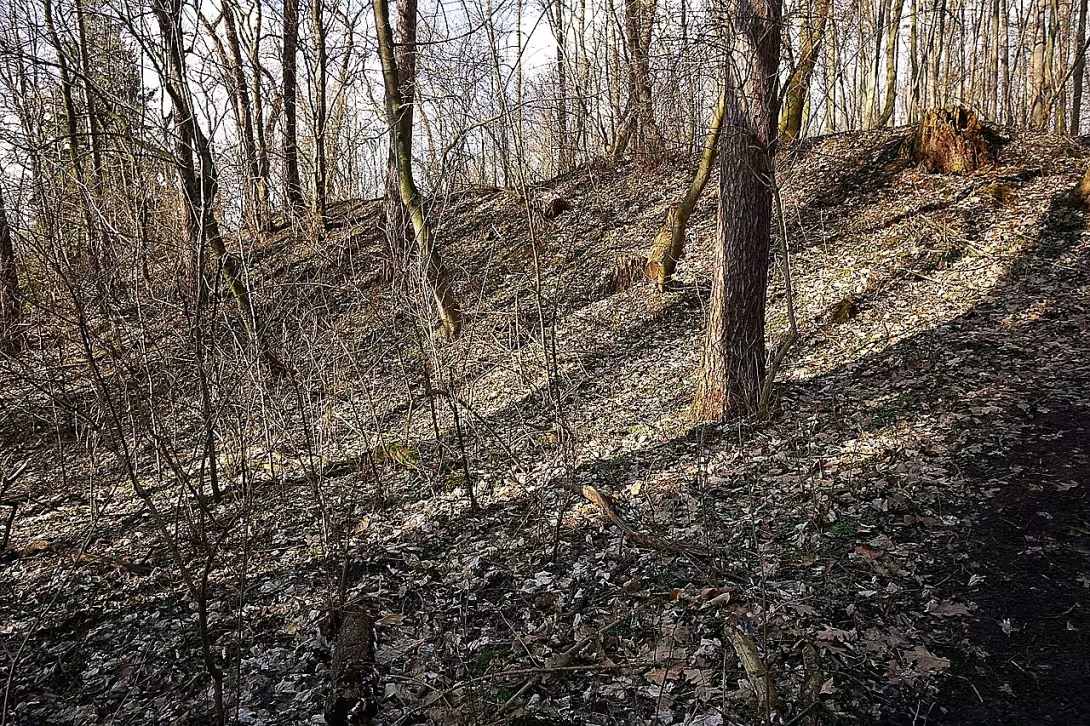
Hradišťátko is an early medieval castle on the island above the Břežanské creek near the village Dolní Břežany in the Praha- west district. The area of 1.73 hectares was inhabited in the tenth century and is today protected as a cultural monument. The importance of the site lies mainly in the short period of its existence and in the role that it probably played within the imaginary castle system.
Historical sources suggest that the castle was created in the second third of the tenth century, i.e. during the expansion of Prince Běslav I. It is assumed that the site served as a supporting point in the Přemyslovská domain. By its location, the fort could provide protection of the road to the Vltava ford near the Warmlav. There are also hypotheses that its foundation was related to gold mining in the area. According to the revision of the dating of the archaeologist Ladislav Varadzin from 2010, the fort ceased in the third period of the tenth century.
The building form of the castle is trapezoidal. It uses the natural protection of the steep slope of the valley of Břežanský creek and the two ravines in the south and west. The original wall was approximately five metres wide. It was made up of dry-laid stones with a thickness of between 1.4 and 1.8 metres, a back wall of fossils and an inner space filled with stoneware. The outside of the fortifications were protected by a moat of 8.5 metres wide and 2.4 metres deep. In the second construction phase this structure was compared and replaced by a sprinkled bead with a palisade on top.
Experts learned of the existence of the site in 1860, when it was presented at the meeting of the National Museum of Archaeology. Systematic research took place here only in the second half of the 1980s under the leadership of Vladimir Four. On the basis of the pottery findings at the time, he dated life on the castle to the eleventh century. However, this determination was later revised by Ladislav Varadzin, which drew attention to the lack of supporting evidence for the inclusion of the second construction phase in that period.
Today, the remains of the fortifications, especially the fortifications on the east and southwest side, are visible in the field and reach an altitude of 2.5 to 2.8 metres. The original entrance to the premises was located in the south, while the modern access route leads from the east. The location is freely accessible and offers the possibility of exploring preserved elements of early medieval fortification. Visiting this place allows direct contact with the history of the imaginary expansion and demonstrates the importance of the then castle system for the administration of the Czech territory.
Then and now
Drag the slider to compare how the landmark may have looked when it was built with the view today.
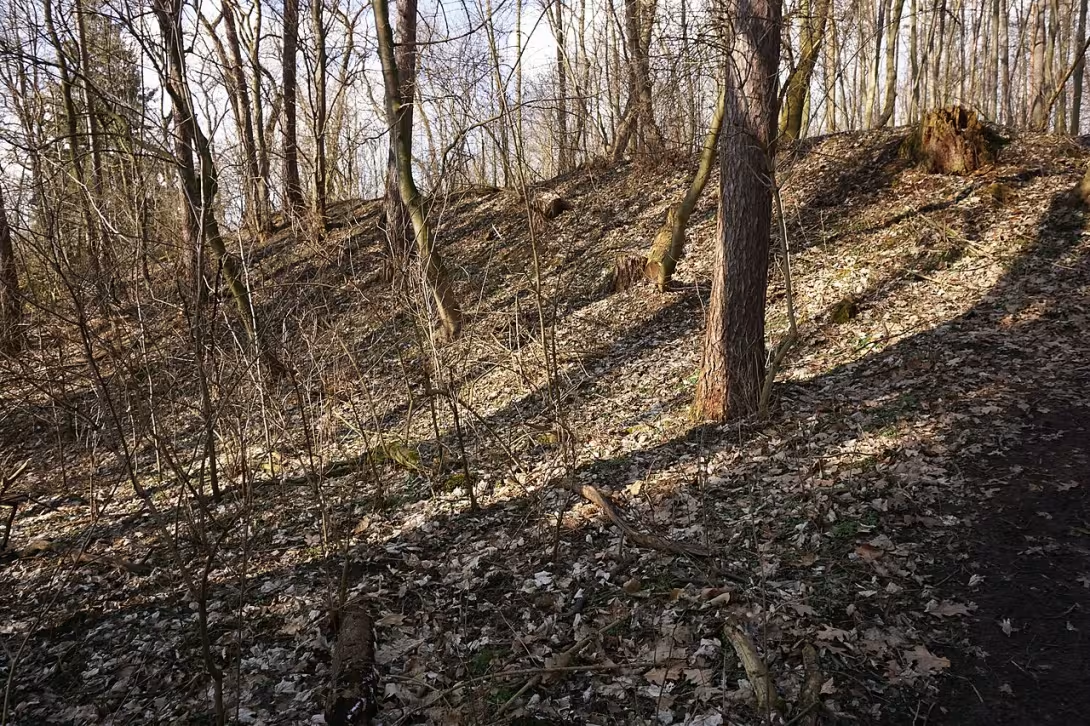
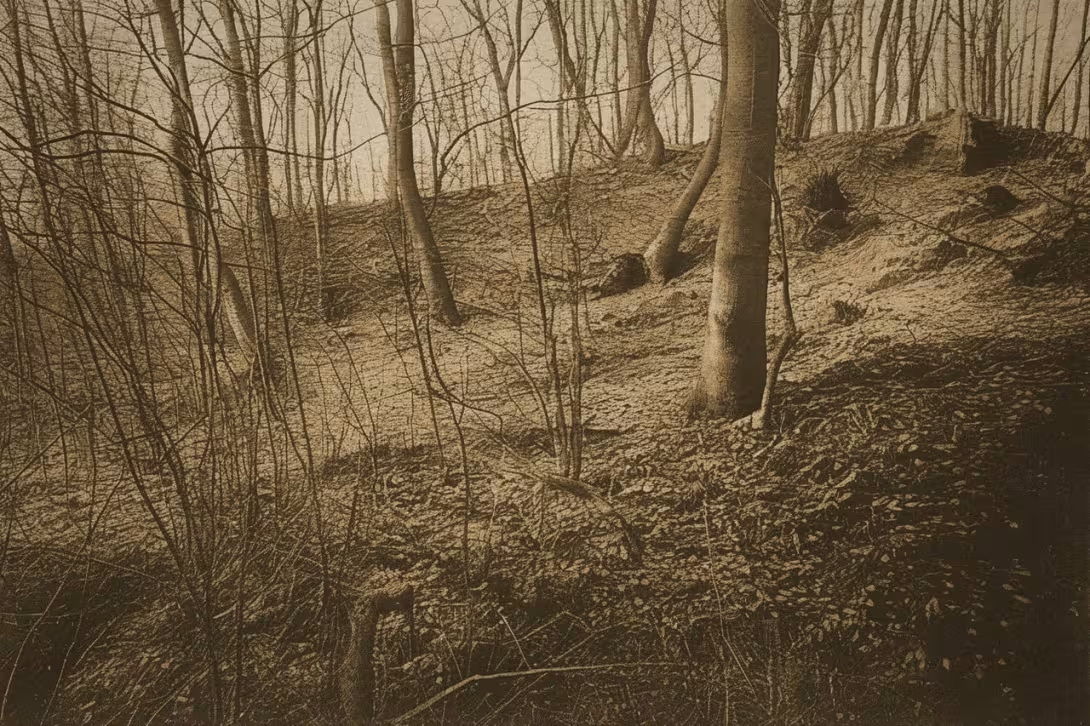
The historical appearance on the left is an AI-generated visualisation and serves as inspiration only.
Historical milestones
- 1860
- The first performance of the fort at the National Museum Archaeological Choir meeting.
- 1980
- Opening of archaeological research under the leadership of Vladimir Čtverák.
- 2010
- Ladislav Varadzin published a revision of the date of the castle into the second third of the tenth century.
Architectural development
The original wall was five metres wide and formed by a front wall from dry laid stones with a back wall from the fossils. In the second construction phase, this structure was galvanized and converted into a covered wall with a palisade on top. The entire perimeter was protected by a ditch that was 8,5 meters wide.
Historical events
1860: The first performance of the castle at the meeting of the National Museum of Archaeology. 1980s: Archaeological research led by Vladimir Four.
Points of interest
- The fort has an area of 1.73 hectares and was inhabited in the tenth century. - The building form of the castle is trapezoidal and uses natural protection of steep slope and two gallows. - The original wall was approximately five metres wide and formed a front wall of dry laid stones, a back wall of fossils and an inner space filled with stone. - In the second construction phase the original construction of the wall was compared and replaced by a sprinkled valley with a palisade at the top. - Experts learned of the existence of the site in 1860 when it was presented at the meeting of the National Museum of Archaeology.
Guide
Show guide text
This text was created by artificial intelligence and has not been editorially reviewed. It may contain inaccuracies.
Welcome to the historic site Hradišťátko in Lower Břežany, where you stand before the remnants of the early medieval castle. Before you is a place full of secrets and historical stories waiting to be revealed. Hradišťátko boasts an area of 1.73 hectares with a trapezoidal plan, which you will notice when you first look at this interesting piece of history. He uses the natural protection of the steep slope and the two gorge, which gave him a strategic advantage.
Let's dive into his history. The fort was inhabited during the tenth century and probably served as a premeditated supporting point in the family domain. His job was to protect the road to the Vltava ford near Bishlav, which was very important for the time being. The first mention of the castle appeared at the meeting of the Archaeological Choir of the National Museum in 1860, but only in 1980 began the first archaeological research under the direction of Vladimir Čtverák. In 2010, Ladislav Varadzin published a revision of the castle dating into the second third of the tenth century, giving us a clearer picture of its origin and purpose.
Look up at the remains of the original wall. It had a wide front wall made of dry laid stones, which was protected by a back wall made of fossils and an inner band-aid. This architectural detail shows the skills of the then builders and their ability to use the available materials to create a strong and durable fortification.
The key figures associated with Hradištík include Boleslav I., who was one of the first rulers to use the castle for their purposes. Vladimír Čtverák and Ladislav Varadzin are two archaeologists whose work helped clarify the history and chronology of this place.
Now notice the interesting thing: the castle was designed to use the natural protection of its environment. The steep slope and ravine not only provided a defensive advantage, but also ensured the safety of the population. This detail shows the strategic thinking of then people and their ability to adapt to the environment.
By inviting you to further explore, he left you here with historic dust, which helps us understand the life of our ancestors. I hope your visit to Hradištětka was interesting and full of discoveries. If you are interested in other historical rooms or archaeological secrets, do not hesitate to look at the offers of the National Museum. Goodbye and have a nice day!
Tips for visitors
The best time to visit is during spring or autumn months when vegetation is not so dense and the terrain inequalities of the castle are better visible. In summer the site may be overgrown, making it difficult to move and observe archaeological elements.
You can easily walk to the location from the village Dolní Břežany. Parking can be used on public areas in the village, from where it leads to the castle marked path. For current transport possibilities by public transport we recommend using the connection search engine.
We recommend fixed shoes for the field and suitable clothes as you move in the natural area. Don't forget to pack enough fluids and snacks because there are no service or sales stalls on the site itself.
For photography is ideal early morning or late afternoon, when the oblique sunlight highlights reliefs of waves and ditches. The best shots will be taken from the high places of the island, where the view of the valley of Břežanský creek opens.
For families with children, the place is suitable for a short trip related to history. In the surrounding area you can visit the picturesque valley of Vltava or walk along the Břežanská creek, which offers a pleasant natural walk suitable even for smaller children.
Businesses nearby
Do you run a restaurant, accommodation, shop, museum, rental, wellness or other visitor service near this monument? Show yourself directly to the people heading to it — this is how they will see you in the app and on the web:
Events nearby
Zdroj akcí: otevřená data měst a obcí ČR (Národní katalog otevřených dat) a kalendář akcí Národního památkového ústavu.
Nearby
Břežanská potok, Vltava valley, village Dolní Břežany.
Accommodation nearby
Trips and activities nearby
Guided tours, tickets and activities nearby from GetYourGuide
Affiliate link: if you buy from the partner, we may receive a commission. The price for you does not change.
Search tours and activities →Themed route
1. Dolní Břežany, municipality. A suitable place to start the route and prepare for a walk. 2. Brejan stream, water flow. The road along the shore offers a peaceful atmosphere in nature. 3rd Valley of Vltava, the landscape unit. The large areas by the river provide beautiful views of the surroundings. 4. Hradišťátko, archaeological site. The main destination of the trip, which will lead you to the knowledge of historical clues.
Seasonal recommendations
Spring brings to the archaeological site freshness and fine, molten light, which beautifully highlights the surface of old stone remains. Fresh greenery are starting to erupt around the ruins, creating an interesting contrast between nature and history. For this time of year we recommend layered clothing because the morning cold can quickly rotate with the heat of the sun. The best is to visit the place early in the morning when the air is the cleanest and there are not so many people around.
In the summer months, the mood is the most vivid, but high grass and dense vegetation can partially cover parts of the ruins. The sun shines the strongest, so it is necessary to bring a headgear and plenty of water. Due to increased interest in the main summer season, it is advisable to arrive as early as possible in the morning to enjoy your peace and avoid the greatest temperature peaks.
Autumn brings a calm sadness and mystery to the castle thanks to morning fog, which is lazy rolling around the remains of the buildings. The golden and red colours of the leaves create ideal sets for photography. Due to wet terrain and slippery roads, it is recommended to choose waterproof shoes and a practical jacket. The afternoon light in this period is the most noble and best highlights the shapes of ruins.
Winter offers raw beauty and deep silence, where bare branches of trees and any snow cover highlight the very skeleton of the site. The atmosphere is the lightest, but also the quietest. It is necessary to prepare for strong wind and cold, so choose very warm and wind-resistant clothes. Due to short days, plan a visit so that the sun doesn't set you up before you can finish the tour.
Visualizations and artistic views


The visualisations are generated by artificial intelligence and serve as inspiration.
Photos from the area
Real photos taken near the monument


Zdroj a licence jsou uvedeny u každého snímku.
Tips from visitors
No tips yet. Be the first!
Log in and add your tip.
Sources and literature
Fotografie: MartinVeselka / CC BY-SA 4.0 — Wikimedia Commons. The author and licence also appear when you hover over the image.
Faktickým podkladem tohoto textu byl článek na Wikipedii, jehož autory jsou přispěvatelé Wikipedie. Článek je dostupný pod licencí CC BY-SA 4.0.
Location on the map
More monuments – Dolní Břežany
Show all in the municipality
Příběhy a pověsti
Legendy, pověsti a příběhy spjaté s touto památkou
Fotografie návštěvníků
Zatím žádné fotografie. Buďte první, kdo přidá fotografii z návštěvy!
Přihlaste se a přidejte svou fotografii nebo hodnoťte.
Za ověřenou návštěvu v aplikaci získáte víc bodů — poznáme podle GPS, že jste na místě.
Reviews and comments