



hradiště Doudleby Hillfort
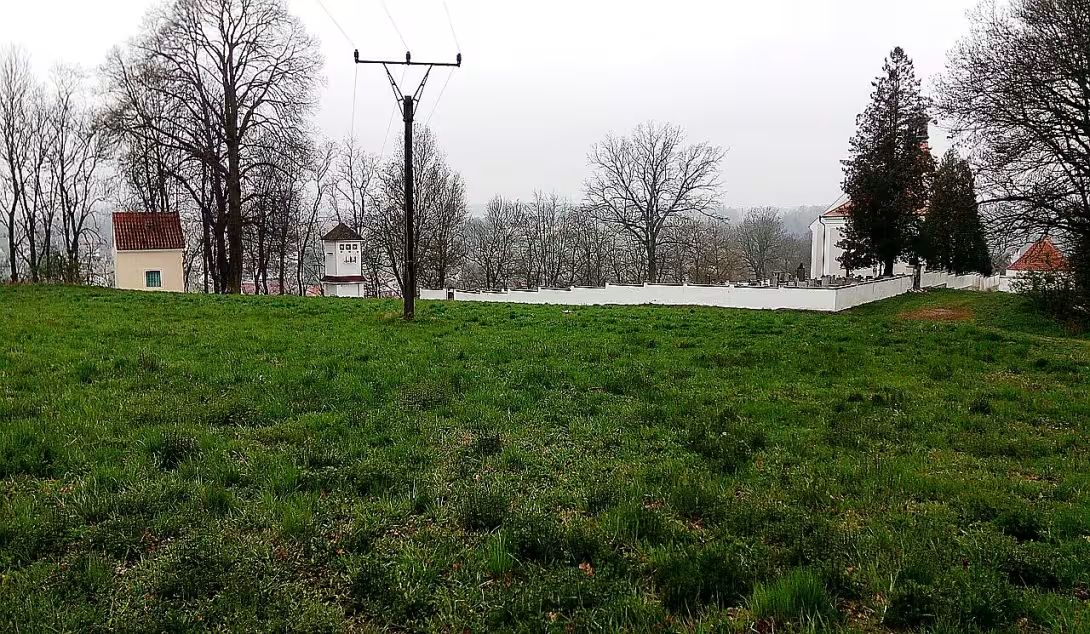
The castle Doudleby is an early medieval archaeological site in the village Doudleby south of České Budějovice. It was inhabited from the tenth to 13th century and served as an administrative center. It is known for its terrain traces of fortifications and remains of the castle church.
The formation of the castle dates back to the second half of the tenth century, when the early medieval state formed and administrative centers were created. Doudleby served as a strategic frontier. The first written mention is in the Kosmov Chronicle, where Kosmas marked the fort as the border castle Slavíkovice, but more likely it was founded by the Přemyslovovci.
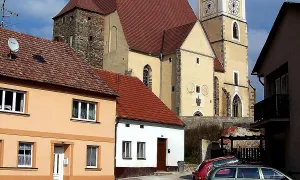
The site is located in the area of the Meander River Malš. The total length of the fortifications was approximately 660 metres and protected an area of about 4.8 hectares. The acropolis with dimensions of 200 × 60 meters was located in the narrowest part of the coupling neck of the meander. Today, the dominance is St. Vincent's church, which contains the masonry of the original castle church. In the acropolis there was also a court with the residence of the administrator, serving as the occasional seat of the prince.
The protection of the acropolis was secured by steep slopes on the north and south sides. The east side was protected by a wall, which was preceded by a boulder and a six-metre moat. On the west side there is a steep cliff with an altitude of almost ten metres; this unit of probably natural origin was artificially modified for defence purposes. Further west, they protected other belts of walls and trenches, visible as terrain inequalities in gardens.
In the thirteenth century, the fort ceased when the older fort in Branisovice took over the administrative function. Historical sources indicate particular castellans such as Kochan in 1175 and Pillunk in 1179 and 1186.
The first archaeological research was carried out by Bedřich Dubský in 1940. In the last decade of the twentieth century, Jura Thma's rescue survey took place in the area of St. Vincent's church, where earring evidence of the burial ground was found.
Archaeological footprints are protected as a cultural monument. Visitors can observe the terrain tracks of the fortifications and the scarred church of St. Vincent.
This monument is a valuable document of early medieval settlement and border management. It is recommended that you visit it to imagine the strategic use of the landscape at this time.
Historical milestones
- 10th century
- The foundation of the fort in the second half of the century.
- 1175
- Mention of the local Castelan Kochan.
- 1179
- Mention of the local Castelan Pillunk.
- 1186
- Another mention of Castelan Pillunk.
- 13th century
- The demise of the fort.
Architectural development
The fortification of the fort used steep slopes and was supplemented by walls, walls and six meters wide moat. The acropolis was 200 × 60 metres and was protected from the east side by a wall. The original church of Hrad was later zarokied.
Historical events
In the 12th century there were Castelans Kochan and Pillunk. The fort died during the 13th century.
Points of interest
- The castle Doudleby is an early medieval archaeological site inhabited from the tenth to 13th century and served as an administrative centre. - The formation of the castle dates back to the second half of the tenth century, when the early medieval state formed and administrative centers were created. The first written mention is in Kosmo's chronicle. - The site is located in the middle of the river Malš, the total length of the fortifications was approximately 660 metres and protected the area of about 4.8 hectares. The acropolis with dimensions of 200 × 60 meters was located in the narrowest part of the coupling neck of the meander. - The dominance today is St. Vincent's church, which contains the masonry of the original castle church. There was also a yard in the acropolis with the residence of the administrator. - The protection of the acropolis has been secured by steep slopes and artificially modified service on the west side for defence purposes. In the thirteenth century, the fort ceased when the older fort in Branisovice took over the administrative function.
Guide
Show guide text
This text was created by artificial intelligence and has not been editorially reviewed. It may contain inaccuracies.
Welcome to the historic site hradiště Doudleby, a unique archaeological site that is witnessed by the early medieval times. You are standing in front of a space where history has taken place in the past and reflected the future of the entire region. First of all, you will notice the vast space that is bounded by the river Lesser, whose meadows provide unique beauty to this place while providing protection for its inhabitants.
The castle Doudleby was established in the second half of the tenth century when the early medieval state formed and needed administrative centers. This place served as an important administrative headquarters which took over the functions of the older castle in Branisovice. It was inhabited from the tenth to 13th century and during its existence it became a key place for regional governance.
Take a look up at the scarred church of St. Vincent, which today dominates the area. This church is not only a beautiful architectural monument, but also contains the remains of the original structures of the castle. The church of St. Vincent was built on the site of an older temple and is now one of the most significant parts of this historical complex.
Notice the acropolis that used to serve as the mansion of the castle manager. Although all details are no longer visible today, it is important to recognise its importance for the management of the area. The total length of the fortification of the fort was approximately 660 metres, which indicated the strategic significance of this place.
The interesting thing is that two key Castellans - Kochan and Pillunk - were mentioned here. The first written mention of Castelan Kochan dates back to 1175, followed by further mention of Castelan Pillunk in 1179 and 1186. These personalities played an important role in the administration of the castle and its history.
Now let's look at some of the mysteries that surround this space. Although most architects remain unfamiliar, their work is still visible and talks about artistic and technical progress at that time. Imagine how this fort was built to withstand the temporal influences while serving its purpose.
Let's move on to other interesting things. The castle Doudleby is not only an important historical place, but also reminds us of how the regional administration developed during the Middle Ages. Here were laid the foundations for modern structures and systems.
Your tour isn't over yet. If you try other parts of this interesting place, you will find out even more about its rich history and architecture. I hope you enjoyed exploring hradiště Doudleby and I hope you bring back memories of this unique place.
Thank you for your attention and wishes for happy discoveries. When you get back to us, we'll be waiting here with more interesting information about the history of our region.
Tips for visitors
The best time to visit is late afternoon, when the sun shines low above the Meandra River Malš and creates beautiful shadows on the ruins of the castle. Nature is the most beautiful in this area at this time.
you can get around the monument by car and public transport; Please check the current connection in the traffic controller.
Take firm and comfortable shoes with you to visit, as the terrain at the archaeological site can be uneven. For families with children, a nature walk by the river is a great experience, but we recommend having a repellent and plenty of drinking water.
If you are interested in photography, the best places for pictures are high places with a view of the Meanders of the river Malš. The best light to capture the atmosphere of the old castle is at sunset.
Frequently asked questions
Can the monument be visited?
This is an archaeological site. Often there is little to see on the ground and the land may be private. We have not verified access.
Where is the monument?
Location: Doudleby, Jihočeský kraj. The map on this page shows the exact spot.
Why is the monument protected?
It is listed in the Central List of Cultural Monuments of the Czech Republic as a cultural monument (register no. 1000136124).
Businesses nearby
Do you run a restaurant, accommodation, shop, museum, rental, wellness or other visitor service near this monument? Show yourself directly to the people heading to it — this is how they will see you in the app and on the web:
Events nearby
Zdroj akcí: otevřená data měst a obcí ČR (Národní katalog otevřených dat) a kalendář akcí Národního památkového ústavu.
Nearby
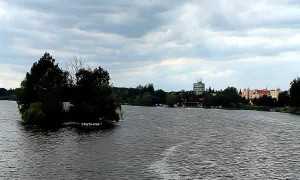
Řeka Malše a její meandry.
Accommodation nearby
Trips and activities nearby
Guided tours, tickets and activities nearby from GetYourGuide
Affiliate link: if you buy from the partner, we may receive a commission. The price for you does not change.
Search tours and activities →Themed route
Thematic cruise route around hradiště Doudleby
1. Hrad Doudleby (archaeological site) Type: Archaeological site Why it is worth a visit: The castle Doudleby is one of the most important prehistoric sites in Bohemia. Here you can explore the remains of an ancient settlement that bears witness to the lives of the Bronze Age people until the Middle Ages.
2. The River Malš Type: Natural element Why is it worth a visit: Malš River attracts lovers of water landscapes with its calm currents and beautiful meanders. It is an ideal place for relaxing, looking at nature or even for the classic order of photos.
3. Meander Garden Type: Natural and recreational area Why is it worth a visit: This garden, which consists of the Meanders of the river Malš, offers beautiful walks along the water stream. It is a place full of calm and natural beauty where you can enjoy a view of the green meadows and the glass surface of the river.
4. Doudleb Park Type: Local recreational area Why is worth a visit: Park in Doudleby is an ideal place for relaxation and family activities. It offers beautiful pavements where you can enjoy the natural environment or find a place to have a quiet conversation with your friends.
5. View from the height Type: Natural card Why is it worth a visit: Some parts of the surrounding terraces offer an amazing panoramic view of the Malš River and its surroundings. It's a great way to enjoy the beauty of nature and see the overall layout of the region.
This route allows you not only to discover the historical location of hradiště Doudleby, but also to immerse yourself in the quiet nature and beauty of the river Malš.
Seasonal recommendations
Spring
During the spring season hradiště Doudleby is surrounded by flowering shrubs and trees that create a living and colorful background for the architecture of the ruins. The sun illuminates the structures in a strange way, bringing into the picture fine shadows and bright colors. Nature is in full bloom, which may be the perfect time for photography. It is advisable to choose a visit at the end of the morning or afternoon when the crowd shrinks and the natural beauty is in full bloom. It is recommended to wear clothes with the possibility of layering because temperatures can be variable.
Summer
In summer hradiště Doudleby is usually full of people looking for places to relax and active leisure. The sunlight illuminates the structure in bright colours and long days allow extended visits. The atmosphere is alive, but it can also be hot, so it is recommended to come early in the morning or later in the evening to avoid the hottest hours and crowds. It's good to bring a protective umbrella, breathing and plenty of drinking water.
Autumn
In the autumn period hradiště Doudleby becomes melancholic beauty. Tree leaves change colour to gold or red, adding fine and quiet tones to the architecture. Short days and long evenings create unique lighting that can be ideal for taking photos or relaxing on quiet walkways. It is recommended that you wear warmer clothes and visit the site on a mission because the days are shorter and the winter can quickly come.
Winter
During winter hradiště Doudleby is covered with snow or shakes, which provides a unique view of the architecture of the ruins. The sunlight illuminates the snow crust in bright colours and the atmosphere is calm and quiet. It is necessary to wear warm clothes and protective shoes because the surface can be light and cold.
Visualizations and artistic views


The visualisations are generated by artificial intelligence and serve as inspiration.
Photos from the area
Real photos taken near the monument


Zdroj a licence jsou uvedeny u každého snímku.
Tips from visitors
No tips yet. Be the first!
Log in and add your tip.
Sources and literature
Photos: Czeva / CC BY-SA 3.0 — Wikimedia Commons. The author and licence also appear when you hover over the image.
Faktickým podkladem tohoto textu byl článek na Wikipedii, jehož autory jsou přispěvatelé Wikipedie. Článek je dostupný pod licencí CC BY-SA 4.0.
Location on the map



Příběhy a pověsti
Legendy, pověsti a příběhy spjaté s touto památkou

Fotografie návštěvníků
Zatím žádné fotografie. Buďte první, kdo přidá fotografii z návštěvy!
Log in a přidejte svou fotografii nebo hodnoťte.
Za ověřenou návštěvu v aplikaci získáte víc bodů — poznáme podle GPS, že jste na místě.
Reviews and comments