






Hradiště u Bílence Hillfort
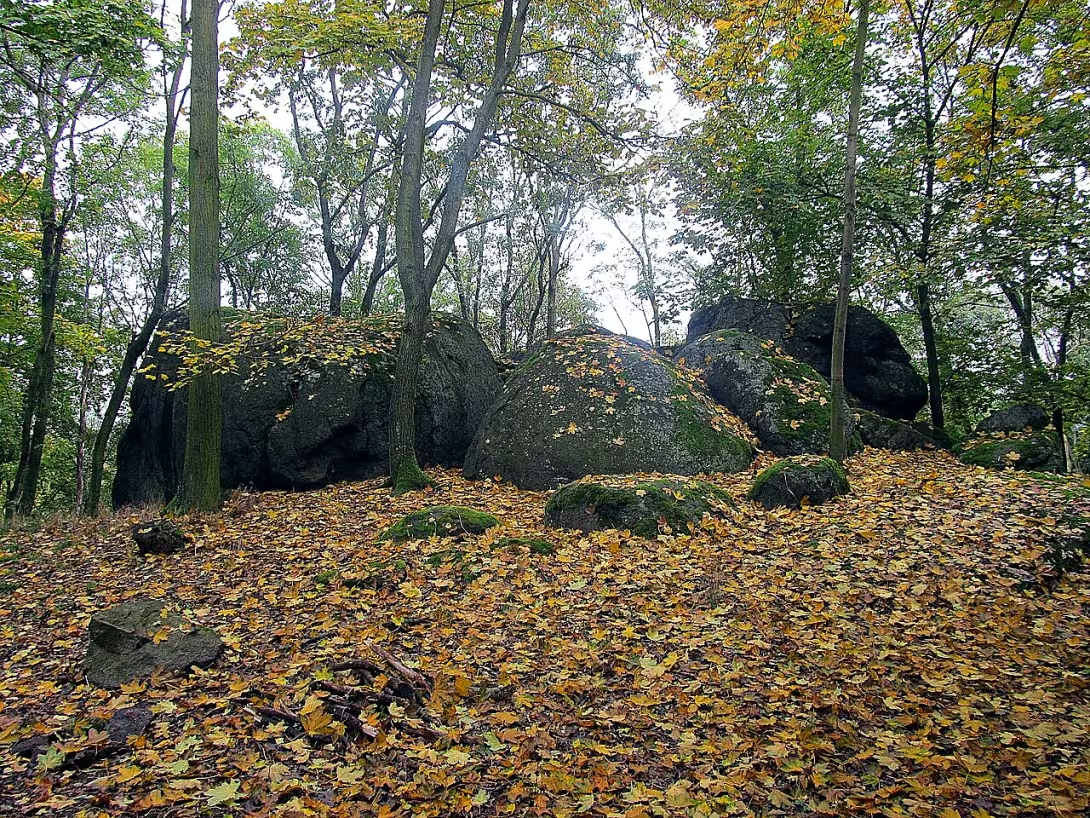
Hradiště u Bílence, also known as Wolf Mountain, is an important ancient archaeological site. It lies on a wooded island at an altitude of about 480 metres in the Louna district. It is located about 1.5 kilometers southeast of Belarus and its remains are protected as a cultural monument. The site stands out for a very diverse settlement, which took from neolithic to eneolite and bronze to the hallucinative period.
The island itself occupies an area of about six hectares. From three sides it is naturally bounded by steep rocky slopes, with the surface covered by boulders and small rocks. The only tangible evidence of artificial fortification is a cross-wall which crosses the only accessible east side. The exact age of this wall is not entirely certain, but on the basis of the findings of ceramics in its close proximity, Lenka Plšková suggested that the fortification was established during the period of young Ukrainian culture.
Only the results of archaeological research indicate the oldest history and specific fate of the site. The findings have shown that from the Bronze Age there were people of utenistic culture, wind group and Middle Dodenai moth culture. Experts were also able to demonstrate younger settlements in the period of the Hallatians.
The year 2017 is documented from modern events, when a specialist detector survey took place at the castle. His main task was to check for traces of human activity, limit illegal excavations and activities of unofficial search engines, while specifying the extent of damage to the local wall.
Currently, this building is a protected cultural monument. Access to it is provided by a turn from a green marked tourist route which leads from Kryr to Petrohrad. Visiting this location offers a direct view of the region's prehistoric history and an opportunity to explore the remains of fortifications in the natural terrain of the Wolf Mountains.
Historical milestones
- 2017
- There was an expert detector survey at the castle to check for traces of human activity and to specify the damage to the wall.
Architectural development
The island is made up of boulders and small rocks. The only tangible evidence of artificial fortifications is a cross-wall crossing the accessible east side, the age of which is not entirely certain, but can be linked to the period of young ubitic culture based on ceramic findings.
Historical events
In 2017, a detector survey was conducted at the castle to check for traces of human activity and to map the damage to the wall.
Points of interest
- Hradiště u Bílence, also known as Wolf Mountain, is an important ancient archaeological site protected as a cultural monument, which lies on a wooded island at an altitude of 480 metres in the Louna district. - The site stands out for a very diverse settlement, which took from neolite to eneolite and the bronze period to the period of the Hallatite. - The only tangible evidence of artificial fortification is a cross-wall crossing the only accessible east side, with Lenka Plšková, on the basis of the ceramic findings, proposed its creation during the period of young ubitic culture. - In 2017, an expert detector survey was conducted at the castle, whose main task was to investigate human activity, reduce illegal excavations and specify the extent of damage to the local wall. - Access to the building is provided by a turn from a green marked tourist route leading from Kryr to Petrohrad.
Guide
Show guide text
This text was created by artificial intelligence and has not been editorially reviewed. It may contain inaccuracies.
Welcome, distinguished visitors. You have just arrived at a place where time has stopped and where the country keeps the secrets of thousands of years of human existence. You're standing outside the castle at the White House, which many locals know under the poetic name Wolf Mountain. Stop for a moment, take a deep breath and feel the air of this wooded hill. Look around you. You are on top of the island, which is basically a narrow and elevated ridge of the hill, which naturally comes out of the surrounding landscape. It is this geographic oddity that has determined the fate of this place in ancient times. You are at an altitude of approximately 400 80 meters, which gives you a sense of superiority over the surrounding terrain and allows you to perceive the space as people perceived a thousand years ago.
Now let's think together about how this place was created and who lived here. Hradiště u Bílence is not the work of one period or one culture. It's a fascinating, layered record of history that begins in Neolithic, that is, at a new age. Imagine the first people to come here. They were not just random pilgrims, but people who recognized the strategic potential in this location. The settlement continued in the eneolite, which is the time of transition from stone to copper, and followed also in the bronze age. This means that generations were changing, technology, tools and faith were changing, but this place remained an attractive point for human communities. Why here? The answer lies in the country itself.
Now pay attention to the area where you are moving. Notice how this island is formed. The entire area of the castle occupies approximately six hectares, which is a relatively significant area in prehistory. If you look around, you'll see that this place is naturally protected on three sides. The steep rocky slopes you see here served as insurmountable walls. Nature has done most of the work here for the people. Anyone who tries to attack the fort from the side or from behind would have to face almost vertical walls and dense forests, making the invaders easy targets.
But look towards the exit. This is where the natural protection of the rocks ends and the fort is open to the surrounding countryside. This is where the ancient people must have invented their own defenses. Notice the trace of the cross wall. This wall was a key element of the castle architecture. It was an artificial wall of clay, stones and wood that overloaded the access path and formed a single gateway to this safe haven. Introduce yourself to enter this very way, under the supervision of the guards who watched every movement in the valley from the top of the wall. Even though today the wall looks like a slight ripple in the forest, at the time of its glory it was a powerful symbol of power and security.
When we think about the people who lived here, we have to admit that their names didn't go down in history. We have no specific personalities here, no names of kings or leaders we can pronounce. The architects of this castle remained anonymous. But it is in this anonymity that strange magic lies. Who were these people? What dreams did they have? What rituals did they perform in this high place that is so close to the sky? Feel the atmosphere of this quiet forest and try to imagine the noise of everyday life, the sound of metal fittings, the smell of smoke from fires and the voices of children playing in the shadow of the wall. This place was not only a military fortress, but a home where life, love, and work were lived.
Now I'll show you one of the most interesting modern chapters of this place. Although the fort looks like a sleeping giant, science has not become dormant. In the year two thousand and seventeen there was a very important expert survey with detectors. The archaeologists were trying to check for traces of human activity that were not visible on the surface, and above all wanted to find out exactly how the eastern wall was damaged. Detectors are like eyes that can see through the earth. They helped us understand that the fort is not just a pile of stones, but a complex system that has been modified over the centuries. This mystery about wall damage teaches us that even after thousands of years human activity or natural processes can change the face of history. It is fascinating to think that beneath your feet may still be hidden objects waiting for their rediscovery, a piece of ceramics or a forgotten bronze-age tool.
Hradiště u Bílence is today protected as a cultural monument, and it is very correct. It's the bridge that connects us to our oldest ancestors. When you are moving along this wooded island, feel the contrast between the calm of the present nature and the tension that must have existed here in times of unrest, when the whole village withdrew to protect the cross-wall.
Now that you know the basic story of Wolf Mountain, he invites you to explore again. I suggest you slowly go around the perimeter of the island and observe the steep slopes that have so perfectly isolated the fort from the surrounding area. Stop at the east wall and try to reconstruct its original height and power in your spirit. Let yourself be guided by the sounds of the forest and imagine how the view of the primordial landscape, which looked completely different from today's.
Thank you for spending time with us in company history. We hope you have felt the depth of the time that persists here. We wish you a pleasant further walk and remember that every stone you meet here can tell its own story, thousands of years old. Goodbye.
Tips for visitors
The best time to visit Hradiště u Bílence is spring or autumn, when the forest is on a sharpness thinner and the terrain remains of prehistoric settlement without disturbing summer vegetation stand out better.
For transport use the road to the village Petrohrad or Bilenec. By car you can arrive in the nearby area, from where you can reach the top by walking from the green marked tourist route leading from Kryr to Petrohrad; Check the exact parking possibilities on site.
Since it is a wooded ruin at an altitude of about four hundred and eighty metres with an area of about six hectares, bring with you firm hiking shoes to an uneven terrain, it is advisable to have snacks and drinking water, because you will not find any refreshments on site.
For shooting Wolf Mountain, it is worth starting in the morning, when the side light radiates nicely through the forested island and highlights traces of former fortifications, with the best shots taken directly from the edges of the vast area of the castle.
In the wider area within 30 minutes you can visit nearby Petrohrady and Kryry, while the tourist route itself will guide you through the picturesque landscape in the Louny district where this monument is located.
For families with children, the trip is suitable as a small forest hike associated with the discovery of nature, but due to the unsecured remains of the castle on the island, it is necessary to keep an eye on children and move only on obvious paths.
Businesses nearby
Do you run a restaurant, accommodation, shop, museum, rental, wellness or other visitor service near this monument? Show yourself directly to the people heading to it — this is how they will see you in the app and on the web:
Nearby
The monument is located in the district of Louny about 1.5 km southeast of Bílence, with a turn from the green marked tourist route leading from Kryr to Petrohrad leading to the top.
Accommodation nearby
Themed route
Hradiště u Bílence Archaeological sites The main destination of our trip is located in the district of Louny about one and a half kilometers southeast of Whitenice. A clear turn from the green marked tourist route leads to the top.
Zelené marked tourist route (section from Kryr to Petrohrad) Tourist route This path forms the backbone of the whole trip in nature. It provides a direct connection to the turnoff leading directly to the main archaeological site.
Municipality area Petrohrad Target location The village is a starting and ending point in the wider surroundings of the monument. It is located on the route of the tourist route coming here from Kryr.
Seasonal recommendations
Spring awakens Hradiště u Bílence from winter sleep, when the surrounding landscape of Petrohrad begins to green and low shrubs reveal the terrain waves of ancient settlement. Sun rays penetrate even thinner treetops and create an interesting game of lights and shadows on the walls, ideal for clear photography of archaeological details without disturbing summer leaves. You will not meet almost any visitors here during this period, which guarantees deep peace of mind over history. Due to the spring showers and the stormy terrain in the field roads, the prose is necessary with solid waterproof shoes and a waterproof jacket. The best time to visit is in the morning, when the morning herpes gives the ruins a mysterious atmosphere.
Summer turns this archaeological site into an overgrown oasis of calm, where ruins are almost lost in lush vegetation and high grass. The bright noon sun falls directly on exposed stones and creates sharp contrasts, but the most beautiful light atmosphere prevails at late sunset, when warm tones radiate the whole space. Tourism is also minimal in the main summer season, but the main challenge is the ubiquitous insects and bulls. For comfortable exploration on hot days, choose light breathable clothes with long legs for ticks, headgear and plenty of drinking water, as you will find no refreshments on site. The ideal time for arrival is early in the morning or late in the evening when temperatures drop.
Autumn covers Hradiště u Bílence in melancholic grove, when the surrounding trees change colour into yellow and red shades, and morning fog slowly rolls over the entire boiler at Petrohrad. The low autumn sun radiates the ruin of the side light all day long, creating an unrepeatable atmosphere for lovers of nostalgic scenery. You rarely meet visitors here, usually just occasional, quiet mushrooms or passing cyclists. The practical site requires warmer layered clothing because the wind in the open area can be cold, and high-quality shoes with anti-slip soles on the fallen, moist leaves. The best time for a trip is around noon, where there is a chance of at least a partial brightening of the sky.
Winter gives this place a rough and raw face, when snowy remains of walls contradict grey, sleeping nature, creating an unadulterated set for quiet contemplation over ancient ages. The lighting is usually dampened under a layer of clouds for most of the day, but on a sunny freezing day the snow glows and reflects the light so intensely that it makes up for a short day. Not many people come in this time of year, so you'll enjoy complete loneliness. The key to a successful journey is quality winter clothes, warm gloves, hats and solid high shoes for snow or mud. Due to the rapid dimming in the afternoon, plan a visit for the morning time.
Visualizations and artistic views

The visualisations are generated by artificial intelligence and serve as inspiration.
Photos from the area
Real photos taken near the monument


Zdroj a licence jsou uvedeny u každého snímku.
Tips from visitors
No tips yet. Be the first!
Log in and add your tip.
Sources and literature
Fotografie: Gortyna / CC BY-SA 4.0 — Wikimedia Commons. The author and licence also appear when you hover over the image.
Faktickým podkladem tohoto textu byl článek na Wikipedii, jehož autory jsou přispěvatelé Wikipedie. Článek je dostupný pod licencí CC BY-SA 4.0.
Location on the map
Příběhy a pověsti
Legendy, pověsti a příběhy spjaté s touto památkou
Fotografie návštěvníků
Zatím žádné fotografie. Buďte první, kdo přidá fotografii z návštěvy!
Přihlaste se a přidejte svou fotografii nebo hodnoťte.
Za ověřenou návštěvu v aplikaci získáte víc bodů — poznáme podle GPS, že jste na místě.
Reviews and comments