



zámek Petrohrad Chateau
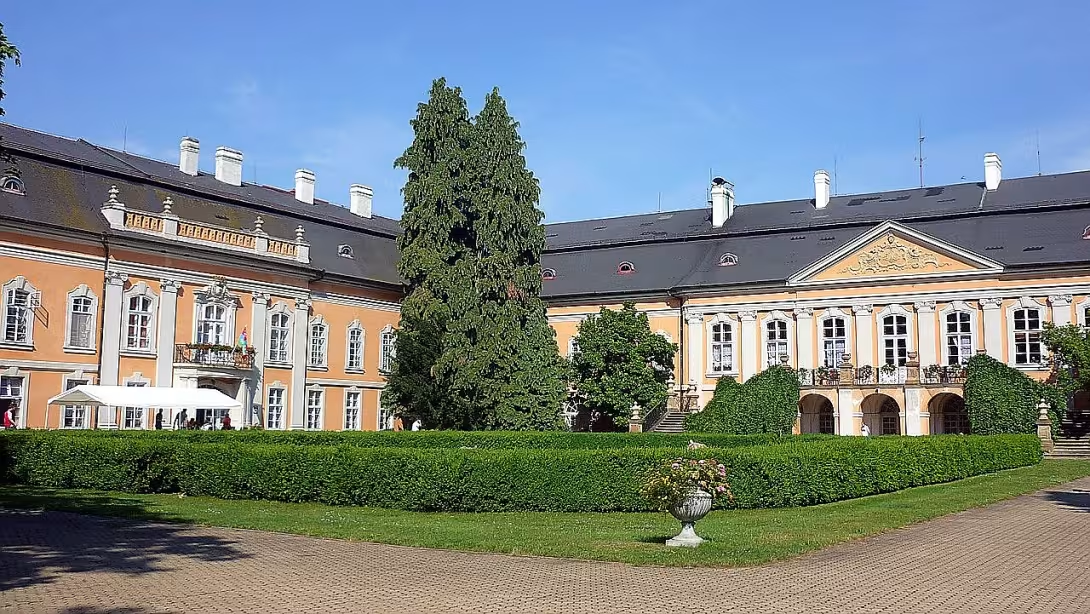
Petrohrad Castle is a Baroque castle located in Petrohrad village, within the Louny District of Ústecký kraj. Built in the latter half of the seventeenth century, it has undergone numerous renovations and modifications over time. The castle holds cultural significance as a protected monument since 1964 but remains closed to the public due to housing a psychiatric clinic.
The origins of Petrohrad Castle date back to a period marked by political and religious turmoil in Bohemia during the Thirty Years' War. Initially, a Gothic castle stood on the site until it fell into disrepair by the mid-sixteenth century. Around 1560, Jaroslav Libštejnský z Kolovrat commissioned a Renaissance manor at the site's south-western edge. After Jaroslav’s death in 1595, his son inherited the estate but lost much of it due to involvement in a rebellion against Habsburg rule. In 1622, Heřman Černín z Chudenic acquired the property.
The castle experienced significant architectural evolution under various owners. Following its destruction by fire at the start of the Thirty Years' War, Humprecht Jan Černín inherited it in 1651 and initiated post-war renovations. The most notable transformation occurred during Heřman Jakub Černín's ownership from 1682 to 1710 when Baroque renovations were completed under architect Giovanni Alliprandi’s guidance. Subsequent owners, including František Josef Černín and Vojtěch Černín, continued these enhancements, with the latter overseeing work between 1747 and 1752.
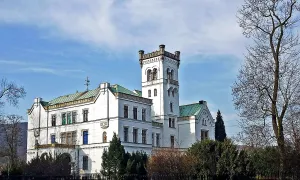
Petrohrad Castle's architectural style blends Renaissance and Baroque elements. The three-winged structure forms a U-shape around an honor court. The north-east wing retains its Renaissance roots, while the other two wings exhibit Baroque characteristics. Notable features include a two-story tower with a half-dome and "swallowtail" finial on the north-eastern façade, alongside a semi-circular arched portal. The central section of the castle is adorned with a seven-bay risalit featuring an arcade supported by columns, leading to a tympanum above three windows.
Ownership passed through several notable families, including the Černín family, who maintained control until 1945. During this time, significant changes were made, such as establishing an English park at the end of the eighteenth century by Jan Rudolf Černín and relocating a brewery to a separate building designed by architect Josef Zítek in 1864. The castle suffered another fire in 1915 but was restored, with additional structures like a pavilion added.
Today, Petrohrad Castle remains closed to visitors due to its use as a psychiatric clinic. Despite this, it is an important cultural monument, reflecting the architectural and historical transformations of the region over centuries. Its significance is further highlighted by its inclusion in local tourism routes, with a red-marked trail passing nearby.
Petrohrad Castle stands as a testament to Bohemia's rich history and architectural evolution during turbulent times. While not accessible for exploration, its presence continues to captivate those interested in the region's past. Visitors are encouraged to explore surrounding areas and trails that offer glimpses into this historical landmark’s storied legacy.
Then and now
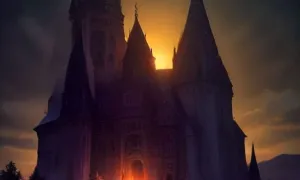
Drag the slider to compare how the landmark may have looked when it was built with the view today.
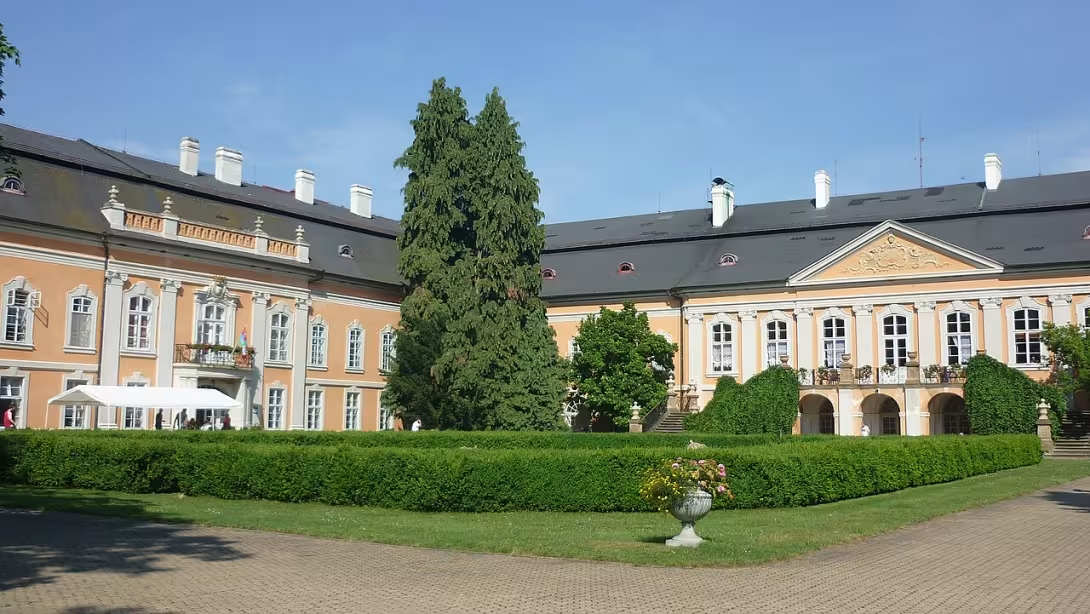
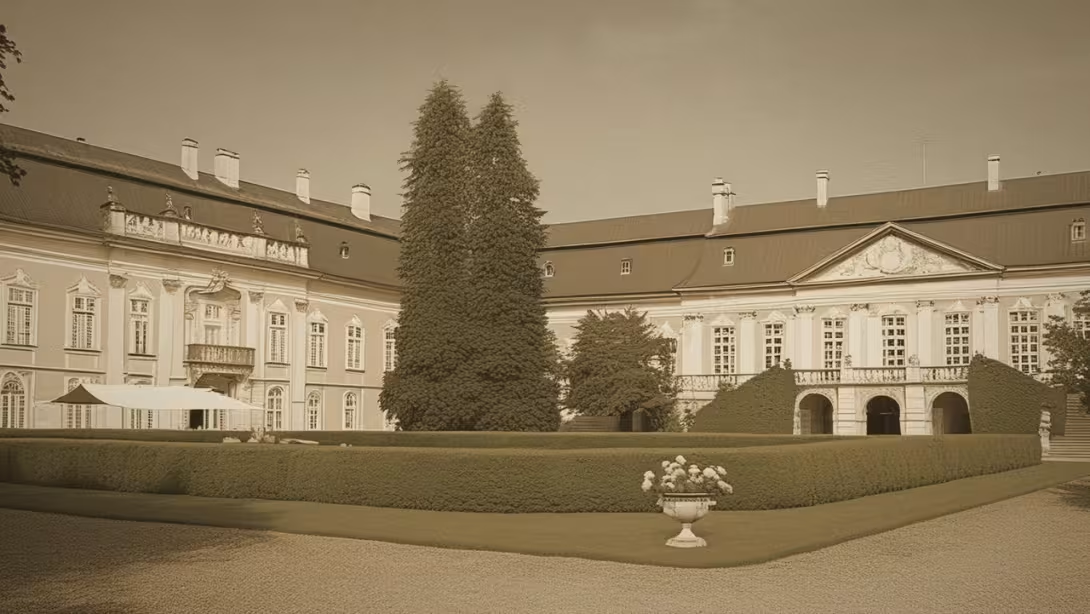
The historical appearance on the left is an AI-generated visualisation and serves as inspiration only.
Historical milestones
- 1560
- Jaroslav Libštejnský z Kolovrat commissioned a Renaissance manor.
- 1595
- Jaroslav Libštejnský z Kolovrat died, estate inherited by son.
- 1622
- Heřman Černín z Chudenic acquired the property.
- 1651
- Humprecht Jan Černín inherited and initiated post-war renovations.
- 1682
- Heřman Jakub Černín began Baroque renovations under Giovanni Alliprandi.
- 1964
- Castle designated as a protected cultural monument.
Architectural development
Zámek Petrohrad began as a Renaissance manor built by Jaroslav Libštejnský z Kolovrat around 1560. It underwent significant baroque renovations under the guidance of architect Giovanni Alliprandi during Heřman Jakub Černín's ownership in the late seventeenth century. The castle features a mix of Renaissance and Baroque architectural styles, with notable additions such as an English park established by Jan Rudolf Černín at the end of the eighteenth century.
Historical events
The original manor house was destroyed by fire at the beginning of the Thirty Years' War.
Baroque renovations were completed under Heřman Jakub Černín in the late seventeenth century.
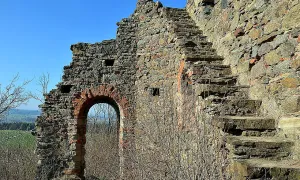
A large English park was established between the castle and the ruins of an old fortress at the end of the eighteenth century.
The castle burned down in 1915 but was subsequently restored.
Owners
Jaroslav Libštejnský z Kolovrat (1560s)
Heřman Černín z Chudenic (1622)
Humprecht Jan Černín (1651)
Heřman Jakub Černín (1682–1710)
František Josef Černín
Vojtěch Černín (1747–1752)
Jan Rudolf Černín (late 18th century)
Evžen Černín (1864)
Points of interest
- Despite its Baroque architecture today, Petrohrad Castle originally had a Gothic structure that fell into disrepair by the mid-sixteenth century before being replaced with a Renaissance manor.
- The castle was once owned by Heřman Černín z Chudenic after Jaroslav Libštejnský z Kolovrat's son lost his inheritance due to involvement in a rebellion against Habsburg rule, highlighting the political tensions of the era.
- Architect Giovanni Alliprandi played a crucial role in transforming Petrohrad Castle into its current Baroque form during Heřman Jakub Černín’s ownership, showcasing the influence of Italian architects in Bohemia's architectural history.
- An English park was established at the end of the eighteenth century by Jan Rudolf Černín, reflecting the broader European trend of integrating natural landscapes with aristocratic estates.
- The castle suffered a significant fire in 1915 but was restored and even expanded with additional structures like a pavilion, demonstrating resilience and continuous adaptation through its history.
Guide
This guide is narrated by a synthetic voice generated by artificial intelligence.
Show guide text
This text was created by artificial intelligence and has not been editorially reviewed. It may contain inaccuracies.
Petrohrad Castle stands in the village of the same name in the Louny region. Its present appearance is the result of many reconstructions and modifications. Since the second half of the twentieth century it has been used by a psychiatric hospital and since 1964 it has been protected as a cultural monument.
The original seat of the Petrohrad estate was a Gothic castle above the village. In the middle of the sixteenth century it fell into disrepair, so around 1560 Jaroslav Libštejnský z Kolovrat had a Renaissance castle built on the southwestern edge of the village. After his death in 1595, Petrohrad was inherited by Jaroslav the Younger Libštejnský z Kolovrat. He died in 1619, and because he took part in the Estates' Rebellion, two thirds of his property were confiscated. The estate at that time included the castle with a courtyard, three parts of the town of Jesenice, and a number of surrounding villages. In 1622 everything was purchased by Heřman Černín z Chudenic.
At the beginning of the Thirty Years' War the castle was burned. In 1651 it was inherited by Heřman's nephew Humprecht Jan Černín who had post-war modifications carried out. Under his son Heřman Jakub Černín, who held the estate in the years 1682 to 1710, the castle was reconstructed in the Baroque style according to a project by the architect Giovanni Alliprandi. The Baroque modifications were continued by his son František Josef and grandson Vojtěch Černín.
At the end of the eighteenth century Jan Rudolf Černín had an extensive English park laid out between the castle and the castle ruins. In 1864 Evžen Černín relocated the brewery from the southern wing to a separate building which was designed by architect Josef Zítek. In 1915 the castle caught fire but was repaired. It belonged to the Černín family until 1945. After confiscation it housed among other things a parachute training centre, later a hospital. A large part of the original furnishings was moved to the castle in Krásný Dvůr, part of the library ended up in the Náprstek Museum.
The castle has three storeys with wings that form the letter U and open onto a courtyard of honour. The northeastern wing is Renaissance, the other two are Baroque. At the Renaissance wing stands a tower with a gable topped with what are called swallow-tail motifs. A two-armed staircase decorated with vases leads to the storey of the central wing and above three central windows rises a triangular gable. In one of the corners there is the chapel of Saint Lawrence, which was created in the first half of the nineteenth century by converting living quarters.
Tips for visitors
The best time to visit Zámek Petrohrad is during the late spring or early autumn months, when the weather is mild and the surrounding landscapes are particularly picturesque. These seasons offer pleasant temperatures for exploring both the castle grounds and the nearby English park, which was established in the late eighteenth century. Additionally, visiting outside of peak summer can mean fewer crowds, allowing for a more relaxed experience.
For those preferring public transport, there are options that connect nearby towns and villages; however, specific routes should be verified using a transportation search tool for the most current information.
When planning your visit, consider bringing comfortable walking shoes, especially if you intend to explore the red-marked tourist trail leading from Černčice through Rabštejn nad Střelou, Žlutice, and Bochov. A camera is also recommended, as there are several scenic spots around the castle where natural light enhances photography, particularly during sunrise or sunset.
For families with children, Zámek Petrohrad offers a variety of activities that can be enjoyed by all ages. The expansive grounds provide ample space for walking and exploration, while the historical aspects of the baroque castle may captivate older children interested in history. Nearby attractions within 30 minutes include the remnants of an old fortress, which can add an element of adventure to your visit.
Frequently asked questions
Can the monument be visited?
Some buildings of this kind are open for guided tours, others serve another purpose or are privately owned. We have not verified whether and when this monument is open – please ask the operator.
What are the opening hours and admission?
We have not verified the opening hours or admission. Current information is published by the operator. Official website: https://www.plpetrohrad.cz/
Where is the monument?
Location: č.p. 1, Petrohrad, Ústecký kraj. The map on this page shows the exact spot.
Why is the monument protected?
It is listed in the Central List of Cultural Monuments of the Czech Republic as a cultural monument (register no. 42329/5-1312).
Businesses nearby
Do you run a restaurant, accommodation, shop, museum, rental, wellness or other visitor service near this monument? Show yourself directly to the people heading to it — this is how they will see you in the app and on the web:
Events nearby

Zdroj akcí: otevřená data měst a obcí ČR (Národní katalog otevřených dat) a kalendář akcí Národního památkového ústavu.
Nearby
The area around Zámek Petrohrad features a red-marked tourist trail leading from Černčice through Rabštejn nad Střelou, Žlutice, and Bochov. The landscape includes the remnants of an old fortress and an English park established in the late eighteenth century.
Accommodation nearby
Themed route
Tematická výletní trasa kolem Zámku Petrohrad
1. Zámek Petrohrad - Typ: Historický zámek - Proč stojí za návštěvu: Zámek Petrohrad je krásnou reprezentací architektury s bohatou historií, která nabízí pohled na elegantní interiéry a fascinující historické exponáty. Je to ideální místo pro ty, kteří mají zájem o historii a architekturu.
2. Černčice - Typ: Místní obec - Proč stojí za návštěvu: Černčice je místo, kde se začíná vaše dobrodroužství po cestě zámku Petrohrad. Tato malebná obec nabízí klidnou atmosféru a krásné venkovské krajiny, které jsou ideální pro relaxaci před začátkem výletu.
3. Rabštejn nad Střelou - Typ: Historická lokalita - Proč stojí za návštěvu: Rabštejn nad Střelou je známý svými historickými pevnostními zbytky, které představují zajímavý pohled do minulosti. Tato lokalita nabízí krásné výhledy a je ideální pro ty, kteří mají rádi historii a architekturu.
4. Žlutice - Typ: Místní obec - Proč stojí za návštěvu: Žlutice vás přivítají svými venkovskými pohledy a klidnou atmosférou. Tato oblast je ideální pro krátké odpočinkové zastávky během vašeho výletu, kde můžete užít si přírodní krásy okolního území.
5. Bochov - Typ: Místní obec - Proč stojí za návštěvu: Bochov je známý svou historií a kultúrním dědictvím, což z něj činí zajímavé místo pro konci vašeho výletu. Tato obec nabízí pohled na tradice regionu a je ideální pro uzavření trasy.
Tato trasa vás provede krásným územím kolem Zámku Petrohrad, přičemž každá zastávka nabídne jedinečné pohledy na historii a kulturu regionu.
Seasonal recommendations
Spring: Visiting the Petrohrad Castle during spring offers a unique opportunity to witness nature's reawakening. The surrounding landscapes are adorned with blooming flowers and fresh greenery, creating a picturesque setting that enhances the castle’s historical charm. This time of year is characterized by milder weather, making it ideal for leisurely exploration without the discomforts of extreme temperatures. Visitors should be prepared for occasional rain showers and consider wearing layers to accommodate fluctuating temperatures throughout the day. While crowds may not yet reach their peak, arriving early can ensure a more peaceful experience, allowing you to appreciate both the castle's architecture and its natural surroundings.
Summer: Summer is the high season at Petrohrad Castle, with long daylight hours providing ample time for exploration under bright sunlight that highlights the castle’s intricate details. The warmth of the season makes it perfect for outdoor activities in the lush gardens surrounding the site. However, this period also attracts larger crowds, so planning your visit early in the day can help avoid peak tourist times. Comfortable walking shoes and light, breathable clothing are recommended to navigate the grounds comfortably, along with sun protection such as hats or sunglasses.
Autumn: The autumn season at Petrohrad Castle is marked by a stunning display of fall foliage, transforming the landscape into a vibrant tapestry of reds, oranges, and yellows. This period offers a serene atmosphere as visitor numbers begin to decrease compared to summer, allowing for a more tranquil experience. Cooler temperatures make it an ideal time for photography enthusiasts looking to capture the castle against a backdrop of autumnal beauty. Visitors should dress in layers to adapt to the cooler weather and consider bringing a light jacket or sweater.
Winter: Winter at Petrohrad Castle provides a magical setting with snow-covered grounds that add a fairy-tale quality to its historic architecture. The shorter days mean visits are best planned for earlier hours, as some areas may close sooner due to limited daylight. While the castle itself might be closed during this time, the surrounding area can still offer a unique and quiet experience in the colder months. Visitors should dress warmly in layers, including thermal clothing, hats, gloves, and waterproof boots, to ensure comfort while exploring the winter landscape.
Visualizations and artistic views


The visualisations are generated by artificial intelligence and serve as inspiration.
Photos from the area
Real photos taken near the monument


Zdroj a licence jsou uvedeny u každého snímku.
Tips from visitors
No tips yet. Be the first!
Log in and add your tip.
Sources and literature
Photos: SchiDD / CC BY-SA 4.0 — Wikimedia Commons. The author and licence also appear when you hover over the image.
Faktickým podkladem tohoto textu byl článek na Wikipedii, jehož autory jsou přispěvatelé Wikipedie. Článek je dostupný pod licencí CC BY-SA 4.0.
Location on the map
Příběhy a pověsti
Legendy, pověsti a příběhy spjaté s touto památkou
Fotografie návštěvníků
Zatím žádné fotografie. Buďte první, kdo přidá fotografii z návštěvy!
Log in a přidejte svou fotografii nebo hodnoťte.
Za ověřenou návštěvu v aplikaci získáte víc bodů — poznáme podle GPS, že jste na místě.
Reviews and comments