






Petrohrad Ruin
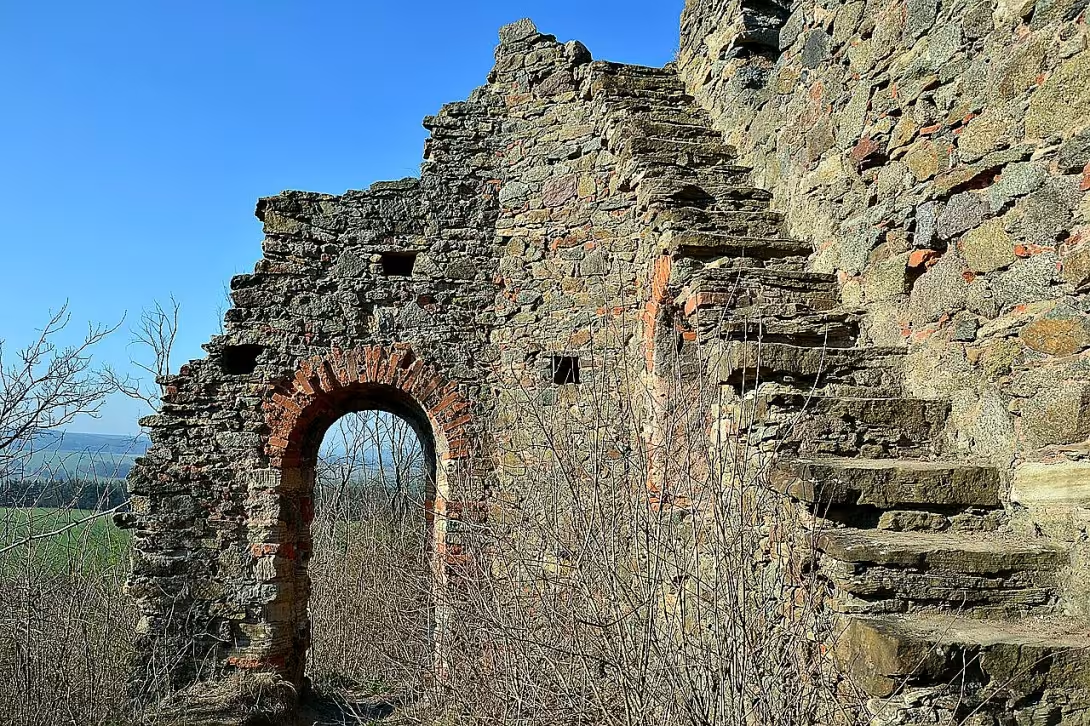
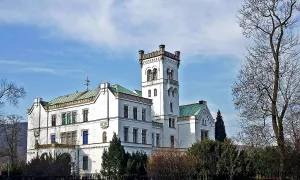
The Petrohrad ruins are a captivating medieval castle site located in the village of Petrohrad within the Louny District of the Ústí nad Labem Region in the Czech Republic. This historical monument stands as a testament to the region's rich past and is notable for its strategic significance during the mid-14th century when it was initially constructed by the nobility. Today, only remnants of walls and terrain irregularities remain, protected as cultural heritage.
The origins of Petrohrad Castle date back to 1356 when Petr z Vrtby became its first recorded owner. Built in the mid-14th century during a period marked by political stability and cultural flourishing under Charles IV's reign, the castle served as a strategic stronghold for the Vrtby family and later other noble families. Its construction reflects the shifting power dynamics among noble families in Western Bohemia at that time.
Architecturally, Petrohrad Castle was originally constructed as a bergfrit-type structure featuring a square entrance tower. By the mid-17th century, an octagonal chapel dedicated to All Saints was built on its site, adding a significant religious element to the castle's history. The lower part of the castle included a basement section separated by a moat, while the upper part likely housed a palace. Over time, as the needs of Renaissance nobility evolved, the original structure was replaced by a romantic ruin featuring a viewing staircase in the 19th century.
Ownership and administration of Petrohrad Castle saw several notable changes over the centuries. In 1483, Jan Jenec sold the estate to Burian II. Gutštejna, marking a significant transition in its history. By 1559, the castle was documented as abandoned due to its inability to meet the evolving needs of its noble inhabitants. The Černínové family acquired the property in 1622 after a noble rebellion, further embedding the site within the complex socio-political landscape of the region.
While specific dramatic events are not extensively recorded at Petrohrad Castle, its historical significance is underscored by the transitions it underwent through various ownerships and architectural transformations. The chapel of All Saints, built in 1652, remains a prominent feature on the site, highlighting the blend of military and religious influences that characterized its history.
Today, the ruins of Petrohrad Castle are accessible via marked trails from the town of Petrohrad, surrounded by forested areas that enhance their historical allure. Visitors can explore the remnants of walls and terrain irregularities while enjoying the serene natural surroundings. The site also features a memorial oak tree nearby, adding to its historical charm.
Petrohrad Castle ruins offer a unique glimpse into medieval history and architecture, making them a worthwhile destination for those interested in exploring the cultural heritage of the Czech Republic. Its preserved remnants invite visitors to reflect on the past while enjoying the tranquility of its natural setting.
Then and now
Drag the slider to compare how the landmark may have looked when it was built with the view today.
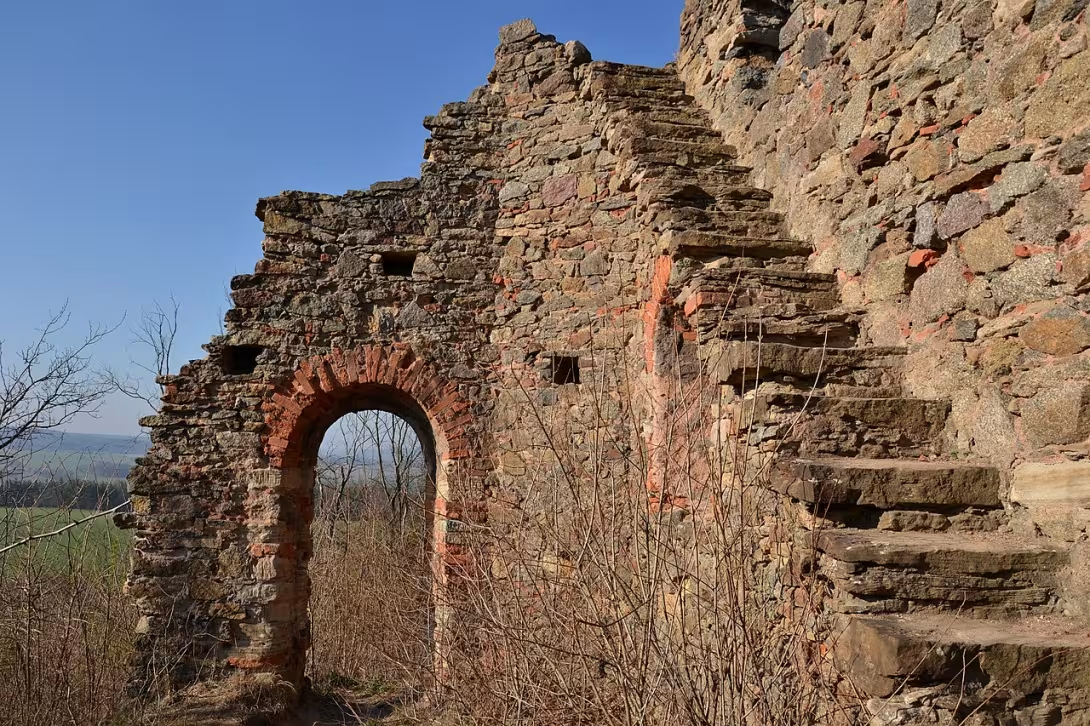
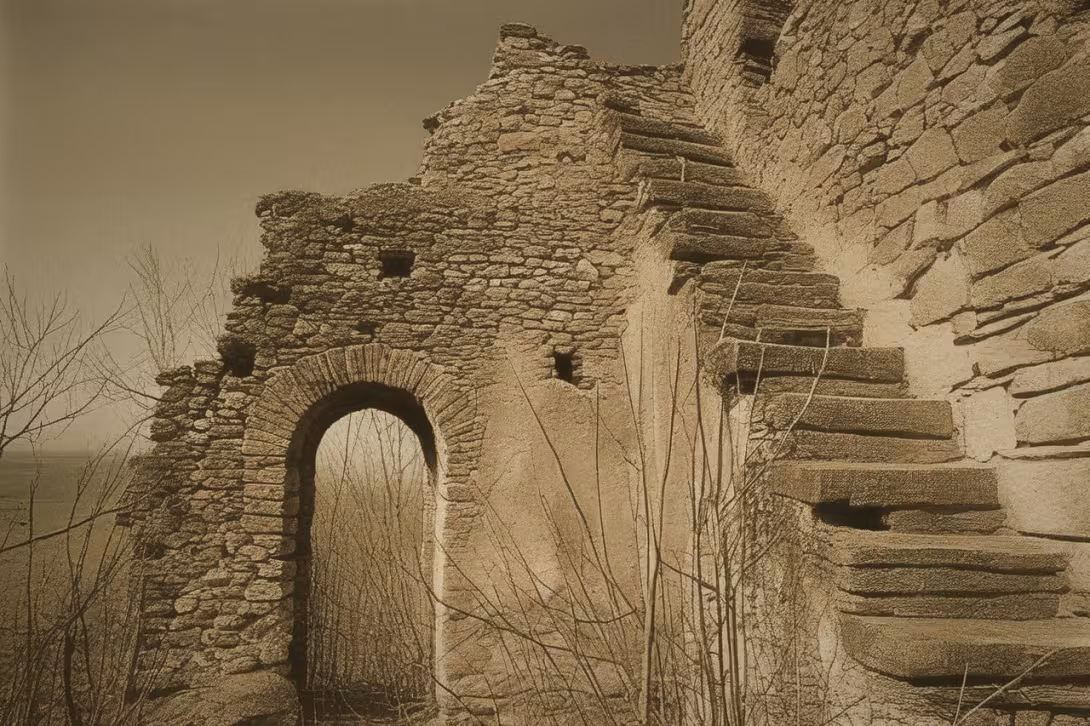
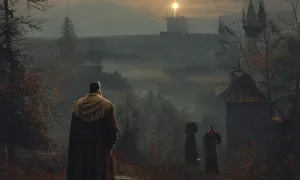
The historical appearance on the left is an AI-generated visualisation and serves as inspiration only.
Historical milestones
- 1356
- Petr z Vrtby became the first recorded owner of the castle.
- 1483
- Jan Jenec sold the estate to Burian II. Gutštejna.
- 1559
- The castle was documented as abandoned.
- 1622
- The Černínové family acquired the property.
Architectural development
Petrohrad Castle was originally constructed as a bergfrit-type castle with a square entrance tower. In the mid-17th century, an octagonal chapel of All Saints was built on its site. The castle's lower part included a basement section separated by a moat, while the upper part likely housed a palace. By the 19th century, a romantic ruin featuring a viewing staircase replaced the original structure.
Historical events
The castle was initially built by Petr z Vrtby in the mid-14th century.
In 1483, Jan Jenec sold the estate to Burian II. Gutštejna.
By 1559, the castle was abandoned as it no longer met the needs of Renaissance nobility.
The Černínové family acquired the property in 1622 after a noble rebellion.
Owners
Petr z Vrtby (1356)
Petra z Janovic (1358)
Jan Jenec z Janovic
Burian II. Gutštejna (1483-1554)
Jaroslav Libštejnský z Kolovrat
Černínové z Chudenic (1622-1945)
Points of interest
– Despite its current state as ruins, Petrohrad Castle was once a bergfrit-type structure with a square entrance tower, reflecting the military architectural styles of the mid-14th century.
– The castle's chapel dedicated to All Saints, built in 1652, highlights an unusual blend of religious and defensive purposes within the same site, showcasing the era’s architectural adaptability.
– In 1483, Jan Jenec sold Petrohrad Castle to Burian II. Gutštejna, marking a notable shift in ownership that reflects the complex feudal relationships among Bohemian nobility during that period.
– By 1559, the castle was abandoned due to its inability to meet the evolving needs of its noble inhabitants, illustrating how architectural and functional obsolescence could lead to the decline of medieval strongholds.
– The presence of a memorial oak tree near the ruins adds a layer of natural history to Petrohrad Castle, symbolizing the passage of time and the intertwining of human and environmental narratives.
Guide
This guide is narrated by a synthetic voice generated by artificial intelligence.
Show guide text
This text was created by artificial intelligence and has not been editorially reviewed. It may contain inaccuracies.
The ruins of Petrohrad Castle are located on a forested promontory above the village of the same name in the Louny region. The noble castle was built in the middle of the 14th century. Today only small remains of the masonry and terrain irregularities survive, protected as a cultural monument.
The first known owner was Petr z Vrtby from the Hroznatovci family in 1356. His family was at that time building strongholds in western Bohemia on their newly acquired estates. The castle was called Petersburg in German, meaning Peter's Castle. From this the Czech name Petršpurk later developed. The castle had the right to appoint a priest to the Church of Saint Lawrence in Lubenci.
Already in 1358 Petrohrad was held by Petr z Janovic. Probably the most important figure of the family was Jan Jenec z Janovic, who was burgrave of Prague Castle from 1470 to 1503. In 1483 he sold the extensive Petrohrad estate with two subject towns, Kryry and Jesenice, and fifteen villages to Burián the Second of Gutštejna. The Gutštejna family held the castle until 1554, when Viktorin z Gutštejna died. His brother-in-law Jaroslav Libštejnský z Kolovrat then gradually acquired all shares of the estate.
By the middle of the 16th century the castle no longer met the demands of Renaissance nobility. It is recorded as deserted in 1559. Around 1560 Jaroslav Libštejnský began building a château below it. As a result of supporting the Estate Uprising the estate was confiscated from the Libštejnskys. In 1622 the Černín family of Chudenic bought it from the state and held it until 1945.
The original form of the castle is not clear due to the fragmentary nature of what remains. A round bergfried above the access road indicates it was a bergfried type castle. Entry was through a square tower. The castle was most likely divided into a lower and upper part. The lower part was leveled in the middle of the 17th century due to the construction of a chapel. Only the basement part of the bergfried remains, separated by a moat over which a drawbridge presumably led. Beside the chapel are remains of a vaulted building and further to the west remains of the entrance tower. A palace probably stood in the upper part. In the 19th century a romantic ruin with a staircase to a viewing platform was built on its site.
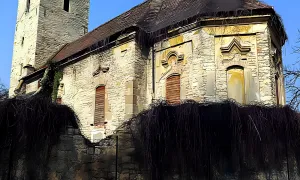
The only dominant feature of the place today is the Chapel of All Saints. The Černín family built it in 1651 to 1653 according to plans by Carlo Lurago. It has a circular floor plan, a conical shingled roof and a façade divided by pedestals and pilaster strips. The interior is lit by lunette windows. The chapel was restored in 1860, 1903 and 1927, but its furnishings did not survive.
Frequently asked questions
Can the monument be visited?
This is a ruin. Such sites are often freely accessible, but some can only be visited with a guide or are closed for safety reasons. We have not verified the current situation – take care and respect any restrictions.
Where is the monument?
Location: Petrohrad, Ústecký kraj. The map on this page shows the exact spot.
Why is the monument protected?
It is listed in the Central List of Cultural Monuments of the Czech Republic as a cultural monument (register no. 43040/5-1313).
Businesses nearby
Do you run a restaurant, accommodation, shop, museum, rental, wellness or other visitor service near this monument? Show yourself directly to the people heading to it — this is how they will see you in the app and on the web:
Nearby
Petrohrad Castle is surrounded by forested areas and can be accessed via marked trails from the town of Petrohrad. Nearby, there are historical landmarks such as the memorial oak tree.
Accommodation nearby
Themed route
Thematic Vlog Tour: Petrohrad and Its Historical Surroundings
1. Petrohrad Castle Ruins - Type: Historical Site - Why Visit: The ruins of Petrohrad Castle offer a captivating glimpse into the past, surrounded by lush forested areas that enhance its mystical allure. Explore the remnants of this historical structure and immerse yourself in the stories it holds.
2. Memorial Oak Tree - Type: Historical Landmark - Why Visit: Just a short walk from the castle ruins, the Memorial Oak Tree stands as a living testament to history. Its majestic presence is not only a natural wonder but also a symbol of remembrance and resilience in the community.
3. Marked Trails through the Forest - Type: Nature Trail - Why Visit: These trails offer an enchanting journey through serene forest landscapes, leading you back towards the town of Petrohrad. They provide a perfect opportunity for reflection and connection with nature while exploring the area's historical context.
This thematic tour combines history and nature, offering a unique experience that highlights both the cultural significance and natural beauty surrounding Petrohrad Castle.
Seasonal recommendations
Spring: Visiting the ruins of Petrohrad during spring offers a unique experience as nature begins to awaken, blanketing the site with vibrant colors from emerging wildflowers and fresh greenery. The soft, diffused light of early mornings or late afternoons enhances the mystical atmosphere of the ancient stones, providing ideal conditions for photography enthusiasts. Visitors should be prepared for unpredictable weather; layering is recommended to accommodate fluctuating temperatures throughout the day. Spring sees a moderate number of tourists, making it an excellent time to explore without the crowds typical in peak seasons.
Summer: The summer months bring long daylight hours and warm sunshine to Petrohrad's ruins, creating an inviting atmosphere for exploration. However, this season also attracts larger numbers of visitors, so arriving early is advisable to avoid the midday heat and crowds. Light, breathable clothing is essential, along with sun protection such as hats and sunscreen. The lush surroundings offer a picturesque backdrop for leisurely strolls or picnics amidst the historical ambiance.
Autumn: Autumn transforms Petrohrad's ruins into a breathtaking tableau of warm hues, with leaves in shades of red, orange, and gold providing a stunning contrast against the ancient stones. This season offers cooler temperatures, making it comfortable to wander around the site for extended periods. The changing light during late afternoons casts dramatic shadows, enhancing the mystical quality of the ruins. Visitors should pack layers to adjust to varying weather conditions throughout the day.
Winter: Winter at Petrohrad's ruins presents a serene and almost otherworldly experience as snow blankets the landscape, adding an ethereal charm to the ancient site. The crisp air and shorter daylight hours create a quiet atmosphere, perfect for contemplation or photography in soft, natural light. Due to potential closures during extreme weather, checking accessibility beforehand is crucial. Warm clothing, including hats, gloves, and insulated layers, is essential to comfortably enjoy the winter wonderland setting.
Visualizations and artistic views


The visualisations are generated by artificial intelligence and serve as inspiration.
Photos from the area
Real photos taken near the monument


Zdroj a licence jsou uvedeny u každého snímku.
Tips from visitors
No tips yet. Be the first!
Log in and add your tip.
Sources and literature
Photos: Petr Kinšt / CC BY-SA 4.0 — Wikimedia Commons. The author and licence also appear when you hover over the image.
Faktickým podkladem tohoto textu byl článek na Wikipedii, jehož autory jsou přispěvatelé Wikipedie. Článek je dostupný pod licencí CC BY-SA 4.0.
Location on the map
Příběhy a pověsti
Legendy, pověsti a příběhy spjaté s touto památkou
Fotografie návštěvníků
Zatím žádné fotografie. Buďte první, kdo přidá fotografii z návštěvy!
Log in a přidejte svou fotografii nebo hodnoťte.
Za ověřenou návštěvu v aplikaci získáte víc bodů — poznáme podle GPS, že jste na místě.
Reviews and comments