



Hřbitov Malvazinky Cemetery
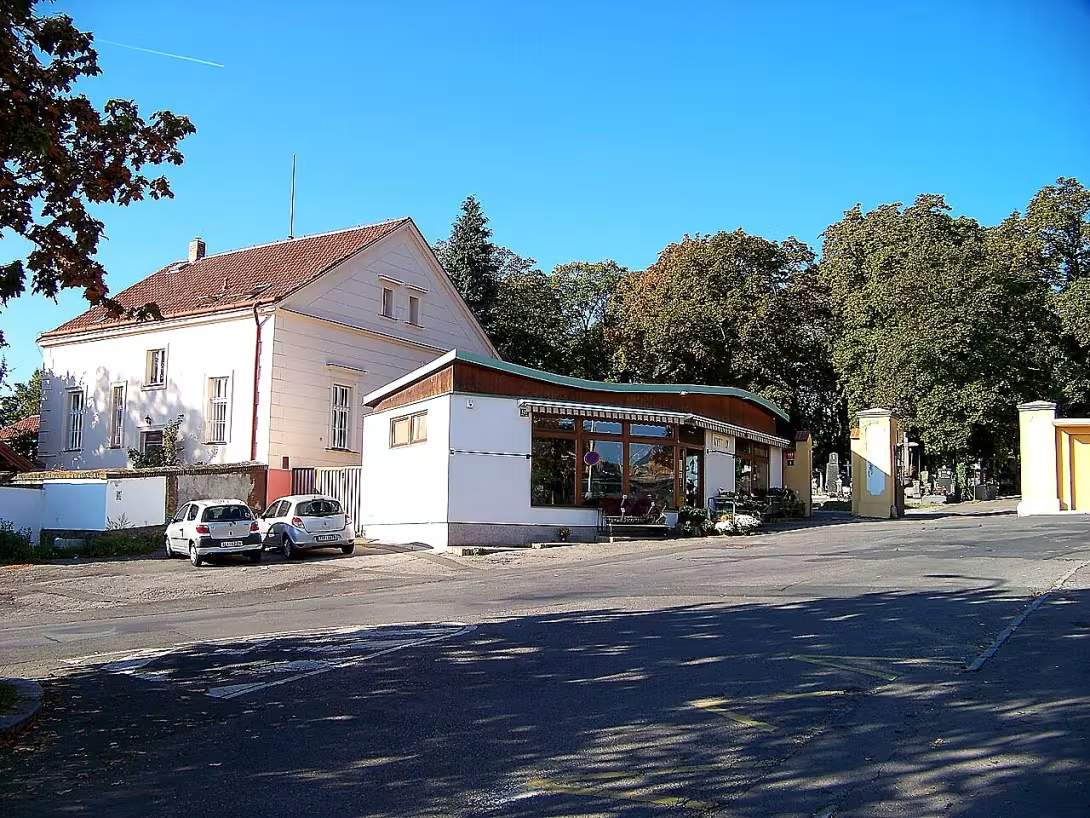
Hřbitov Malvazinky is a large city burial ground in Smíchov, founded in 1876. With an area of 7.58 hectares and more than 54 thousand buried are among Prague's largest cemeteries. It is an important place of last rest for many personalities of Czech culture, science and politics.
The creation of the cemetery was a reaction to the abolition of the original Smíchov burial ground at the church in today's Arbes Square. Since 1884, the population of the Prague suburb, which could no longer use the closed Malostran cemetery, has also been buried here. The area was created according to the design by Antonín Viktor Barvitia in the place of former vineyards and economic estates, which originally belonged to the small town of Tomáše Malvazy.
The dominance is the New Romanesque church of St. Philip and James, which was built by architect Adolf Duchoň between 1894 and 1896. The construction used material, two bells and three baroque statues from the demolished Smichov temple of the same patrons. The statues of Christ the Savior, Saint Philip and James are placed above the entrance portal and in nothing under the arcades. The whole area, including the church, has been protected as a cultural monument since 1958.
The current space includes 8 420 graves, 680 urn graves and 12 chapel tombs. Two dedicated meadows serve as a distraction. The building management is provided by the contribution organization Hřbitova and funeral services hl. m. Prague, namely the cemetery administration Malvazinka and Bubenec.
Here lies a number of prominent personalities. From politics we find President Antonín Novotný and the Earth President for the country Czech Hugo Cubáta. In the field of literature there are the graves of Jakub Arbes, Ondřej Sekora, Jiří Karásek from Lvovice and Jiří Grusha. The film and theatre representatives include the directors František Vláčil and Václav Kubásek, the stage designer Josef Svoboda, director Petr Lébl or singer Karel Gott and singer Eva Pilarová. The scientific importance of the site is underlined by the graves of doctor Jan Janský, astronomer Jiří Kavan or inventor Ivan Puluje. Sport history is represented by gymnast Alois Hudec or car racers František Krorka and Bohumil Turk.
Among the attractions in the area include the cenotaf of the Fafková family, who were executed for support of the Anthropoid away and a share of the assassination of Reinhard Heydrich. The next monument is God's torment with a Gnomón from 1675. This six-metre-high baroque column with reliefs and inscriptions served originally as a sun clock on the Schwarzenberg road in Smíchov. It was transferred to the cemetery to avoid interfering with traffic after the expansion of the Railway Street. There are references to the 1737 flood on the base plate.
Modern elements are complemented by Poesiomat from the workshop Ondřej Kobza. It was listed here in June 2021 and reminds of buried poets. The place was also inspired by a music group Crying cat, which published an album called Malvazinky.
Hřbitov Malvazinky presents a valuable archive of Czech history and culture in the area of former vineyards on the western edge of Smíchov. Visiting this place offers the opportunity to become acquainted with the fate of people who have fundamentally influenced the Czech state and art.
Then and now
Drag the slider to compare how the landmark may have looked when it was built with the view today.
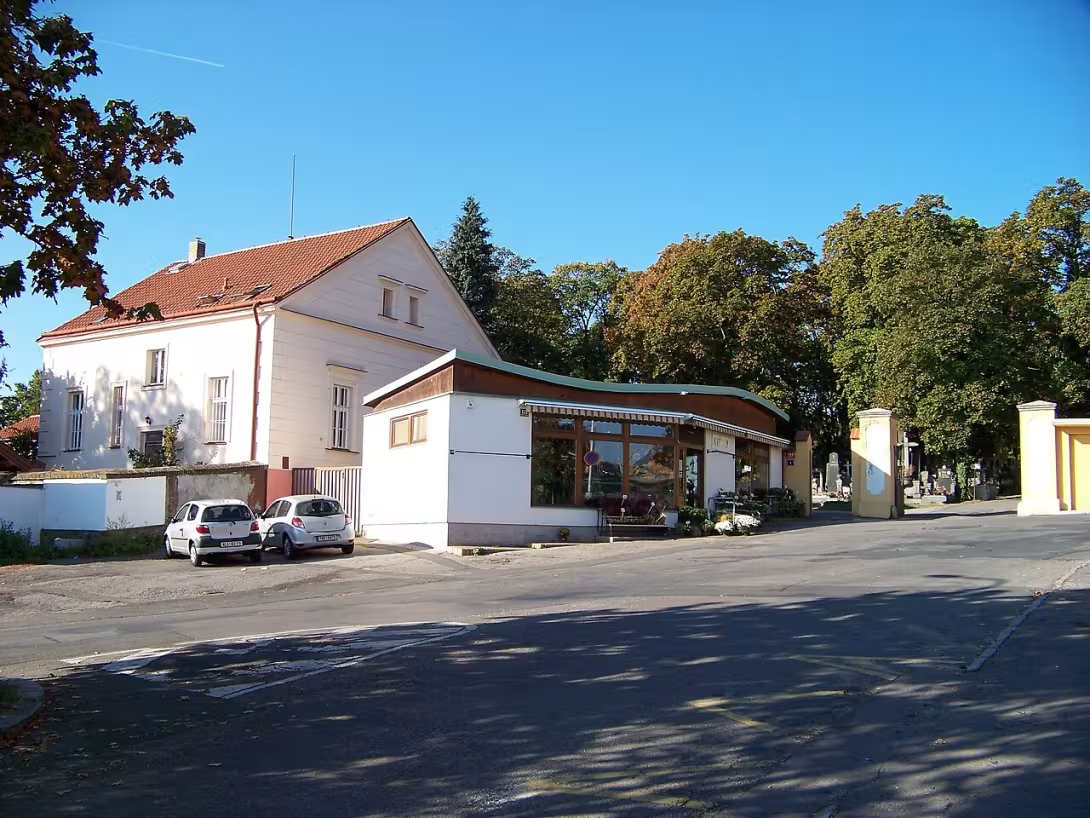
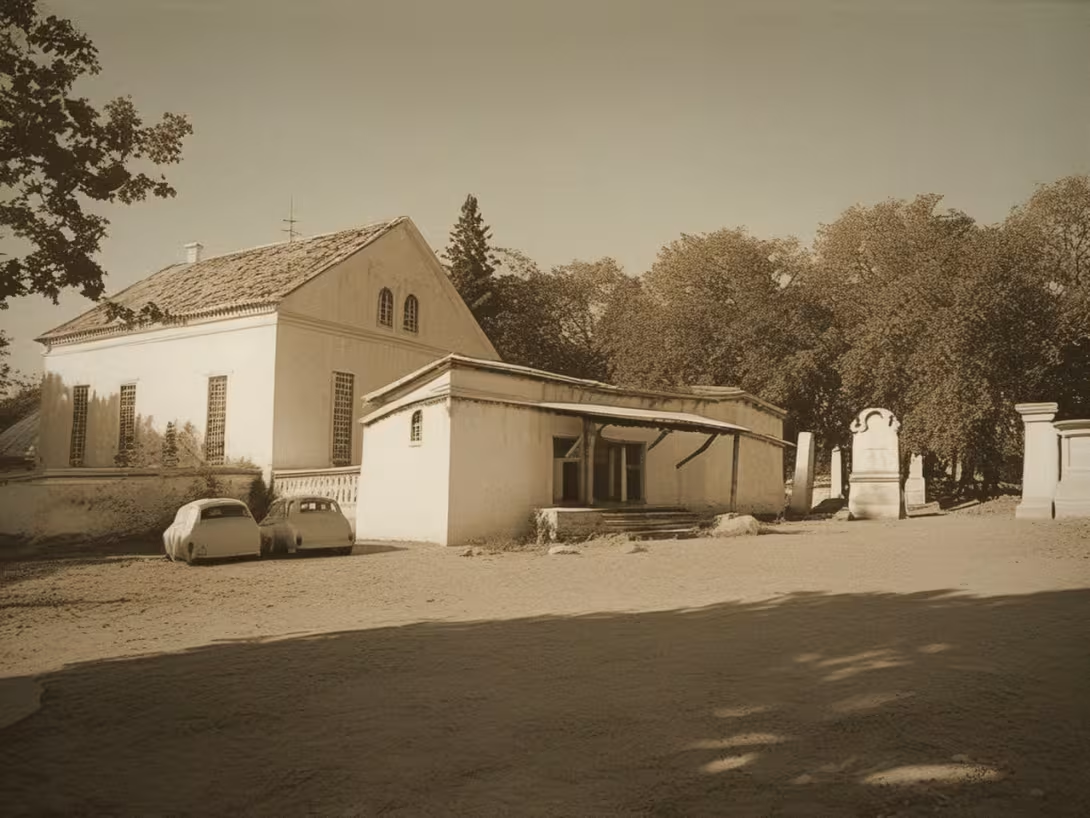
The historical appearance on the left is an AI-generated visualisation and serves as inspiration only.
Historical milestones
- 1876
- The foundation of the Malvazinka cemetery.
- 1884
- The cemetery began to serve the population of Prague suburb after the closure of the Malostran cemetery.
- 1894
- The beginning of the construction of St. Philip and James.
- 1958
- The area is protected as a real-estate cultural monument.
Architectural development
The cemetery was founded according to the design of A. V. Barvitia. In 1894-1896 a New Romanesque church of St. Philip and James was built. Material, bells and Baroque statues from the demolished Smíchov church were used in the construction of the church.
Historical events
1876: Establishment of a cemetery in response to the abolition of the original Smíchov cemetery. 1958: Announcement of the premises with church for a cultural monument.
Points of interest
- The cemetery was established at the site of former vineyards and economic estates belonging to Tomáša Malvazy. - The church of St. Philip and James uses material, bells and three Baroque statues from the demolished Smilichov temple. - There is a cenotaf of the Fafka family, executed for support of the Anthropoid away team and part of the assassination of Reinhard Heydrich. - The torment of God from 1675 was originally used as a sun clock on the Schwarzenberg Road in Smichov. - Since June 2021, there has been a poesiomat that resembles buried poets.
Guide
Show guide text
This text was created by artificial intelligence and has not been editorially reviewed. It may contain inaccuracies.
Welcome, distinguished visitors. You are standing just outside the gates of the Malvazinka cemetery, one of the largest and most important places of last rest in Prague. Now, when you look around you, you see the calm and the vast space that stretches in the heart of the laughing district. It's a place where the history of the city connects to the personal stories of thousands of people who have found their eternal spreader. In front of you is an area that is not just a burial ground, but a real cultural monument that has been with us for over a century.
Let's stop at the beginning of this place together. The cemetery was founded in a thousand eight hundred seventy-six. If you're wondering why he's here, the answer will lead us to one particular person. The whole area was created in a place where vineyards and economic estates once stood. They belonged to a small town guy named Tomas Malzazy. According to his name, the cemetery got its name today. At that time, the city grew, and it needed new space for funerals. A little later, in the year one thousand eight hundred eighty-four, the cemetery began to fully serve the inhabitants of Prague suburbs, especially after the old Malostranská cemetery was closed. Since then Malvazinky has become an important point on the map of Smíchov, Prague.
Now, as you enter deeper into the premises, pay attention to a dominant structure that attracts your sight. It's the church of St. Philip and James. Its construction began in the year one thousand eight hundred ninety-four. Take a look at his appearance, which is performed in a new Romanesque style. The architects Antonín Viktor Barvitius and Adolf Duchoň were responsible for its creation. It's fascinating to realize that this temple carries traces of other places. If you notice the details, you will find that the church uses material, bells and three baroque statues that come from the demolished Smichov temple. It's a bridge between the old and the new, where parts of the extinct building got a new life in this newer building. The whole complex has been protected as a cultural monument since the year one thousand nine hundred and fifty eight, which guarantees that its unique atmosphere will remain for future generations.
Now let's move slowly between the grave fields. Malvazinky is known for resting people who have left a deep mark in Czech culture, art and sport. On your walk you can think about the lives of the personalities you find here. Among them is the famous writer Jakub Arbes or a respected painter Ondřej Sekora. If you're interested in the world of film, feel the silence at the grave of director František Ráčil. For music lovers, this place is special because here you will find the last resting place of the legendary singer Karl Gott and his partner Eva Pilar. Note also names such as Josef Svoboda, Jan Janský or Alois Hudec. Each one of these graves tells a different story about success, talent, and constant efforts for perfection. It is a real gallery of Czech spirit, where there are creators from different periods and disciplines.
In addition to these familiar names, there are also stories that are much more dramatic and tragic, which make us think about the fate of people in the days of political coup. There is a cenotaf of the Fafková family. Kenotaf is a monument to memory that is not necessarily above the grave, but serves as a symbol. The Fafka family was executed for their support to the away team to save the Republic in World War II. It's a place that resembles the courage and dedication of people who were willing to risk their lives for higher ideals. When you stand at this monument, feel the contrast between the calm of the cemetery park and the stormy events that led to this tragic end.
The interesting thing you may have missed is the change in the landscape. Imagine, where you see a series of graves and carefully maintained paths today, the grapes of wine vineyards once smelled and the walls of farm buildings lifted. The transformation from productive agricultural space to a place of silence and reflection is, in itself, a powerful symbol of the fleeting of time. Everything you build changes over time, but the memory of the place remains.
Now I leave you to quietly explore the rest of this vast space. I suggest you slowly walk through the streets, perceive the noise of trees and look for names that interest you. Let yourself be guided by your curiosity and enjoy a moment of peace in this city oasis. Malvasins have many hidden layers that reveal themselves only to those who take time to observe and think.
Thank you for joining me in this opening circuit. I wish you an inspiring and peaceful walk around the Malvazinka cemetery. Goodbye.
Tips for visitors
The best time to visit is late spring or autumn, when the trees are in a colorful robe and the atmosphere of the place acts most calmly. Transport to the premises is possible by car and public connections. Check your maps for specific routes. When walking we recommend to wear comfortable shoes suitable for the park and plenty of water. For photo lovers are the most interesting old tombs and new Romanesque elements, the best light for the pictures is in early morning or late afternoon. Near the cemetery you can explore the area of Radlice. Families with children can use the place to walk quietly and observe nature, but it is important for children to learn about respect for the drinking space.
Frequently asked questions
Can the monument be visited?
Cemeteries and graves are usually accessible; please respect the dignity of the place. We have not verified the opening hours of this cemetery.
Where is the monument?
Location: Praha. The map on this page shows the exact spot.
Why is the monument protected?
It is listed in the Central List of Cultural Monuments of the Czech Republic as a cultural monument (register no. 1000152448).
Businesses nearby
Do you run a restaurant, accommodation, shop, museum, rental, wellness or other visitor service near this monument? Show yourself directly to the people heading to it — this is how they will see you in the app and on the web:
Events nearby

Zdroj akcí: otevřená data měst a obcí ČR (Národní katalog otevřených dat) a kalendář akcí Národního památkového ústavu.
Nearby
Hřbitov leží na západním okraji Smíchova v oblasti bývalých vinic, v těsné blízkosti hranice s pražskou čtvrtí Radlice.
Accommodation nearby
Trips and activities nearby
Guided tours, tickets and activities nearby from GetYourGuide
Affiliate link: if you buy from the partner, we may receive a commission. The price for you does not change.
Search tours and activities →Themed route
Here is the design of the thematic route:
1. Smíchov (district) - Starting point. This area offers a path to the target through urban development. 2.Hřbitov Malvazinky (cemetery) - Main destination of the visit. The place is known for its atmosphere and its significant personalities who rest here. 3. Former vineyards (region) - The environment is close to the cemetery. Here you can feel the historical nature of the landscape that once prevailed. 4. Radlice (district) - Final stop at the cemetery border. This part of the city complements the overall picture of the surrounding area of the visited area.
Seasonal recommendations
In spring, the cemetery awakens to life thanks to the flowering green and the first sun, which light gently between the trees. The atmosphere is full of hope and freshness. We recommend shoes suitable for wet ground and visit in the morning when the air is the cleanest.
In the summer months the space is dominated by thick crowns of trees that provide pleasant shade and cold. The light is sharp, but there is peace and quiet in the back corners. It is advisable to choose light, breathable clothes and visit the place in late afternoon to avoid the greatest heat.
Autumn brings with it golden colours of leaves and melancholy mood, which matches the character of the piety place. The lighting is soft and the fog often gives the surroundings a mysterious look. It's practical to bring a waterproof coat and a warm neck scarf.
Zimą causes space stopped by time and silence, often under a layer of snow, which will dampen all sounds. The landscape is silver and looks very sober. A warm jacket, wool gloves and solid footwear with non-slip soles are essential because of the frost and slippery roads.
Visualizations and artistic views


The visualisations are generated by artificial intelligence and serve as inspiration.
Photos from the area
Real photos taken near the monument


Zdroj a licence jsou uvedeny u každého snímku.
Tips from visitors
No tips yet. Be the first!
Log in and add your tip.
Sources and literature
Photos: ŠJů (cs:ŠJů) / CC BY-SA 3.0 — Wikimedia Commons. The author and licence also appear when you hover over the image.
Faktickým podkladem tohoto textu byl článek na Wikipedii, jehož autory jsou přispěvatelé Wikipedie. Článek je dostupný pod licencí CC BY-SA 4.0.
Location on the map
Příběhy a pověsti
Legendy, pověsti a příběhy spjaté s touto památkou
Fotografie návštěvníků
Zatím žádné fotografie. Buďte první, kdo přidá fotografii z návštěvy!
Log in a přidejte svou fotografii nebo hodnoťte.
Za ověřenou návštěvu v aplikaci získáte víc bodů — poznáme podle GPS, že jste na místě.
Reviews and comments