



Hrnčířův mlýn Water mill
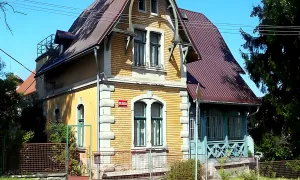
Hrnčířův mlýn in Český Meziríč, the district of Rychnov nad Knežně, is a water mill on the river Dedina. Since 2019 it has been protected as a cultural monument of the Czech Republic. This construction with a history dating back to the end of the 16th century represents an important technical object whose equipment dates back to the turn of the 19th and 20th centuries.
The oldest mention of the mill is from 1598, from the town hall where the mill owner Pavel Šnorař rented it.
The construction stands out with thick stone masonry and was originally covered with shingles roof. The ground floor, built from opposites, probably dates back to the mid-18th century. In the residential area there are rolled arches with five-sided sections. The roof with the vassal roof was built at the end of the 19th to first period of the 20th century.
The mill had three water wheels, one of which reached the floor. In the 1970s, it went from ordinary to artistic grinding. A brick object from the beginning of the 20th century, which was used for Francis' turbine, was added to the longitudinal facade. This novelty replaced a wooden fridge with a ventroku under which water flowed.
The interior of the residential part remained elements from the first half of the 20th century, such as a bathroom with old batteries, flushing toilet with metal tank and cabinet freezer.
After the abolition of the submission in 1848 mill purchased František Šefelín for 8,000 gold. In 1862 it was taken over by Jan Hrnčíř from Lhota in Nahořán for 22,000 gold. The Pottery family owned the mill until the 1950s when the miller activity ended.
The demolition of the building was planned in June 2017. However, the mill avoided it thanks to the declaration of cultural monument and transfer to the Society of Monuments Protectors in Eastern Bohemia, which began its reconstruction.
Hrnčířův mlýn is a valuable witness to water management and technical development in the region. It shows the transition from craft to industry and is worth visiting any interested in technical history.
Historical milestones
- 1598
- The oldest mention of the mill in the town hall.
- 1848
- After the cancellation of the subordination he purchased the František Šefelín mill for 8,000 gold ones.
- 1862
- Jan Hrnčíř from Lhota in Nahořán took over the mill for 22,000 gold ones.
- end of the 19th century
- The transition from ordinary to artistic grinding.
- end of 19th to first period of 20th century
- Roof position with vassal roof.
- 2019
- The mill was declared a cultural monument of the Czech Republic.
Architectural development
The mill had three water wheels and was technologically converted from ordinary to artistic grinding in the 1970s. The ground floor with an opal quarry wall probably dates back to the middle of the 18th century when rolled vaults were made.
Historical events
- 2017
- Approval of the mill demolition.
- 2019
- Declaration for a cultural monument.
Owners
- 1598
- 1848
- 1862
Points of interest
- Hrnčířův mlýn is protected as a cultural monument of the Czech Republic since 2019. - The oldest mention of the mill dates back to 1598, when it was rented by the miller Pavel Šnorař. - The mill had three water wheels and went from ordinary to artistic grinding in the 1970s. - After the abolition of the subordination in 1848 he purchased the mill František Šefelín for 8,000 gold pieces. - The mill avoided demolition thanks to the declaration for cultural monument and transfer to the Society of Monuments Protectors in Eastern Bohemia.
Guide
Show guide text
This text was created by artificial intelligence and has not been editorially reviewed. It may contain inaccuracies.
Welcome to Czech Mezzanine. Stop for a moment, take a breath and feel the atmosphere of this place. You're standing in front of a building that is a silent witness for centuries, in front of the Pottery Mill. Take a look at this structure and try to imagine how the noise of working machines used to sound and how dust from ground grain was floating through the air. It is in front of you that there is a place where the power of nature has come together with human ingenuity. The key to the existence of this mill is the Dedina River, which flows through it and gives it the energy needed to operate. The water still flowing here has been the main engine of everything that's been happening in these walls for centuries.
Let us now return together in time deep into the past so that this space begins to speak with its own voice. The history of this place dates back to the end of the 16th century. The oldest written mention of the mill dates back to 1598. At that time, the mill was registered in the urbarian, which was such a detailed book of records on land and duties, which belonged to the honours. So imagine that even at the time of the Renaissance, when the world around us was changing dramatically, someone was already standing at the mill wheel. The first name that we associate with this place from that time is the miller Pavel Šnorař, who rented the mill at the time. At that time the mill was a fundamental pillar of the survival of local inhabitants, because grinding grain on flour was an absolutely essential activity for each community.
Now pay attention to the construction itself. Although the mill was changing over the years, it still carries traces of its function. Look at the overall shape of the building and perceive its stability. One of the most important architectural elements I would like to draw your attention to is the roof. If you look up here, you'll see the binder. This construction was built between the end of the nineteenth century and the first third of the twentieth century. The Binding Crove is a specific way of arrangement of beams, which allows you to cover the building without the need for too many internal supports, which allowed better positioning of machines and handling of goods in the mill space. It is this roof that gives the building its characteristic appearance and shows the technical progress of that time.
If we go further in time, we get to the nineteenth century, which brought about major social changes. 1848 was a turning point because of the abolition of submission. This meant that people were no longer so close to their masters and could start building their own property. It was at this time, in 1848, that the mill was purchased by a man named František Šefelín. He paid 8,000 gold for it, which was a very large sum at the time. Imagine what courage and faith he had in future profits when he invested such funds in this business.
A little later, in 1862, the mill got into the hands of another person who basically gave him his name today. It was an Jan Hrnčíř from Lhota near Náverán. The price of the mill rose sharply at that time and Jan Hrnčíř paid twenty-two thousand gold for it. This price increase is not random. It shows that the mill has prospered and its value has grown along with the development of the surrounding region. Jan Hrnčíř was not only the owner, but the person who left his mark in this place.
Now, I want to take you to something that might interest you from a technical point of view. The mill wasn't just an ordinary building with one wheel. At the time of its greatest fame, Hrnčířův mlýn had three water wheels. Imagine the movement, the rhythm and the power of the water that drove three different wheels simultaneously. That made the mill a very powerful device. But the most interesting change came in the 1970s. At that time, there was a transition from ordinary grinding to so-called artistic grinding. What does that even mean? Ordinary grinding was rather a craft activity for basic needs. However, artistic grinding required a much softer approach, more precise machine settings and a deeper knowledge of the properties of the grain to produce flour of the highest quality, suitable for more demanding bakery. It was basically a transition from simple craft to high expertise.
If you stand before this monument today, you may be asking why it's so important to us. The answer is that Hrnčířův mlýn is the living book of the history of our region. In 2019, the mill was officially declared a cultural monument to the Czech Republic. This recognition means that the State recognised its unique historical, technical and architectural value. It is a place where we can see how the economy has changed, how technology has developed, and how human destinies have changed over more than 400 years.
Now try to close your eyes for a moment and listen. Do you hear the noise of the Dadina River? It is the same sound that Pavel Šnorař heard more than four centuries ago, which František Šefelín heard at the signing of the purchase contract and which accompanied Jan Hrnčíř in his daily work. This river was and is the lifeblood of this place. Without her, there would be no building, no history, no stories.
Hrnčířův mlýn reminds us of a time when man was much more in line with the rhythm of nature. Everything depended on water level, river flow and crop quality. Today we live in a time of speed and electronics, but looking at these walls makes us slow down. It's a place that teaches us patience and respect for the work of our ancestors.
Now that you know the story of this place, I suggest you examine it further. Take a walk around the building, pay attention to the details in the roof construction, and try to imagine how people from different centuries have moved in this area. Feel the contrast between the calm of today's landscape and the ruckus that existed here in the past.
Hrnčířův mlýn remains a proud symbol of the industrial and craft heritage of the Czech Mezirich. It is a monument that connects us to our roots and reminds us that even the simplest things like grinding grain can have profound meaning and leave a trail in history.
Thank you for accompanying me on this short journey through time. I hope you're interested in the story of the Pottery Mill and that you will take a sense of respect for this fascinating place. You are now fully entrusted with the space. Go through it in peace, look for your own details and be inspired by the atmosphere of this water mill. I wish you a pleasant rest of the day and many other beautiful experiences while exploring our historical monuments. Goodbye.
Tips for visitors
The best time to visit the Pottery Mill is in the spring or autumn season when vegetation is in full beauty and the temperature is pleasant. In addition, you can avoid the excessive sun of the summer months.
The location is also accessible by public transport; Check the current connection in the search engine.
Bring with you shoes suitable for walking along lawn and rocky paths as well as protective clothing against rain. Don't forget the water and sun cream too.
For photography is best come morning or evening when light is softer and shadow effects are more attractive. The most beautiful views of the mill offer water flow from the river Dědiny.
In the vicinity of the Hrnčíř Mill you can visit the church of St. George, which is located about 30 minutes walk from the place. It is an ideal place for families with children due to historical importance and beautiful interior.
Frequently asked questions
Can the monument be visited?
This is a technical monument. Some are open as exhibitions, others are out of use or on private land. We have not verified whether this one is accessible. According to the heritage register restoration is under way, so access may be restricted.
What are the opening hours and admission?
We have not verified the opening hours or admission. Current information is published by the operator.
Where is the monument?
Location: České Meziříčí, Královéhradecký kraj. The map on this page shows the exact spot.
Why is the monument protected?
It is listed in the Central List of Cultural Monuments of the Czech Republic as a cultural monument (register no. 1999993572).
Businesses nearby
Do you run a restaurant, accommodation, shop, museum, rental, wellness or other visitor service near this monument? Show yourself directly to the people heading to it — this is how they will see you in the app and on the web:
Events nearby


Zdroj akcí: otevřená data měst a obcí ČR (Národní katalog otevřených dat) a kalendář akcí Národního památkového ústavu.
Nearby
🏰 Historic sites (108)
- Tomáš Garrigue Masaryk 0.4 km
- Hugo Konias 2.2 km
- Jan Karel Rojek 4.1 km
- S. Jan 4.9 km
- letohrádek 5.0 km
- Záhon Bohumila Vally 5.1 km
- Pomník obětem 2. světové války 5.1 km
- František Kupka 5.2 km
- Husův kámen 5.2 km
- Emanuel Štěpán Petr 5.2 km
- Stálá expozice Františka Kupky a Luboše Sluky 5.3 km
- barokní márnice 5.3 km
- Opočno (zámek) 5.3 km +420 494 668 216 web
- Panna Maria 5.4 km
- Muzeum motocyklů Šestajovice 6.9 km +420 774 903 530 web
- 1918 - 1928 7.4 km
- HIeronymus Mannsfeld 7.7 km
- Pomník padlých v I. světové válce 7.7 km
- Triangulacni bod josefovske zakladny 7.8 km
- Vodní tvrz Kalthaus 7.8 km web
🍽️ Restaurants and dining (127)
- Kafárna Srcofka 0.3 km +420 732 892 908
- Cyklohostinec Slavětín 4.8 km
- Praha 5.0 km
- Zmrlina U Maxe 5.1 km
- Caffetteria & Bar V Zámecké 5.1 km
- U Slunce 5.1 km
- Sport bar 5.1 km
- U Gabči 5.2 km Charouzova 53
- Hospoda u Hrubých 5.6 km +420 603 564 071 web
- Slunný dvůr 6.0 km
- Pod lípou 6.7 km web
- Motoklub East Way 6.8 km
- Obecní hostinec Jeníkovice 7.3 km Jeníkovice 119
- U Popů 7.3 km
- Sklípek 7.6 km
- Montana 7.8 km
- Kebab Dobruška 7.8 km
- Hospůdka Na Hřišti 7.9 km +420 722 930 942
- Jelen 7.9 km
- Kino kavárna 7.9 km
🏨 Accommodation (36)
- Jordánek 4.1 km
- Hostinec 4.2 km
- Podloubí 5.2 km
- Orchidea 5.2 km
- U Zámku 5.2 km
- Broumar 6.0 km
- Slánských statek 8.0 km +420 775 249 035 web
- Jakubův Nový dvůr 8.2 km
- Stellplatz Rozkoš 8.8 km web
- Wakesurf Rozkoš 9.1 km web
- Novoměstský Penzion 9.7 km Kpt. Jaroše 108
- Privát Nováč 9.8 km Havlíčkova 190
- Brouček 9.8 km
- Rajská zahrada 10.0 km
- Penzion Na Hradčanech 10.1 km
- Pension Wunsch 10.4 km web
- Penzion u Pechanzů 11.1 km web
- Helena Hanušová 11.5 km
- Statek u Kynosů 11.5 km web
- Penzion Expanze 11.9 km web
🚲 Rentals and sport (34)
- Zimní stadion Opočno 5.1 km
- dětský bazén 5.8 km
- plavecký bazén 5.9 km
- Sokolovna 7.6 km web
- Střelnice na asfaltové holuby 7.8 km
- Krytý bazén Dobruška 8.1 km
- BN Aktivity 8.2 km Kostelní 369 +420 724 123 120 web
- Odysseus Jachtklub molo 8.9 km
- Jachtklub Slavia 9.1 km
- R2 sport bike 9.9 km Husovo náměstí 1212 +420774711972 web
- MORRISCZ COMMERCE s.r.o 10.2 km web
- Cyklocentrum Petr Václavek 10.2 km +420 777 638 983
- Krytý bazén 10.3 km web
- Sokolovna 10.4 km
- Libra JÍZDNÍ KOLA 11.2 km web
- Orlice, km 16,2 - nástupní místo Třebechovice 11.3 km
- Nextbike 11.5 km web
- sportovní hala 11.7 km
- Orlice, km 9,3 - nástupní/výstupní místo 11.8 km
- Plavecký bazén 11.9 km
🥾 Hiking and nature (166)
- Černý kopec 2.6 km
- Bílý kopec 2.8 km
- Lhotecký kopec 3.3 km
- U Tuřího 3.7 km
- Horka 4.0 km
- U Kříže 4.2 km
- Na čihadle 4.2 km
- Budín 4.2 km
- Humbule 4.5 km
- Humbule 4.5 km
- Hřiby 4.6 km
- Hlohovský kopec 4.8 km
- Pelesov 4.8 km
- Švamberk view 5.3 km
- Horka 5.3 km
- Homole 5.4 km
- Na Tibetu 5.4 km
- Panenkův kopec 5.4 km
- Chateau view 5.5 km
- Horka 5.5 km
Accommodation nearby
Themed route
Thematic cruise route from Český Meziríčí
1. Hrnčířův mlýn (Water Mill) The main objective of our route is Hrnčířův mlýn, a historical monument located in the heart of Český Meziríč. This water mill was an important part of local industrial activity and today it is open to visitors who want to learn more about the traditions of pottery. The mill offers an interesting exhibition and an opportunity to see historical machines.
2. Church of St. Jacob the Greater After visiting the Potnčíř Mill we will go to the city centre where we will find the Church of St. Jacob the Greater. This Baroque church is one of the most interesting architectural monuments in Český Meziríč. Its richly decorated interior and city views are a real reward for visitors.
3. Square of the Republic The next step is to visit the Central Square of the Republic, which is the heart of the city and an ideal place for relaxing after visits. This public area offers beautiful views of surrounding historical buildings and is suitable for walking or simple relaxation.
4. Pottery Museum If you are interested in a deeper understanding of the local industry, we recommend visiting the Pottery Museum. This museum is located near the Hrnčíř Mill and provides detailed information on the history and technology of the pottery craft, which has been developed in Český Mezíříčí in the long term.
5. Brewery Black Snake To conclude our route we recommend a visit to the Black Snake Brewery, where you can not only explore the beer production process, but also enjoy the beer fruit itself. This brewery is known for its traditionally produced drinks and offers an opportunity to understand local drinking traditions.
This route will guide you through the historical and cultural aspects of Český Meziríčí, which is an ideal way to learn more about this interesting location.
Seasonal recommendations
Spring in the surroundings of Hrnčíř's mill in Český Meziríčí brings awakening nature and changing water levels, which affects the atmosphere around the building. The bright rays of the sun fall on wet wood and stone masonry, creating a melancholy but hopeful impression. Since it is a monument in reconstruction, it is necessary to count on the work of building brigades, noise and possible closed parts of the complex. Clothes should be laminated because spring weather is variable and often accompanied by rain. It is best to visit a place in the late afternoon when temperatures rise and construction can slow down. Avoid narrow paths that may be slippery after rain and be considerate to workers working on restoring historical elements.
Summer offers the longest days and brightest lights that reveal details of reconstructed facades and surrounding greenery. The atmosphere is lively, but in the main summer season there are more tourists in the region, which can affect the quiet atmosphere at the mill. It is recommended that you arrive in the early hours of the morning to avoid the biggest crowds and enjoy the cold shadows before the sun comes full. Clothes should be light and breathable, suitable for higher temperatures, and it is essential to have enough drinking water with them. The shade under the trees or at the water tank will be appreciated in the afternoon when the heat is most intense. Be prepared that part of the premises may be temporarily unavailable due to summer operations and maintenance.
Autumn brings a rich variety of leaves and cooler air to the landscape around the mill, which gives the scene a romantic and thoughtful character. The light is softer and warmer, highlighting the texture of old wood and stone reconstructed buildings. Nature around the water tank is calmer because summer tourism has receded. Clothing should be laminated with an emphasis on thermal insulation, as evening cold manifests itself faster. The best time to visit is in the morning when visibility is good and temperature still tolerable. Observe changes in the water mode that may affect the access routes. The autumn atmosphere is ideal for shooting details of the reconstruction in the soft autumn light.
Winter in Český Meziríčí brings rest of nature and often snow cover, which contrasts with the dark colours of the mill. Short days mean that the light conditions are rapidly deteriorating and therefore it is best to visit the memory in the noon hours when the sun is highest. The atmosphere is quiet and quiet, ideal for thinking about the historical context of the building. Clothes must be very warm, waterproof and with good shoes on slippery surfaces. Since the monument is in reconstruction, winter traffic can be restricted or completely stopped due to frost and building restrictions. Check the current accessibility information before the trip. The winter landscape around the mill offers a unique view of historical architecture in a quiet, snowy environment.
Visualizations and artistic views


The visualisations are generated by artificial intelligence and serve as inspiration.
Photos from the area
Real photos taken near the monument


Zdroj a licence jsou uvedeny u každého snímku.
Tips from visitors
No tips yet. Be the first!
Log in and add your tip.
Sources and literature
Faktickým podkladem tohoto textu byl článek na Wikipedii, jehož autory jsou přispěvatelé Wikipedie. Článek je dostupný pod licencí CC BY-SA 4.0.
Location on the map

Příběhy a pověsti
Legendy, pověsti a příběhy spjaté s touto památkou

Fotografie návštěvníků
Zatím žádné fotografie. Buďte první, kdo přidá fotografii z návštěvy!
Log in a přidejte svou fotografii nebo hodnoťte.
Za ověřenou návštěvu v aplikaci získáte víc bodů — poznáme podle GPS, že jste na místě.
Reviews and comments