



Hrobka rodiny Daubkovy Tomb
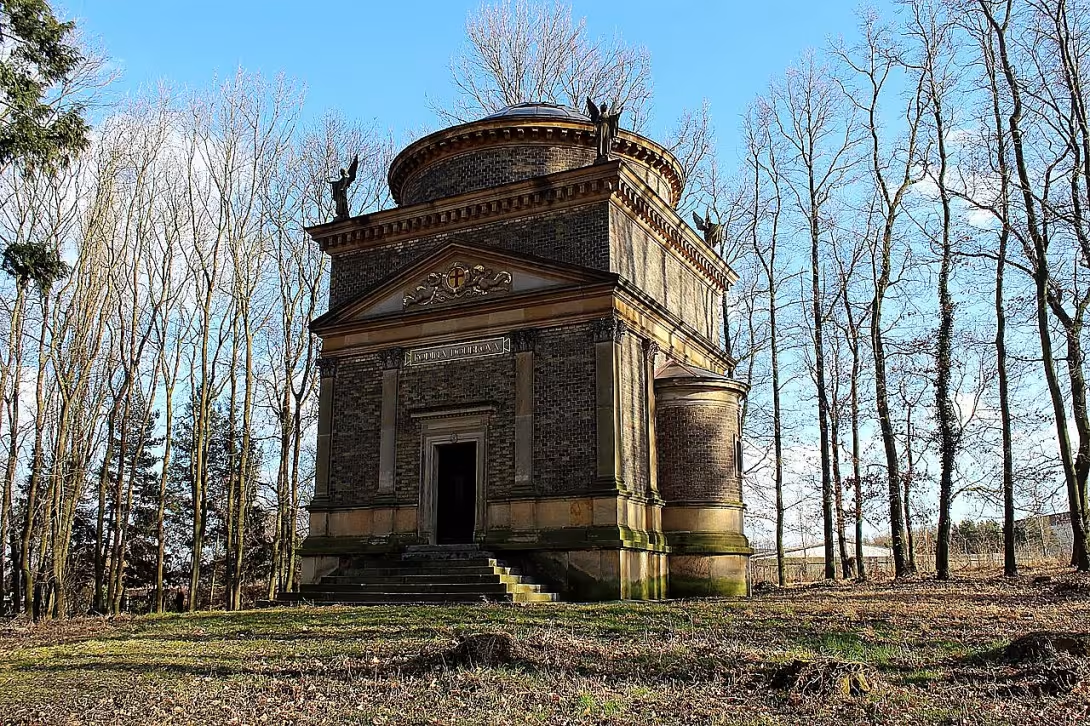
Hrobka rodiny Daubkovy in the municipality of Liteň in the district of Beroun is a neo-Renaissance funeral chapel with a tombstone built in 1888 according to the design of architect Antonín Wiehl. This cultural monument registered since 1958 is remarkable by its combination of the top Czech Neo-Renaissance architecture of the turn of the 19th and 20th centuries with the artistic decoration of the great creators of the time, which include Josef Václav Myslbek or Maxmilián Pirner.
The builder of the funeral chapel and tomb was Josef Šebestián Daubek. After taking over the family capital in Litni and Lower Vlence in 1882 he modernised the Lithuanian capital and supported the economic and cultural development of the region. The design of the chapel with the tomb of a renowned architect, sculptors and painters is related to Daubka's benefactor. Since the 1980s he regularly invited to the castle in Litni and to his farm to Brno an important artist of the generation of the National Theatre and supported them by entering art orders. The construction was built in 1888 on artificially elevated terrain, thus forming a dominant edge of Litna when viewed from east and south.
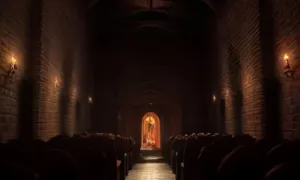
The funeral sanctuary has a square floor plan and it is based on a suspect made from a plinth of a sandstone. The circumferential wall of the chapel and the tamburu form unbraided burnt bricks. On each wall of the building there are two pillars and one column in each corner. On the perimeter of the roof, at the height of the tympanone and on the tamburo, they step out of the facade of the console ledge. Above the main ledge is a triangular tympanone with the width of the facade of the chapel. It is decorated with a relief of two flying children's characters or putti, which carry a laurel wreath with a mosaic filling of a red cross on a yellow background. Above it takes place in the entire width of the console ledge. The entrance door is set in a richly decorated portal, over which also a console ledge runs across the whole width. The interior walls are decorated with cluster stucco and there is a sign above the entrance. On the marble altar is a statue of St. Joseph with a white marble Jesus. The fresco above the altar in triptych depicts the Virgin Mary the Painful, kneeling Joseph Franz Joseph Daubek with wife and kneeling builder Josef Šebestián Daubek with wife and daughter. During the design of the Lithuanian tomb, the author Antonín Wiehl inspired the church of San Andrea on Via Flaminia in Rome. The plastic decoration of the tympanone, the belt with the inscription RODINA DOUBKOVA and marble altar was created between 1884 and 1886 by Josef Václav Myslbek, while the author of the triptych above the altar is Maxmilián Pirner.
Under the chapel is a tomb in which the body of members of the Daubka family and their wives are stored in eleven decorated zinc coffins. The walls of the tomb are decorated with coats of arms, swords and badges.
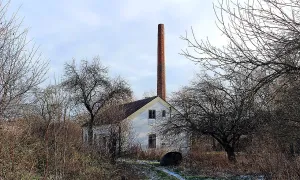
In 1958, the chapel with the tomb was registered as a cultural monument. A major event in modern history was the deposit of an urn with the remains of the opera singer Jarmila Novotné, married to Daubková, after their transport from New York in 1994. This urn lies with the urn of her husband George Daubek in the chapel on the altar. Around the monument there was an English park, whose trees cover the construction especially in summer. The project's author is also Antonín Wiehl. Due to the security of the tomb, a guard house for the watchman grew up in its neighborhood by the road, whose author is once again Wiehl. The folk architecture-style guard house has a saddle roof with a refraction and instructive password Naprzed at the back of the eye meg, better gestest deter him than catch him. There's another access road to the tomb around the house.
Since 2013 the monument has been presented to the public as a stop on the blue path of the learning path Liteň.
This object represents a valuable example of the historical architecture and monetary art of the end of the 19th century, which links the work of important personalities of Czech culture. Visiting this place in the village of Liteň offers a remarkable view of a collection of architecture, sculpture and landscaping in an authentic historical context.
Then and now
Drag the slider to compare how the landmark may have looked when it was built with the view today.
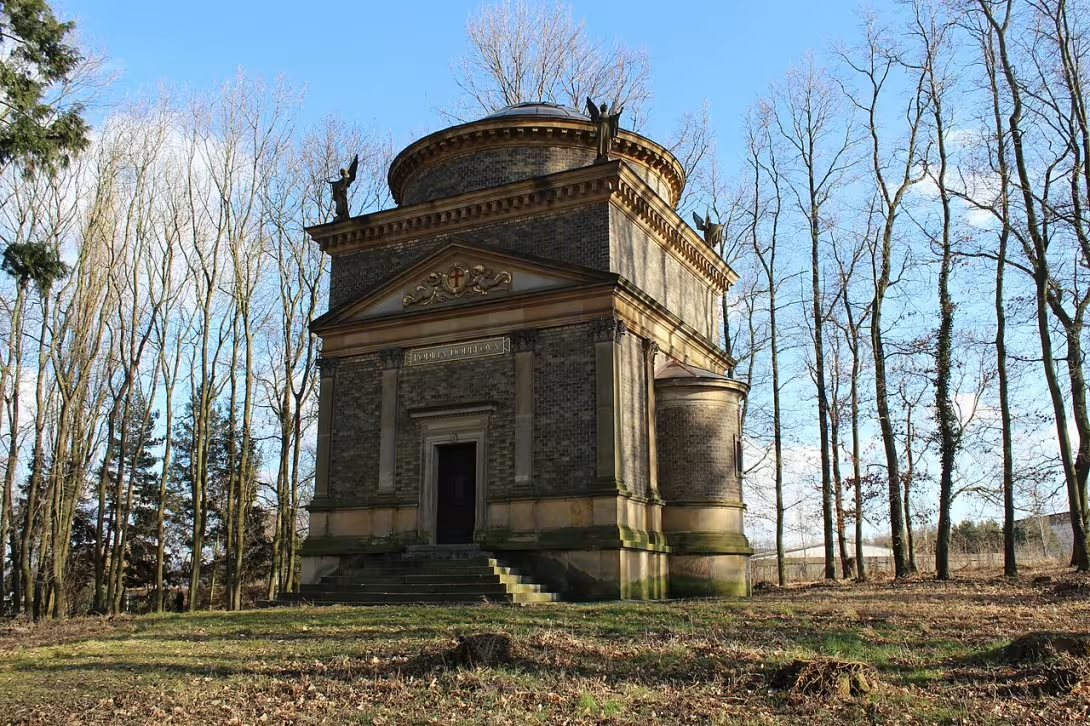

The historical appearance on the left is an AI-generated visualisation and serves as inspiration only.
Historical milestones
- 1888
- Completion of funeral chapel and tomb construction.
- 1958
- Writing the chapel into the register of cultural monuments.
- 1994
- Saving an urn with the remains of the opera singer Jarmila Novotné.
Architectural development
The construction was carried out in a Neo-Renaissance style made of unwashed burnt bricks and sandstone. The interior is decorated with cluster stucco and marble altar. The whole area including the park was designed by Antonín Wiehl.
Historical events
In 1888, the chapel was built. In 1958 it was registered as a cultural monument. In 1994, the funeral of the opera singer Jarmila Novotné took place.
Owners
Josef Šebestián Daubek (construction kit)
Points of interest
- Hrobka rodiny Daubkovy in Litni is a neo-Renaissance funeral chapel with a tomb built in 1888 according to the design of architect Antonín Wiehl. - The monument is a remarkable combination of top Czech Neo-Renaissance architecture with artistic decoration of important creators, including Josef Václav Myslbek or Maxmilián Pirner. - The construction was created on artificially elevated terrain and forms the dominant edge of the Litna Litna when viewed from east and south. - In the underground tomb, in eleven decorated zinc coffins, the body box of members of the Daubka family and their wives is stored, with the walls of the tomb decorated with coats of arms, swords and badges. - In 1994, an urn was placed in the altar chapel with the remains of the opera singer Jarmila Novotné, married to Daubková, along with her husband George Daubka's urn.
Guide
Show guide text
This text was created by artificial intelligence and has not been editorially reviewed. It may contain inaccuracies.
Welcome to Litni, a place where history joins nature in complete harmony. Right now, you're standing in front of one of the most important places in the area, the tomb of the Daubkov family. Stop for a moment, take a breath and feel the atmosphere of this English park that surrounds the memory. In front of you is a Neo-Renaissance funeral chapel, which, by its presence in the countryside, is peaceful and yet very noble. The first thing you'll probably notice is its compact, balanced form. The chapel has a square plan, which gives it a sense of stability and eternity, which is very symbolic of funeral architecture. It is a place of silence and contemplation which now invites you to know who was behind this building and why it is so valuable to us today.
Let us now go back in time more than a hundred and thirty years. We are in 1888, at a time when Czech architecture experienced a period of boom and sought its identity in returning to the values of the Renaissance. It was this year that the construction was completed for the Daubka family. The main character who breathed life into this project was the important architect Antonín Wiehl. Wiehl was not just an ordinary builder, he was the master of his craft, who was able to combine functionality with a high aesthetic ideal. The Daubka family, and especially Josef Šebestián Daubek, wanted to create a place that was not just a tomb, but a real work of art that would last centuries. And as you can see, their wish has come true. This chapel is not only a private family grave, but it has become part of the cultural heritage of the whole region.
Now that you're standing right by the building, pay attention to its architecture. As has already been mentioned, this is a neo-Renaissance style. Take a look at the total octave design and see how architect Wiehl worked with space. The square plan is not random, it represents order and balance. Look at the facade and see the precision of the details that are typical of this period. The Neo-Renaissance tried to return to harmony and humanity, which is evident here in every element. But architecture is just a framework for something much deeper. This chapel is a real open-air gallery.
Notice the statues that decorate the object. These are not anonymous works, but the work of one of the greatest Czech sculptors of all time, Josef Václav Mysbek. The mind was a master who could capture human emotions and the depth of the spirit in the stone. When you look at these statues, you realize that you are meeting the work of a man who defined the shape of many of our most important monuments. His work here gives us a spiritual dimension and reminds us of the transitory life and the hope of immortality in art. And that's not all. If you could see into the inner space, your eyes would meet the fresco created by Maxmilián Pirner. The combination of the architecture of Wiehl, the sculpture of Mybek and the painting of Pirner makes this chapel a unique whole, where the three top talents of their time worked together on one piece. It's a rare example of such a complex artistic approach to funeral architecture.
Now let's think about the personalities associated with this place. In addition to the founder of Josef Šebestián Daubka, there have been other fates here over the years. One of the most important is the story of the opera singer Jarmila Novotné. Imagine the fascinating parallel where the world of high opera art meets in the tomb of a family of industrialists and benefactors. In 1994, an urn with the remains of this legendary artist was stored here, famous for her voice and talent around the world. Her presence here gives the place a new layer of meaning. So the chapel stopped being just a family archive place and became a temple of the memory of human genius in various forms.
You may be wondering how this monument is protected. Its value was officially recognised in 1958 when the chapel was entered in the register of cultural monuments. This means that the state has recognised that this building is not only a local unique building, but is of importance for the whole Czech culture. It's fascinating how at one point in space, the industrial ambitions of the late nineteenth century, the top art craft and subsequent recognition in the mid-twentieth century meet.
The interesting thing that may interest you is the very location in the English park. Unlike the grisly, geometric cemeteries we know from cities, this tomb is planted in a landscape that is supposed to act naturally. The English park is designed so that the visitor passes through nature and gradually discovers individual dominance. This chapel is one of them. Imagine the shadow of Neo-Renaissance architecture floating in the forgotten silence of the park. There's something about romanticism, something about secrets that make you stop and think about the relationship between man, art and nature. It's a place where time has stopped and where you can escape the daily rush.
Now that you know the story of this building, its creator and the personalities that rest here, I suggest you take a walk around the chapel slowly. Feel the light breaking on the statues of Josef Václav Mysbek, and try to imagine what colors and stories Maximilian Pirner's frescoes tell inside. Walk a little further into the surrounding park, let yourself follow the paths and feel the calm this place offers. This tomb of the Daubkov family is not just a stone building, it is a letter from the past that reminds us that true art and nobility will never go out of fashion.
Thank you for accompanying me on this short journey to the history of Litni. I hope this view of the Daubkov family tomb has helped you better understand its beauty and significance. I wish you a pleasant further tour and many inspiring experiences in discovering the beauty of our region. Goodbye.
Tips for visitors
To visit the Neo-Renaissance tomb of the Daubkova family in Litni, choose the morning clock, where the sunlight ideally illuminates the architectural details of the chapel and gives the place a quiet atmosphere. Transport to the city of Liteň is possible by car and public transport, while check the current connection in the search engine; you can park in the area where you will walk to the monument. Take with you comfortable shoes for walking in uneven terrain, suitable snacks and drinks, because you will not find shops at the tomb. For photography it is best to use morning or late afternoon light to highlight the shapes of the building embedded in the picturesque environment, with the best shots achieved from the edges of grassy areas in the park. During the trip with children you will appreciate plenty of space for outdoor movement and exploring nature, while you can enhance the trip by telling children about the history of the Daubka family.
Frequently asked questions
Can the monument be visited?
Cemeteries and graves are usually accessible; please respect the dignity of the place. We have not verified the opening hours of this cemetery.
Where is the monument?
Location: Liteň, Středočeský kraj. The map on this page shows the exact spot.
Why is the monument protected?
It is listed in the Central List of Cultural Monuments of the Czech Republic as a cultural monument (register no. 1000145962).
Businesses nearby
Do you run a restaurant, accommodation, shop, museum, rental, wellness or other visitor service near this monument? Show yourself directly to the people heading to it — this is how they will see you in the app and on the web:
Events nearby


Zdroj akcí: otevřená data měst a obcí ČR (Národní katalog otevřených dat) a kalendář akcí Národního památkového ústavu.
Nearby
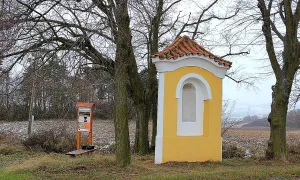
English park and guard house in the style of folk architecture.
Accommodation nearby
Trips and activities nearby
Guided tours, tickets and activities nearby from GetYourGuide
Affiliate link: if you buy from the partner, we may receive a commission. The price for you does not change.
Search tours and activities →Themed route
1. Hrobka rodiny Daubkovy (chapel) Type: Historical monument Why is it worth a visit: This family chapel represents the main destination of the trip in the village Liteň and captures its unique architecture and atmosphere.
2. English park Type: Natural and landscape element Why is it worth a visit: A large park in the immediate vicinity of the tomb offers a pleasant environment for a quiet walk in the middle of the green.
3. Watchhouse in the style of folk architecture Type: Architectural interest Why is it worth a visit: The picturesque house around the main destination is evidenced by the traditional folk architecture of the region.
Seasonal recommendations
Spring brings new beginnings around the chapel and fresh green color of surrounding vegetation, creating a pleasant contrast to the historic stone part. The light is fine and scattered during this period, which is ideal for observing the details of the construction. For the best experience we recommend visiting the morning hours when the air is the cleanest. Prepare your layered clothes because the morning cooling can still be felt despite the coming heat.
In the summer months the atmosphere around the monument is full of life and dense green provides a pleasant shade. Strong sunlight highlights the texture of materials, but can also cause sharp shadows. In the main summer season it is recommended to arrive in the early morning to avoid the biggest rush of visitors and heat. Don't forget the quality shoes and sun protection.
Autumn is a period of melancholy and calm for this location, when golden shades of leaves and morning fog create a mystical mood. Low sun in the afternoon creates interesting shadows on the facade. It is advisable to take a warmer top layer and plan a tour at a time when the sun is still shining to make the landscape colorful. The weather is unpredictable at this time, so wear waterproof clothes.
Winter turns the surroundings into a quiet and rugged landscape, where bare branches and possible snow underline the historical importance of the place. The atmosphere is very quiet and permeable for contemplation. Due to short days and lower temperatures, it is best to visit the memory around noon when the light is the most. The need is very warm clothes and solid shoes to protect you from cold and possible ice.
Visualizations and artistic views


The visualisations are generated by artificial intelligence and serve as inspiration.
Photos from the area
Real photos taken near the monument


Zdroj a licence jsou uvedeny u každého snímku.
Tips from visitors
No tips yet. Be the first!
Log in and add your tip.
Sources and literature
Photos: Elektracentrum / CC BY-SA 4.0 — Wikimedia Commons. The author and licence also appear when you hover over the image.
Faktickým podkladem tohoto textu byl článek na Wikipedii, jehož autory jsou přispěvatelé Wikipedie. Článek je dostupný pod licencí CC BY-SA 4.0.
Location on the map


Příběhy a pověsti
Legendy, pověsti a příběhy spjaté s touto památkou
Fotografie návštěvníků
Zatím žádné fotografie. Buďte první, kdo přidá fotografii z návštěvy!
Log in a přidejte svou fotografii nebo hodnoťte.
Za ověřenou návštěvu v aplikaci získáte víc bodů — poznáme podle GPS, že jste na místě.
Reviews and comments