






Židovský hřbitov v Litni Jewish cemetery
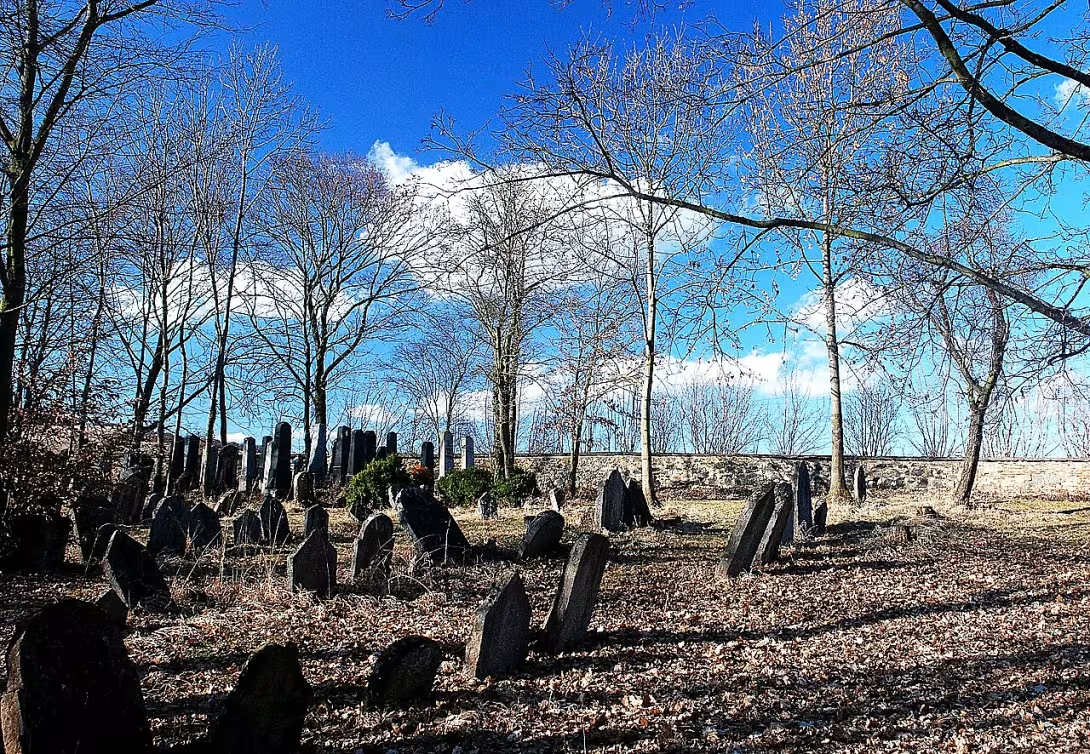
Židovský hřbitov v Litni is one of the oldest Jewish burial grounds in Central Bohemia. It lies approximately one kilometre southwest of the village Liteň. It was founded in 1680 by Count Kunoutou of Bubno and was used to bury Jews from a wide area including Praskoles, Hostomic and other neighbouring communities. It is celebrated thanks to well preserved baroque and classical tombstones with unusual patterns. It has been under the protection of the National Heritage Institute since 1958.
The burial ground was created when Jewish communities began to stabilize under the protection of nobles. The first mention of the Jewish settlement in Litni dates back to the year of establishment, which shows the importance of this place for local Jews. The oldest preserved part is located at the entrance and in the centre of the complex. Here you can find some of the oldest tombstones with legible inscriptions from 1685. The expansion of the cemetery towards the end of the 19th century is evident from the typology of matrices and other details.
Architecturally dominated by tombstones carved from the lining, common material in the surroundings. Older monuments were carved out of wood; The last preserved piece from 1843 is part of the exhibition of the Jewish Museum in Prague. Unique are the haskal obelisks from the second half of the 17th century whose "wings" lining the perimeter of the original part of the cemetery. There is also a new Romanesque building serving as a dwelling for the grave digger, the road or a place for the tahara.
Property and administration have changed over the years. Although the cemetery was founded by Count Kuňta z Bubna, tombstones bear the names of families such as Roubíček (Robitschek) and Epstein, who had a significant position in the Jewish community. These families were associated with the role of kohanim and leviji.
Key events include burying Jews expelled from Prague by Maria Terezia in 1744, which is reflected on some tombstones with motives for birds and plants. On 3 May 1958 the cemetery was registered among the national cultural monuments, highlighting its historical and cultural value.
Today the Lithuanian Jewish cemetery is in a desperate state, although between 2005 and 2013 the roof of the former ceremonial room was repaired. Although it fades, its historical and cultural value remains unquestionable. The cemetery represents an important testimony of Jewish settlement in the region and is a permanent monument to rich history and traditions.
Visiting the Lithuanian Jewish cemetery offers a unique view of the past, where each tombstone tells its own story. It's a place full of historical miracles and symbols worth exploring and honoring.
Then and now
Drag the slider to compare how the landmark may have looked when it was built with the view today.
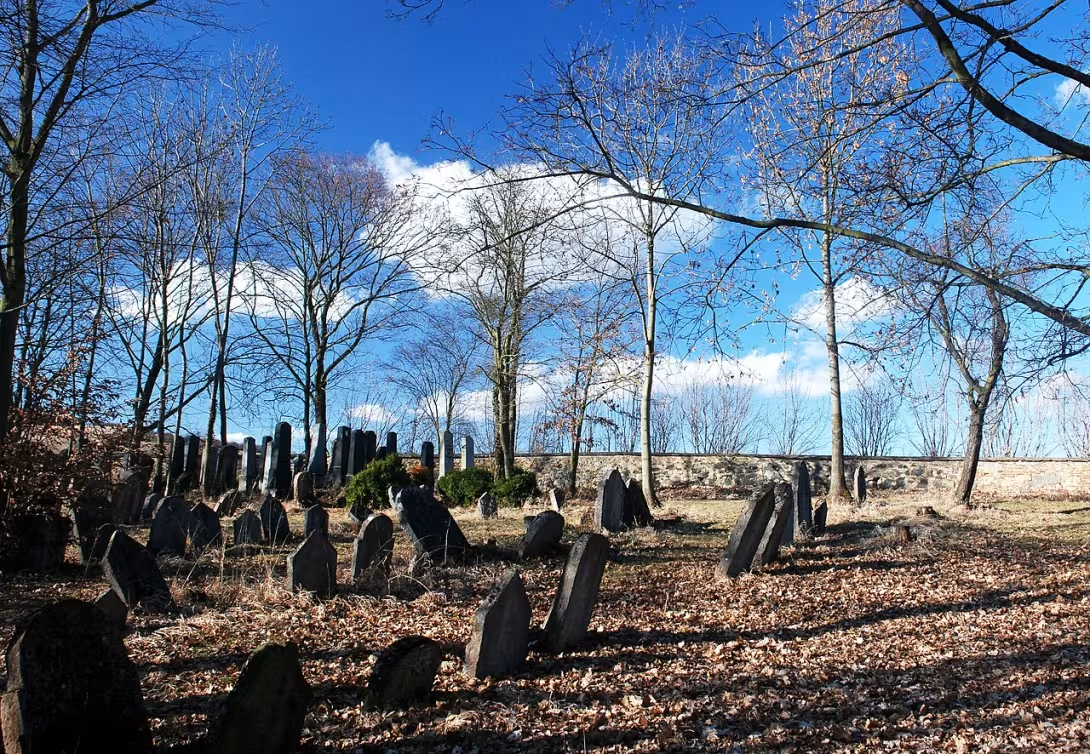
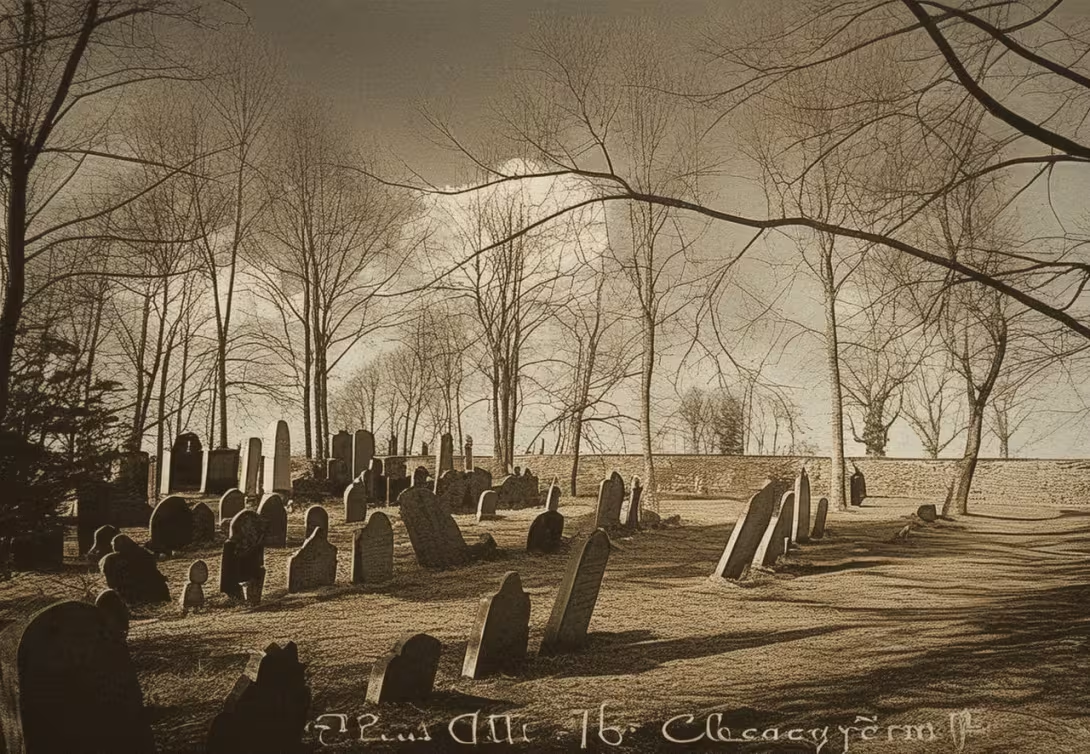
The historical appearance on the left is an AI-generated visualisation and serves as inspiration only.
Historical milestones
- 1680
- The foundation of the cemetery by Count Kunata of Bubno
- 1685
- The creation of one of the oldest preserved tombstones
- 1744
- Burying Jews expelled from Prague by Marie Terzie
- 1927
- Building a ceremonial hall
- 1958
- Listing to the list of national cultural monuments
Architectural development
The oldest part of the cemetery is located at the entrance and in its centre. At the end of the 19th century the area was expanded to the sides. Part of the complex is the New Romanesque building for the Gravedigger and ceremonial hall from 1927.
Historical events
In 1680, the cemetery was founded. In 1744 Jews expelled from Prague by Marie Terzie were buried here. In 1958 the monument was registered among the national cultural monuments.
Owners
Count Kuňta z Bubna (founder)
Points of interest
- Židovský hřbitov v Litni is one of the oldest Jewish burial grounds in the Central Bohemia region. - It was founded in 1680 by Count Kunoutou of Bubno and was used to bury Jews from a wide area including Praskoles, Hostomic and other neighboring communities. - It is celebrated thanks to well preserved baroque and classicist tombstones with unusual patterns. - The oldest preserved part of the cemetery contains some of the oldest tombstones with legible inscriptions from 1685. - Key events include the burial of Jews expelled from Prague by Maria Terezia in 1744, which is reflected on some tombstones with motives of birds and plants.
Guide
Show guide text
This text was created by artificial intelligence and has not been editorially reviewed. It may contain inaccuracies.
Welcome to one of the most important and oldest places in Central Bohemia. You are standing right outside the gate, which undetected separates you from today's busy world and leads you into a space where time seems to have stopped. Before your eyes, there is a Jewish cemetery in Litni. Feel this quiet, until the sacred atmosphere, the serenity that prevails here, and let yourself be carried away by the feeling of deep respect for history that is felt in every stone and shadow of the log. This enclosed wall garden is not only a simple resting place, but a living witness to the fate of many people who once lived here, believed and worked in the wider surroundings. Behold these walls that surround the entire space and create a protective circle around this peaceful refuge.
Let us now go back deep into the past together to understand better how this place was created and why it is so important here today. The whole history of this cemetery begins in the year one thousand six hundred and eighty. At that time, Count Kuňta z Bubna decided to establish this place in order to provide a dignified and permanent resting place for Jewish citizens. It was not just a local cemetery for the people of Litna itself. Its meaning goes far beyond what you might think at first sight. This space was used to bury Jews from a very wide area. People from nearby villages such as Praskoles, Hostomice and other neighboring settlements came to Litna. This made Liteň an important centre for the Jewish community throughout the region, and this cemetery became their common home even in the afterlife.
Now pay attention to what you see right around you as you go between the tombstones. As soon as you take the first steps into the premises, notice their extraordinary beauty and diversity. This space is a true glass cabinet of history in terms of stone art. Here you will see tombstones from different periods, which together form a fascinating and harmonious whole. Focus mainly on the Baroque and Classicist elements that dominate here. The Baroque tombstones are often richer, with more distinctive shapes and dynamics, while the classicist ones are more silky, clean and elegant. But what is truly extraordinary and what you should not miss are unconventional patterns that you can see in them. Each stone tells its own story through these decorative motifs that differ from ordinary contemporary art and give the whole place its unique character. Note the details of how light breaks on the uneven surface of an old stone and how different styles complement each other. Within the cemetery you can also see the historical morgue and the grave digger's apartment, which shows how organized and important the operation of this place was in the past centuries. The whole area is carefully defined by the wall, which gives the place a sense of closure and peace.
The history of this place is closely linked to large figures and also to dramatic events that have affected the entire fate of people in this area. In addition to the founder, Count Kunita of Bubno, here we must remember a time when the fate of the people buried here has fundamentally changed because of political decisions. In the year one thousand seven hundred forty-four, there was an event that shook the entire Jewish population around. Marie Terezie issued a decision that led to the expulsion of Jews from Prague. This meant that many people sought refuge and a new place for their lives and their communities, and it was Liteň and its cemetery that became part of this complex and often painful process of finding a new home. This cemetery is not only a collection of stones but a monument to human endurance and the ability to adapt in times of great change.
You might find one particular thing interesting when you look closely. One of the oldest preserved tombstones dates back to the year six hundred and eighty-five. Imagine how long this piece of stone has resisted all the weather, how it survived for centuries and how many generations have seen it. It's a fascinating connection with the past, which is almost tangible here. The whole area was recognised in a thousand and nine hundred and fifty-eight by its uniqueness and entered on the list of national cultural monuments. This confirms that what you see is not just an old cemetery, but an invaluable treasure of our culture that we must protect for future generations.
I won't keep you now. I suggest you continue your peaceful walk between these tombstones. Look at every detail, feel the silence and be inspired by the history that is hidden here in every corner. Maybe you'll find tombstones that interest you with their unconventional patterns, or you'll just find a moment to think quietly about human life and the time that passes. Thank you for visiting the Jewish cemetery in Litni. We wish you a beautiful and touching encounter with history.
Tips for visitors
The best time to visit the Jewish cemetery in Litni is autumn or spring when vegetation on the edge of the cemetery is best visible and the light is ideal for photography. These periods also offer a quieter environment without high temperatures of summer months.
Parking is located near the village Liteň, where it is possible to find a vacancy. For those travelling by public transport, Litni is well accessible from Beroun or Hostoměc, with connection options that can be verified in the current schedule. It is advisable to plan the journey so that the place is easily accessible.
When visiting the cemetery, it is recommended to take with you shoes or shoes suitable for walking on both dry and wet surfaces, because part of the area may not be in ideal condition. Fill your inventory with umbrella and protective clothing, especially if you plan to visit in colder months.
Photography in the cemetery offers unique possibilities thanks to historical stones and natural environments. Preferably take pictures at noon, when the light is brightest, but also in the early morning or evening for softer shadows. Remember to respect the place and treat the monument sensitively.
In the vicinity of the cemetery you can visit historical villages such as Beroun or Hostomyče, which offer interesting cultural and historical attractions. For families with children, interest in history and culture can be taught through visits to these places, providing a valuable opportunity for learning outside the school framework.
Businesses nearby
Events nearby



Zdroj akcí: otevřená data měst a obcí ČR (Národní katalog otevřených dat) a kalendář akcí Národního památkového ústavu.
Nearby
Municipality of Liteň and surrounding municipalities such as Beroun, Hostomyce or Libomyl.
Accommodation nearby
Trips and activities nearby
Guided tours, tickets and activities nearby from GetYourGuide
Affiliate link: if you buy from the partner, we may receive a commission. The price for you does not change.
Search tours and activities →Themed route
1. Beroun (City) - A good place to start the journey in this area. 2. Hostomyce (Village) - A stop in this location during the transfer. 3. Libomyl (Village) - Another point of the route within the vicinity. 4.Liteň (Municipality) - A place that forms the basis for the main objective. 5. Židovský hřbitov v Litni (Memorial) - The main destination of the trip, the historic place to visit.
Seasonal recommendations
Spring: In spring, the cemetery wakes up with nature. Fresh shoots are beginning to grow between old tombstones and light is soft and pleasant due to the lower position of the sun. The atmosphere is full of contrast between a new life and a crumbling history. I suggest you wear waterproof shoes because the road can be muddy because of spring rain. The best thing is to come in the morning when the air is the cleanest.
Summer: In the summer months there is a place covered with thick greenery, which can be very uneasy in combination with the bad state of the monument. The sun shines directly and creates sharp shadows between the trees. Because of the heat and possible insect occurrence, it's best to visit the site early in the morning before the gate begins. Don't forget the headgear and tight shoes that protect you from uneven terrain and high grass.
Autumn: Autumn brings a melancholy mood to Litna which perfectly matches the decaying monuments. The foggy morning times and falling leaves create a very strong, almost threatening atmosphere. The light is golden and deep in this period, which is ideal for capturing details. Dress with layers and count on wet leaves to cause slippiness while travelling.
Winter: Winter makes the cemetery feel full of emptiness and silence. Without leaves, you can see even the most neglected parts of the tombstones, and the whole monument is rough and rough. In advent time or during freezing days there is a bossy silent sadness. It is necessary to have very warm clothes and solid shoes with good grip due to impacts of frost or snow. For short days, plan a visit around noon.
Visualizations and artistic views


The visualisations are generated by artificial intelligence and serve as inspiration.
Photos from the area
Real photos taken near the monument

Zdroj a licence jsou uvedeny u každého snímku.
Tips from visitors
No tips yet. Be the first!
Log in and add your tip.
Sources and literature
Fotografie: Pastorius / CC BY 3.0 — Wikimedia Commons. The author and licence also appear when you hover over the image.
Faktickým podkladem tohoto textu byl článek na Wikipedii, jehož autory jsou přispěvatelé Wikipedie. Článek je dostupný pod licencí CC BY-SA 4.0.
Location on the map
More monuments – Liteň
Show all in the municipality
Příběhy a pověsti
Legendy, pověsti a příběhy spjaté s touto památkou

Fotografie návštěvníků
Zatím žádné fotografie. Buďte první, kdo přidá fotografii z návštěvy!
Přihlaste se a přidejte svou fotografii nebo hodnoťte.
Za ověřenou návštěvu v aplikaci získáte víc bodů — poznáme podle GPS, že jste na místě.
Reviews and comments