






Hynšta Rock castle
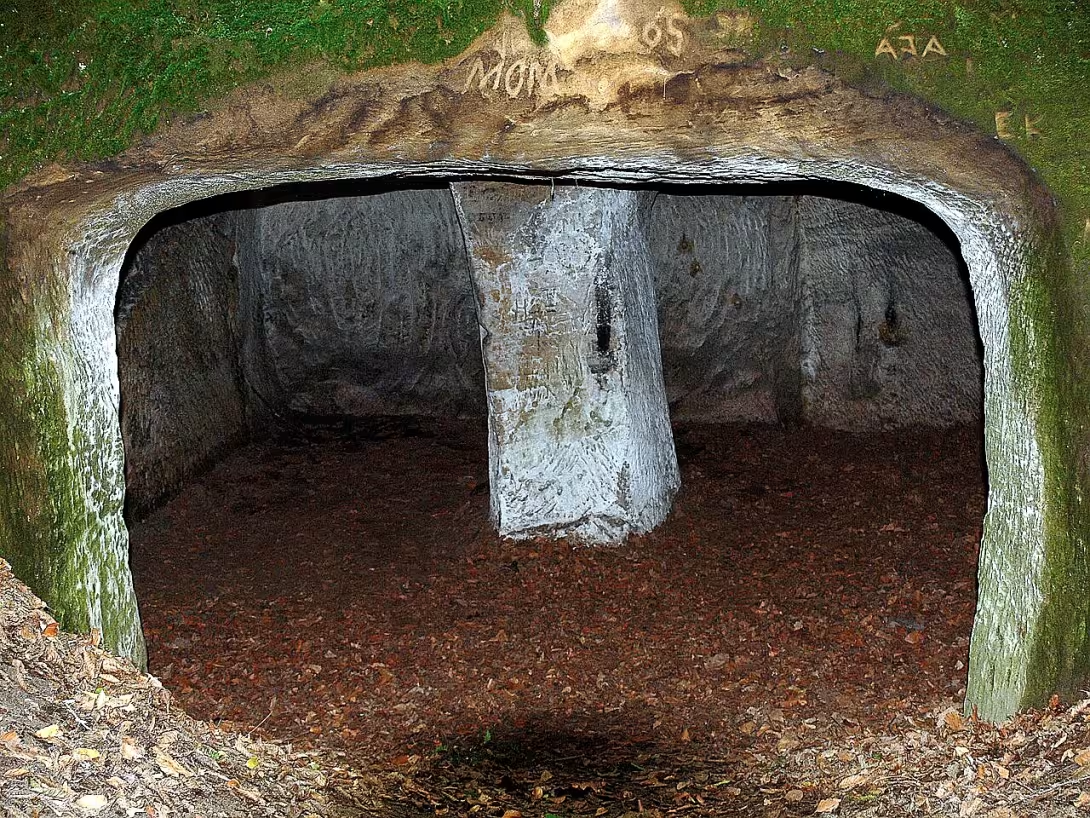
Hynšta is a rock castle in Příhraz rocks, located approximately 1.5 km north of the village of Branzež in the district of Mladá Běslav. This 13th century monument is remarkable by being carved directly into the sandstone block. Later, the rock skylight was adapted to the prayer room.
There are no written sources of the oldest history of the mansion, and his original name remains unknown. The existence of the building in the 13th century is only evidenced by archaeological findings. This period was linked in Czech countries with intense colonization and the construction of a castle network under the rule of the last Přemyslívov, which corresponds to the wider European context of the High Middle Ages and the development of Gothic architecture.
The building form of the castle was based on the use of a natural sandstone block which formed the core of the building. To him, there was a vast foothold, separated from the core by a moat. The outer fortifications have not been preserved until today. At the base of the rock, there's an overflowing water tank. The most striking element is the carved saint in the rock, which in the 17th century was extended to a prayer house.
The history of the owners and the specific fate of the castle remains unknown, as all written sources remain silent about them. Tradition connects the prayer house with the hiding place of the Czech brothers, but this fact is not historically documented. Similarly, the authenticity of Jan Amos Komenský's quote is questioned, which is carved on the eastern rock wall of the castle core.
Today Hynšta is protected as a cultural monument. The locality in the Příhraz rocks near the Měžský hill offers the possibility of looking into the form of a medieval rock settlement. Visiting this place allows direct confrontation with archaeological history of the 13th century and later folk traditions that bind to the building.
Then and now
Drag the slider to compare how the landmark may have looked when it was built with the view today.
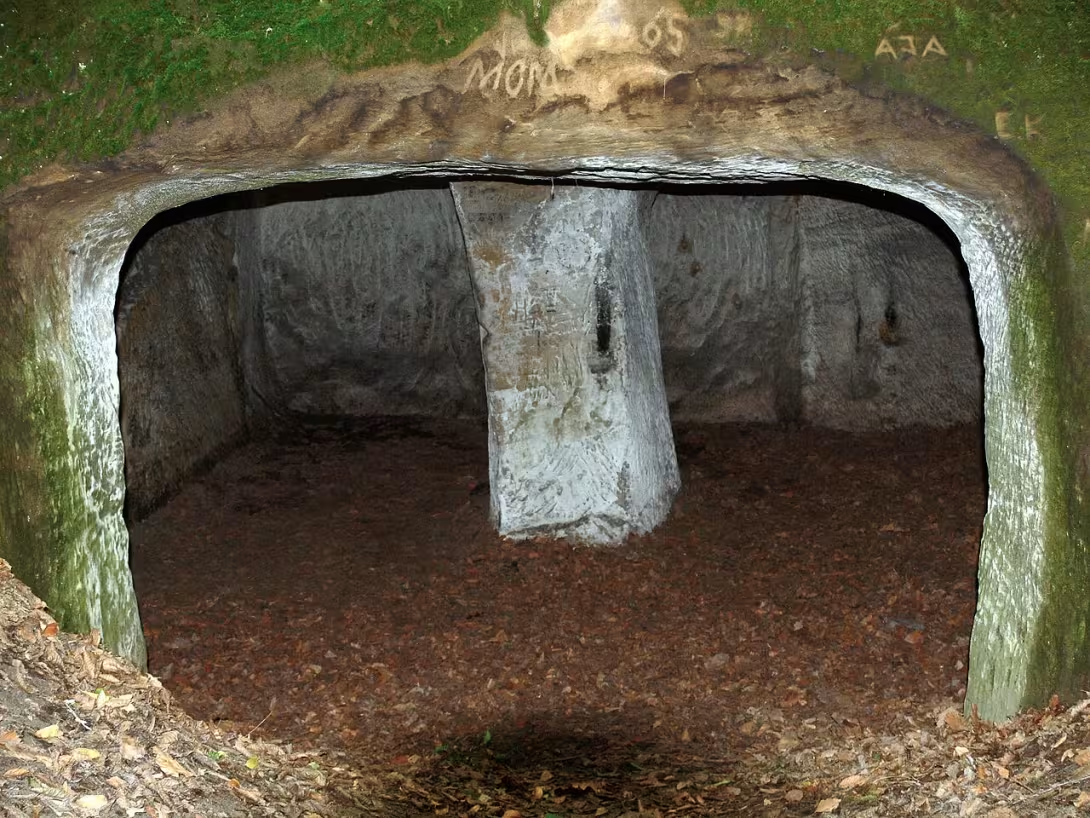
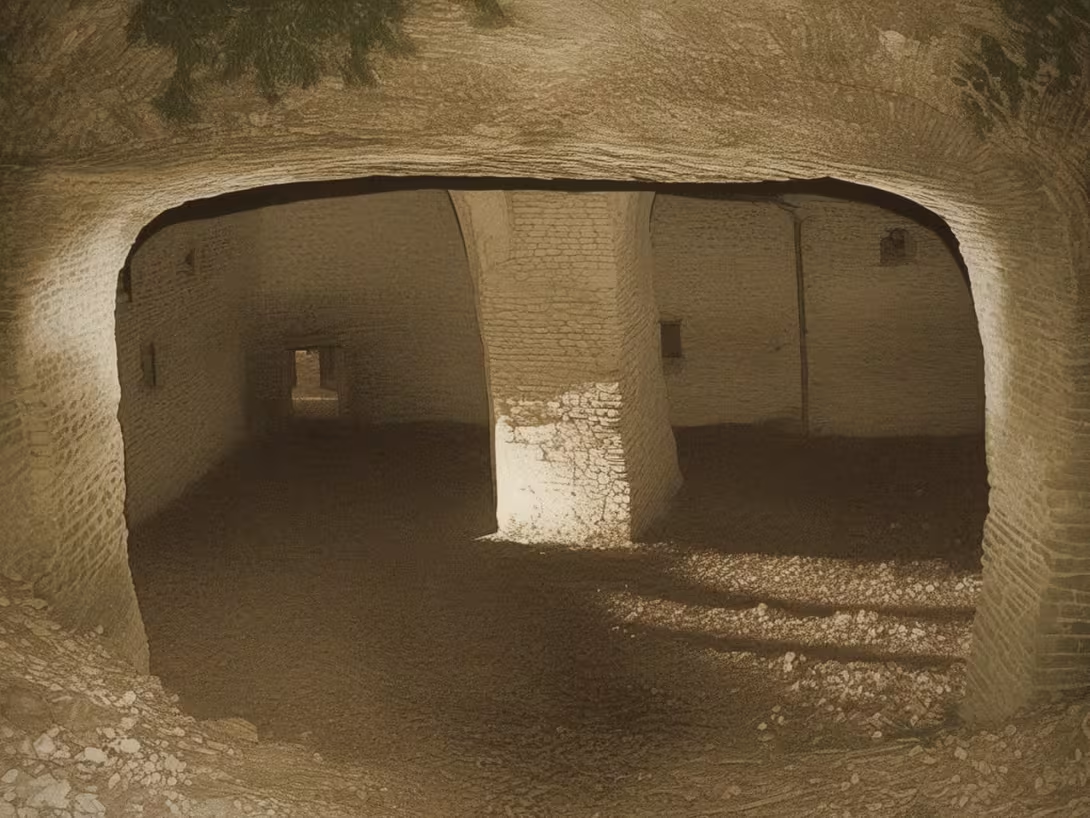
The historical appearance on the left is an AI-generated visualisation and serves as inspiration only.
Historical milestones
- around 1250
- The creation of a rock castle during the period of intense colonization in the last Přemyslovovas.
- 17th Century
- Adjusting the rock skylight to the prayer room, probably used by Czech brothers.
- 20th century
- Declaration of the Hynšta area for a state-protected cultural monument.
Architectural development
The castle was carved into a sandstone block, and a buried tank was preserved at the foot of the rock. In the 17th century, the original saint was extended to a prayer house. The outer fortifications were not preserved.
Points of interest
The castle was carved directly into the sandstone block. - The rock skylight was extended to a prayer house in the 17th century. - The oldest history of the mansion has left no written sources, and his original name remains unknown. - There's a water tank buried at the foot of the rock. - There is a quote by Jan Amos Komenský on the eastern rock wall of the castle core, whose authenticity is, however, questioned.
Guide
Show guide text
This text was created by artificial intelligence and has not been editorially reviewed. It may contain inaccuracies.
Welcome to Hynšta Rock Castle. You are standing in a place where the borders between natural art and human work are being wiped into one unique work. Look around you and perceive the extraordinary atmosphere created by the Temples. In front of your eyes is a massive sandstone block that is not only part of this landscape, but is its very body. Unlike many other castles that were built on the rock using stone and mortar, Hynšta is directly carved into live sandstone. Feel the raw and the strength of this material that surrounds you. It's not just a view of the ruin, it's a view of a castle that was born right from the depths of the earth.
To understand why this rock formation has become a seat, we need to go back deep into the past, to a time when this landscape has yet to form for future generations. Let's move together in time towards the mid-13th century. This was a period of intense colonization, when the last of the great Czech Přemyslovovas sought to secure and develop their territories. At this very time, about a thousand and two hundred fifty, this rock castle was built. People at the time sought not only protection in this rough terrain, but also the strategic advantage offered by these rock masses. But it is fascinating and at the same time slightly mysterious that we have no written testimony about its oldest beginnings. No chronicle, no old letter, no legal document told us what this castle was originally called. This silence of history gives the place special weight and makes us think about the people who lived here without leaving their name in the books.
Now pay attention to what you see right in front of you and what lies in the very structure of this place. Hynšt's architecture is absolutely unique because its lines are not designed by architects in the traditional sense, but rather by creators who were able to use the natural shapes of the rock. The main core of the castle is this massive sandstone block, which served as a solid center of the entire complex. If you look at the overall organization of space, you will notice that the castle was not just an isolated point in the forest. There was also a large area of the vanguard, which was separated from the main core by a deep moat. This system created a complex defense device that used every unstoppable terrain drop. Feel the geometry of space as human needs have adapted to the uneven rock to create a functional and safe place for life.
Now, let's focus on the details of the later centuries. Although the castle was founded in the time of medieval colonization, its fate continued to evolve. In the sixteenth and seventeenth centuries, events took place here that changed the character of this place. Notice these rock spaces that are carved directly into the walls. One of the rock lights went through a major adjustment in the seventeenth century. It was no longer a simple hiding place or homes, but it was extended and transformed into a prayer house. The historians believe that this place was probably used by Czech brothers. Imagine this quiet, dark room carved into a sandstone, where people in seclusion prayed for spiritual peace at a time of great social upheaval. This transition from military and strategic function to spiritual use is one of the most beautiful stories this rock castle keeps for us.
Even though we don't know the specific names of kings or noble families who would be based here at the time of their inception, history tells us about the people who were trying to survive here and find their home. But this absence of personalities in written sources does not mean that life did not go. Every notch in the stone, every modification of the rock wall is proof of human presence.
But now I want to invite you to consider one of the greatest mysteries of this place. Hynšta is a castle without a name, a castle that refuses to reveal its true identity to us. It is a place that exists in the very nature of nature, but its original name remains forgotten in the darkness. This absence of records creates a misty atmosphere around the castle. And if you look at the heel of this massive rock, you might encounter further evidence of life and technical reasoning back then. There is a water tank filled here. Imagine the need and effort that people had to make to ensure drinking water in such a difficult and rocky environment. This tank is a silent witness to the daily struggle for survival and proof of how deeply people were connected to this terrain.
In your next view of the eastern rock wall, where the core of the entire complex is located, feel the resilience of sandstone, which resisted centuries, even though it was constantly shaped by the human hand. Everything here acts as a part of a whole, where the human quest for security and faith has become bound to the relentless force of nature.
Now we will no longer slow you down and leave you with your own impressions. Hynšta is a cultural monument that deserves respect and quiet observation. We recommend you continue your walk around the Příhraz rocks and perceive this rock castle as an integral part of the wider, wild natural whole. Let yourself drift through the atmosphere of this place where history touches the very essence of the earth and where every rock can have its own, misunderstood story. Thank you for spending this moment with us in discovering the secrets of Hynšta. We wish you a beautiful and inspiring journey along the paths of this wonderful landscape.
Tips for visitors
The best time to visit is in the morning during the working week or outside the main summer season, avoiding crowds of tourists and enjoying the quiet atmosphere of the rock town. Parking is possible in the village of Branžež or on reserved weaning areas near the Příhraz rocks, from where the marked tourist route leads to the castle. Take with you fixed shoes suitable for the field, enough water and a flashlight to help you explore the darker corners of the rock spaces. For photography is ideal soft light in the morning or late afternoon when the sun beautifully depicts the structure of sandstone rocks and castle spaces. In the immediate surroundings, do not miss a walk through the Příhraz rocks and a hike on the top of the Měžský, from where there is a stunning view of the landscape. For families with children, the trip is an adventurous journey to explore history, but due to the rugged terrain and the rocky passages we recommend increased caution and supervision of children throughout the tour.
Businesses nearby
Do you run a restaurant, accommodation, shop, museum, rental, wellness or other visitor service near this monument? Show yourself directly to the people heading to it — this is how they will see you in the app and on the web:
Events nearby


Zdroj akcí: otevřená data měst a obcí ČR (Národní katalog otevřených dat) a kalendář akcí Národního památkového ústavu.
Nearby
Dwarf rocks, top of the Man, village of Branzej.
Accommodation nearby
Trips and activities nearby
Guided tours, tickets and activities nearby from GetYourGuide
Affiliate link: if you buy from the partner, we may receive a commission. The price for you does not change.
Search tours and activities →Themed route
1. Municipality of Branzej (municipality) - Suitable starting point for the beginning of the journey in a quiet rural environment. 2. Castle Hynšta (Castle) - The main destination of the trip and historical dominance, which offers a tour of ancient spaces. 3. Hraz rocks (natural monument) - Stupendous rock formations with observable walls and views. 4. Top of the Man (top) - The elevated point of the road, which serves as a view of the surrounding landscape.
Seasonal recommendations
In spring the castle comes alive with the first green and blooming nature that surrounds stone walls. The light is soft and the air is fresh, which gives the ruins a feeling of a new beginning. We recommend to dress in layers because the weather is unstable. It's an ideal time for quieter walks in front of the main tourist wave.
Summer moons bring rich green foliage and sharp sun, which highlights the texture of the old masonry. The atmosphere is full of energy, but in hot days it can be stuffy in the area. To avoid the biggest crowds and heat, visitors should arrive first thing in the morning. Don't forget light clothes, hat and plenty of fluids.
In the autumn, the surroundings of Hynšta turn into golden and red tones, which in contrast to the grey stone create a melancholy mood. The frequent fog gives the place mystery and romance. Due to the moisture of the terrain, waterproof shoes and a warm sweater are essential. The best time to visit is the late afternoon with soft light.
In winter, the ruins are hard and exposed, especially when the landscape is covered with snow and the trees are without leaves. There is a deep silence and calm that allows you to fully see the history of the place. It is necessary to choose high-quality thermal clothing and fixed shoes. Pay attention to shorter opening times and plan to arrive around noon when the most daylight is.
Visualizations and artistic views


The visualisations are generated by artificial intelligence and serve as inspiration.
Photos from the area
Real photos taken near the monument


Zdroj a licence jsou uvedeny u každého snímku.
Tips from visitors
No tips yet. Be the first!
Log in and add your tip.
Sources and literature
Fotografie: Lukáš Kalista / CC BY-SA 3.0 — Wikimedia Commons. The author and licence also appear when you hover over the image.
Faktickým podkladem tohoto textu byl článek na Wikipedii, jehož autory jsou přispěvatelé Wikipedie. Článek je dostupný pod licencí CC BY-SA 4.0.
Location on the map
Příběhy a pověsti
Legendy, pověsti a příběhy spjaté s touto památkou
Fotografie návštěvníků
Zatím žádné fotografie. Buďte první, kdo přidá fotografii z návštěvy!
Přihlaste se a přidejte svou fotografii nebo hodnoťte.
Za ověřenou návštěvu v aplikaci získáte víc bodů — poznáme podle GPS, že jste na místě.
Reviews and comments