



I. P. Pavlova Railway station
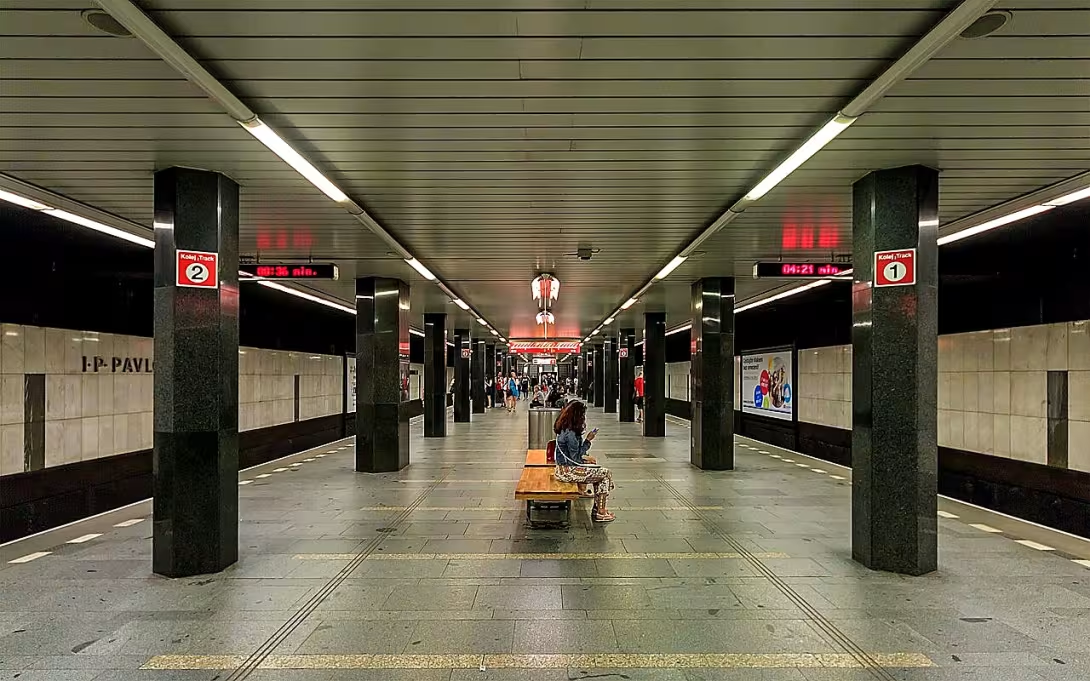
The metro station I. P. Pavlova, located under the same-name square on the border of New Town and Vinohradské suburb in Prague 2, is the busiest point of the Prague metro. It was opened on 9 May 1974 with the first section (I. C. Florenc - Kacherov) and named after Russian physiologist Ivan Petrovich Pavel. Its deep construction with six-sided columns and marble plates represents an architectural unique feature.
The establishment of the station is linked to the development of public transport in Czechoslovakia in the 1970s, when the first metro line began to be built. Work on the pilot walls and overall construction was launched by the military construction industry in 1970. The construction included mining and assembly of prefabricated ceilings and steel structures. The first intermediate ceiling was completed at the end of 1971, allowing for gradual concrete and dismantling of hinges from the bottom up.
Architecturally, the station is characterised by a deep location (19 m below ground) and one exit into an extensive underground vestibule which allows for access to tram lines. The decoration consists of a stone relief with a pair of lions, which in the past decorated the Baroque fortification of New Town, and illustrations of Catherine Bažantová over escalators. This work of art depicts passengers as anthropomorphic dogs, which gives the object a specific character.
During its existence, the station has undergone several major changes. In 2015 it was converted into barrier-free, thereby increasing its accessibility and comfort. The interesting thing is that in the lobby was made Czech sci-fi film "Tomorrow I will get up and smoke tea," which underlines its cultural importance.
Today I. P. Pavlova serves not only as a key transport hub, but also as a place with a rich history. Architectural unique, artistic decoration and cultural history make the station attractive not only to passengers but also to tourists interested in Prague monuments. It offers an easy connection with many neighborhoods of Prague and represents an integral part of urban infrastructure. Its uniqueness makes it an important point on the map of the metropolis, which is certainly worth visiting.
Historical milestones
- 1974
- Opening of station I. P. Pavlova.
- 2015
- The station was converted into wheelchair-free.
Architectural development
In 1970-1974 the station was built by the branch company Military Construction. The construction included pilot walls and prefabricated ceiling, with total mining of rock and assembly of steel structures. The first ceiling was completed at the end of 1971.
Historical events
- 1974
- Opening of station I. P. Pavlova together with the first metro section.
- 2015
- The station was converted into wheelchair-free.
Points of interest
In the lobby there is a relief with a pair of lions from the Baroque fortification of New Town.
Illustration of escalators by Kateřina Bažantová depicts passengers as anthropomorphic dogs.
In the lobby there was a Czech sci-fi film tomorrow I will get up and I will roast with tea.
Guide
Show guide text
This text was created by artificial intelligence and has not been editorially reviewed. It may contain inaccuracies.
Welcome to the heart of our city, a place where thousands of life stories are met every second. You are standing in the square, which serves as one of the most important points for the movement of people throughout Prague. Can you feel the constant energy, the constant current rolling around? You are at the border of two important parts of our city, where the old New Town meets the expanding Vinohradmi. It's a place that never sleeps, a place that keeps moving, and you're part of this great rhythm. In front of you is a space that can lead you deep beneath the surface of the earth into a world that has been built with great effort and vision of a modern city.
Let us now look together at how this place was created and what it is all about. This metro station is not just an ordinary stop point, it is a key transport hub that connects different parts of the metropolis. Her history began to be written on the ninth of May in a thousand nine hundred seventy-four, when the gates to this underground world first opened. Since then the station has become one of the most busy in the entire Prague metro system. Every day, she gets away with a huge number of people who use her to go to work, to school, to take a trip. The station bears the name of a great scientist, Ivan Petrovich Pavlov. Although his name may sound foreign, his contribution to science was huge and his legacy is perceived worldwide. This station thus serves as a small monument to human knowledge and scientific progress that takes place right under our feet.
Now I want to take you to what you see as you go deeper into this structure. This station is really deep, which is apparent from its overall form. It's a deep structure that needs to be extremely firm to carry the weight of everything above it. Notice the pillars that will accompany you on your descent. They're six-sided. This geometry gives the space a unique sense of stability while creating an interesting visual rhythm that follows you the whole way. These pillars are not just elements, they are pillars of the underground world itself. Although in the year two thousand and fifteen, the station underwent a major reconstruction to be fully barrier-free and accessible to everyone, regardless of its physical ability to move, its basic architecture and its depth are preserved. This modernization has ensured that everyone can access this underground world, which is absolutely essential at present.
If you enter the main area now, or the lobby, please pay attention to the details that are hidden from the eyes of ordinary passengers. If you stop, you can see the relief that's being exposed here. But they're not any creatures. You'll see a couple of lions there. These lions aren't just an ornament, they're pilgrims from history. They come from a baroque fortification that once protected New Town. It is a fascinating connection, when a piece of old, historical Prague, its fortifications and protective elements, was transferred to this modern, underground environment. It's like history is whispering directly into the ear of a modern person who's just passing through this space quickly.
And what if you look up now, towards the escalators? There's something waiting for you that can really surprise you and lead you out of anticipation. Above the escalators is an illustration from an artist named Kateřina Bažantová. If you look at her closely, you'll see something very unusual. Instead of ordinary people traveling to work, you'll see characters that are depicted as human-looking dogs. They are anthropomorphic beings, i.e. creatures that have human properties and behavior, but their appearance is dog. It's a surrealist view of everyday life, of the constant movement of people moving around. This work forces you to stop, to think, and maybe even smile a little bit about how unusual the view of the world can be when we look at it from a different angle.
The site also has its own, a little mysterious and film side. You might think you've seen this place somewhere, maybe in a movie. You're right. It was in this very lobby that the scenes from the Czech scientific and fantastic film called Tomorrow I will get up and I will roast with tea. Imagine the atmosphere where this modern, underground space became a scene for stories about the future and things that transcend us. This film history gives the place another layer of mystery and reminds us that even this common place can be part of something much bigger and more interesting.
Now that you've been through this short journey of history, architecture and art, you have a much broader idea of this place. It's not just a subway station anymore, it's a place full of symbols, from ancient lions to scientific names to unusual art creatures. I suggest you continue your journey and keep looking around. Prague is filled with hidden treasures waiting to be discovered. Maybe you'll find another detail that you missed, or you'll just enjoy the constant movement of life that's so strong in this place. Thank you for spending this moment with us and for choosing to explore this space. We wish you a pleasant journey and many other interesting experiences in your further discovery of our beautiful city.
Tips for visitors
The best time to visit the station I. P. Pavlova is in the morning or in the evening, when traffic tenacity is lower and you can enjoy a quieter environment. In addition, there is often a pleasant light for photography in these hours.
The station is well accessible both by car and public transport.
When you visit, you should bring an ambulance, especially if you are planning a long walk around the area. The stations and its surroundings are a very popular place for pedestrians and cyclists.
For the photo it is best to use the lights from morning or evening when interesting lighting may appear on the buildings and around the square. Photographs can be taken from the metro station as well as from nearby streets, where it is possible to capture views of historical buildings.
In the vicinity of Pavlova Square is located the Square of the Republic and other attractions of New Town. There are also parks nearby where you can spend a few quiet hours. For families with children it is advisable to visit nearby parks or to look at historical buildings in the centre of Prague.
Frequently asked questions
Can the monument be visited?
The building is in use (offices, a school, shops and the like). The interior is generally accessible only during operating hours and tours are not usually offered; we have not verified the details. You can see the exterior from the street.
Where is the monument?
Location: Praha 2, Hlavní město Praha. The map on this page shows the exact spot.
Why is the monument protected?
It is listed in the Central List of Cultural Monuments of the Czech Republic as a cultural monument (register no. 1999998061).
Businesses nearby
Do you run a restaurant, accommodation, shop, museum, rental, wellness or other visitor service near this monument? Show yourself directly to the people heading to it — this is how they will see you in the app and on the web:
Events nearby

Zdroj akcí: otevřená data měst a obcí ČR (Národní katalog otevřených dat) a kalendář akcí Národního památkového ústavu.
Nearby
Náměstí Pavlova
Křižovatka s přilehlou křižovatkou
Accommodation nearby
Trips and activities nearby
Guided tours, tickets and activities nearby from GetYourGuide
Affiliate link: if you buy from the partner, we may receive a commission. The price for you does not change.
Search tours and activities →Themed route
1. Square of Paul, square. It's the perfect place to start the journey and observe urban events. 2. Crossing with adjacent intersection, transport node. Here you can see the constant movement of people and vehicles. 3. I. P. Pavlova (station), transport station. The main destination of your route, which serves as an important point for transport.
Seasonal recommendations
Nature in the vicinity begins to grow again, which gives the place freshness. For visiting it is best to choose the morning hours when people's movement is pleasant. We recommend to prepare several layers of clothing because the weather can be variable.
Summer: It's very busy here in the summer months and the air can be hot inside. The sun shines the strongest and the days are very long. Due to large crowds of passengers, it is best to arrive early in the morning to avoid the greatest rush. Dress very lightly and have water with you.
Autumn: The autumn season brings softer, golden lighting and a calmer mood. Falling leaves and morning fog create an interesting look in the middle of urban movement. It is advisable to have a waterproof jacket and umbrella ready for frequent rains. The best time to see a beautiful light is late afternoon.
Winter: Zimą days are short and artificial lighting prevails in the building. People are moving fast here and it's cold in space. It is necessary to take very warm clothes and shoes with good grip to avoid slipping on snow or ice. Plan your visit to take place at a time when there is still plenty of daylight.
Visualizations and artistic views


The visualisations are generated by artificial intelligence and serve as inspiration.
Photos from the area
Real photos taken near the monument

Zdroj a licence jsou uvedeny u každého snímku.
Tips from visitors
No tips yet. Be the first!
Log in and add your tip.
Sources and literature
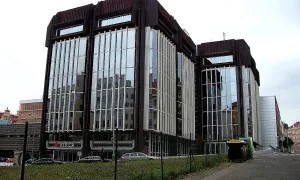
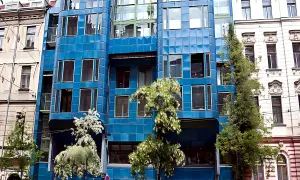
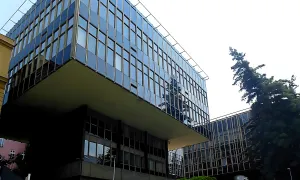
Photos: A.Savin / FAL — Wikimedia Commons. The author and licence also appear when you hover over the image.
Faktickým podkladem tohoto textu byl článek na Wikipedii, jehož autory jsou přispěvatelé Wikipedie. Článek je dostupný pod licencí CC BY-SA 4.0.
Location on the map
Příběhy a pověsti
Legendy, pověsti a příběhy spjaté s touto památkou
Fotografie návštěvníků
Zatím žádné fotografie. Buďte první, kdo přidá fotografii z návštěvy!
Log in a přidejte svou fotografii nebo hodnoťte.
Za ověřenou návštěvu v aplikaci získáte víc bodů — poznáme podle GPS, že jste na místě.
Reviews and comments