






Jeruzalémská synagoga Synagogue
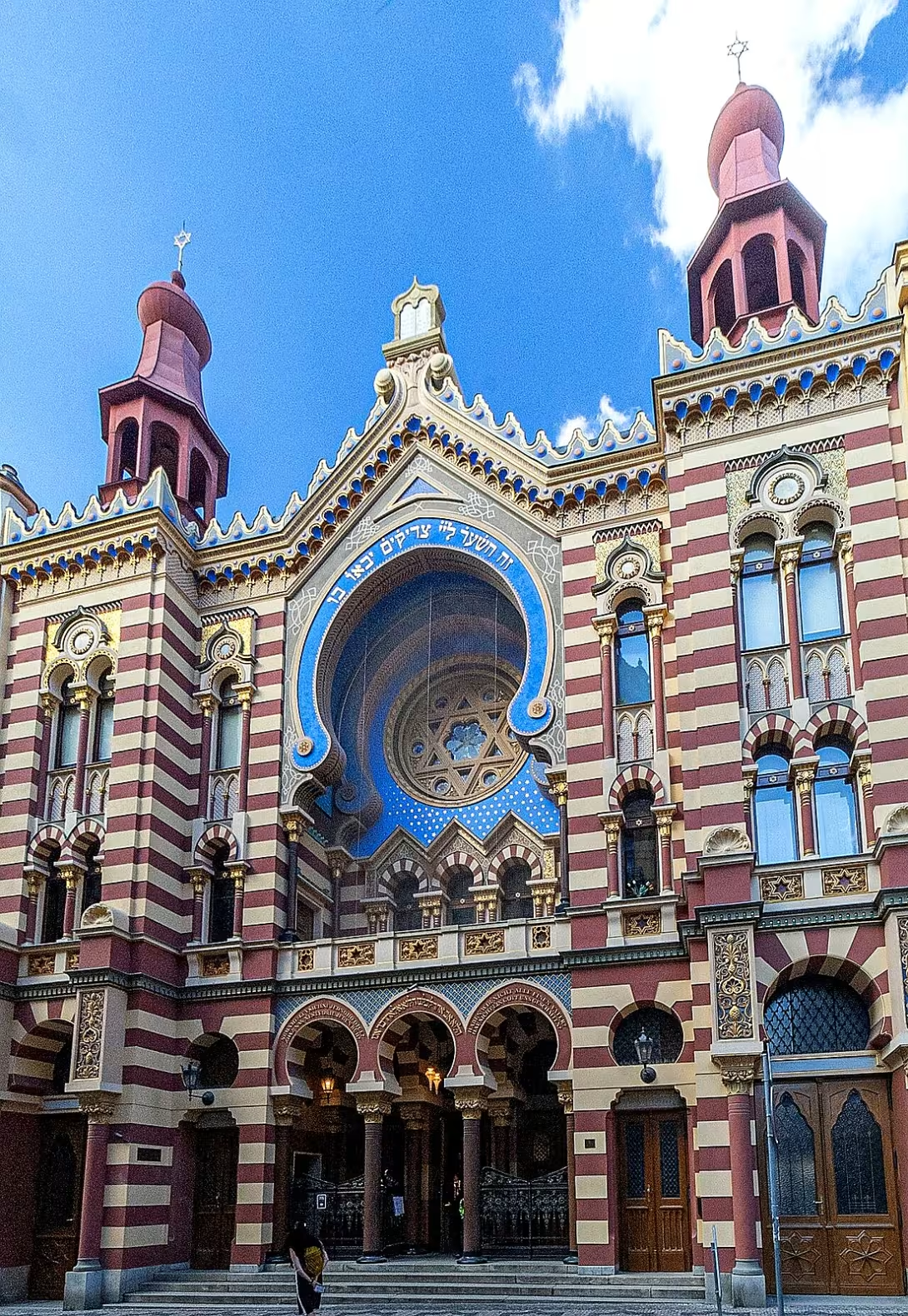
Jeruzalémská synagoga, also known as Jubilee synagogue of emperor Franz Joseph I., is the largest and one of the youngest synagogue in Prague. It is located on New Town in Jerusalem Street and was built between 1905 and 1906 as a substitute for the Gypsy, Velkodvor and New Synagogue which were demolished during the rendering of the Jewish ghetto. Its architecture is distinctive in the Moorish and Art Nouveau style.
The creation of the Jerusalem Synagogue was inspired by the need to replace the three older synagogues that were to be demolished. In 1896 Israelitischer Synagogenverein in Prag was founded to ensure the status of a new synagogue. After the purchase of the property in Jerusalem Street various architectural projects were submitted, and finally the project by Wilhelm Stiassny was approved in the Moorish style. The construction took place between 26 June 1905 and 16 September 1906 and the synagogue was ceremonially dedicated during Simchat Torah.
Architectural Jeruzalémská synagoga is an example of Art Nouveau styling of the Moorish style. The floor plan consists of a three-boat basilical type with two transverse wings and a massive Islamic arch decorating the facade. The facade is decorated with Rosetta's window, David's star and Hebrew inscription from Psalm 118: 20. The interior is divided by Islamic arches, which carry a woman's gallery, and illuminated by large windows with stained windows. The high halibut (aron ha-codesh) is decorated with the relief of the wine bush and Desater plates.
The synagogue was originally owned by the Israeli synagogue in Prague, which officially died in 1907. Since then, it has been the property of the Jewish village of Prague. During World War II, the synagogue was closed for religious purposes and served as a warehouse of confiscated Jewish property, which saved it from destruction. After the war, its activities have been restored and services are held here today.
Key events include the ceremonial initiation of the synagogue in 1906, the first synagogue sermon in Czech in 1931 and the closure for religious purposes by order of Reinhard Heydrich in 1941. During the recent reconstruction the original decoration was discovered, including a parchment scroll with historical information about the construction.
Today Jeruzalémská synagoga is an active place of worship in orthodox rites. Apart from the main services, organ and other music concerts are held here. The synagogue also hosts a permanent exhibition of "Jewish monuments and their reconstruction after 1989" in the area of the former women's gallery.
Jeruzalémská synagoga is not only an architectural pearl of Prague but also a witness of important historical events. Its rich history and significant role in Jewish community life make it necessary to visit who is interested in the cultural heritage of the city. Its presence in New Town still shows the resilience and adaptability of the Jewish community in Prague.
Then and now
Drag the slider to compare how the landmark may have looked when it was built with the view today.
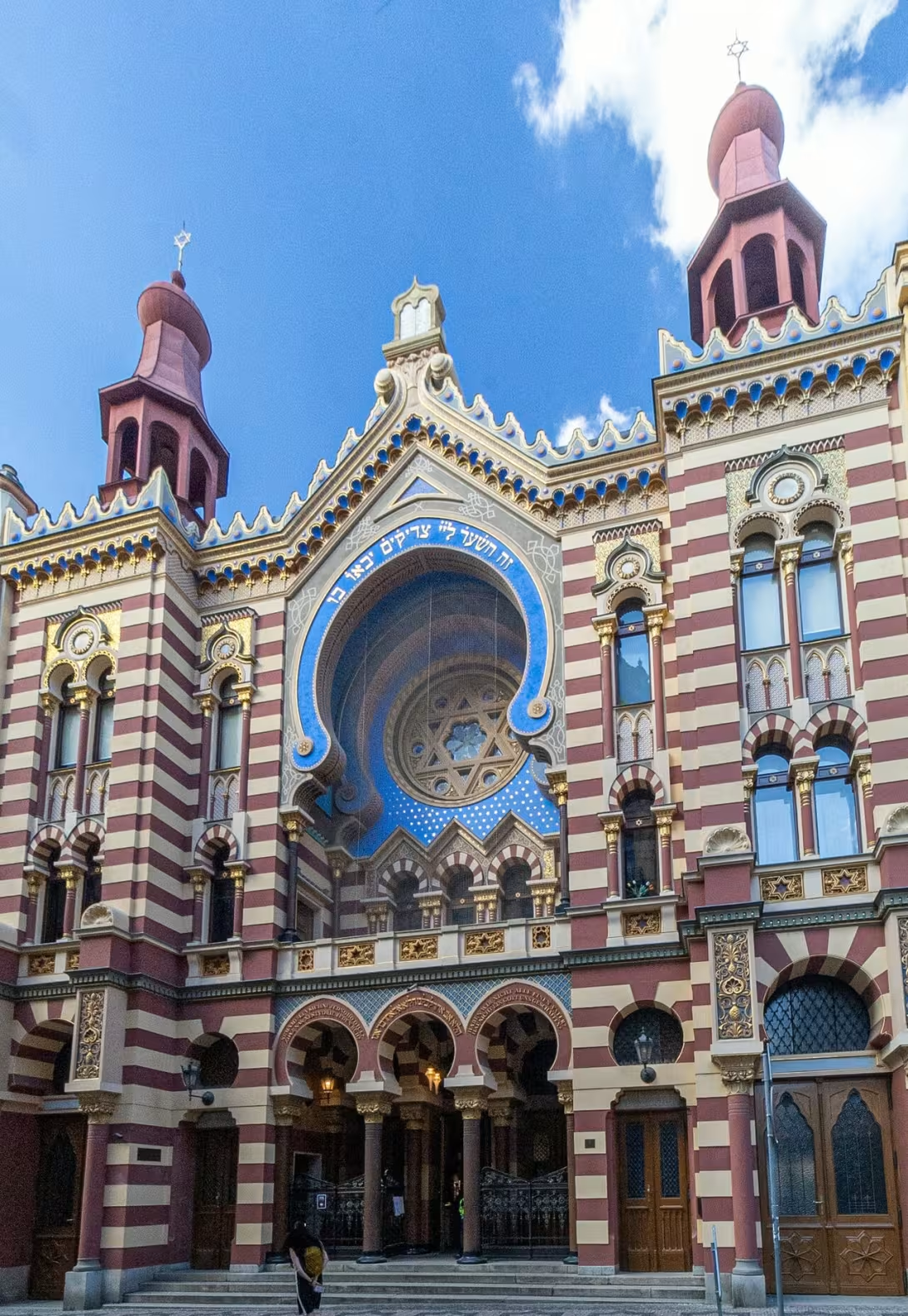
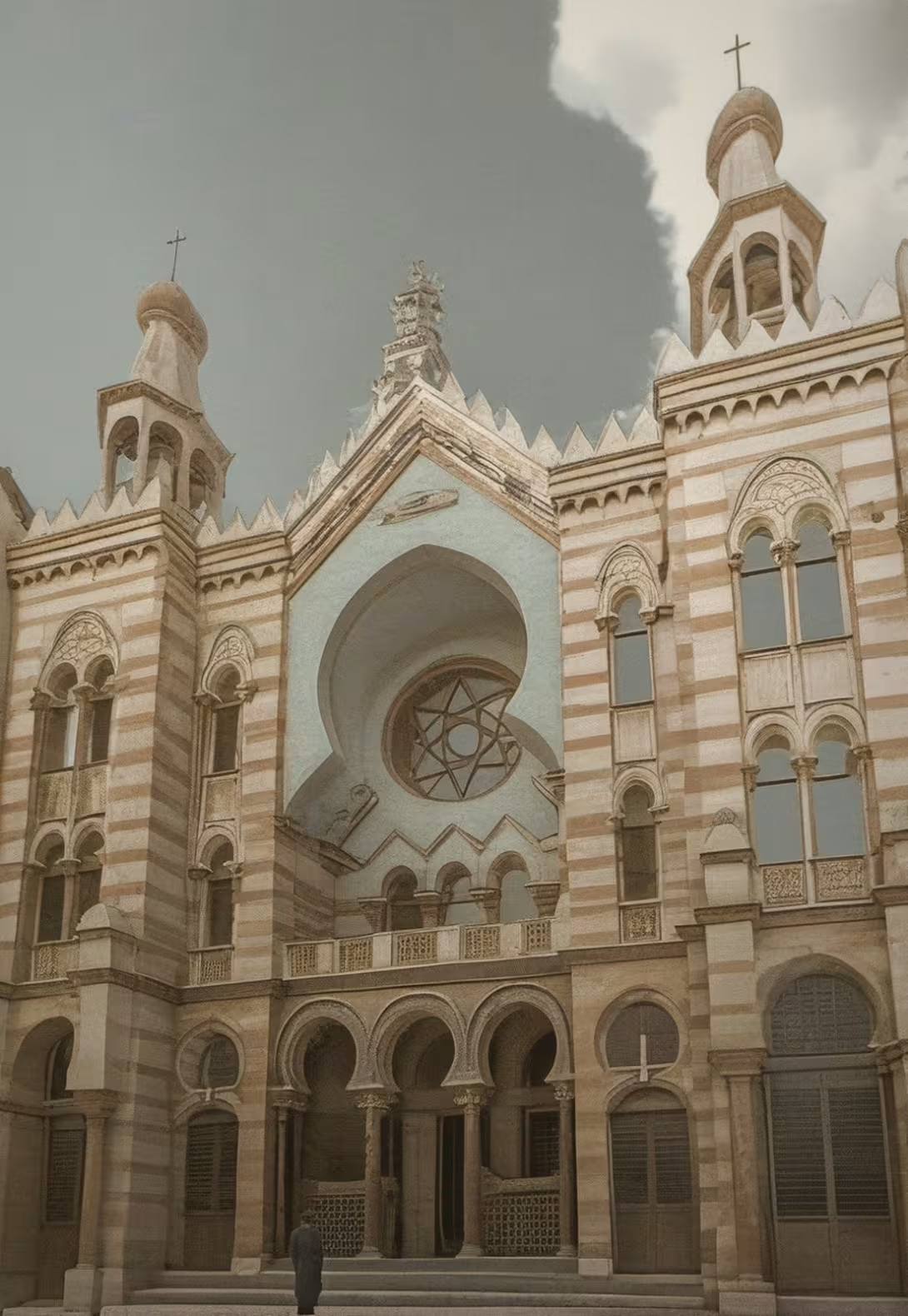
The historical appearance on the left is an AI-generated visualisation and serves as inspiration only.
Historical milestones
- 1896
- The formation of the Israeli Synagogue Association in Prague.
- 1906
- The ceremony of the synagogue for Simchat Torah.
- 1931
- First sermon in synagogue in Czech language.
- 1941
- The closure of the synagogue for service purposes.
- 2003
- Discovering the hidden parchment scroll under the marble plate.
Architectural development
The original designs were in the new Romanesque and neo-gothic style before the Wilhelm Stiassny project was accepted in the Moorish style. The building is an example of Art Nouveau styling of the Moorish style. The original rich decoration was restored as part of the recent reconstruction.
Historical events
1906: Ceremonial initiation of the synagogue during Simchat Torah. 1931: First synagogue sermon in Czech language. 1941: The closure of the synagogue for religious purposes by Reinhard Heydrich.
Owners
Israeli Synagogue Association in Prague (until 1907), Prague Jewish Community (since 1907).
Points of interest
- She is the largest and one of the youngest synagogue in Prague. - It was built between 1905 and 1906 as a replacement for three synagogues demolished during the rendering of the Jewish ghetto. - Its architecture is distinctive in the Moorish and Art Nouveau style. - During World War II, she served as a warehouse for confiscated Jewish property, which saved her from destruction. - In recent reconstruction the original decoration was discovered including a parchment scroll with historical information about the construction.
Guide
Show guide text
This text was created by artificial intelligence and has not been editorially reviewed. It may contain inaccuracies.
Welcome. You are standing in front of one of the most striking and yet youngest Jewish sacral structures in our capital. Welcome to the Jerusalem Synagogue. If you look at it with the distance that the street allows you now, you will appreciate its monumental dimensions and unique architectural form that differs from the older, Gothic or renaissance inspired synagogue in the centre of Prague. This building is not just a building, but a living witness to the history that has taken place here in the last hundred years. Her history is closely linked to the fate of the Prague Jews, their struggle for survival, their cultural boom and the tragedy of World War II.
To understand why this synagogue was created in the first place, we have to go back several decades to the end of the nineteenth century. There was a major decision in 1896. An Israeli synagogue association was established in Prague, which was designed to build a new, large enough home for worship services. The reason was practical and political. The city was undergoing a massive urban transformation, called sanitation, to remove old, decrepit neighborhoods and create a modern urban core. In this reconstruction, it was unfortunately necessary to demolish the three older synagogues that served the Jewish community for centuries. So the new generation needed a place to gather, pray and discuss. The construction took place in 1905 and 1906 and its ceremonial initiation took place in 1906, exactly on the holiday of Simchat Torah, which is one of the most joyous Jewish holidays celebrating the completion of the Torah reading. It was an expression of hope and a new beginning.
Now pay attention to the facade of the building that surrounds you. Architecturally, Jeruzalémská synagoga is the work of three important creators, Wilhelm Stiassny, Alois Richter and Josef Linhart. Their joint work is a mixture of two distinctive styles, Moorish and Art Nouveau. When you look at the facade, notice how these two worlds intersect. The Moorish influence, drawing from the architecture of Andalusian Spain and North Africa, is reflected in the character of window openings, decorative elements and the overall rhythm of the facade. The Art Nouveau brings smooth lines, organic shapes and sensitive detail processing. This combination is quite rare in Prague and makes it an architectural rarity. This is not a copy of a historical pattern, but a modern interpretation of a tradition that matched the spirit of the time around 1900. See how geometrical and vegetative motifs complement each other and how the overall composition acts harmoniously, even though it combines elements that could at first glance be contradictory.
But the history of this building is much richer than its appearance. There are stories of people who have identified themselves with this place. Among the important figures associated with this history are Moše Blum, for example, who was one of the leading representatives of the Jewish community and an active participant in cultural life. His name resembles the time when Jewish culture in Prague developed and integrated into a wider social context. On the contrary, the name Reinhard Heydrich, a Nazi official, resembles a dark chapter when this synagogue was closed for service purposes in 1941. During the occupation, she served as a warehouse of confiscated Jewish property. Imagine what it was like for a community that had to leave its holy place and watch it be used to store things that were stolen from them. This is a painful but important part of history that we need to remember.
Although the war brought destruction and silence, the synagogue did not die. After the end of World War II, its activities were gradually restored. And that's one of the most beautiful aspects of this place. Religious services, prayers and cultural events are being held here again today. The building's alive. Its existence is proof of the resilience of the human spirit and faith.
If you want to dive into the depths of history and find something that might surprise you, look carefully at the floor if you have the opportunity to see it, or imagine what's under marble boards. An unexpected discovery was made in 2003. A hidden parchment scroll was found under one of the marble plates. This find has opened a new chapter in the history of this synagogue. Parchment scrolls are sacred in the Jewish tradition, often containing texts of the Torah or other religious documents. Hiding such a scroll under the floor may have various reasons, ranging from protection from damage to specific ritual practices. This discovery recalls that even in the oldest and most famous places can hide secrets that await discovery. It's a reminder that we look around each other carefully because history is often hidden beneath the surface.
Another interesting factor worth mentioning is the language dimension of this place. Although the synagogue was built at a time when German was the dominant language of public life in many parts of Europe, including Prague, changes occurred over time. In 1931 a sermon was first delivered in the Czech language. This moment symbolizes the growing identification of the Jewish community with the Czech nation and the cultural environment. It was a step towards greater integration and clarity for the wider public. It shows how the dynamics between the community and the outside world have changed and how the way in which faith and tradition have been transmitted have changed.
So you're standing in front of a building that is not only an architectural gem, but also a palimpssem, a layered document of history. You see the Moorish and Art Nouveau elements that guide you through the facade. You feel the weight of the years that have taken place here since the ceremony in 1906, through the dark years of war, to today's renewal and active life. Every detail, every stone, every line of facade has a story.
Before we say goodbye, I want to invite you to enjoy this space in peace. Don't be hasty. Look at the facade from different angles. Note how the light hits the plaster and decorated elements in different daily hours. Try to imagine what the sounds of the past were - singing, prayer, discussion, but also the silence that existed here during the occupation. This synagogue is open to the public and its gates open not only to believers, but also to those who are interested in learning the history and culture that is part of our common memory.
Thank you for taking the time to stop by this important place. We hope that this short guide helped you better understand the context and importance of the Jerusalem Synagogue. We wish you,
Tips for visitors
The best time to visit the Jerusalem Synagogue is in the early afternoon, especially during the summer months. This time allows you to enjoy a quiet moment without too many crowds while looking forward to the optimal light for photo.
Access to synagogue is possible both by car and public transport. Parking spaces are limited in the surroundings, so we recommend using buses or metro. You can check the current connection in the online search engine.
When visiting, bring protective sunglasses and a light jacket because the synagogue interior can be cold. Don't forget the water and breakfast for longer visits.
Photography is permitted, but respect the laws of privacy and spiritual space. The best light for photo can be found in the interior of the synagogue around noon.
In the vicinity of the Jerusalem Synagogue is the church of St. Henry, which is suitable for visiting. For families with children it can be interesting to visit other historical monuments in the centre of Prague.
Businesses nearby
Events nearby

Zdroj akcí: otevřená data měst a obcí ČR (Národní katalog otevřených dat) a kalendář akcí Národního památkového ústavu.
Nearby
St. Henry's Church.
Accommodation nearby
Trips and activities nearby
Guided tours, tickets and activities nearby from GetYourGuide
Affiliate link: if you buy from the partner, we may receive a commission. The price for you does not change.
Search tours and activities →Themed route
1. Jeruzalémská synagoga (outer space) - Architecture. The admiration of the facade and surrounding the building. 2. Jeruzalémská synagoga (inner space) - Prayer. Exploring the interior and spiritual atmosphere. 3. Church of St. Henry - Temple. A visit to the nearby sacral space.
Visualizations and artistic views


The visualisations are generated by artificial intelligence and serve as inspiration.
Photos from the area
Real photos taken near the monument


Zdroj a licence jsou uvedeny u každého snímku.
Tips from visitors
No tips yet. Be the first!
Log in and add your tip.
Sources and literature
Fotografie: VitVit / CC BY-SA 4.0 — Wikimedia Commons. The author and licence also appear when you hover over the image.
Faktickým podkladem tohoto textu byl článek na Wikipedii, jehož autory jsou přispěvatelé Wikipedie. Článek je dostupný pod licencí CC BY-SA 4.0.
Location on the map
Příběhy a pověsti
Legendy, pověsti a příběhy spjaté s touto památkou

Fotografie návštěvníků
Zatím žádné fotografie. Buďte první, kdo přidá fotografii z návštěvy!
Přihlaste se a přidejte svou fotografii nebo hodnoťte.
Za ověřenou návštěvu v aplikaci získáte víc bodů — poznáme podle GPS, že jste na místě.
Reviews and comments