



jezuitská kolej v Opavě School building
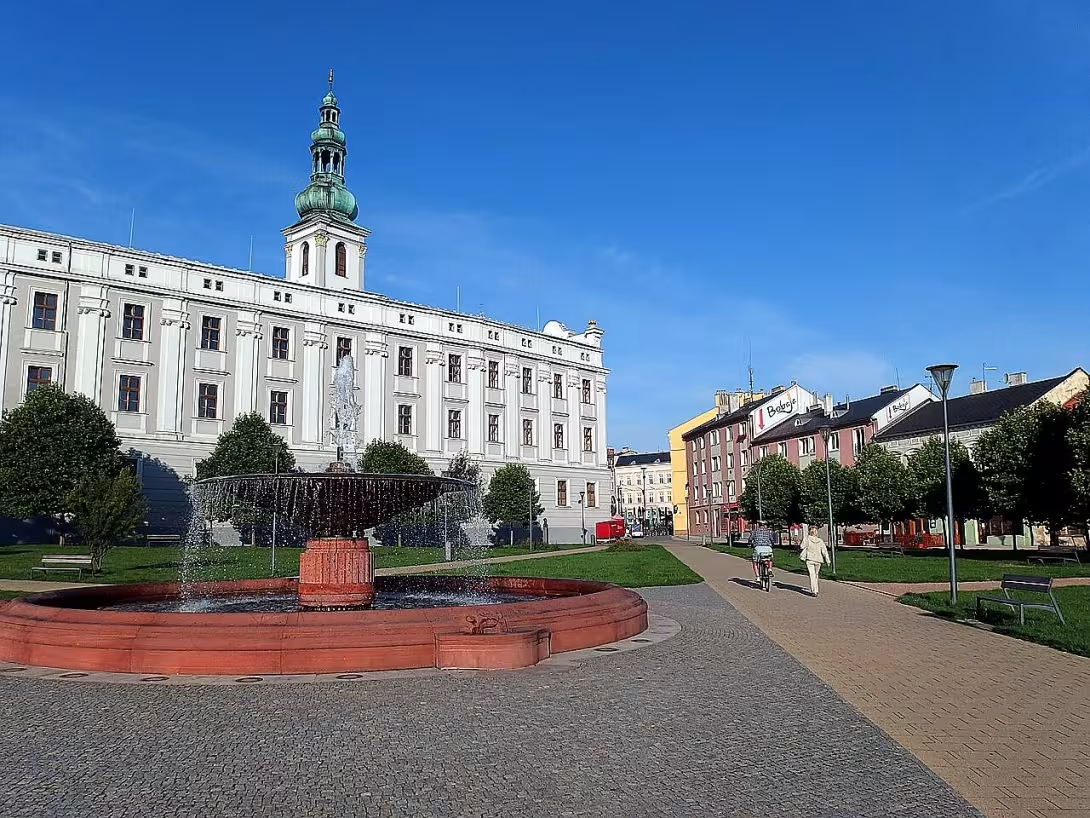
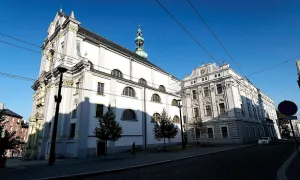
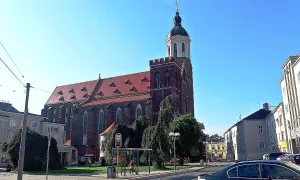
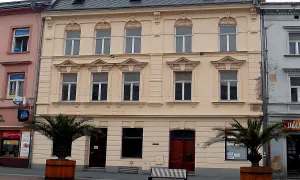
Jesuit College in Opava is an important Baroque monument from the first half of the 18th century, located in part Opava-Město. The building was built by builder Georg Hausrucker. It represents an important architectural element of the city, closely linked to the church of St. George.
The work of Jesuits in Opava began in 1625. At the request of Prince Charles of Liechtenstein and with the consent of Bishop Francis of Ditrichstein of Olomouc, members of the Olomouc college came to town. They took over the administration of St. George's Church. However, this start was interrupted in 1626, when they had to leave the order as a result of Mansfeld's invasion of Silesia.
They returned to the city in 1627 after Opava conquered Albrecht z Valdštejna. He gave the Jesuits the administration of all churches in the prince of Opava, including the parish of the city with the Church of the Assumption of the Virgin Mary. In 1630 the first class of Gymnasium began here, but in 1634 the parish church was reclaimed by German knights. Soon, however, Prince Karel Eusebius z Lichtenštejna gave the Jesuits three houses in the neighbourhood of St. George's Church, where the Order moved. The church of St. George was finally acquired in 1655.
From the point of view of architecture it is a baroque object whose current form dates from the first half of the 18th century. The construction was implemented by Georg Hausrucker.
In 1964, part of the buildings were listed by the National Heritage Institute in the list of cultural monuments. The object remains tangible evidence of the long-term influence of the Jesuit Order in the region and its influence on education and church administration in Opava.
The monument is a valuable witness to the history of the city and baroque art. Her visit offers an opportunity to look into the early period of modern education and administration in Silesia.
Then and now
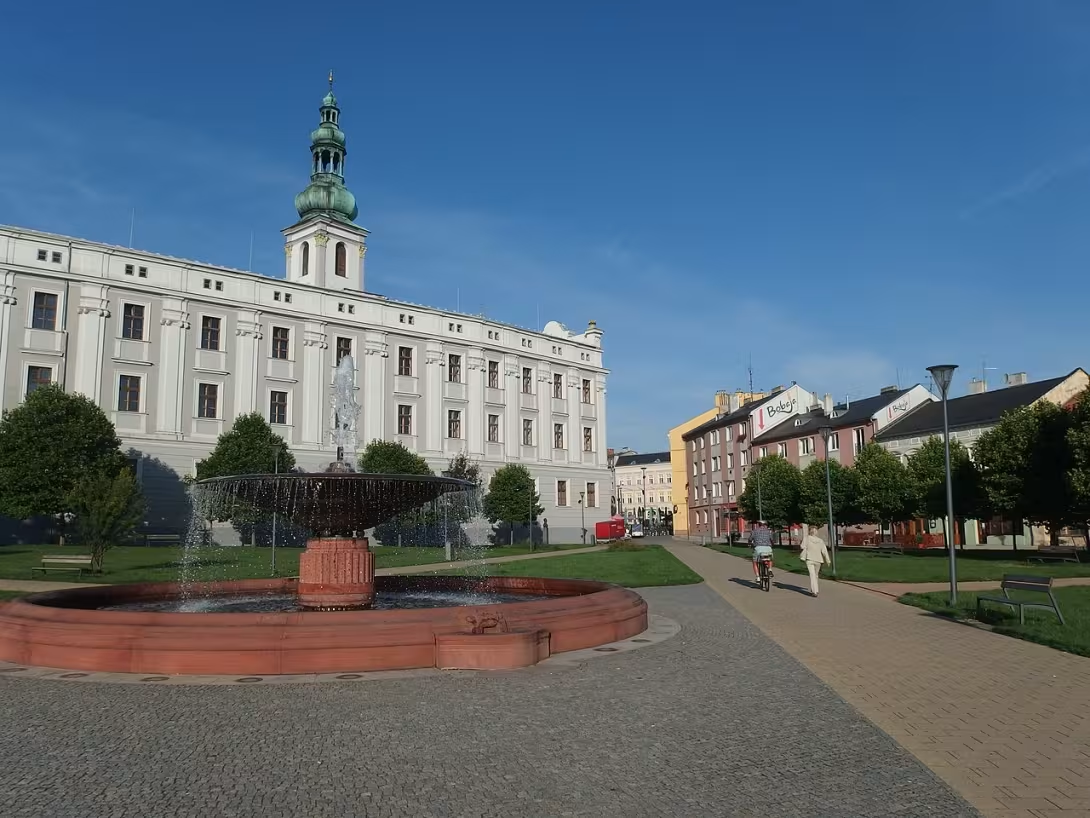
Drag the slider to compare how the landmark may have looked when it was built with the view today.
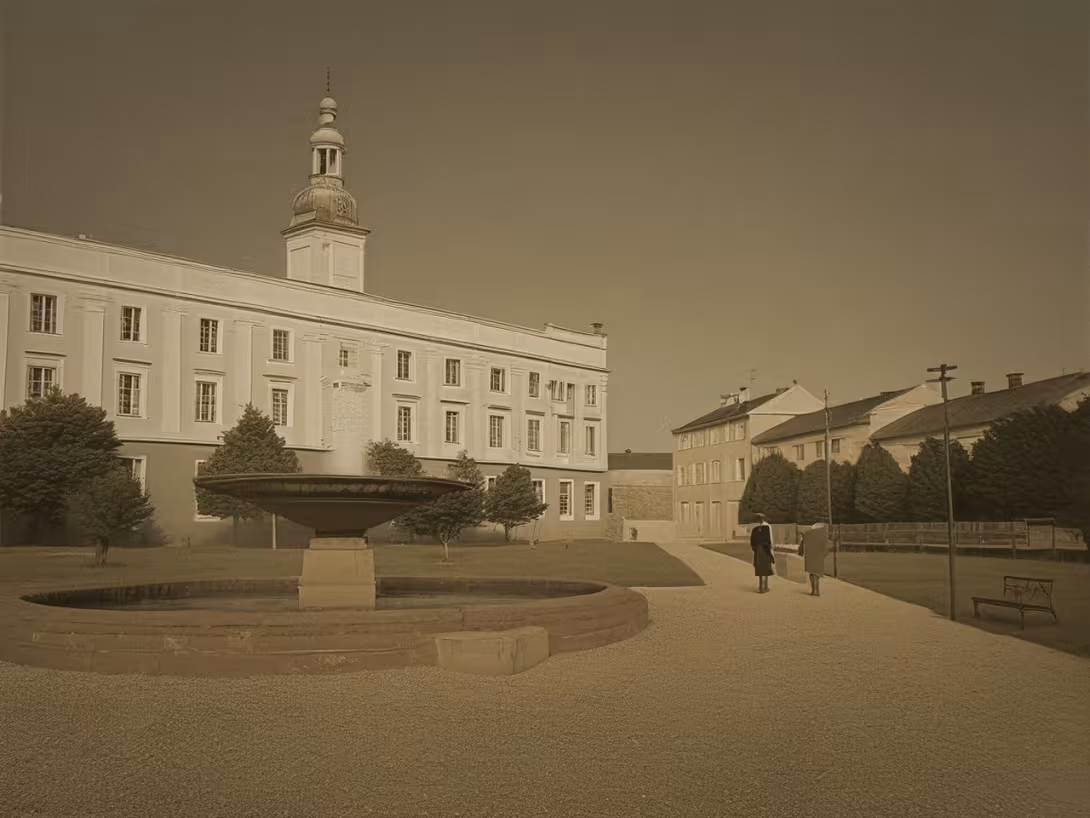
The historical appearance on the left is an AI-generated visualisation and serves as inspiration only.
Historical milestones
- 1625
- The arrival of members of the Olomouc Jesuit college in Opava.
- 1627
- The Jesuit return to the city after the conquest of Opava Albrecht from Valdštejn.
- 1634
- Donating three houses in the neighborhood of St. George's Jesuit Church from Prince Karl Eusebio of Liechtenstein.
- 1655
- The ultimate takeover of St. George's Church into Jesuit administration.
- 1964
- The entry of part of the buildings into the list of cultural monuments by the National Heritage Institute.
Architectural development
The present Baroque form of the building dates back to the first half of the 18th century. Construction was realized by builder Georg Hausrucker.
Historical events
In 1630 she began teaching in Opava first class gymnasium. In 1964, some of the buildings were listed as cultural monuments.
Owners
Jesuits (since the 17th century)
Points of interest
- This is an important Baroque monument from the first half of the 18th century, built by Georg Hausrucker. - The Jesuit activity in Opava began in 1625, but in 1626 they had to leave the order due to the invasion of Silesia. In 1630 the first class of high school began here. - Prince Karel Eusebius z Lichtenštejna donated three houses in the neighbourhood of St. George's Church. - Some of the buildings were listed in 1964 as cultural monuments.
Guide
Show guide text
This text was created by artificial intelligence and has not been editorially reviewed. It may contain inaccuracies.
Welcome to the heart of Opava. You're standing in front of a building that carries hundreds of years of history, faith and education. In front of you is the Jesuit college, a massive building that defines the character of this place by its presence. If you look at it now, consider it an embodiment of the time when architecture was an expression of power and spiritual bribery. It is a place where the fates of great nobles, scholars and religious men have intertwined. Stop for a moment, take a breath and let the atmosphere of this space take you deeper into the past.
To understand why this building is so important, we have to go back many centuries. The work of Jesuits in Opava started not with the construction of this particular building but much earlier. The first traces of their presence can be found here in the year six hundred twenty-five, when members of the Olomouc college came into town. But their beginnings were not easy and full of unrest. Just a year later, in the year six hundred and twenty-six, they had to leave this order because of the dangers associated with the invasion of Silesia. It was a time of uncertainty, but their bond with Opava was not broken.
A few years later, six hundred twenty-seven years later, the Jesuits returned to the city. The conquest of Opava Albrecht from Valdštejn contributed to this return, which was one of the most prominent personalities of his time. With the gradual strengthening of their position in the city, infrastructure began to emerge, allowing them to operate fully. The breaking point was the year six hundred thirty-four, when Prince Karel Eusebius z Lichtenštejna donated three houses to the Jesuits in the immediate vicinity of St. George's Church. This gift laid the foundation for the future expansion of the complex.
Now that you're standing in front of the building, focus your attention on its overall appearance. What you see today is primarily the work of the first half of the eighteenth century. It was at this time that the college was built in Baroque style, which was the direction that emphasized grandeur and dynamism. The author of this construction was builder Georg Hausrucker. Notice the total expansion of the building and its involvement in the city space. Even though we are looking at its external appearance today, remember that Baroque architecture was intended to create a sense of wonder and respect. Look at the facade and see how this building dominates the surroundings.
It is very important to remember that this college is not a separate island, but it is closely linked to the church of St. George. This temple was a spiritual center for the Jesuits, and in the year six hundred fifty-five they finally took it into their administration. So imagine this whole area as one organism, where religious ceremonies took place in the church and there was study, administration and life of members of the order in the dorm. This symbiosis between prayer and learning was a fundamental pillar of Jesuit philosophy.
Now let's think about the people who left their trail. In addition to the already mentioned Albrecht of Valdstejn and Karl Eusebia of Liechtenstein, other important men, such as František z Ditrichštejna, were associated with this place. These nobles were not only donors of money or land, but they were players in the great political game of their time. Their support for the Jesuits was not random. The Jesuits were considered Europe's best teachers at the time, and therefore their presence in Opava was a huge prestige of the locaity.
And this is where we come across one of the most interesting facts in this place. Did you know that in the year six hundred and thirty, first-class classes began in these premises? Imagine the first students to sit here in the benches, study Latin and Greek language and prepare for life in the society at the time. This school has become the center of intellectual life in the region. The college was not only a home for religious men, but above all a place where knowledge spread and the minds of future leaders and scholars formed.
If you look at these walls today, you might ask why this monument is so valuable to us today. The answer lies in its historical value and in how faithfully it represents the Baroque era. This is why a part of the buildings in the year nine hundred and sixty-four were registered as a cultural monument to the National Heritage Institute. This registration is not just a formal administrative act, but a recognition that this building is an irreplaceable testament to the history of Silesia and Opava.
Now try to imagine what the morning awakening in this dorm looked like two hundred years ago. The sound of bells from St. George's Church, silent steps in corridors and rustling parchments in libraries. Everything here was organized with strict discipline, but also with the aim of achieving the highest possible education. It's fascinating to think about how many generations of people have gone through these gates, how many discussions have been conducted here, and how many secrets these walls keep.
When looking at the building, please note that George Hausrucker's Baroque architecture was tasked with expressing order and stability at a time that was often very chaotic. This building was to be a fortress of faith and science. Although the time has changed and the function of the building has transformed over the centuries, its basic character has remained preserved. It is a monument to endurance because Jesuits had to overcome obstacles here, from expulsion in the seventeenth century to building a magnificent building in the eighteenth.
Now that you have learned of the journey from the first members of Olomouc to the gifts of the nobles to the emergence of the Baroque complex, I suggest you give a moment of silence. Look again at the details of the building, perceive its potency and try to connect all these dates and names into one image. This college is basically an open book that tells about ambition, faith and desire for knowledge.
I hope this short trip to history has helped you better understand the importance of this place. The Jesuit college in Opava is not only a pile of rocks and mortar, but a living proof of how deeply the traditions of education and spirituality in our city are rooted. It's a place that teaches us that even if we have to leave sometimes, with the genus and the support of the right people, we can go back and build something that will last for centuries.
Now you can continue your walk through the city. I recommend that you visit the neighbouring church of St. George, which we talked about, and experience the overall atmosphere of this historic core. Allow yourself to follow the streets of Opava and discover other hidden corners that carry similar fascinating stories. Thank you for your attention and I wish you the rest of the day to discover the beauty of our city. Goodbye.
Tips for visitors
The best time to visit is spring or autumn, when the colors of the city are pleasant and the crowds are less, allowing a peaceful observation of the Baroque facade. You can easily transport to the city centre by car or public transport; Check the specific transport possibilities in the maps.
To visit we recommend taking comfortable shoes for a walk through the historical core of the city and the camera. Since it is a building in operation, we recommend to be considerate to people who work or study here.
For the best photos we recommend morning or late afternoon light, which highlights the details of the construction by George Hausrucker. The most interesting views offer a view from the street to the main facade of the building.
During a short walk in the surrounding area you can visit the Church of St. George, located in close proximity. It is advisable for families with children to focus on finding architectural details on the facade, which can be a fun game for children.
Frequently asked questions
Can the monument be visited?
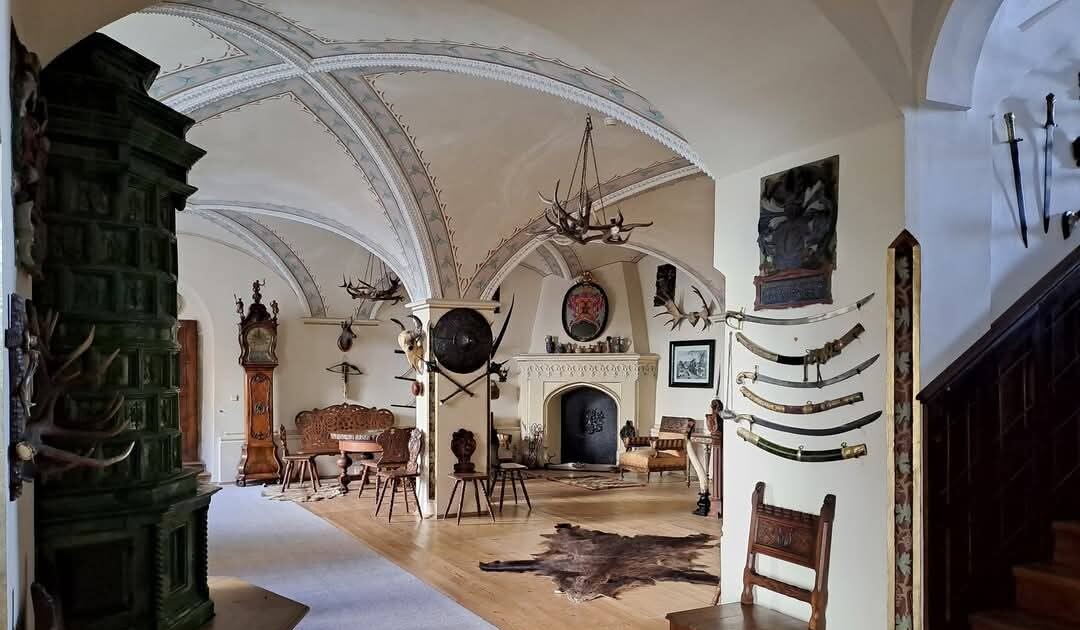
The building is in use (offices, a school, shops and the like). The interior is generally accessible only during operating hours and tours are not usually offered; we have not verified the details. You can see the exterior from the street.
Where is the monument?
Location: Opava-Město. The map on this page shows the exact spot.
Why is the monument protected?
It is listed in the Central List of Cultural Monuments of the Czech Republic as a cultural monument (register no. 1000124842).
Businesses nearby
Do you run a restaurant, accommodation, shop, museum, rental, wellness or other visitor service near this monument? Show yourself directly to the people heading to it — this is how they will see you in the app and on the web:
Events nearby
Zdroj akcí: otevřená data měst a obcí ČR (Národní katalog otevřených dat) a kalendář akcí Národního památkového ústavu.
Nearby
Kostel svatého Jiří
Accommodation nearby
Themed route
Here is the design of the thematic route:
1. St. George's Church (sacral building) - The starting point of the journey, which captures its architecture and spiritual atmosphere. 2. Jesuit Dorm in Opava (historical building) - The main destination of the trip, where you can admire the ancient walls and inner spaces of this educational complex.
Seasonal recommendations
In the spring the surrounding area of the building awakens to life and the fresh green highlights the colours of the facade. We recommend morning walks when the light is fine and the air is fresh. Light spring clothes and shoes are suitable for walking on city pavement.
In the summer months it dominates the space of strong sun, which highlights the details of architecture. The best time to visit is early morning or late evening to avoid heat. It is advisable to choose light, breathable substances and not forget to protect your head from the sun.
Autumn brings golden shades of leaves and melancholy atmosphere to the city. Lighting is softer and more saturated during this period, which is ideal for observing the appearance of the building from the outside. We recommend layered clothes and waterproof shoes for frequent collisions.
Zimą is a monument in contrast to freezing air and possible snow. In Advent time, the surroundings are lit and there is a cozy mood. Hot winter clothes, hats and gloves are essential to make your stay in the city centre pleasant.
Visualizations and artistic views


The visualisations are generated by artificial intelligence and serve as inspiration.
Photos from the area
Real photos taken near the monument


Zdroj a licence jsou uvedeny u každého snímku.
Tips from visitors
No tips yet. Be the first!
Log in and add your tip.
Sources and literature
Photos: Palickap / CC BY-SA 4.0 — Wikimedia Commons. The author and licence also appear when you hover over the image.
Faktickým podkladem tohoto textu byl článek na Wikipedii, jehož autory jsou přispěvatelé Wikipedie. Článek je dostupný pod licencí CC BY-SA 4.0.
Location on the map

Příběhy a pověsti
Legendy, pověsti a příběhy spjaté s touto památkou

Fotografie návštěvníků
Zatím žádné fotografie. Buďte první, kdo přidá fotografii z návštěvy!
Log in a přidejte svou fotografii nebo hodnoťte.
Za ověřenou návštěvu v aplikaci získáte víc bodů — poznáme podle GPS, že jste na místě.
Reviews and comments