



Jezuitská rezidence (Petrovice u Sedlčan) Jesuit residence
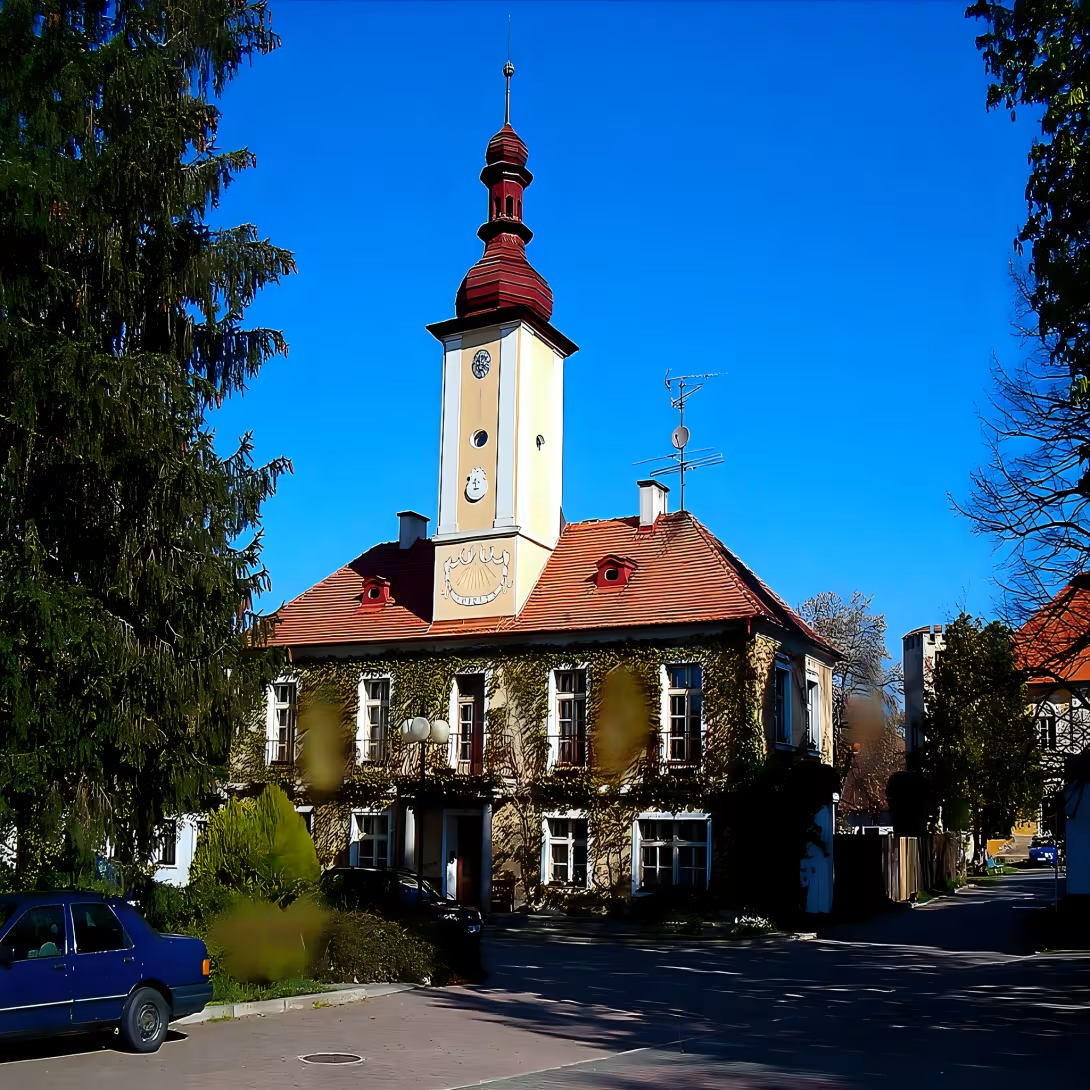
The Jesuit residence in Petrovice near Sedlčan in the Central Bohemian Region is a remarkable monument from the 17th century. It testifies to the work of Tovaryště Jesus in Připomsk in the Baroque reCatholics. Today this building is part of the cultural heritage of the Czech Republic and is registered in the Central List of Real Cultural Monuments. A storey building with a rectangular plan and a square-oriented face was built by Jesuits as part of their wider economic and religious centre. The characteristic elements of the residence are the Portic and high prism tower above the main entrance, which provide a unique character to the construction.
The establishment of the residence is closely linked to the historical context of the 17th and 18th centuries. In the Czech countries there was intense recatharization in the framework of counter-reformation. The tovarishness of Jesus played a key role in this process, and his influence on the Primand was considerable. In 1666 Jesuits Petrovice bought from their colleagues from Krašovice. This allowed a large and small residence to be built. Acquisition was part of a strategy to expand influence and strengthen the Catholic Church at local level.
The architecture of the building reflects an early Baroque style typical of the time of origin. The building with a rectangular plan is equipped with a portico with two columns above which is a small balcony. The valb roof is covered with burnt bags. The tower is finished with eight-sided fighting with lantern and poppy. Over the years, the object has undergone several reconstructions. In particular in 1935 his doctor Josef Abraham modernized him to a residential house. Although the original Baroque elements were only partially preserved, the monument still represents an interesting historical object.
The ownership and administration of the residence have undergone several changes after the dissolution of the Tovaryště of Jesus in 1773. After leaving the Jesuits, the farm went into the hands of a fund that later sold the property. In 1806 he bought the petrovical farm Jan Václav Bechyně z Lažan. It was subsequently owned by several others, including Count George of Oppersdorf and Knight Vladimir Zhorsky of Zhorz and Kronberk. After Zhorsky's death, the widow Odona Zhorská took over, which sold part of the estate to local farmers.
The key moments in relation to the building were the Baroque reconstruction in 1721, which the Jesuits carried out near the church of St. Peter and Paul. Another significant change was the dissolution of the order in 1773, which led to changes in ownership and purpose of the building. In the 20th century, the building served as a health centre before being readapted to a private house.
Today, the petrovical residence is open to the public and its historical value is officially recognised. Although the state of the building suffered after years of use as a health centre, the importance of the building for local and national history remains unquestioned. The visit offers a unique view of the Baroque reCatholics and influence of Jesuits in Czech countries. This makes the monument not only historically interesting, but also a culturally valuable destination.
Historical milestones
- 1666
- Buying Petrovic Krašovice Jesuit and building two residences.
- 1773
- The dissolution of the Tovarishness of Jesus by Emperor Joseph II and the change of ownership.
- 1806
- Buying a petrovic farm by Jan Václav Bechy from Lažany.
- 1935
- Modernization and reconstruction of the residence by a doctor Josef Abraham to a residential house.
Architectural development
Originally early Baroque building from the second half of the 17th century with a rectangular plan. During the time the building was modified, especially in 1935 it was modernized to a residential house. On the north side of the original building is later added staircase risalite and storehouse.
Historical events
1666: purchase of Petrovic Jesuit from Krašovice; 1721: Baroque reconstruction of nearby church; 1773: dissolution of the Jesuit Order; 1887: reconstruction of the castle with a cimburia; 1935: modernising the residence by Josef Abraham.
Owners
Since 1666 Tovaryštvo of Jesus; from 1773 onwards, following the dissolution of the Jesuit Order; since 1806 Jan Václav Bechyně z Lažan; the descendants of Count George of Oppersdorf; Knight Vladimír Zhorský ze Zhorze a z Kronberka; widow Odona Zhorsky; since 1935 various private owners.
Points of interest
- Jesuit residence in Petrovice is a monument from the 17th century and testifies to the work of Tovarysch Jesus in Přibram during Baroque reCatholisation. - The residence has a portico, a high prism tower above the main entrance and is part of the cultural heritage of the Czech Republic. - In 1666, Jesuits Petrovice bought from their colleagues in Krašovice, which was part of a strategy to expand the influence of the Catholic Church. - After the dissolution of Tovaryště Jesus in 1773, the object underwent several changes of ownership and purpose, last served as a health centre. - Today, the residence is open to the public and offers a view of the Baroque reCatholics and influence of Jesuits in Czech countries.
Guide
Show guide text
This text was created by artificial intelligence and has not been editorially reviewed. It may contain inaccuracies.
Welcome to Petrovice. You're standing right now in front of a remarkable historical monument to the Jesuit residence here. When you look up and look around you, before your eyes is an early Baroque storey building dating back to the second half of the seventeenth century. Feel the extraordinary atmosphere of a place that breathes old times. The building has a rectangular plan and is oriented directly to the square. Its appearance bears traces of building development, which took place over long centuries, and forms a natural and very important part of the wider historical area together with the local castle. Let the ancient walls work on you and follow us on a short journey to the depths of the past.
Now let's move back in time to 16 hundred and sixty-six. That's when Petrovice was bought by members of the order called the Krašovice Jesuits. They then built two residences in this place, which were intended to serve as a small or also a summer residence for the members of Tovarysch Jesus. This building is so faithful to the profound influence of these order throughout the region during the period of so-called Baroque reCatholisation. Life in this building and its surroundings was closely linked to spiritual and administrative efforts at the time. For centuries, it brought about various changes, the most significant of which was the year seventeen hundred seventy-three. In this year, Tovarysch Jesus was officially dissolved by the then monarch, who was the emperor Josef the Second, which led to a fundamental change in ownership of the entire building. But history continued and brought new owners and new fates. A few decades later, namely in the year eighteen hundred and six, he bought the entire petrovic estate Jan Václav Bechyně z Lažan. The building gradually changed its faces until it reached the twentieth century when another significant chapter of its existence came. In the year nineteen hundred thirty and five, the residence had undergone a major modernization and a complete reconstruction, which a doctor named Josef Abraham deserved at that time. He gave the ancient seed a new form to serve as a common residence.
Now pay attention to the architecture itself and the details you have right in front of you. Look at the main entrance to the building. Above it is a characteristic element, which is a high prism tower. At the entrance you can also admire an interesting portika, which gives the entire facade a festive character. When you follow the line of construction, you realize that this storey building represents a valuable part of our country's cultural heritage. The architects who once designed this building and breathed life into it remained unknown until today, but their work speaks for them and bears traces of the craftsmanship of their time.
When we immerse ourselves in the history of this place, we find that it is linked to a whole range of significant historical figures. The most famous names that appear in chronicles and records associated with Petrovicemi include Jakub Krčín z Jelčan a Sedlčan, Přibík Jeníšek z Újezda, Lidmila Kateřina z Talmberka, already mentioned Jan Václav Bechyně z Lažan, or also Vladimír Zhorský ze Zhorze a z Kronberka and, last but not least, Dr Josef Abraham, who modified the object for modern living. Each of these personalities has left its own mark in the history of the site, whether by managing property, by building modifications or by social influence.
When we stop at interesting things, it is fascinating to think that this building has been in its place for centuries and remembers the times when the landscape and society have changed radically. The influence of Jesuits in this area was not only a matter of faith, but also of landscape and property management. The fact that the original church summer residence became a seat for everyday life and modern home shows how historical buildings managed to live on in completely different social conditions. This whole area, including the castle and this Jesuit residence, thus forms the memory of the region, which is worth seeing through all senses.
We hope you enjoyed the tour of this place and that you enjoyed the time you spent before this interesting historical monument. You can now continue to discover the other beauty of the surrounding area or take a walk along Petrovic Square. We thank you for your attention and wish you a wonderful rest of the day. Goodbye.
Tips for visitors
A tour of the early Baroque Jesuit residence in Petrovice near Sedlčan is planned for spring or autumn months, when the surrounding nature offers the most pleasant atmosphere for a peaceful walk. We recommend morning or late afternoon hours, when sunlight best highlights architectural details of this historic storey building from the second half of the seventeenth century.
Take your comfortable shoes with you for walking on rural roads as well as plenty of drinking water, because you will not find a wide refreshment network in the immediate vicinity of the historic building. Don't forget to pack your camera to capture the picturesque rural architecture.
For shooting the exterior appearance of the residence, it is best suited to side daylight, which creates interesting shadows on the historical facade. See if you can find some footage from a slight ceiling to excel the storey structure and fit it into a local historical environment.
During your trip to this location, don't forget to visit interesting places in the surroundings, which are available within 30 minutes' drive. These include the nearby Petrovický castle, the historic church of St. Peter and Paul in the village and the nearby Krasovice.
If you travel with children, take a trip like exploring old times and talk about the history of the former inhabitants of this region. The surrounding area offers plenty of quiet space for outdoor exploring and a family walk without large crowds of tourists.
Frequently asked questions
Can the monument be visited?
We have not verified whether this monument is accessible. Please ask the owner or operator, or the local municipal office.
Where is the monument?
Location: Petrovice. The map on this page shows the exact spot.
Why is the monument protected?
It is listed in the Central List of Cultural Monuments of the Czech Republic as a cultural monument (register no. 1000136836).
Businesses nearby
Do you run a restaurant, accommodation, shop, museum, rental, wellness or other visitor service near this monument? Show yourself directly to the people heading to it — this is how they will see you in the app and on the web:
Nearby
Petrovický zámek, kostel svatého Petra a Pavla, Krašovice.
Accommodation nearby
Themed route
I propose a thematic tour for lovers of history and monuments in the village Petrovice and its nearby surroundings.
1.Jezuitská rezidence (Petrovice u Sedlčan) Type: Main objective Why is it worth a visit: This historic building represents an important building monument linked to the work of the Jesuit Order. Visitors can admire the ancient architecture and breathtaking history of this place.
2. Petrovic Castle Type: Historical residence Why is it worth a visit: This property is located in the immediate vicinity of the main destination and forms an integral part of the estate. It offers a view of the traditional castle building in the village.
3. Church of St. Peter and Paul Type: Sacral construction Why is worth a visit: Spiritual dominance in the village, which keeps historical building elements and serves as an important meeting place. Its noble tower forms a natural, unoverlooked part of the local landscape.
4. Krasovice Type: Ambient Why is worth a visit: This adjacent location in the vicinity complements the total historical nature of the landscape associated with Petrovicemi. The walk here closes the thematic circuit in selected places.
Seasonal recommendations
The spring visit to the surroundings of the Petrovic Jesuit residence offers awakening rural nature, when the surrounding trees are just beginning to grow and the meadows turn bright green. Sunshine is usually mild, but often variable, with morning fog supplying an ancient wall of mysterious character. During this period, solid and waterproof shoes are suitable because of wet soil after the siege or spring rains and warmer layered clothes to protect you from cold wind. The best time to admire architecture from the outside is in the morning, when soft light ideally paints historical details of the facade.
During the summer months, the memory is surrounded by lush green trees and high grass, while the sun radiates the building most of the day and creates sharp shadows. The atmosphere is quiet, filled with singing birds and buzzing insects in a more remote rural landscape. Light breathable clothes, headgear against strong sunlight and plenty of drinking water are recommended for an open-air tour, as the shade at the building in the morning declines. The best time for arrival is early morning or late evening, when temperatures are most pleasant and the light has a golden touch.
Autumn time brings to the landscape around Petrovic a colorful palette from yellow to red to brown, as the leaflets in the surroundings change colour and gradually fall down. Light is dampened by frequent fog and low clouds, which gives the old residence a somewhat melancholy and noble mood. Don't forget to wear waterproof shoes, long pants and a warm jacket to walk around the building, which will warm you when blowing cold wind. The ideal moment for visiting is around noon, when the fog usually spreads out and provides a clearer view of the rural scenery for at least a moment.
The winter season covers the whole area in silence, often under the snow cover, which dampens sounds and makes the lonely beauty of historical walls stand out. The sun sets very soon and its rays are weak, making the landscape feel cold, but on bright days the snow reflects the light. The best time for a short tour is early afternoon, when there is the best chance of daylight and more stable weather conditions.
Visualizations and artistic views

The visualisations are generated by artificial intelligence and serve as inspiration.
Photos from the area
Real photos taken near the monument

Zdroj a licence jsou uvedeny u každého snímku.
Tips from visitors
No tips yet. Be the first!
Log in and add your tip.
Sources and literature
Photos: Chmee2's family / CC BY-SA 3.0, rozlišení zvýšeno umělou inteligencí — Wikimedia Commons. The author and licence also appear when you hover over the image.
Faktickým podkladem tohoto textu byl článek na Wikipedii, jehož autory jsou přispěvatelé Wikipedie. Článek je dostupný pod licencí CC BY-SA 4.0.
Location on the map




Příběhy a pověsti
Legendy, pověsti a příběhy spjaté s touto památkou
Fotografie návštěvníků
Zatím žádné fotografie. Buďte první, kdo přidá fotografii z návštěvy!
Log in a přidejte svou fotografii nebo hodnoťte.
Za ověřenou návštěvu v aplikaci získáte víc bodů — poznáme podle GPS, že jste na místě.
Reviews and comments