






Jezuitský filosofický ústav Monastery
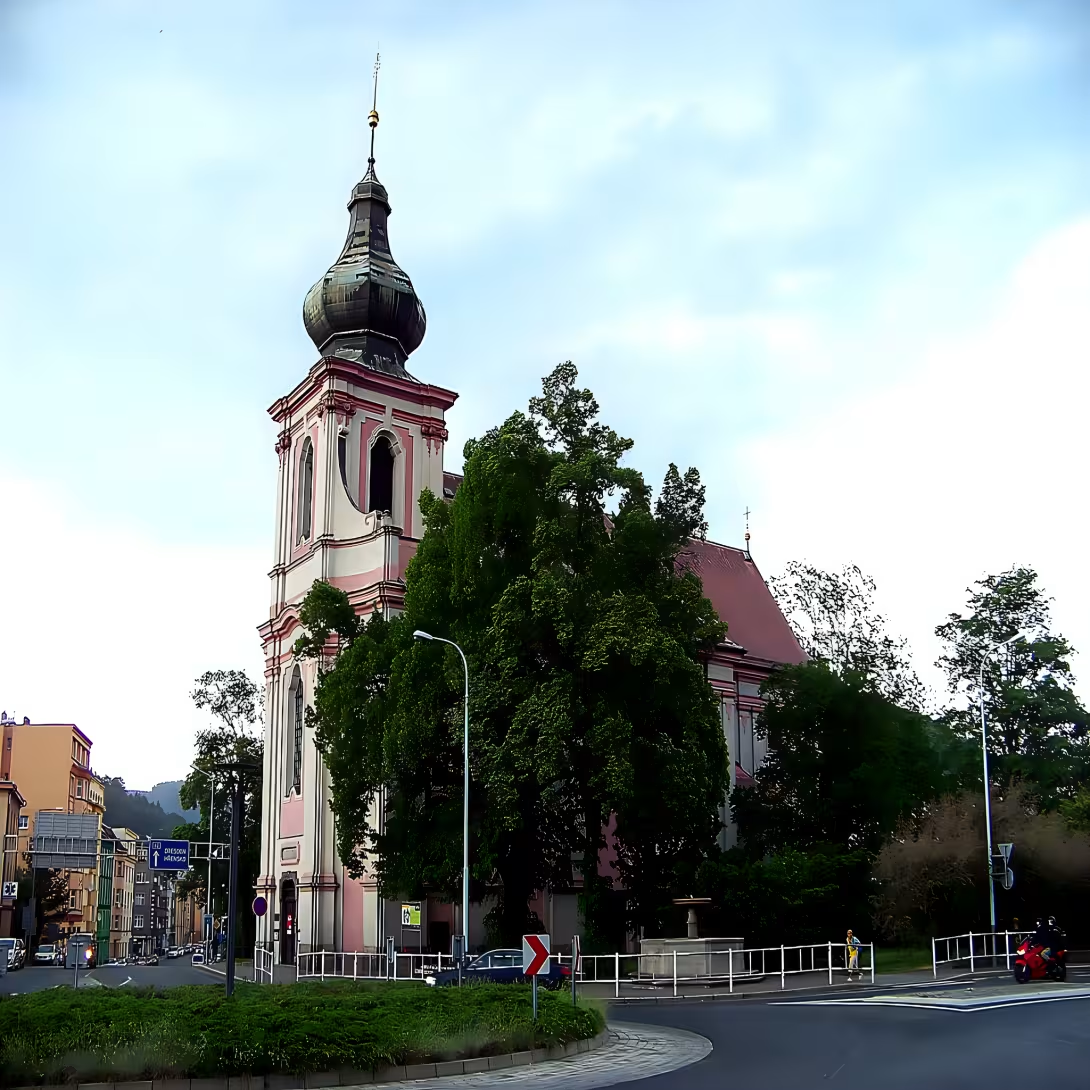
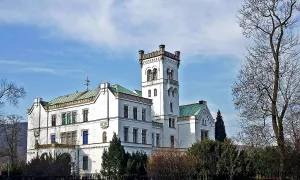
The Jezuitský Filosofický Ústav in Děčín is a historical monument that served as a Jesuit philosophical institute from 1933 until its closure in 1950. Situated near the Church of Saints Wenceslas and Blaise, it was linked to this church by a corridor. The site holds significance due to its role during a period marked by political and religious shifts in Czechoslovakia, reflecting broader socio-political changes within the region.
The establishment began in 1933 when German-speaking Jesuits decided to set up a separate novitiate in Děčín. This decision aimed to create an independent institution distinct from the Moravian Velehrad novitiate, which had previously accommodated both Czech and German novices. The choice of Děčín underscored national tensions within Czechoslovakia at that time, as it catered specifically to German-speaking Jesuits.
Initially, the institute began operations on September 1, 1933, focusing on German-speaking members. By September 1, 1934, Czech novices from Velehrad were integrated into the Děčín institution. This brief period of division within the Jesuit community was short-lived, as both groups relocated to Benešov in May 1935, where a philosophical institute had been established since August 1933. The subsequent occupation of the Benešov college by the German army in June 1942 forced its closure and led to the return of members to Velehrad.
The Jezuitský Filosofický Ústav was re-established in Děčín in 1947 after functioning temporarily in Brno. Its operations continued until April 1950, when it became a target during 'Akce K,' an operation orchestrated by State Security to suppress religious orders. The closure occurred on the night of April 13-14, 1950, resulting in the arrest and internment of 51 Jesuit members, including priests, scholastics, and brothers.
Today, the site is utilized by the Czech Republic's police force. While its original religious function has ceased, the historical significance remains a point of interest for those exploring Děčín's rich past. Visitors can appreciate the architectural connection to the nearby Church of Saints Wenceslas and Blaise, gaining insight into a period when political dynamics significantly influenced religious institutions in Czechoslovakia.
The Jezuitský Filosofický Ústav stands as a testament to resilience amidst adversity, offering a glimpse into the complex interplay between religion and politics during mid-20th century Europe. Its history invites reflection on the enduring impact of such institutions and encourages visitors to explore this site as part of Děčín's broader historical landscape.
Then and now
Drag the slider to compare how the landmark may have looked when it was built with the view today.
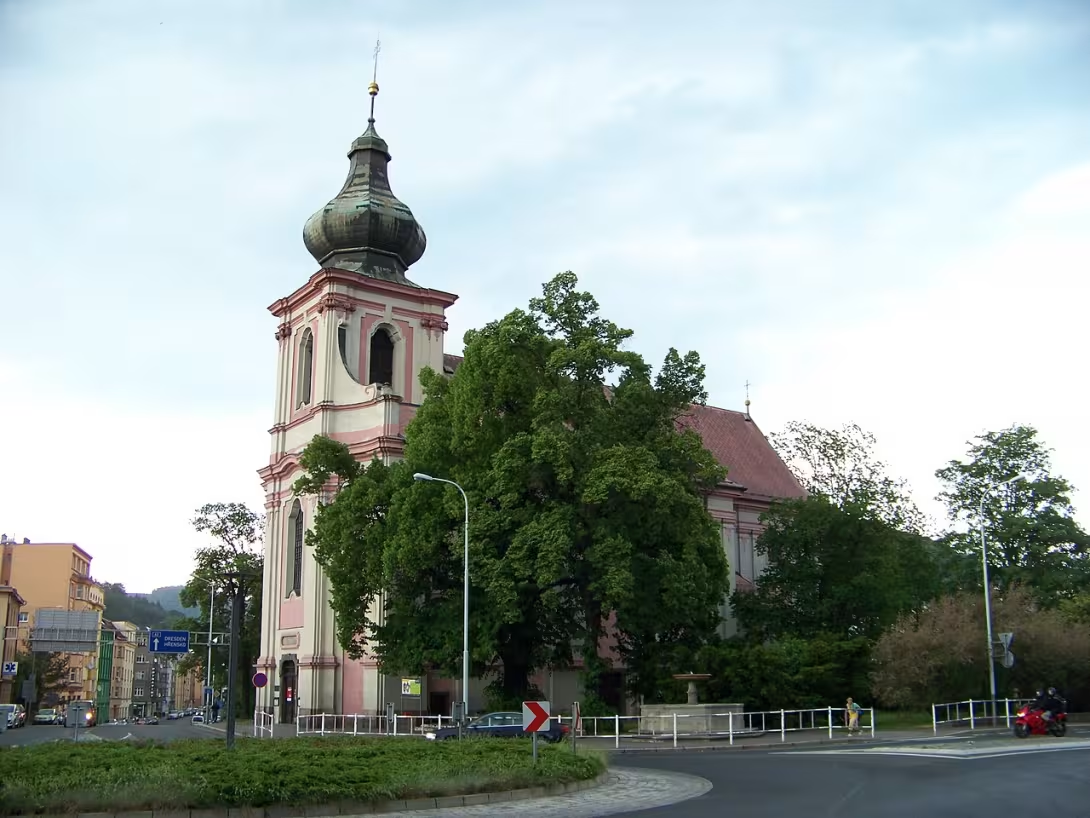

The historical appearance on the left is an AI-generated visualisation and serves as inspiration only.
Historical milestones
- 1933
- The novitiate for German-speaking Jesuits was established in Děčín.
- 1942
- Occupation of the Benešov college by the German army led to its closure.
- 1950
- Closure of the Děčín institution as part of 'Akce K'.
Architectural development
The building was originally constructed as a novitiate for Jesuit training. It underwent no significant architectural changes but was repurposed over time, most recently serving as a police facility.
Historical events
1933: Establishment of a separate novitiate for German-speaking Jesuits in Děčín, initially intended to be distinct from the Moravian Velehrad novitiate.
1942: The Benešov college, where the philosophical institute was located, was occupied by the German army, leading to its closure and relocation of members back to Velehrad.
1950: Closure of the Děčín institution as part of 'Akce K', a crackdown on religious orders orchestrated by State Security.
Owners
Initially owned and operated by the Jesuit order from its establishment in 1933 until its closure in 1950. Since then, it has been repurposed for use by the Czech Republic Police.
Points of interest
- The Jezuitský Filosofický Ústav in Děčín was initially established to address national tensions by creating a separate institution for German-speaking Jesuits, highlighting the linguistic and cultural divides within Czechoslovakia at that time.
- Despite its short-lived operation as an independent philosophical institute, the Jezuitský Filosofický Ústav in Děčín played a crucial role during 'Akce K,' when 51 Jesuit members were arrested, marking one of the largest crackdowns on religious orders by State Security in Czechoslovakia.
- The site's connection to the Church of Saints Wenceslas and Blaise via a corridor is an architectural feature that symbolizes the historical interlinking of educational and religious functions within Děčín.
- After its closure, the Jezuitský Filosofický Ústav was repurposed by the Czech Republic's police force, demonstrating how former religious sites can be adapted for modern civic uses while retaining their historical essence.
- The brief period in 1934 when Czech novices were integrated into the Děčín institute reflects a momentary attempt to bridge divides within the Jesuit community before both groups moved to Benešov, illustrating the fluid nature of institutional affiliations during politically charged times.
Guide
This guide is narrated by a synthetic voice generated by artificial intelligence.
Show guide text
This text was created by artificial intelligence and has not been editorially reviewed. It may contain inaccuracies.
Welcome to the Jezuitský Filosofický Ústav in Děčín, a site where history whispers tales of educational fervor and cultural divides. As you stand before this historic monument, imagine the air filled with the echoes of Jesuit teachings that once reverberated through these halls.
The story of this institution begins in 1933 when it was established as a novitiate for German-speaking Jesuits. Its creation was a strategic response to national tensions within Czechoslovakia, aiming to bridge linguistic and cultural divides by providing a separate space for German-speaking members of the order. This period saw the Jesuit Order navigating complex political landscapes, striving to maintain their educational mission amidst rising turmoil.
As you take in your surroundings, notice the architectural simplicity that speaks volumes about its purpose as an educational institution rather than a grandiose religious edifice. The absence of ornate details underscores the focus on learning and spiritual development over aesthetic display. The building's design reflects the pragmatic approach of the Jesuits during this era.
Throughout its history, the Jezuitský Filosofický Ústav became intertwined with significant events that shaped Czechoslovakia. In 1942, the occupation of the Benešov college by the German army led to a temporary closure, reflecting the broader impacts of World War II on religious and educational institutions. The eventual closure in 1950 as part of 'Akce K' marked the end of an era for the Jesuits in Děčín, amidst political shifts that saw many religious orders disbanded or expelled from Czechoslovakia.
A fascinating aspect of this site is its initial role in addressing national tensions by creating a separate institution for German-speaking Jesuits. This decision highlights the linguistic and cultural divides within Czechoslovakia at the time, offering a glimpse into the complexities of identity and belonging that influenced educational policies.
As we conclude our exploration, I invite you to linger and reflect on the layers of history encapsulated in this site. Consider how the Jezuitský Filosofický Ústav served as both witness and participant in the unfolding story of Czechoslovakia during a period of profound change. Thank you for joining me on this journey through time, and I encourage you to continue exploring the rich tapestry of history that Děčín has to offer.
Farewell, and may your curiosity lead you to many more discoveries.
Tips for visitors
The best time to visit the Jezuitský filosofický ústav is during late spring or early autumn when the weather is mild, and the natural landscapes surrounding Děčín are particularly beautiful. This period also tends to be less crowded, allowing for a more serene experience of the historical architecture. The soft light during these seasons enhances the aesthetic appeal of the site, making it ideal for photography.
Visitors are encouraged to use public transportation or park in designated areas outside the immediate vicinity and walk or take a short ride to the site. Public transport is available and can provide convenient access to the area.
When visiting, bring comfortable walking shoes as exploring the historical architecture and surrounding landscapes may involve some walking. A camera is recommended to capture the unique architectural details of the Jezuitský filosofický ústav and its connection to the Church of Saints Wenceslas and Blaise. Additionally, carrying a light jacket or sweater can be useful due to variable weather conditions.
For photography enthusiasts, the corridor connecting the Jezuitský filosofický ústav with the Church of Saints Wenceslas and Blaise offers unique perspectives, especially during golden hour when the light is soft and warm. The natural landscapes nearby also provide beautiful backdrops for photographs. Early morning or late afternoon are ideal times to capture the best light.
Nearby attractions within a 30-minute drive include the picturesque Děčín Castle, which sits atop a hill overlooking the Elbe River, offering stunning views of the area. For families with children, the nearby botanical garden and park provide a fun and educational outing amidst nature. These locations complement the historical exploration at the Jezuitský filosofický ústav with opportunities for leisure and learning.
Frequently asked questions
Can the monument be visited?
Religious buildings are usually open mainly during services; at other times a visit is normally arranged with the parish or the operator. We have not verified specific times.
Where is the monument?
Location: Děčín, Ústecký kraj. The map on this page shows the exact spot.
Businesses nearby
Do you run a restaurant, accommodation, shop, museum, rental, wellness or other visitor service near this monument? Show yourself directly to the people heading to it — this is how they will see you in the app and on the web:
Events nearby
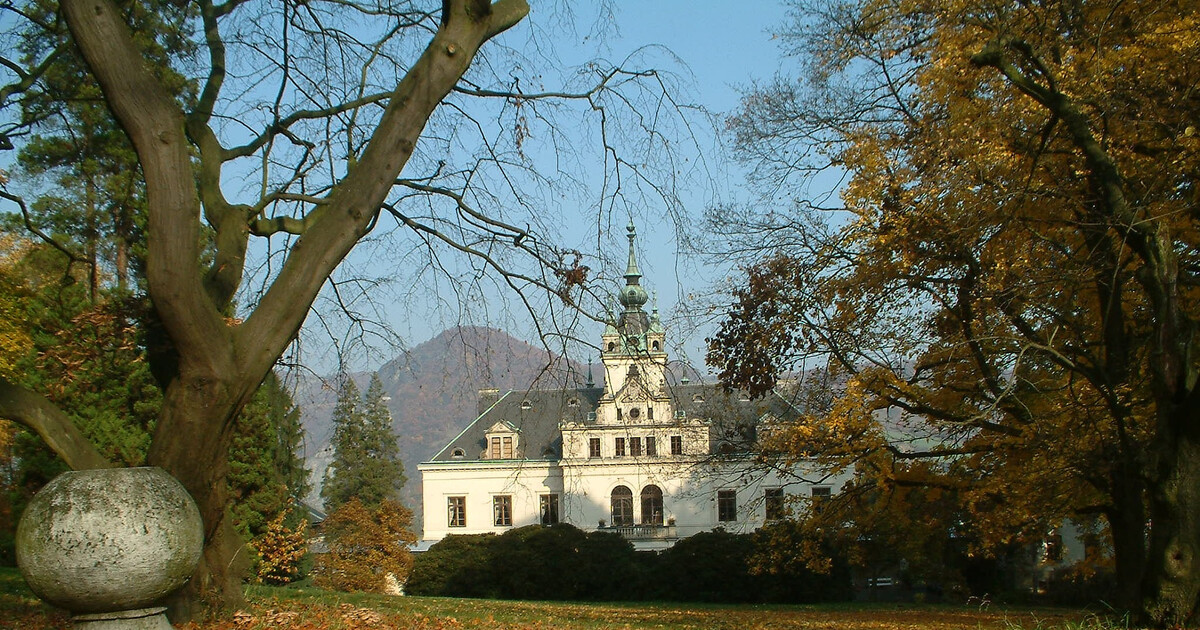

Zdroj akcí: otevřená data měst a obcí ČR (Národní katalog otevřených dat) a kalendář akcí Národního památkového ústavu.
Nearby
The Jezuitský filosofický ústav was located near the Church of Saints Wenceslas and Blaise in Děčín, connected by a corridor. The area is known for its historical architecture and proximity to natural landscapes.
Accommodation nearby
Trips and activities nearby
Guided tours, tickets and activities nearby from GetYourGuide
Affiliate link: if you buy from the partner, we may receive a commission. The price for you does not change.
Search tours and activities →Themed route
Thematic Walking Tour: Jesuit Philosophical Institute and Surroundings
1. Jesuit Philosophical Institute (Klášter) - Type: Historical Building - Why Visit: Begin your journey at the heart of Děčín's historical architecture, the Jesuit Philosophical Institute. This site offers a glimpse into the educational and spiritual life of the Jesuits in the 17th century. The institute is architecturally significant and provides insight into its role as a center for learning and religion.
2. Church of Saints Wenceslas and Blaise - Type: Church - Why Visit: A short walk from the institute, this church is connected by a corridor to the Jesuit Philosophical Institute. Its historical significance lies in its connection to the Jesuits and its beautiful Baroque architecture. The church serves as a testament to the religious heritage of Děčín and offers an opportunity to appreciate its intricate design.
3. Corridor Connecting the Institute and Church - Type: Architectural Feature - Why Visit: This unique corridor not only physically links two significant historical sites but also symbolizes the close relationship between education and religion during the Jesuit era. Walking through this corridor provides a tangible connection to history, allowing visitors to experience how these spaces were once part of a cohesive spiritual community.
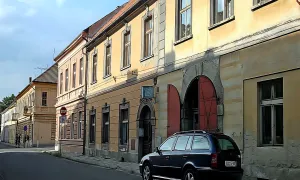
4. Surrounding Historical Architecture - Type: Urban Landscape - Why Visit: Explore the nearby streets and buildings that reflect Děčín's rich historical tapestry. The area around the Jesuit Philosophical Institute is known for its well-preserved architecture, offering a picturesque setting that captures the essence of the town’s past. This exploration provides context to the institute's significance within the broader urban landscape.
5. Natural Landscapes Nearby - Type: Natural Setting - Why Visit: Conclude your tour by stepping outside into the natural landscapes adjacent to Děčín. The proximity of these areas offers a serene contrast to the historical sites, allowing visitors to reflect on the harmony between nature and history in this region. The landscapes provide a peaceful backdrop that enhances the appreciation of Děčín's cultural heritage.
This thematic tour highlights the interconnectedness of Děčín’s historical and natural elements, offering a comprehensive experience of its rich cultural landscape.
Seasonal recommendations
Jaro: During the spring season, the Jesuit Philosophical Institute in Děčín takes on a unique lustrous glow that enhances the beauty of its historic facades. As flowers begin to bloom around the monastery, they provide a vibrant natural landscape that adds to the atmosphere of mild temperatures and renewal. Visitors can expect moderate crowds, making it an ideal time for a visit without excessive crowding. It is recommended to wear compact hats and warm sweaters for protection against sunlight and chilly mornings. The best time to visit is usually in the afternoon when the sun is at its highest, ensuring optimal conditions for photography and tours.
Léto: In summer, the Jesuit Philosophical Institute transforms into a sweltering retreat with long, sunny days. The atmosphere is full of vitality and tranquility, while green trees provide invaluable shaded escape routes from warm temperatures. This time of year is known for its larger crowds, especially during peak summer months, so it's wise to visit the institute early in the morning or later in the afternoon to avoid them. Wearing light clothing and sunscreen is essential for coping with the heat, while carrying water bottles helps maintain hydration during tours.
Podzim: In autumn, the Jesuit Philosophical Institute takes on a romantic and mildly melancholic character as leaves change into vibrant colors. Sunny days are warmer, and shaded areas offer comfortable spaces for relaxation, while morning mists add a magical dimension to its historic setting. Visitors can expect moderate crowds, making this an ideal time for a peaceful visit. It is recommended to wear layered clothing that allows adjustment to changing temperatures throughout the day, and footwear with good traction for comfortable strolls.
Zima: A winter visit to the Jesuit Philosophical Institute offers a unique atmosphere where quiet and stillness are accentuated by snow cover. Historic buildings become backdrops for views of ice formations or local landscapes blanketed in snow, adding to their beauty and mystery. Warm clothing, including sweaters, gloves, and hats, is essential for protection against the cold. Guests should also consider visiting in the afternoon to enjoy maximum daylight and warmth from the sun.
Visualizations and artistic views


The visualisations are generated by artificial intelligence and serve as inspiration.
Photos from the area
Real photos taken near the monument


Zdroj a licence jsou uvedeny u každého snímku.
Atmosphere of the place
This atmospheric visualisation of the place and period was generated by artificial intelligence. It is not real footage of the location.
Tips from visitors
No tips yet. Be the first!
Log in and add your tip.
Sources and literature
Photos: ŠJů (cs:ŠJů) / CC BY-SA 3.0, rozlišení zvýšeno umělou inteligencí — Wikimedia Commons. The author and licence also appear when you hover over the image.
Faktickým podkladem tohoto textu byl článek na Wikipedii, jehož autory jsou přispěvatelé Wikipedie. Článek je dostupný pod licencí CC BY-SA 4.0.
Location on the map


Příběhy a pověsti
Legendy, pověsti a příběhy spjaté s touto památkou

Příběh: Jezuitský filosofický ústav
Bylo to v pondělí ráno, kdy Martin zjistil, že jeho duchovní odpoledne nebude být obyčejné. Když se probudil z krátkého spánku pod modravou láhví stříbrných …
Číst příběh
Pověst: Jezuitský filosofický ústav
Staří obyvatelé Děčína vyprávějí, že v noci ze třináctého na čtrnáctého dubna roku 1950 se nad Kaštanovou ulicí zastavil čas. Bylo to krátce po půlnoci, když…
Číst příběhFotografie návštěvníků
Zatím žádné fotografie. Buďte první, kdo přidá fotografii z návštěvy!
Log in a přidejte svou fotografii nebo hodnoťte.
Za ověřenou návštěvu v aplikaci získáte víc bodů — poznáme podle GPS, že jste na místě.
Reviews and comments