






Děčín Castle
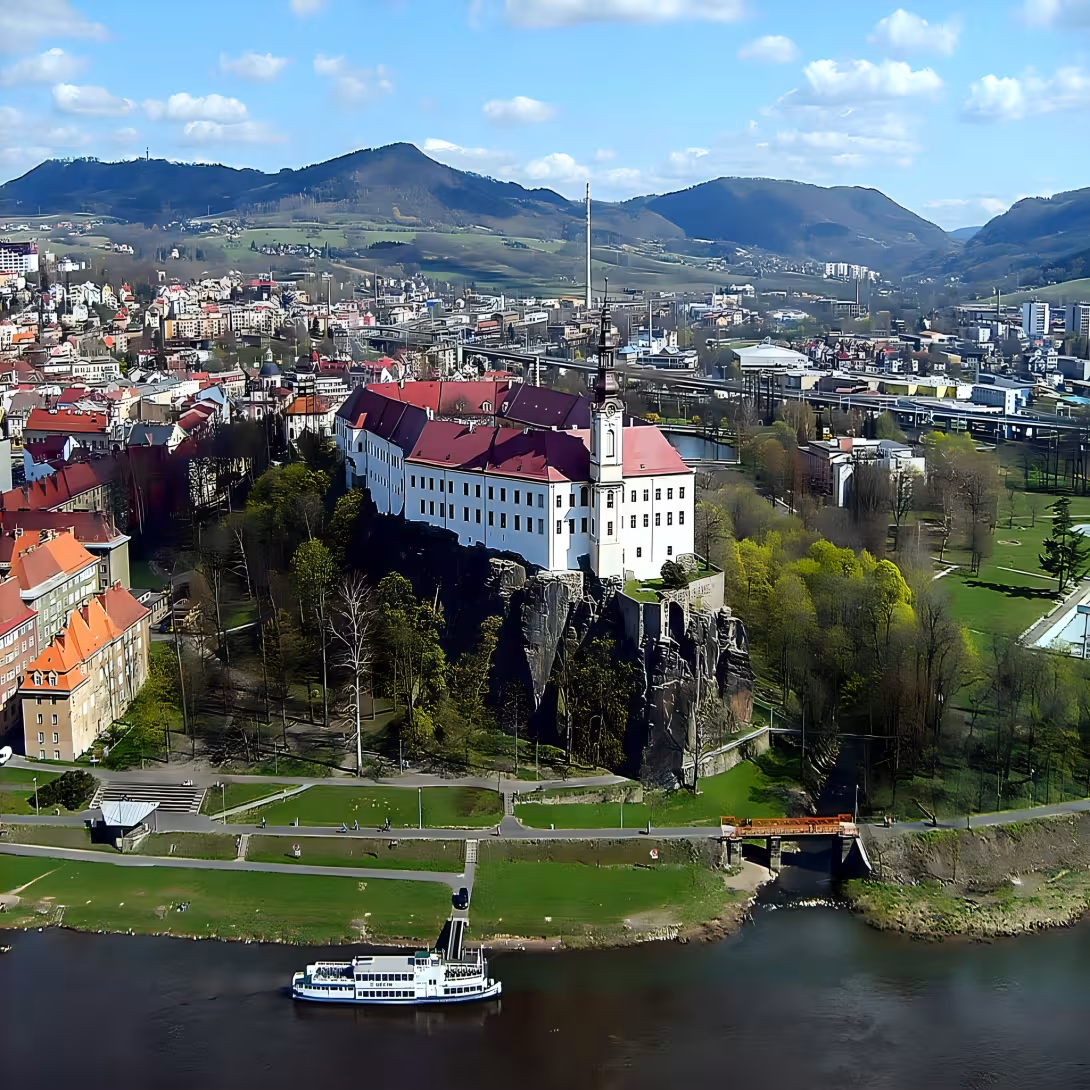
Děčín stands where the Ploznice flows into the Elbe, and it is this position that determines its character from time to time. The Statutory City of Děčín district in the Ústí Region occupies an area of more than 117 km ² and has approximately 46,000 inhabitants. The Elbe is divided into two halves and the whole area is permeated by a quaint river character - Děčín is therefore among the greenest Czech cities. Whoever arrives from the south will soon realize that he is standing on the threshold of the Labic Canyon, Europe's most powerful sandstone canyon.
The beginnings of the settlement are linked to the Elbe Brod, through which an important trade path passed. On today's castle rock there was a castle, which served as an administrative and defence centre. In the 13th century, the castle was replaced by a Gothic stone castle and the king Přemysl Otakar II. had the royal city built in its subbase. Děčín enters the written sources for the first time as a city in 1283.
The fourteenth century brought repeated floods, resulting in the city's centre of gravity being moved above - approximately to the level of today's Masaryk Square. At that time Děčín had the right to trade, river transport and fishing. The Hussite period has marked numerous fires. In the 16th and 17th centuries, three owners took their place on the estate before they were acquired by the Knights of Bünau. Under their rule, trade and craft production rose sharply; The city operated bricks, limestone and quarry and benefited from the port, shipyard and ferry. The Knights of Bünau held the manor until the Thirty Years War, sold it to the Thun-Hohenstein family in 1628.
After a 30-year war, the city's importance temporarily declined. The Thun used this period to reconstruct the castle into a Baroque castle surrounded by gardens. The revival came in the 18th century, when Děčín was abolished. At that time, the Thunes moved on to another reconstruction and the castle was given today's classical form.
The decisive impulse for modern development came on April 8, 1851, when the railway connection Praha- Dresden was operational. The track leading on the left bank of the Elbe started the transformation of Děčína into an industrial city. Particularly the neighbouring Podmokly, where the track was passing, has seen turbulent growth. In 1874, Děčín became a railway junction - additional tracks from Teplice, České Kamenice and Ústí nad Labem, the railway bridge was built over the Elbe and the Elbe paratroop was developed hand in hand with the tracks. The podmokles were promoted to a separate city in 1901 and in 1914 they were already around 20,000 inhabitants.
The 20th century brought deep turns to Děčín. The Munich Agreement caused the city to join Nazi Germany between 1938 and 1945. In 1942 Děčín and Podmokly combined under the common name Děčín. After the war in 1945, this whole was extended to include other municipalities - Melodies, Chromince, Želenice, Vilsnice, Bynov, Belá, Boletice nad Labem, Berezády and Březiny. Since 1960, Děčín has been the administrative centre of a large district of 909 km ² with approximately 130,000 inhabitants.
For visitors, Děčín is a gateway to the landscape of the Labské sandstone and the Czech Central Fire. Castle rock with baroque and then classicically rebuilt castle, two historical cores formed from two originally separate settlements and the Elbe canyon itself give the city an unmistakable character, the roots of which go back to the imaginary castle.
Then and now
Drag the slider to compare how the landmark may have looked when it was built with the view today.
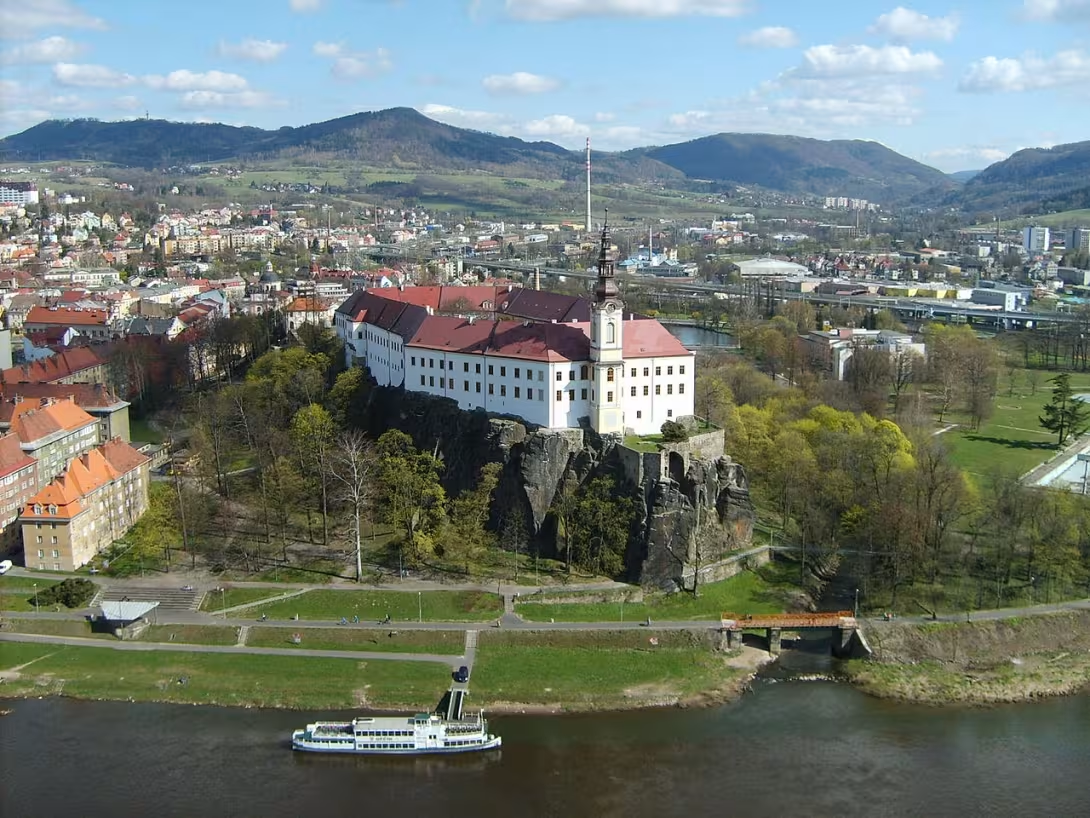
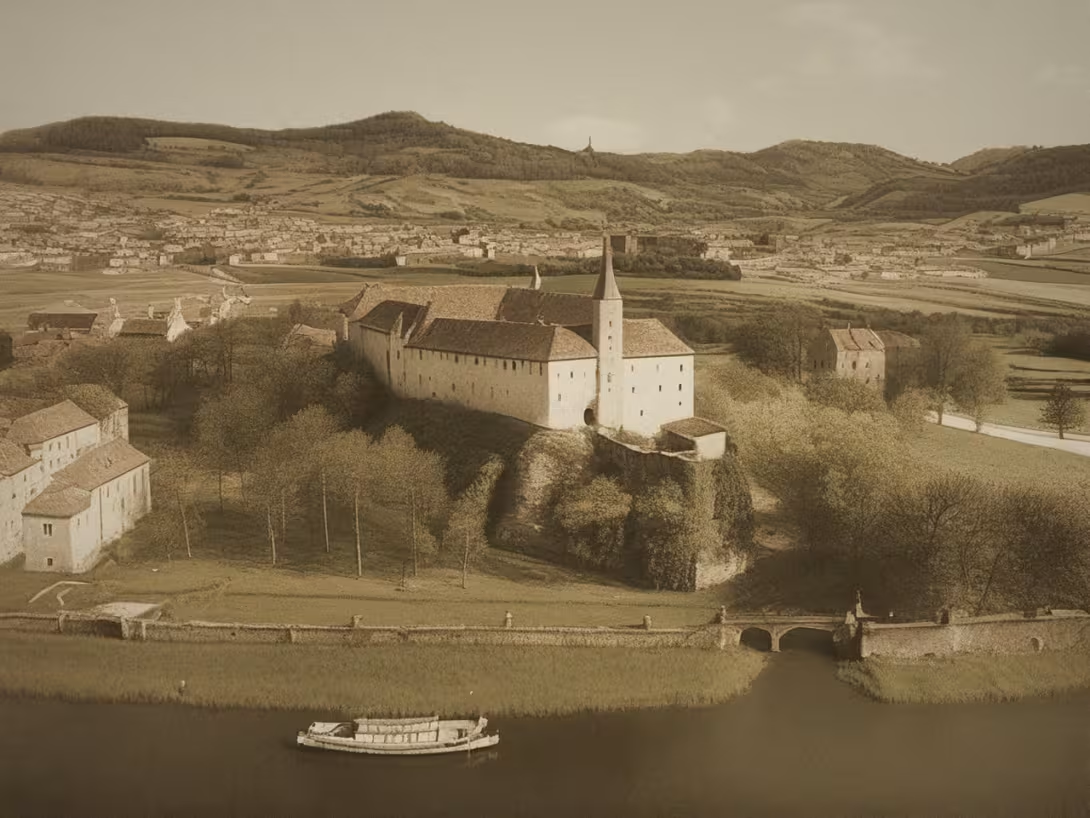
The historical appearance on the left is an AI-generated visualisation and serves as inspiration only.
Historical milestones
- 1283
- First written mention of Děčín as a city.
- 1851
- Operation of the Praha- Dresden railway line.
Architectural development
Děčín Castle experienced several architectural phases. The original Gothic castle was converted into a castle complex with extensive gardens under the Thun-Hohenstein administration in the Baroque period. Another reconstruction took place in the 18th century, which turned the castle into a classical building.
Historical events
- 1283
- First written mention of Děčín as a city.
- 1851
- The operation of the railway line Praha- Dresden, which contributed to the industrial development of Děčína.
- 1933
- Construction of a building for the novitiate of the Tovaryště of Jesus.
Owners
- 13th Century
- 16.-17th century
- 1628
Points of interest
- Děčín stands where the Ploznice flows into the Elbe, which determines its character from time to time. - On today's castle rock, there was a mystical castle, which served as an administrative and defence centre. - In the 13th century the castle was replaced by a Gothic stone castle and the king Přemysl Otakar II. had the royal city built. - After the 30-year war, the castle was converted into a Baroque castle, which later got today's classical form. - On 8 April 1851 the railway connection Prague-Dresden was operational, which contributed to the transformation of Děčína into an industrial city.
Guide
This guide is narrated by a synthetic voice generated by artificial intelligence.
Show guide text
This text was created by artificial intelligence and has not been editorially reviewed. It may contain inaccuracies.
Welcome to one of the most beautiful historical monuments in our region. You're standing in front of a children's castle that stands over the city like a rock. Look up and observe his massive stone walls and steep roofs. Notice how the castle stretches along the Elbe Valley, where the Ploučnice flows into the river.
Let's move back in time and see how the fort here has become an important administrative and defence centre. On the rock, where the castle is today, there was a castle in the 13th century. King Přemysl Otakar II. has built a royal castle that has become an important centre of power and politics in the region.
Now pay attention to the architectural style used here. Děčín Castle is mainly Gothic, but after Baroque reconstruction in the 17th century it acquired its present form. Notice how Baroque elements intersect with Gothic details, creating a unique atmosphere. Look at the castle facade and see how the architecture is reflected in the river surface.
Děčín is a city with a rich history and one of the most important personalities who lived here was the Přemysl Otakar II. King, who had the castle built, was famous for his political and military talents. His name is still linked to the history of our region and his legacy is still visible here.
You're standing in front of the place where the Ploznice flows to the Elbe. This determines the character of the city from time to time. Děčín is a city located at the intersection of two rivers and its history is full of interesting stories and events. Now you have the opportunity to meet some of them.
Děčín is a place worth visiting. Stir in its historic streets, visit the local museum and see the castle and castle complex. Děčín Castle is just one of many interesting places waiting for you.
Tips for visitors
Best time to visit Děčín Castle is the period from spring to autumn when the weather is favourable for walking and sightseeing. During these months, the chateau is not only spectacular, but also surrounding the countryside, such as the Elbe Canyon or the keg of the Elbe and the Ploučnice rivers, it offers beautiful views. Visit the castle also at night during events with revival of history or musical concerts.
Current information about routes and times can be found online or via mobile applications.
When visiting the castle, bring shoes suitable for walking, because the inside of the castle contains many staircases and narrow corridors. It is also good to take with you a sun guard coat or scarf because of possible sunlight in the surroundings, especially on the castle terrace, where the view of the Elbe canyon and the soudok of rivers can be wonderful.
Photography is one of the main attractions of Děčín Castle. The best light for photography is usually in the early morning or late afternoon when the sun is not directly above the head. The terrace of the castle and the surrounding Elbe canyon offer special views, which are ideal for creating impressive photos.
In the vicinity of Děčín Castle there is a Elbe Canyon, which is the perfect place for a short walk or picnic. The Battle of the Elbe and Ploučnice rivers is also ideal for relaxing at the water and monitoring the movement of boats to the Elbe. These places are suitable for families with children because they offer opportunities to explore nature and history.
Frequently asked questions
Can the monument be visited?
Some buildings of this kind are open for guided tours, others serve another purpose or are privately owned. We have not verified whether and when this monument is open – please ask the operator.
What are the opening hours and admission?
We have not verified the opening hours or admission. Current information is published by the operator. Official website: http://www.mmdecin.cz/
Where is the monument?
Location: Děčín, Ústecký kraj. The map on this page shows the exact spot.
For kids
Imagine being a little adventurer and discovering the ancient foundations of places where heroes once lived! Děčín Castle is like a book full of secrets. It stands on a rock that looks down on the Elbe and the Ploznice rivers as if it were a guardian planted in an ocean of rocks. It was a place where people had a ford across the river - like a bridge to new worlds, full of merchants and travelers.
Businesses nearby
Do you run a restaurant, accommodation, shop, museum, rental, wellness or other visitor service near this monument? Show yourself directly to the people heading to it — this is how they will see you in the app and on the web:
Events nearby

Zdroj akcí: otevřená data měst a obcí ČR (Národní katalog otevřených dat) a kalendář akcí Národního památkového ústavu.
Nearby
Elbe canyon
Rivers Elbe and Ploznice
Accommodation nearby
Trips and activities nearby
Guided tours, tickets and activities nearby from GetYourGuide
Affiliate link: if you buy from the partner, we may receive a commission. The price for you does not change.
Search tours and activities →Themed route
Děčín - Elan Paradise
1. The battle of the rivers Elbe and Ploučnice (type: natural monument, why it is worth visiting: a unique natural location where two major European rivers meet. Suitable for hiking and cycling trips.) 2. Labic canyon (type: natural monument why is worth visiting: Narrow section of Elbe, which narrowed down to canyon. Suitable for hiking and cycling trips.) 3. Děčín (type: castle, why it is worth visiting: Large Baroque castle with rich history and beautiful park.)
Seasonal recommendations
Spring: At this time of year the special atmosphere Děčína is affected by flowers and greenery that develop in the park and around the castle. The lighting is mild and pleasant. We recommend visiting the castle in the spring period if you like natural beauty and want to enjoy quiet walks in the park. The best time to visit the castle is in February or March when the weather is mild and there are not too many crowds of tourism.
Summer: The main summer season is in Děčín full of life and energy. The castle is full of tourists who want to walk through the park and admire the beauty of the castle. We recommend you arrive before the main tourist season begins, so that you can walk through the park and see the castle without large crowds. The best time to visit the castle is in June or July when the weather is sunny and warm.
Autumn: In autumn the Děčín is surrounded by beautiful tree leaves and pleasant atmosphere. The lighting is mild and pleasant. We recommend visiting the castle in the autumn period if you like natural beauty and want to enjoy quiet walks in the park. The best time to visit the castle is in September or October when the weather is mild and there are not too many crowds of tourism.
Winter: In winter Děčín is covered with snow and it is an ideal time to visit the castle. We recommend visiting the castle in winter if you like quiet walks and want to enjoy the romantic environment. The best time to visit the castle is in December or January when the weather is cold and opening time is shorter.
Visualizations and artistic views


The visualisations are generated by artificial intelligence and serve as inspiration.
Photos from the area
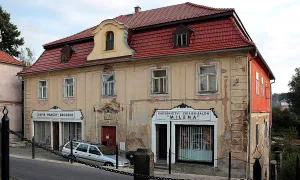
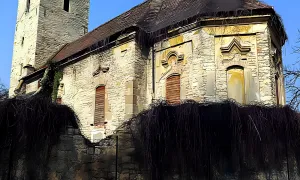
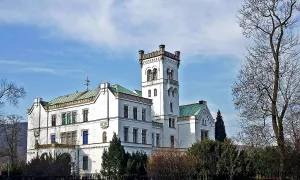
Real photos taken near the monument


Zdroj a licence jsou uvedeny u každého snímku.
Atmosphere of the place
This atmospheric visualisation of the place and period was generated by artificial intelligence. It is not real footage of the location.
Tips from visitors
No tips yet. Be the first!
Log in and add your tip.
Sources and literature
Photos: Ondřej Koníček / Public domain, rozlišení zvýšeno umělou inteligencí — Wikimedia Commons. The author and licence also appear when you hover over the image.
Faktickým podkladem tohoto textu byl článek na Wikipedii, jehož autory jsou přispěvatelé Wikipedie. Článek je dostupný pod licencí CC BY-SA 4.0.
Location on the map



Příběhy a pověsti
Legendy, pověsti a příběhy spjaté s touto památkou
Příběh: Děčín
Bylo to v pondělí ráno, kdy Martin zjistil, že písňe jeho srdce odpovídá pouze jediný rytmus – náhlé tleskání dvou ruky na hrabatelském balkonu. Odvážně vsto…
Číst příběh
Pověst: Děčín
Podle místní pověsti, kterou staří labští vorařeři předávali z otce na syna u zimních ohňů, nebyla děčínská skála od počátku místem, kde by se člověk cítil v…
Číst příběhFotografie návštěvníků
Zatím žádné fotografie. Buďte první, kdo přidá fotografii z návštěvy!
Log in a přidejte svou fotografii nebo hodnoťte.
Za ověřenou návštěvu v aplikaci získáte víc bodů — poznáme podle GPS, že jste na místě.
Reviews and comments